SpaceX conducts static fire test of Starship meant for Flight 13—here's what's next
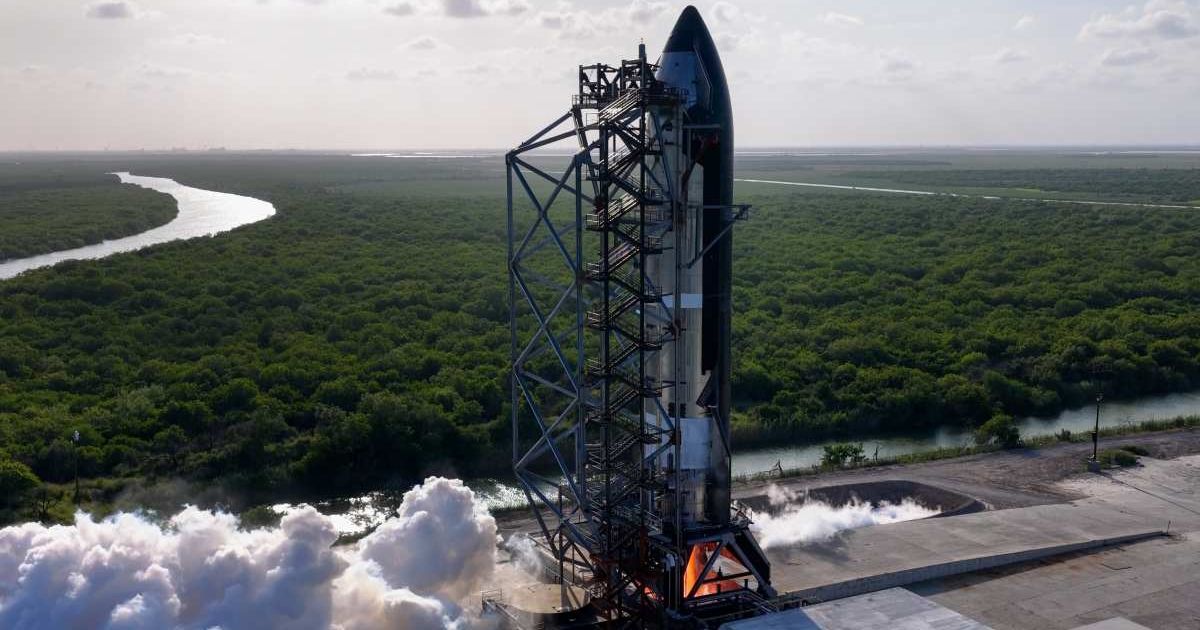
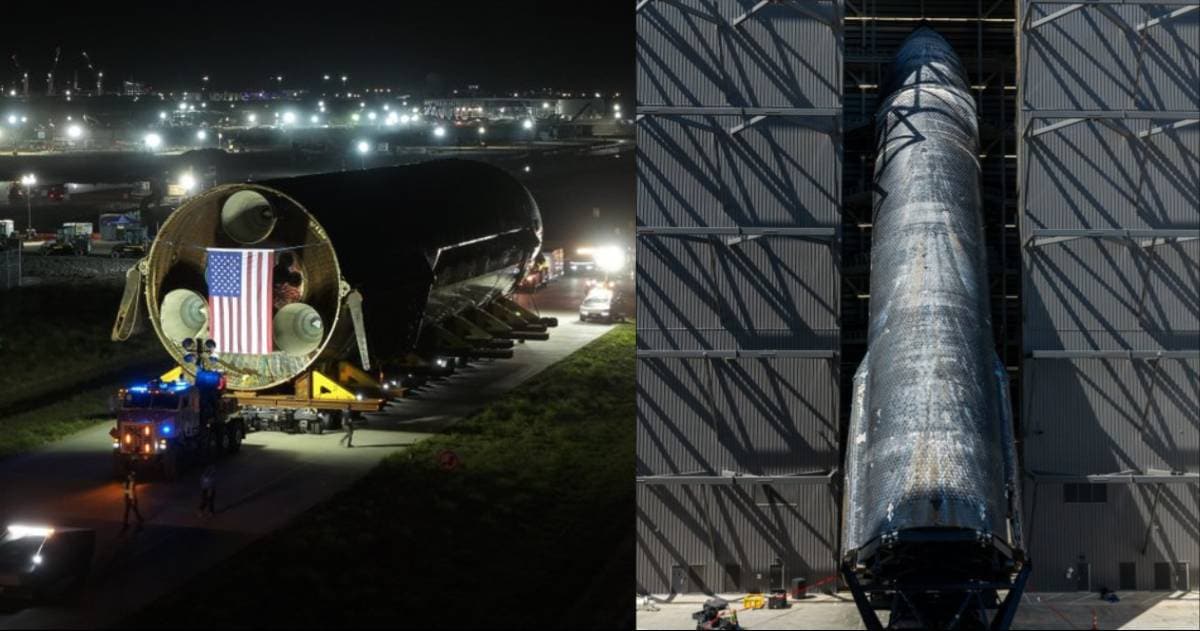
While the date for the next launch of Starship V3 is yet to be announced, it shouldn't be too far off. That's because SpaceX recently conducted a full-duration static fire test of Ship 40—the Starship upper stage set to fly on Flight 13—at its Massey test site in Starbase, Texas. The test took place at around 6:36 pm CDT (7:36 pm EDT) on June 25, 2026, and saw one of Ship's central Raptor 3 engines conduct an approximately 15-second burn while the vehicle remained secured to its base. These tests are done to check if the engines are in working condition before they are used on a flight.
Full duration single-engine static fire test of Starship pic.twitter.com/nfR8PvHpze
— SpaceX (@SpaceX) June 26, 2026
SpaceX also has to conduct a full six-engine static fire test for Ship and a full 33-engine one for the first stage of the rocket, dubbed Booster 20, before Flight 13 takes off. The long-anticipated Flight 12 launched just over a month ago on May 22. While it was a largely successful sub-orbital demonstration, the first-stage booster, which was supposed to make a soft splashdown in the Gulf of Mexico, failed to perform the engine burns that were required and ended up experiencing a hard splashdown. The Federal Aviation Administration (FAA) labeled this a mishap. The company cannot launch the Starship-Super Heavy combination until the investigation into the incident is complete, which is currently being conducted by SpaceX with oversight from the FAA.
Despite the FAA grounding, Gwynne Shotwell, the COO and president of SpaceX, told CNBC earlier this month that she expects Flight 13 to launch in July. Speaking on what the objective of the upcoming Starship flight would be, Shotwell said, “So we had a great most recent flight, Flight 12. Flight 13, we're gonna largely do what we did on Flight 12." She mentioned that while Flight 12 was a success, they will aim to replicate the same objectives on Flight 13 without the things that didn't go as planned, adding, "We obviously had some things that weren’t perfect on that flight for sure. So we'll improve that, fix that. Learn that lesson, address it. Get back to Flight 13."
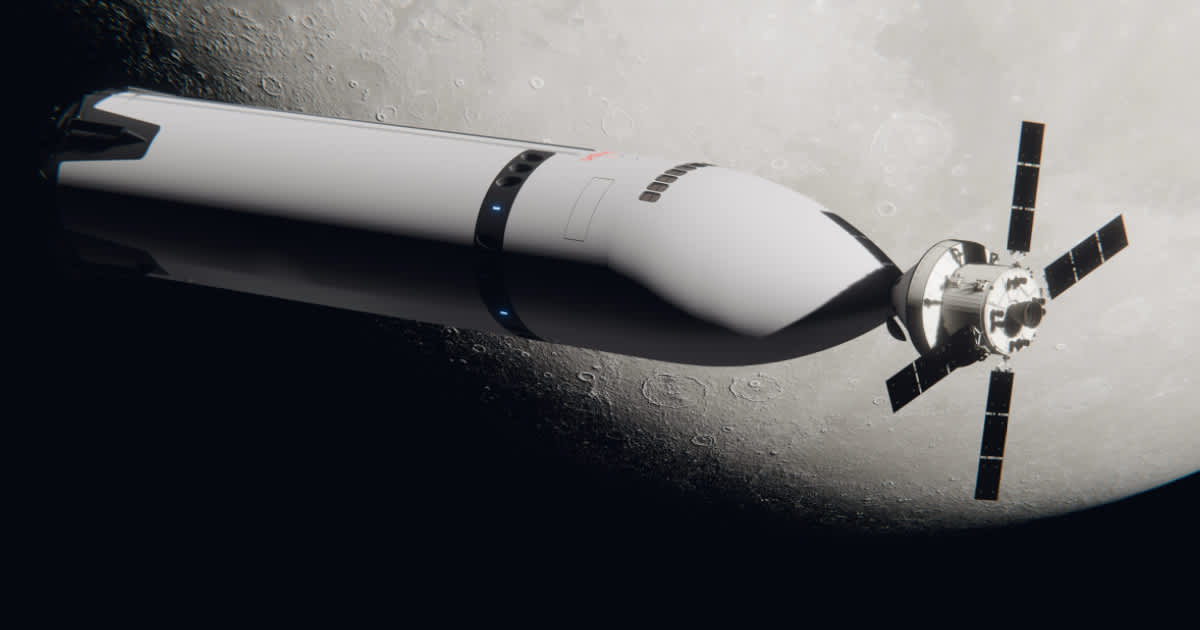
As for the future of Starship, SpaceX is currently in a race against time to have its test article be ready for Artemis III next year. But Starship will need to reach orbit first. Shotwell described what the future planning for Starship could be, stating, "I hope on Flight 14, we will follow the same [plan as Flight 13], with the exception [that] if we feel like we can actually go to orbit, then we would actually have that gait and have the FAA let us go to orbit on Flight 14. And then maybe Flight 15 actually flies from the Cape (Canaveral)." She mentioned that mission demands for Starship will act as a driver for more of them to be built and launched, which will only render the massive vehicle more reliable, alluding to what SpaceX has already shown in its numerous Falcon 9 launches.
More on Starlust
Blue Origin vs. SpaceX: How their landers fit into Artemis III
Moon landers for Artemis III: SpaceX, Blue Origin provide progress updates at NASA event