Skyfall: NASA shares glimpse of helicopter testing for water-hunting Mars mission; watch video
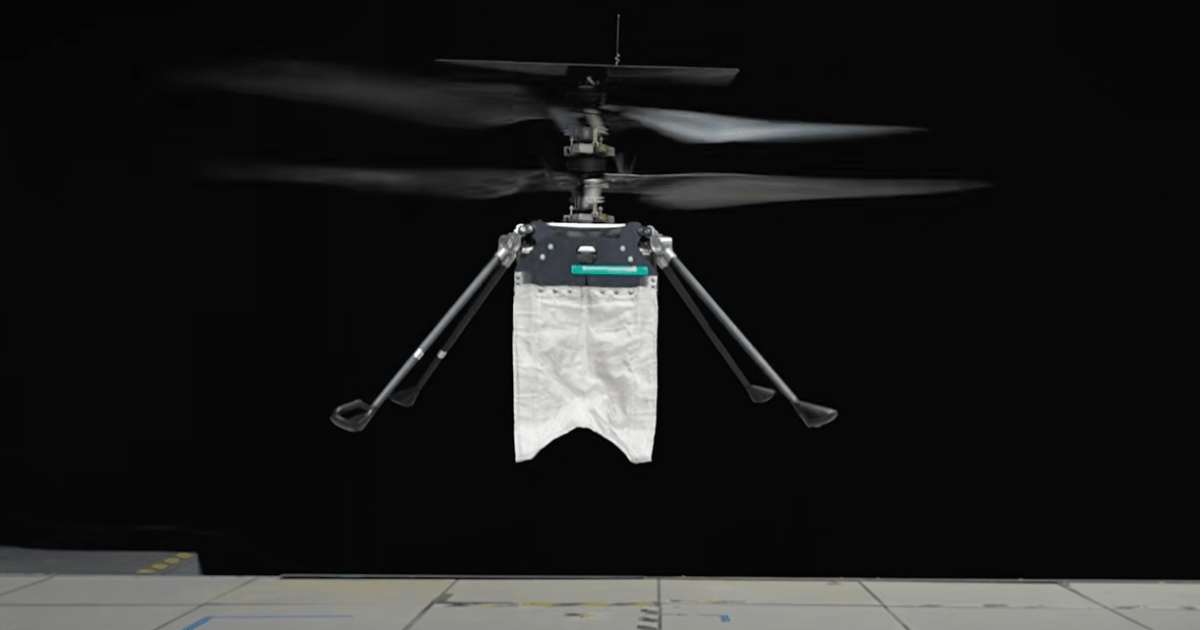
NASA has shared a glimpse of the Skyfall mission—its endeavor to hunt water ice on Mars—which is undergoing rigorous testing in a lab. Built on the success of the Ingenuity helicopter, Skyfall is targeted for launch in late 2028 and will include three rotorcraft to achieve multiple objectives that will aid future crew missions. A new video shared by NASA features the Skyfall helicopter, designed by AeroVironment, which cleared a crucial test at the Jet Propulsion Laboratory in California, with a fabric-based antenna that will detect subsurface ice.
A Mars helicopter with a tuxedo tail?
— NASA JPL (@NASAJPL) August 6, 2026
In this demo for SkyFall, a new, flexible antenna is put through its paces. This ground penetrating radar antenna will hunt for frozen water beneath the Martian surface ⏤ a critical resource for future astronauts. pic.twitter.com/U3ruWvdMF3
Until now, thick Martian ice—which will be used to produce water, oxygen, and fuel—has been located using orbiters that fly several kilometers above the surface, but to find hidden deposits, a spacecraft needs to fly a lot closer to the ground.
“By flying low and slow, a SkyFall helicopter could capture radar images that resolve the fine layering where dry soil gives way to ice, detecting its presence and mapping its extent,” Adrian Tang, SkyFall’s ground-penetrating radar lead instrument scientist at JPL, said in a statement.
What happened at the Skyfall test?
The Skyfall helicopters will be equipped with a ground-penetrating radar that will use an ultra-wide frequency range (500 to 2,500 megahertz) so the signals can penetrate the surface. But traditional antennas using this frequency range are 19 inches (48.3 centimeters) long, and the gap between the Martian surface and the base of the helicopter’s fuselage is only about six inches. To ensure it does not scrape the ground, hit rocks, and snap, JPL engineers developed a fabric-based antenna by significantly reducing the size without compromising on sensitivity.
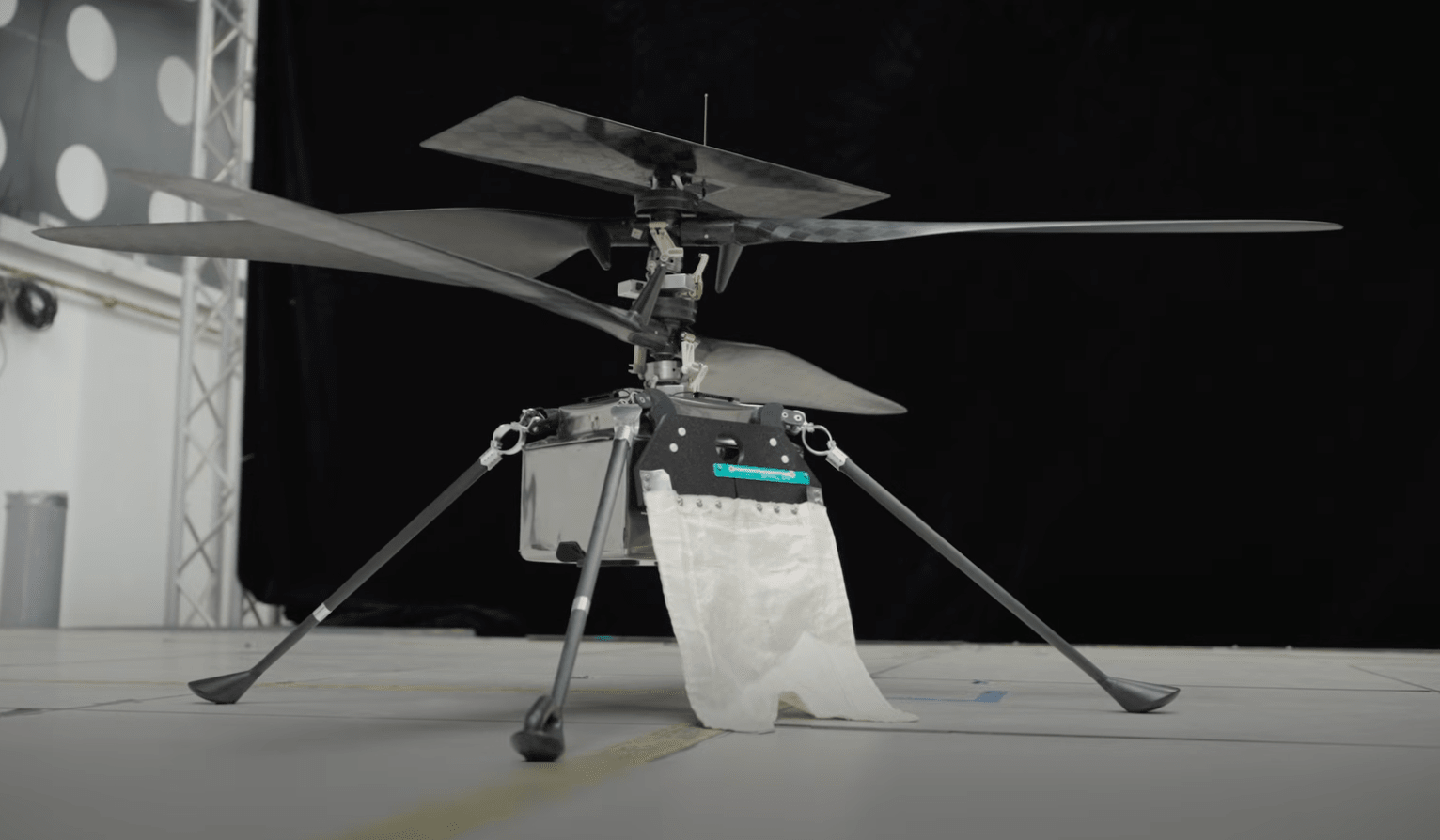
This Vivaldi antenna has been sheathed in polyester and layers of Vectran, the same material used for the landing airbags containing the Spirit and Opportunity rovers. The antenna looks like a cloth that hangs at the base of the helicopter, and it also has fiberglass tape springs and a lightweight magnesium mounting structure that straightens it out when the helicopter is airborne. When it lands, the antenna, which is still 1.5 times longer than the helicopter's legs, bends harmlessly while continuing its subsurface survey.
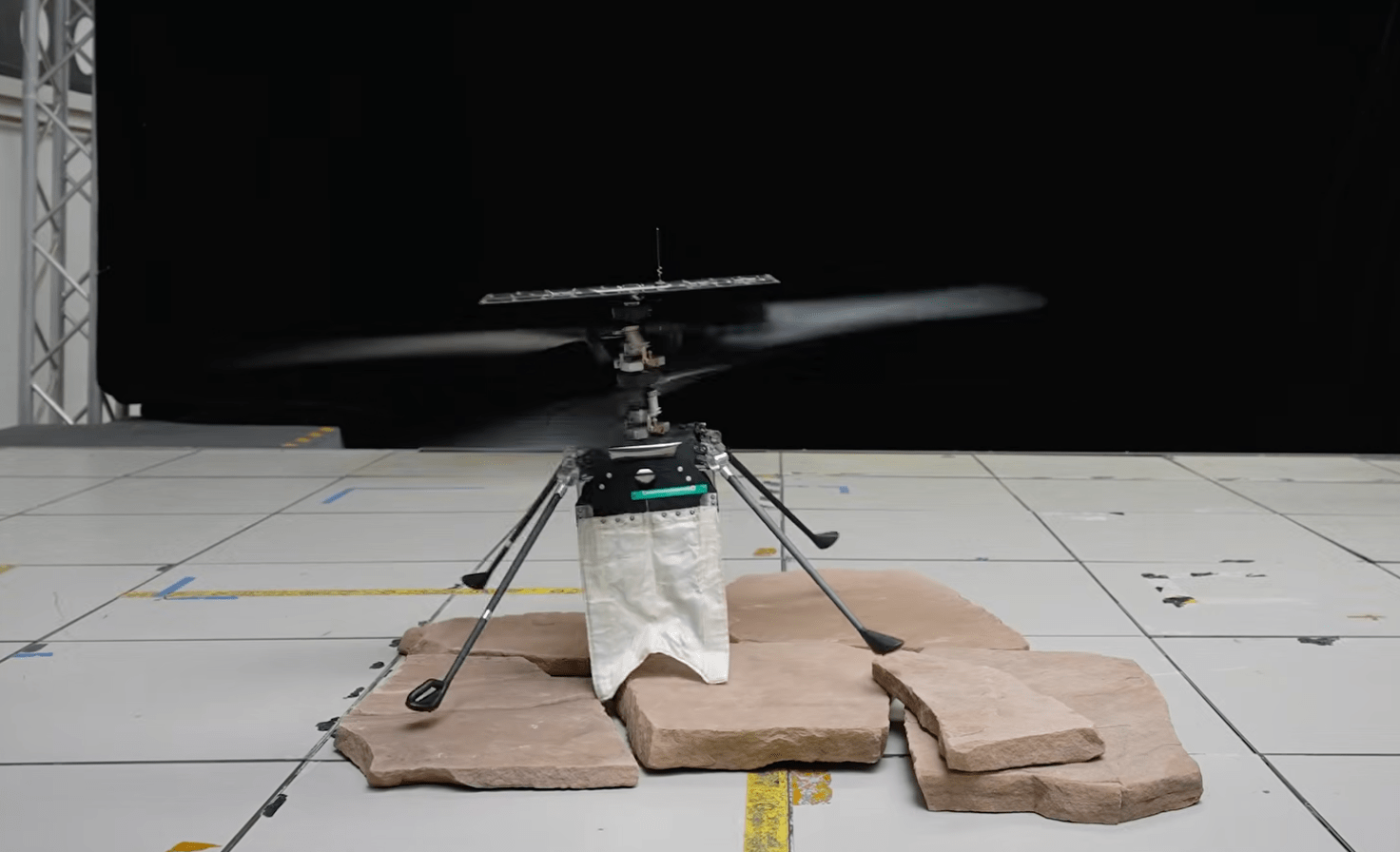
To ensure its durability, the engineers simulated 200 Mars landings, more than double the number of required landings for this mission. They also flipped the antenna upside down, with its bottom pointing up, to test signal performance. “This test checked every box it was supposed to and answered our biggest technical questions,” Tang said. “While we still have work ahead of us before the antenna is fully flight-qualified, this was a major milestone, and the hardware performed exactly as expected.”
What is the Skyfall mission about?
The mission is being launched with a long list of objectives. Apart from hunting frozen water, the three helicopters—equipped with four instruments each—will characterize subsurface geological structures, generate 3D terrain maps to track geological changes, analyze the composition of Martian regolith, investigate the Martian climate history, and find landing sites for future astronauts. The mission will launch on NASA’s Space Reactor-1 Freedom spacecraft in late 2028 and will arrive at Mars in 2030.
More on Starlust:
Earth-like waves a key driver of Mars' atmospheric loss, finds new study
‘Took our breath away’: Scientists amazed as NASA's Curiosity images honeycomb-like features on Mars