Shenzhou-23 spacecraft, carrying Hong Kong's first spacefarer, docks to China's Tiangong space station
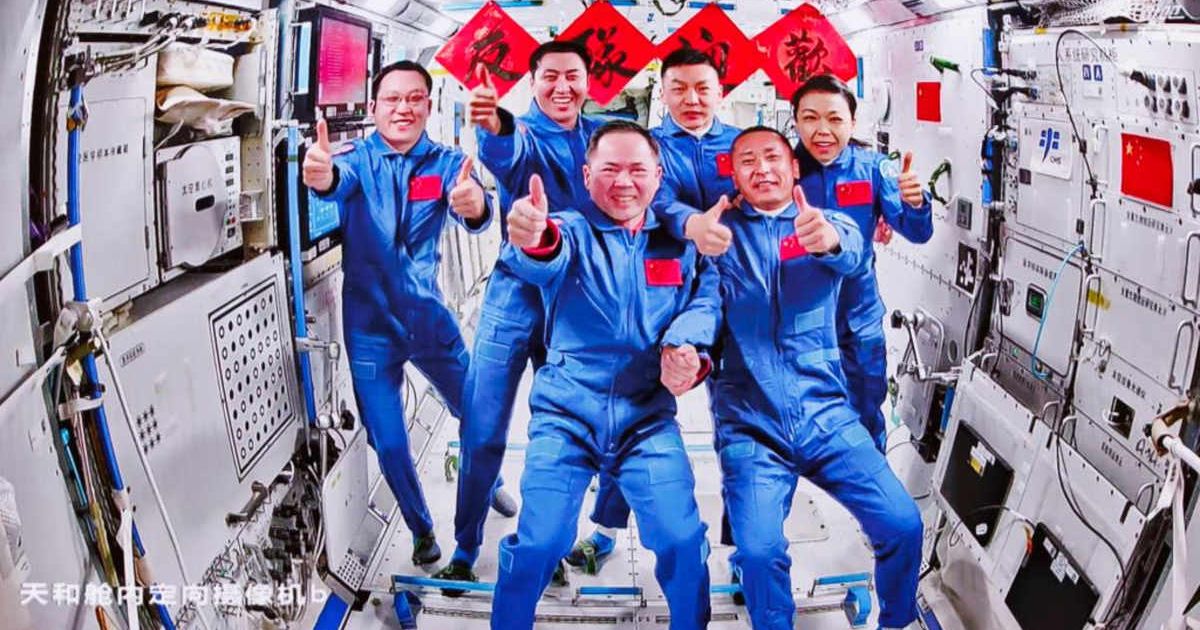
At 2:45 a.m. Beijing Time on Monday, China's Shenzhou-23 spacecraft, carrying three astronauts, docked to the Tiangong space station's core module, Tianhe. The whole docking process took about 3.5 hours, according to the China Manned Space Agency (CMSA), following which, at 5:13 a.m., the Shenzhou-21 crew, who had their stay extended by a month, opened the hatch to welcome the trio on to the station. This marked the eighth in-orbit rendezvous of Chinese astronauts in space.
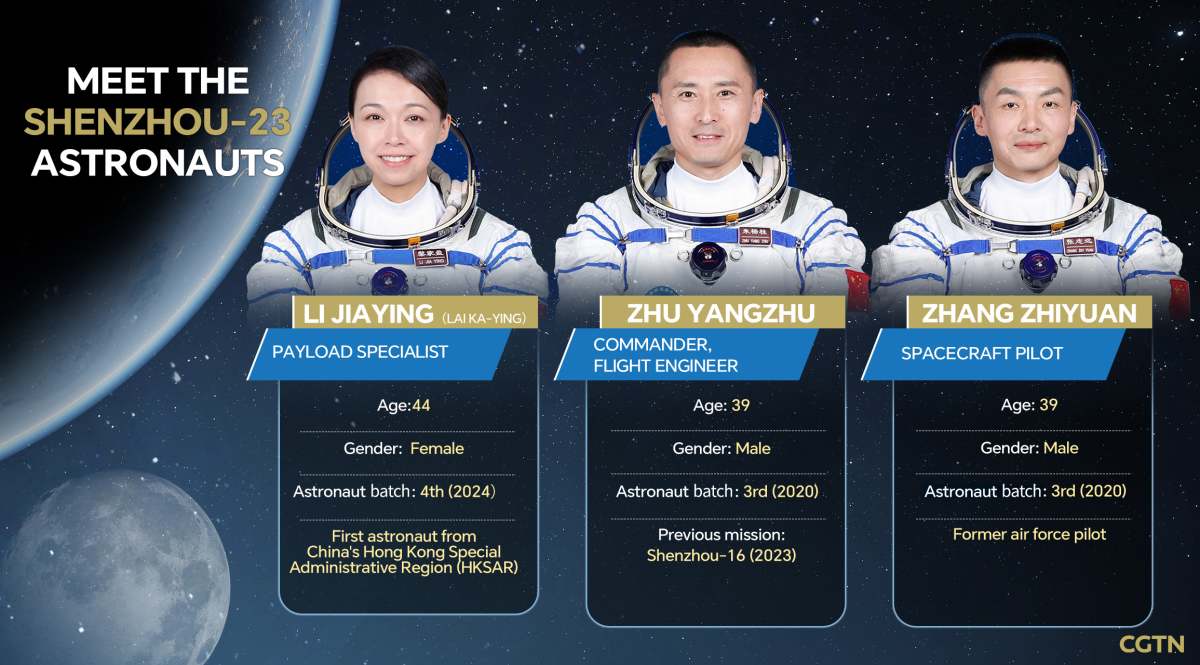
Liftoff took place from the Jiuquan Satellite Launch Centre in the Gobi Desert at 11:08 p.m. local time on Sunday with the help of the 203-foot-tall Long March-2F rocket. The crew consisted of Commander and veteran of Shenzhou-16, Zhu Shenzhou, Pilot Zhang Zhiyuan and Payload Specialist Lai Ka-Ying, both of whom made their first trip to space. Lai, in fact, became the first person from Hong Kong to travel to space, having previously served in the Hong Kong Police Force.
The Shenzhou-23 crew has entered China's space station, marking the eighth in-orbit rendezvous of Chinese astronauts in space. #SpaceChinahttps://t.co/gT7EOelblQ pic.twitter.com/6CVR912P7Q
— CGTN (@CGTNOfficial) May 25, 2026
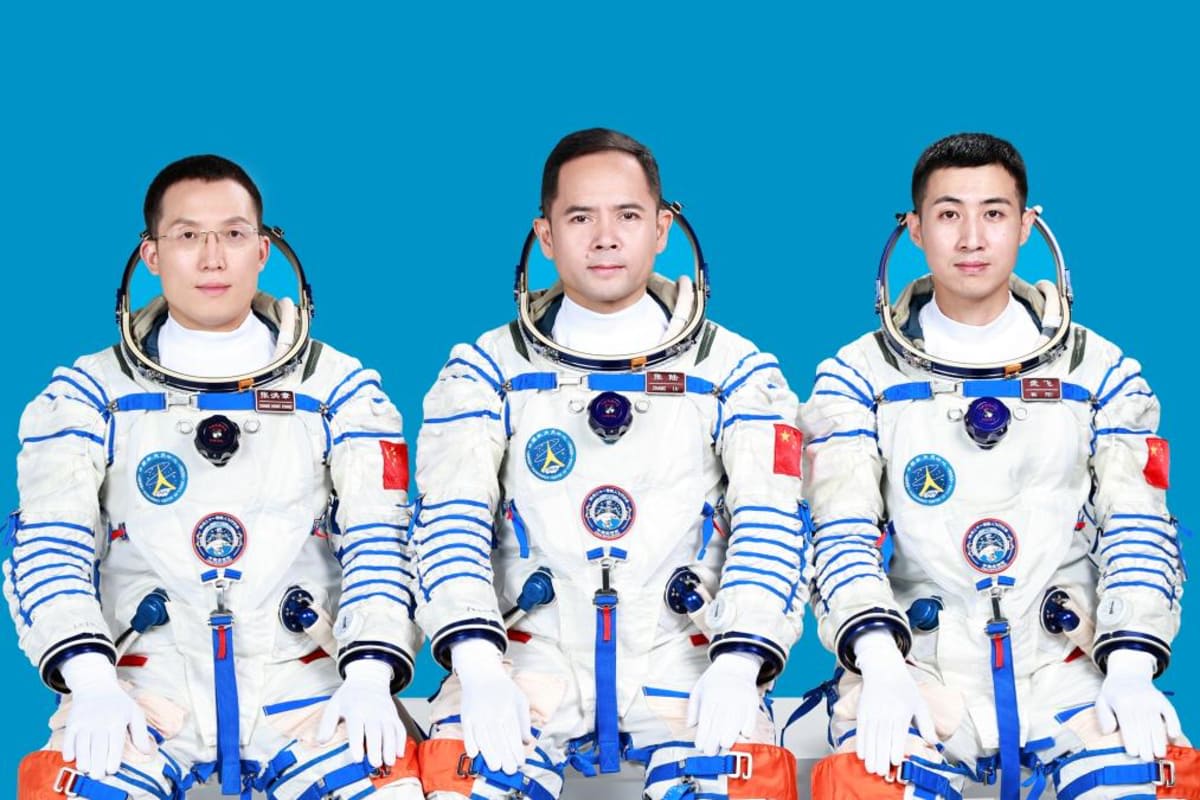
The Shenzhou-23 spacecraft reportedly had enhanced protection for its portview windows—an obvious response to the Shenzhou-20 spacecraft window getting damaged by suspected space debris. The incident had triggered a series of emergency responses from the Chinese space agency, which brought back the Shenzhou-20 crew aboard the Shenzhou-21 capsule and launched the uncrewed Shenzhou-22 last November as a lifeboat for the Shenzhou-21 crew. This particular spacecraft is expected to bring Zhang Lu, Wu Fei, and Zhang Hongzhang back home on May 29 after they conduct handover activities.
Live: Special coverage of China's Shenzhou-23 crewed spacecraft launch #SpaceChina https://t.co/UQ629qfZan
— CGTN (@CGTNOfficial) May 24, 2026
The Chinese space agency had also announced earlier that one of the Shenzhou-23 crew members will spend a year in orbit for the first time in the country's space aviation history. A Pakistani astronaut, set to visit the space station aboard Shenzhou-24, will take the selected crew member's spot on the Shenzhou-23 vehicle to return to Earth. At the moment, the agency has not made public who it will be, although they should be sufficiently equipped to complete the mission, given the recent delivery of the largest payload of supplies and hardware to the space station with Tianzhou-10.
China's astronauts take eighth "space family photo" #SpaceChina https://t.co/WIhJOwpK4j pic.twitter.com/QdYcPuvXOc
— CGTN (@CGTNOfficial) May 25, 2026
This news comes as NASA and Roscosmos prepare for their own crew rotations for the International Space Station. As a part of the agency's schedule for 2026, the Russian Soyuz MS-29 mission will blast off from Baikonur in Kazakhstan in July 2026. While China's crewed activities in their space station are quite new relative to the 25+ years of continuous habitation of the ISS, their progress in crewed exploration has been perceived as a threat to the US's leadership in space and a major factor in the modern space race. In fact, the year-long stay to be completed by one of the Shenzhou-23 crew members is aimed at studying long-term effects of spaceflight on the human body and is a part of China's preparations for crewed lunar missions, as well as those to Mars.
More on Starlust
China is reaching for the Moon: Inside its growing manned spaceflight capabilities
The space race then and now: From the erstwhile US-Soviet rivalry to the current China factor