China's Shenzhou-22 successfully docks with Tiangong space station, set to bring Shenzhou-21 crew home
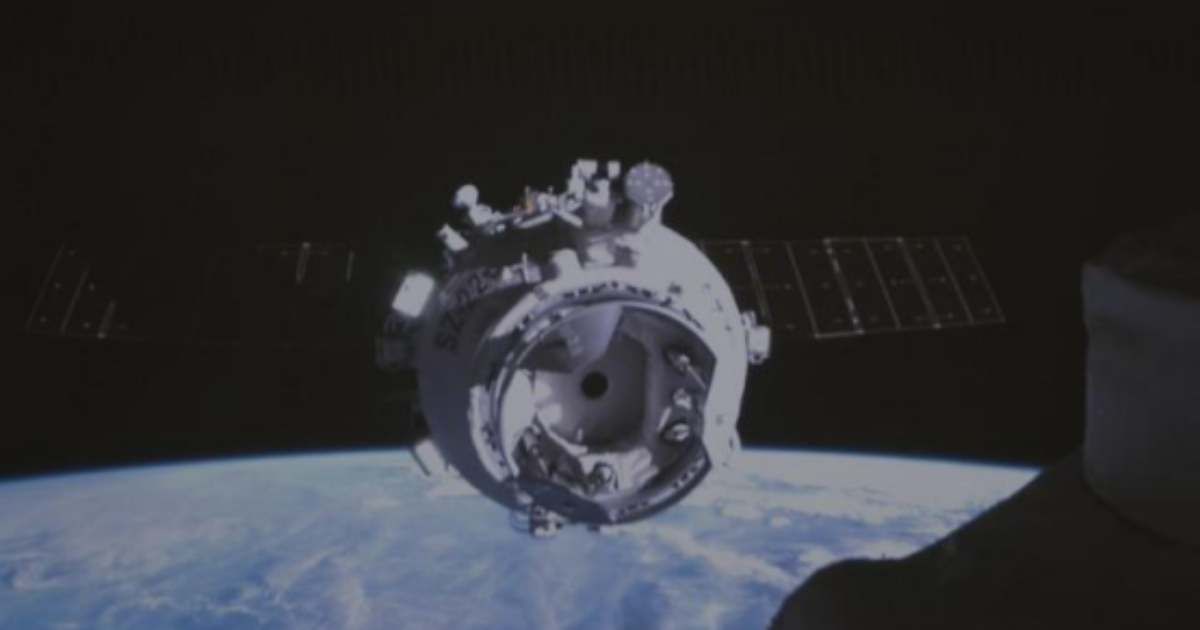
At 3:50 p.m. Beijing time, the spacecraft finished its setup and seamlessly docked at the core module’s forward port.
PUBLISHED NOV 26, 2025
This is a real-time image taken on November 25 at the Beijing Aerospace Flight Control Center, showing the Shenzhou-22 spacecraft docking with the space station (Cover Image Source: Xinhua News Agency | Photo by Wang Chuntao)

The Shenzhou-22 spacecraft successfully conducted an autonomous rapid rendezvous and docking with the Tiangong space station on November 25, demonstrating China's quick-action capabilities following a potential debris incident, according to the China National Space Administration.
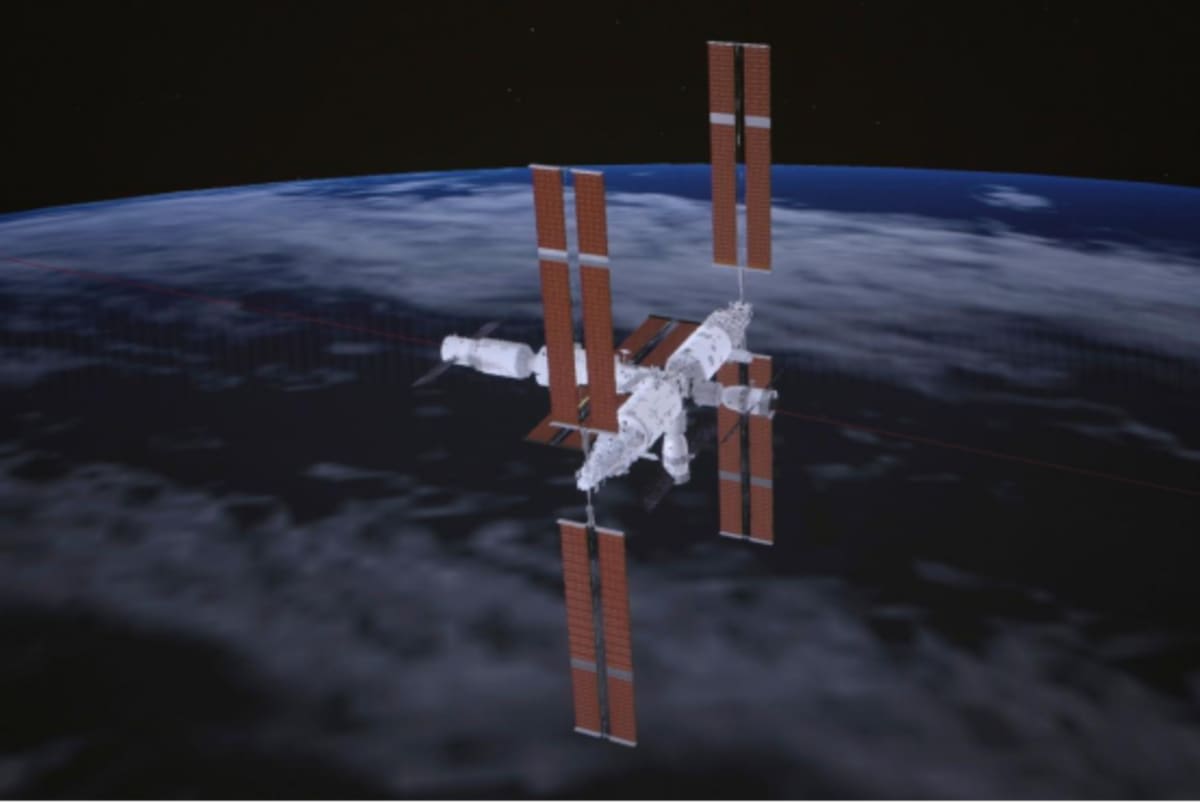
This is a simulated image taken on November 25 at the Beijing Aerospace Flight Control Center, showing the successful docking of the Shenzhou-22 spacecraft with the space station (Image Source: CNSA)
This is a simulated image taken on November 25 at the Beijing Aerospace Flight Control Center, showing the successful docking of the Shenzhou-22 spacecraft with the space station (Representative Image Source: Xinhua News Agency | Photo by Wang Chuntao)

The spacecraft, which successfully completed its status setup upon reaching orbit, docked smoothly at the forward port of the core module Tianhe at 3:50 p.m. Beijing time (2:50 a.m. EST). Its main role will be to serve as the return vehicle for the current astronaut crew from Shenzhou-21. The three astronauts of the Shenzhou-21 mission are carrying out their scheduled activities aboard the station in safety and good condition.
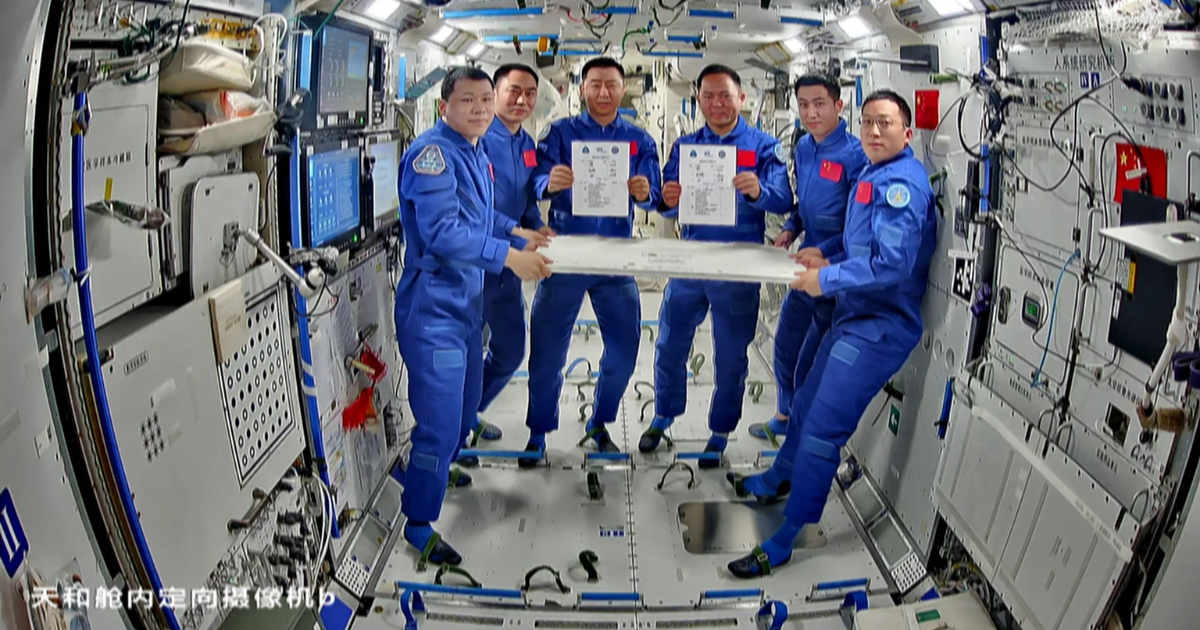
On November 4th, 2025, Beijing time, the Shenzhou-20 and Shenzhou-21 crew underwent a handover ceremony, with the two crews transferring the keys to the Chinese space station(Cover Image Source: Weibo | Manned Spaceflight Speaker)
On November 4th, 2025, Beijing time, the Shenzhou-20 and Shenzhou-21 crew underwent a handover ceremony, with the two crews transferring the keys to the Chinese space station(Image Source: Weibo | Manned Spaceflight Speaker)

The successful docking follows an effective emergency response by the China Manned Space Engineering Office. The planned return of the Shenzhou-20 crew was delayed on November 5 due to a suspected impact from small space debris. Inspections showed that the Shenzhou-20 return vehicle had sustained damage, namely a crack in one of its windows, and thus couldn't be used for safe reentry. Mission command quickly initiated a contingency plan thereafter, thanks to which the three-person Shenzhou-20 crew finally returned safely on November 14 aboard the newly arrived Shenzhou-21 spacecraft. 
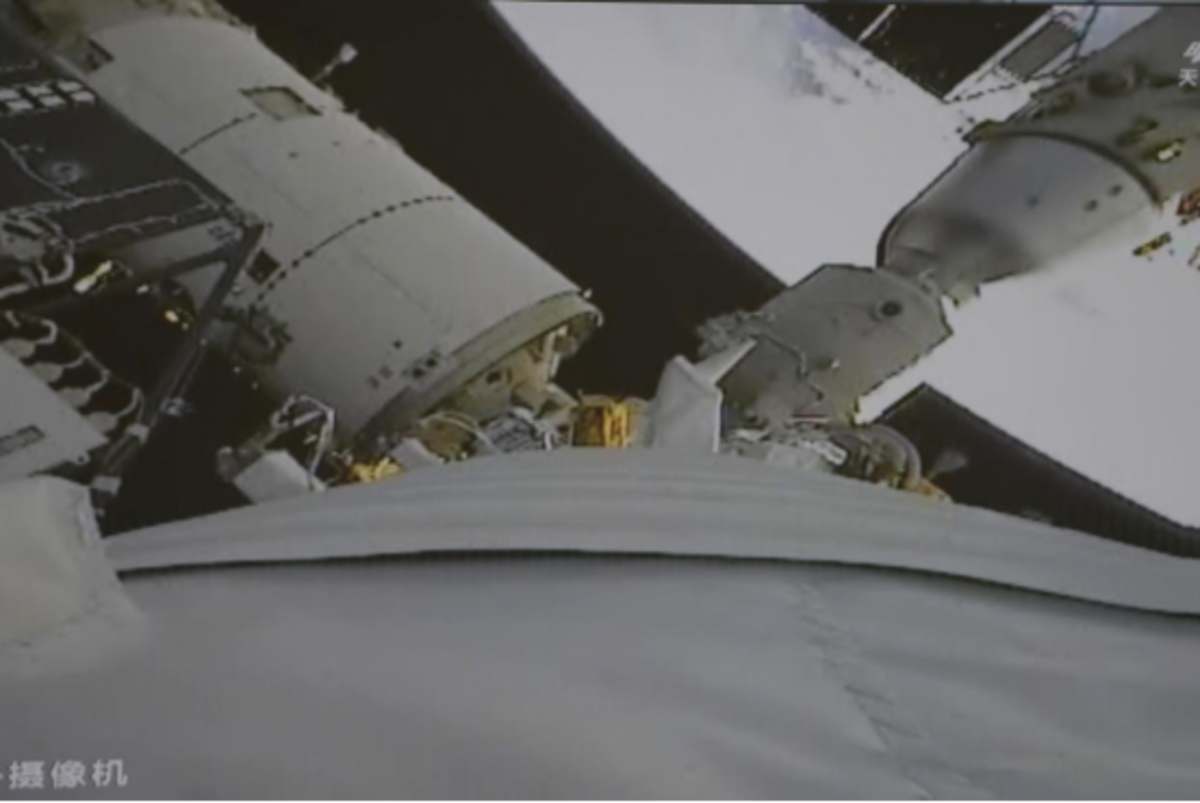
This is a real-time image taken on November 25 at the Beijing Aerospace Flight Control Center, showing the successful docking of the Shenzhou-22 spacecraft with the space station (Image Source: CNSA)
This is a real-time image taken on November 25 at the Beijing Aerospace Flight Control Center, showing the successful docking of the Shenzhou-22 spacecraft with the space station (Image Source: Xinhua News Agency | Photo by Wang Chuntao)

The team of the entire space program worked quickly and scientifically to overcome this problem within the span of just 20 days. This rapid and effective coordination set an important precedent for the international space community in terms of how to handle in-orbit emergencies. As per CNSA, the success of the mission showcased the power of China's centralised system and its principles of "life first, safety first" in spaceflight. It has also wholly confirmed the reliability of the country's "one launch, one backup" strategy for the space station program and proved that the team can respond rapidly in an emergency. In fact, the country has an entire Long March 2F/G rocket and a Shenzhou capsule on standby at the Jiuquan Satellite Launch Center in the Gobi Desert and can get things done fast should a launch need arise.

On November 25, at the Beijing Aerospace Flight Control Center, staff monitored the docking of the Shenzhou-22 spacecraft with the space station (Image Source: CNSA)
On November 25, at the Beijing Aerospace Flight Control Center, staff monitored the docking of the Shenzhou-22 spacecraft with the space station (Image Source: Xinhua News Agency | Photo by Wang Chuntao)

Now, while the older Shenzhou-20 spacecraft remains docked to Tiangong to conduct relevant experiments, its stay in space must come to an end in about five months. That's because the docking port that it occupies will be used by Shenzhou-23, which is expected to launch in April 2026, per Space.com.
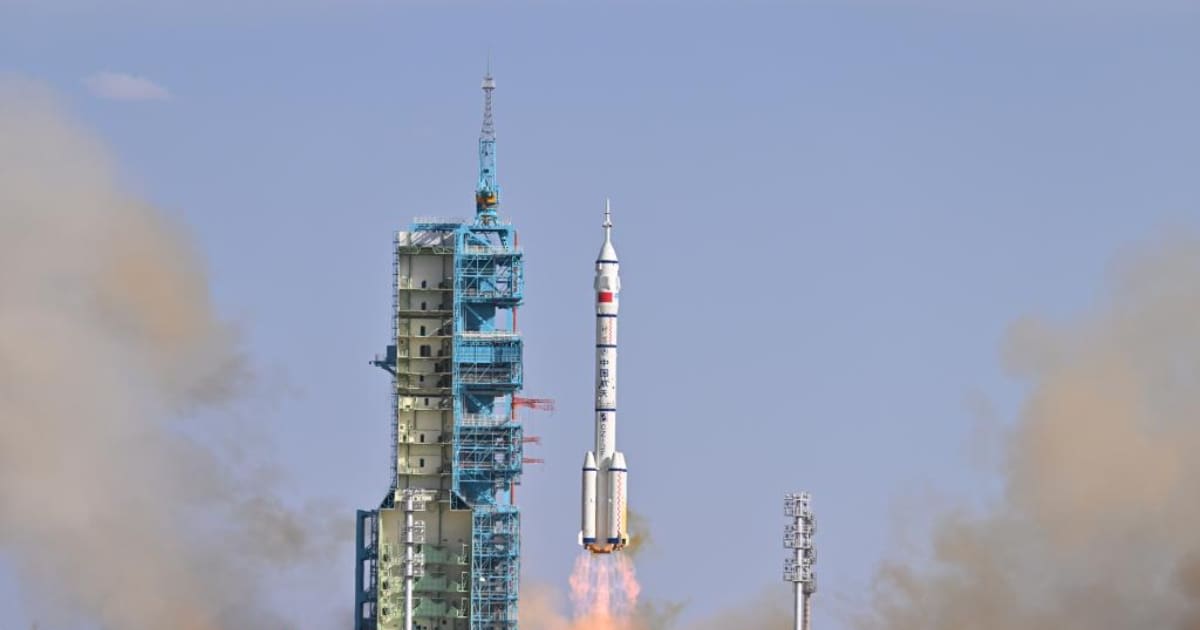
The Shenzhou-20 crewed spaceship, atop a Long March-2F carrier rocket, blasts off from the Jiuquan Satellite Launch Center in northwest China, April 24, 2025 (Cover Image Source: Xinhua Net | Li Xin)
The Shenzhou-20 crewed spaceship, atop a Long March-2F carrier rocket, blasts off from the Jiuquan Satellite Launch Center in northwest China, April 24, 2025 (Image Source: Xinhua Net | Li Xin)

The mission currently aboard the station, Shenzhou-21, is notable not only for the crisis it averted but for its historic crew member and scientific payload. Among them is Flight Engineer Wu Fei, 32, who became the youngest astronaut China has ever launched into space, setting a new national record. Apart from the human contingent, Shenzhou-21 also carried four mice—two male, and two female—to space, thus paving the way for the first Chinese space experiments involving rodents.

More on Starlust

Shenzhou-20 astronauts make it back to Earth following delay caused by space debris

China's Shenzhou-20 crew's return may be postponed after suspected debris impact
MORE STORIES

The tests, aimed at assessing the safety of lunar landings, will continue till the spring of 2026.
1 day ago
Liftoff is scheduled for 8:30 AM CST (14:30 UTC) from Launch Site One, with the live mission webcast beginning 40 minutes prior to the target time.
1 day ago
The record-breaking run concluded with the Long March 3B rocket launched from the Xichang Satellite Launch Center.
3 days ago
The powerful rocket launched Tuesday at 2:16 p.m. ET from Space Launch Complex 40 at Cape Canaveral Space Force Station.
3 days ago
The new year will bring a plethora of space missions, some more exciting than others.
3 days ago
The spacecraft carrying astronaut Kim, cosmonaut Ryzhikov, and cosmonaut Zubritsky pulled away from the orbiting complex at 8:41 p.m. EST on Monday.
4 days ago
SpaceX confirmed construction is already underway at the Space Launch Complex 37 site, following the approval.
4 days ago
The satellites were onboard a Falcon 9 rocket that launched from Space Launch Complex 40 at the Cape Canaveral Space Force Station.
Dec 3, 2025
NASA astronaut Chris Williams, along with Roscosmos cosmonauts Sergey Kud-Sverchkov and Sergei Mikaev, safely arrived at the ISS.
Nov 28, 2025
The Soyuz MS-28 will carry NASA astronaut Chris Williams and Roscosmos cosmonauts Sergei Mikaev and veteran Sergey Kud-Sverchkov.
Nov 27, 2025