Voyager handed subcontract to support U.S. DoW spacecraft that 'breathes air' to propel itself

The Denver-based aerospace firm Voyager Technologies has been awarded an important subcontract to supply high-precision navigation sensors for DARPA's Otter mission. Operating under the banner of the U.S. Department of War (formerly the Department of Defense), the Otter spacecraft is slated to test a revolutionary "air-breathing" electric propulsion system. Rather than carrying heavy tanks of traditional chemical fuel, Otter will harvest sparse air molecules from the upper atmosphere, ionize them into a plasma, and accelerate them out the rear of the spacecraft using electric fields. By expelling this plasma backward, the spacecraft generates the forward thrust needed to maintain orbit. Voyager’s task is to provide the Acceleration Measurement System (AMS)—a sensor suite that takes ultra-precise readings of this acceleration to feed the spacecraft's automated flight controls.
World record-setting precision. Now supporting DARPA's first air-breathing spacecraft.
— Voyager Technologies (@voyagertech_) May 20, 2026
Voyager has been awarded a contract with @Redwire for @DARPA's Otter program, providing its precision acceleration system to support the first air-breathing spacecraft. We're helping unlock a… pic.twitter.com/zQvu9SZpt0
Otter will operate in Very Low Earth Orbit (VLEO), which spans altitudes between 90 to 450 kilometers. Here, due to a greater concentration of atmospheric molecules than in traditional low Earth orbit (LEO), spacecraft face increased aerodynamic drag. Thus, to avoid prematurely burning up in the atmosphere, Otter must constantly fire its thrusters to stay in orbit, while also executing precise maneuvers to adjust its orbit or eventually deorbit. The total impulse required to perform these orbital maneuvers—known in orbital mechanics as delta-v—requires precise monitoring. Voyager's AMS will not physically control the spacecraft, but it will deliver the ultra-precise delta-v and acceleration data that the vehicle's flight computers need to calculate engine burns with high accuracy.
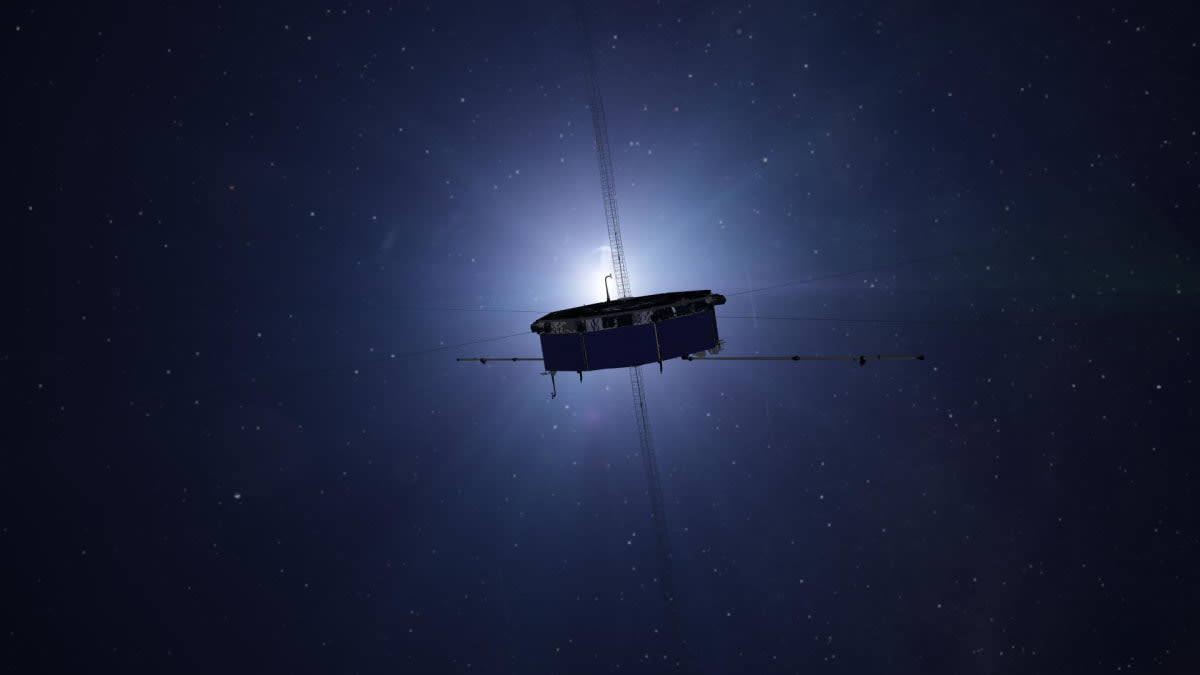
"Missions like Otter demand precise, repeatable thrust control, and that's exactly what our system delivers," noted Matt Magaña, the president of Space, Defense & National Security at Voyager. According to Voyager, the AMS architecture for the Otter mission stems from over a decade of incident-free operations. It is a direct descendant of the Space Acceleration Measurement System (SAMS) and the Microgravity Acceleration Measurement System (MAMS), the highly sensitive sensor arrays utilized aboard NASA's Space Shuttle and the International Space Station (ISS) to monitor microgravity disturbances. This underlying technology also enabled NASA's Magnetospheric Multiscale (MMS) mission to achieve multiple spaceflight records. To study the physics of magnetic reconnection around Earth, the four MMS satellites fly in a highly synchronized 3D tetrahedral formation. Voyager's precision tracking allowed these spacecraft to achieve the tightest separation ever recorded for a multi-spacecraft formation—just 4.5 miles apart.
From Luxembourg to the @Space_Station.
— Voyager Technologies (@voyagertech_) May 13, 2026
Voyager is partnering with @Exobiosphere to provide mission management for their first
scientific mission, OHTS-MVP. We’re providing the safety, verification and integration
required to scale biotech research in microgravity.
Read the… pic.twitter.com/IJJXadRaYw
The Otter mission is managed by the Defense Advanced Research Projects Agency (DARPA). During its year-long spaceflight demonstration, DARPA will treat Otter as an "orbiting wind tunnel." By rigorously testing the intake and thruster hardware in the actual VLEO environment, researchers can gather data on how an air-breathing propulsion behaves in the thermosphere. The data returned from this mission will help refine current aerodynamic modeling and simulation techniques, ultimately dictating the designs of future long-endurance VLEO satellites.
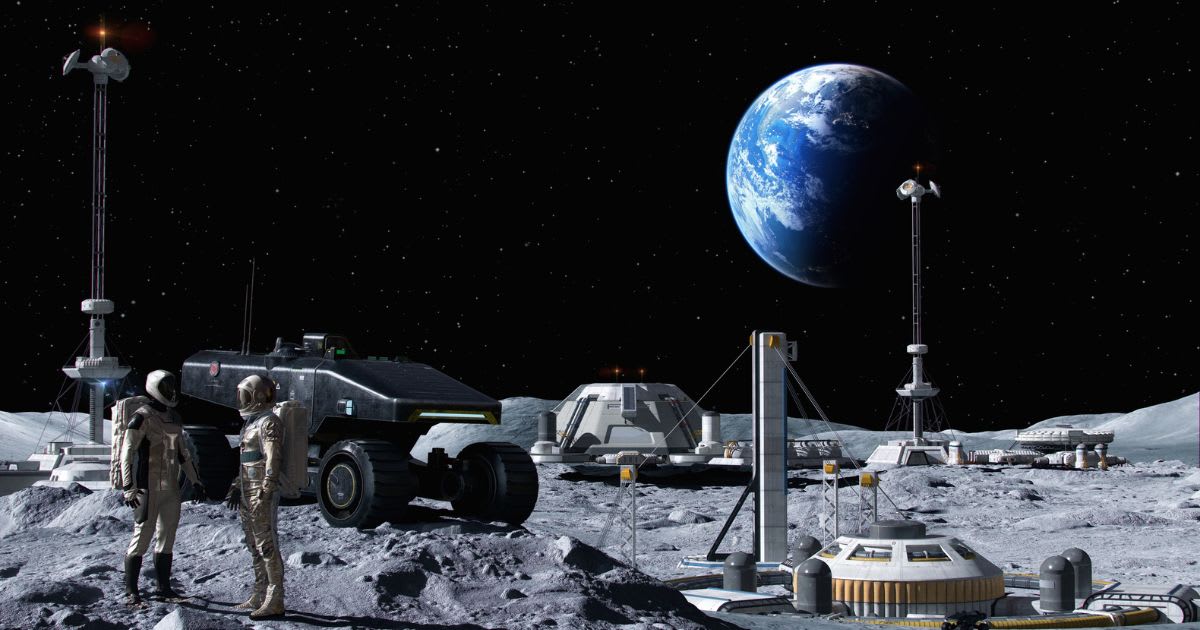
With the latest development, Voyager Technologies continues to grow as an emerging player in American spaceflight capabilities, having recently been selected by NASA for the seventh private astronaut mission to the ISS. Additionally, a mission integration contract with the European space biotech company Exobiosphere was recently announced by Voyager Europe to install the Orbital High-Throughput Screener (OHTS) on board the ISS, paving the way for automated, microgravity-based pharmaceutical research. The company has also made substantial investments in commercial space expansion, prominently backing the development of next-generation expandable space habitats in support of NASA's phased plan to build a Moon Base via the Artemis program. For the Otter program, space infrastructure firm Redwire serves as the main contractor, bringing Voyager aboard to furnish the AMS. "This flight-proven hardware has performed flawlessly on several of NASA’s high-profile missions," Magaña added. "We’re bringing that same level of precision to Redwire and DARPA, helping unlock a new class of maneuverable spacecraft in VLEO."
More on Starlust
NASA and Vast sign an order to give the company the sixth private astronaut mission to the ISS
Vast secures funding of $500 million to speed up building its 'Haven' private space stations