'People in pixels': Artemis II astronauts spotted by Earth-based telescope from over 200,000 miles away
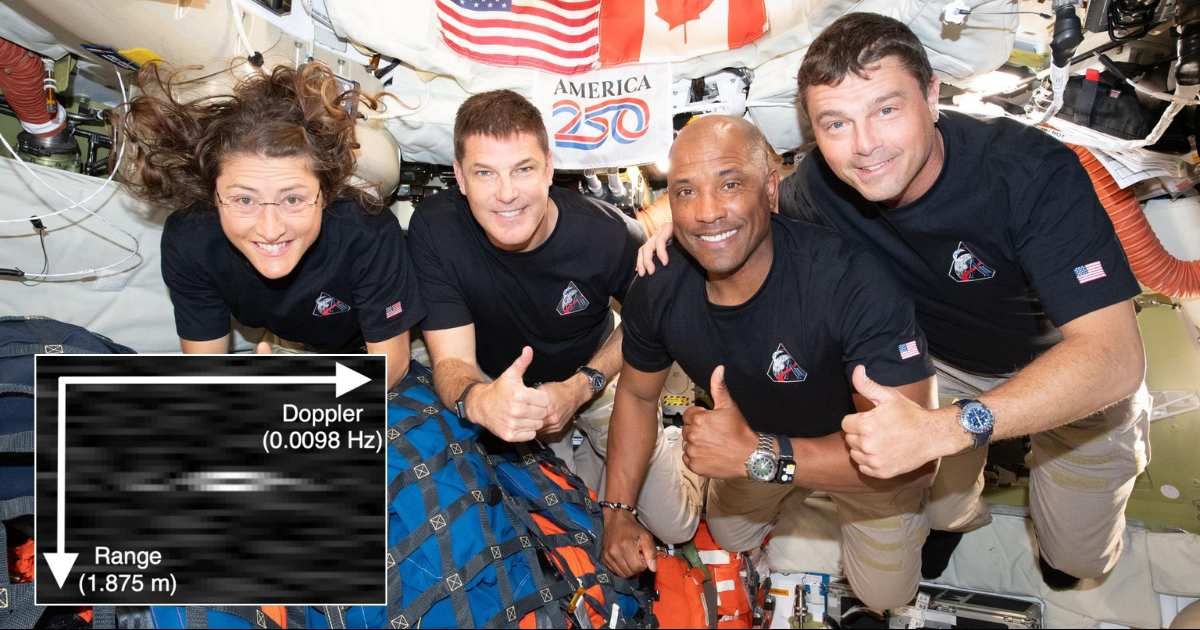
Captured by the GBT, the feat demonstrates how ground-based radio telescopes can aid space missions.
The Artemis II astronauts posing for a group photo from the Orion capsule in space on their way to the Moon. (Cover Image Source: NASA); The inset image is of the Orion capsule shared by the Green Bank Telescope. (Credit: JPL & NSF/AUI/NSF NRAO)

NASA’s Artemis II mission turned out to be a tremendous success. More than five decades after Apollo 17 launched in 1972, Artemis II marked humanity’s long-awaited return to space beyond low Earth orbit. Interestingly, the mission also represented a major milestone as the inaugural crewed flight of both the Space Launch System (SLS) and the Orion spacecraft. Artemis II was a test run to support the launch of Artemis IV, a mission to get humans back on the lunar surface. Throughout the journey, the Artemis II crew captured breathtaking images of Earth and the Moon’s far side, offering a rare perspective from deep space. Over the course of the 10-day mission, a massive radio telescope continuously tracked the Orion spacecraft and its four astronauts for five days as they traveled far beyond low Earth orbit.

The Artemis II crew – (L-R) mission specialist Jeremy Hansen of CSA (Canadian Space Agency), mission specialist Christina Koch, pilot Victor Glover, and commander Reid Wiseman – rehearse a walkout from the Neil A. Armstrong Operations and Checkout Building at NASA’s Kennedy Space Center on December 20, 2025 in Cape Canaveral, Florida. The astronauts are rehearsing for the scheduled February 2026 10-day mission, which will take them around the Moon and back to Earth. (Photo by Joe Raedle/Getty Images)

Situated in West Virginia, the National Science Foundation Green Bank Telescope (NSF GBT) is the largest moving structure on land with a dish covering almost 2.3 acres of land. The massive structure, which reaches a towering 485 feet into the sky and weighs a staggering 17 million pounds, followed Artemis II’s path closely. Over the course of the mission, the telescope gathered essential data about the trajectory of the spacecraft from over 200,000 miles away.
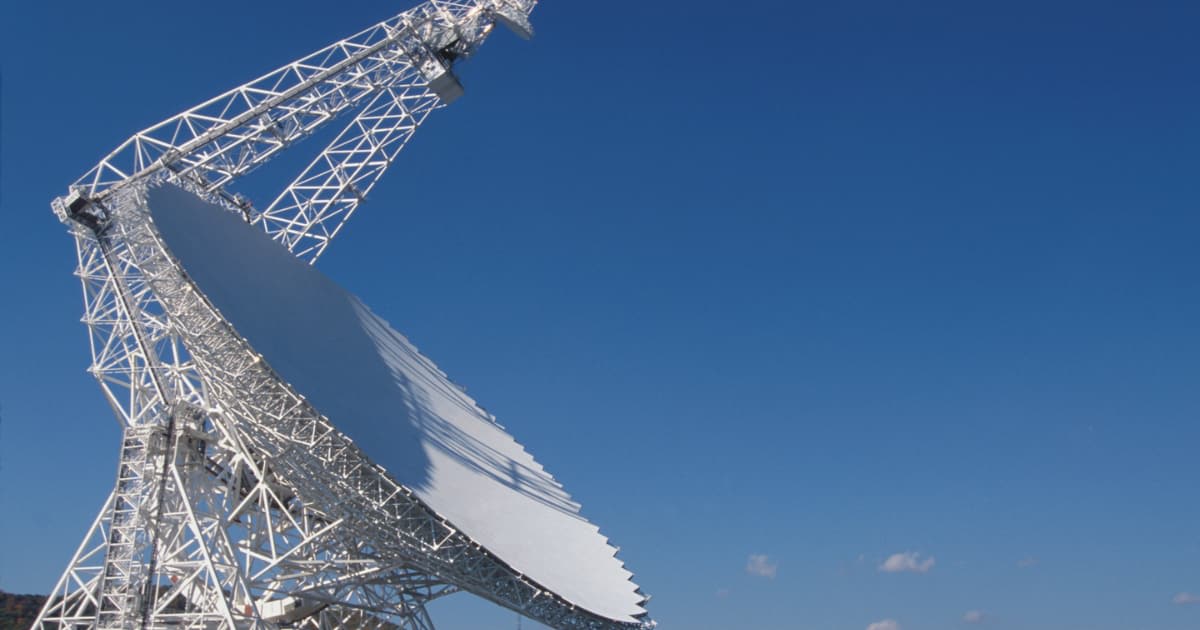
The Robert C. Byrd Green Bank Telescope (GBT) is the worlds largest steerable telescope, standing 485-feet tall, weighing over 17 million pounds, with a 2.3 acre surface. (Credits: GBT – NRAO/GBO)
The Robert C. Byrd Green Bank Telescope (GBT) is the world's largest steerable telescope, standing 485-feet tall, weighing over 17 million pounds, with a 2.3 acre surface. (Credits: GBT – NRAO/GBO)

Commenting on the telescope’s functioning during the five-day tracking operation, the observatory’s site director, Anthony Remijan, said on May 6, “With the GBT, we were able to track the movement of the spacecraft within 0.2 millimeters per second of what NASA calculated in its projections.” Emphasizing the precision of the system, Remijan likened the telescope to the speedometer of a car, but one capable of measuring velocities to 0.0004 decimal places per hour. 
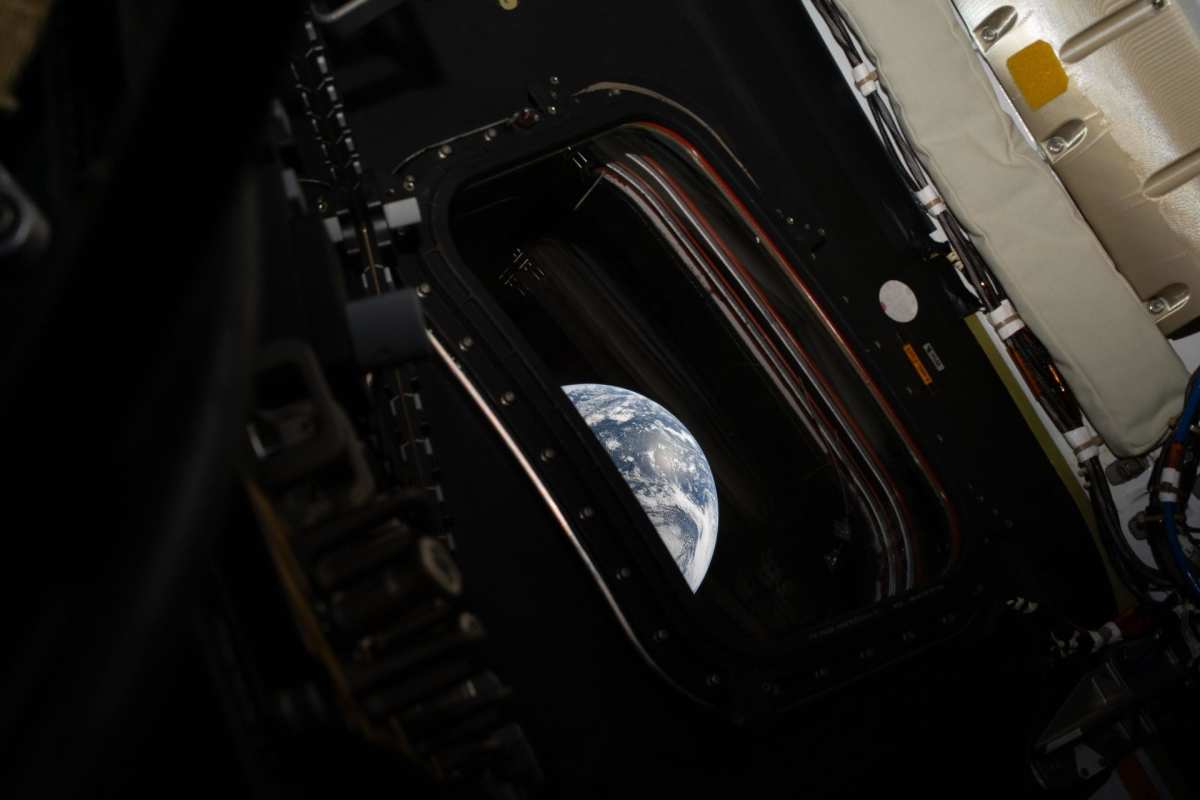
A view of Earth taken by NASA astronaut and Artemis II commander Reid Wiseman from one of the Orion spacecraft's four main windows after completing the translunar injection burn on April 2, 2026. (Image Source: NASA/Reid Wiseman)

Beyond tracking Orion and collecting data, the telescope also captured a mind-blowing snap of the spacecraft, named ‘Integrity’, while it was 213,000 miles away from Earth. Despite the image being understandably pixelated, a distinct dot was visible against the backdrop of deep space, with a vertical axis illustrating the increasing distance to the Integrity capsule as it moved downwards. Unveiling the picture, NSF GBO scientist Will Armentrout highlighted the value of the rather grainy photo, taken from an unimaginable distance — “There are four people in those pixels.”
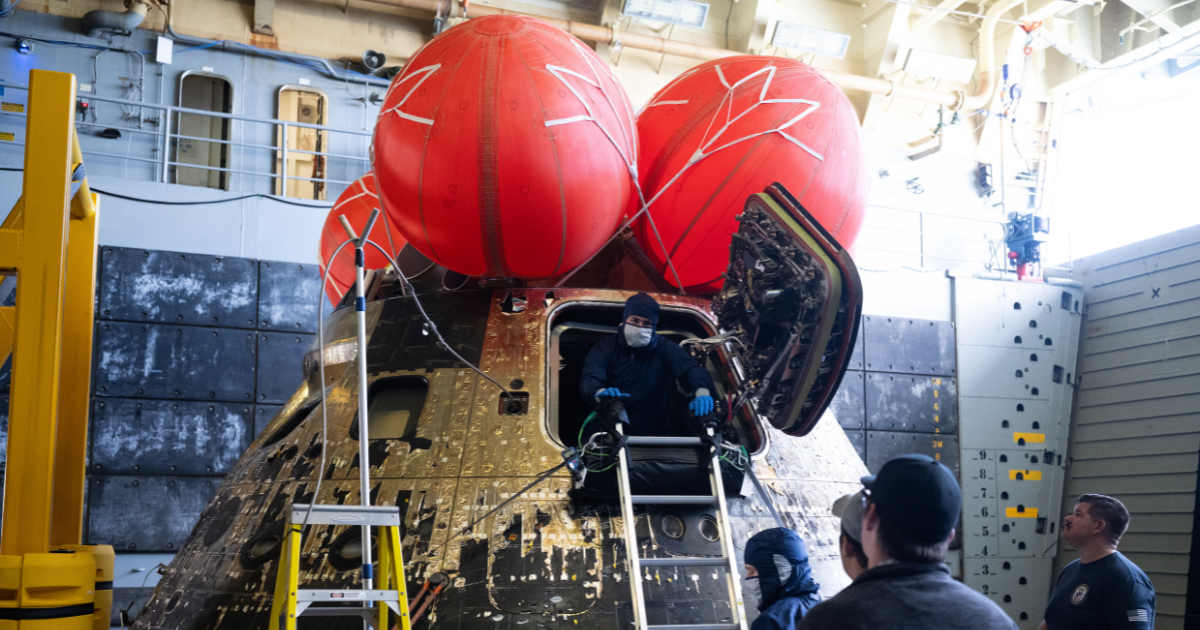
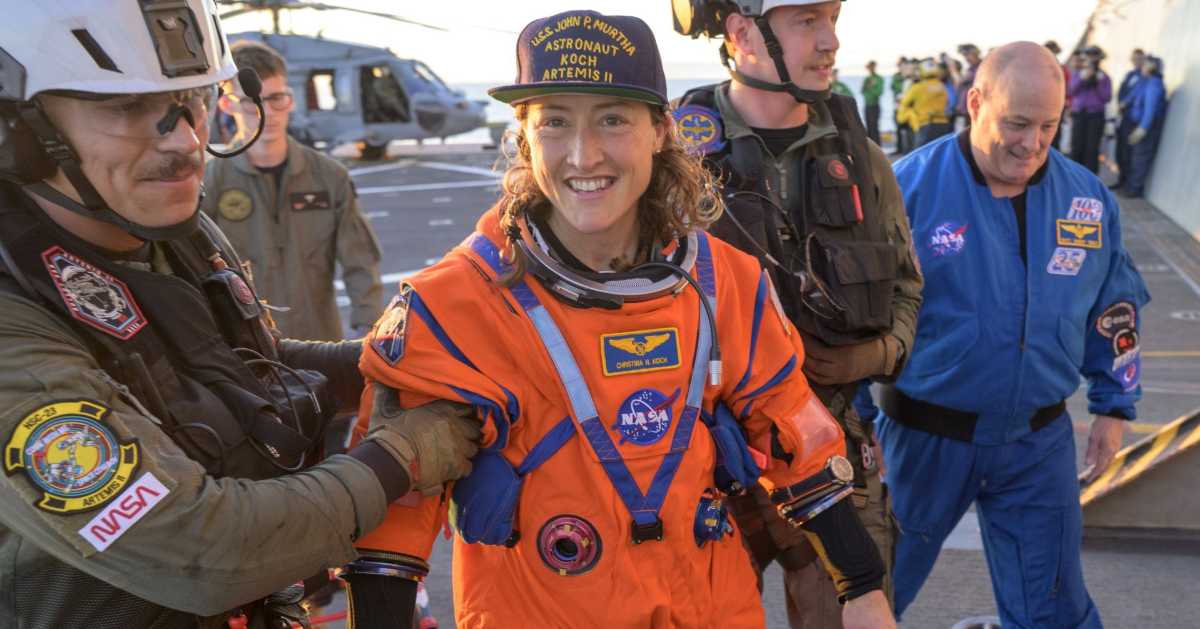
NASA’s Orion spacecraft is seen in the well deck of USS John P. Murtha (Credit: NASA/Joel Kowsky)

Following the success of these observations from the GBT, the NSF National Radio Astronomy Observatory highlighted the potential of radio telescopes for future space exploration missions. The observations taken by GBT also demonstrated how ground-based telescopes can contribute to space missions with crucial, real-time information. Celebrating this milestone, NSF Chief Officer for Research Facilities Linnea Avallone expressed great pride in the facility's contributions. “It’s exciting when projects like this put our NSF facilities in national headlines. Being able to offer inter-agency support to our colleagues at NASA makes the most of all our capabilities," she noted.
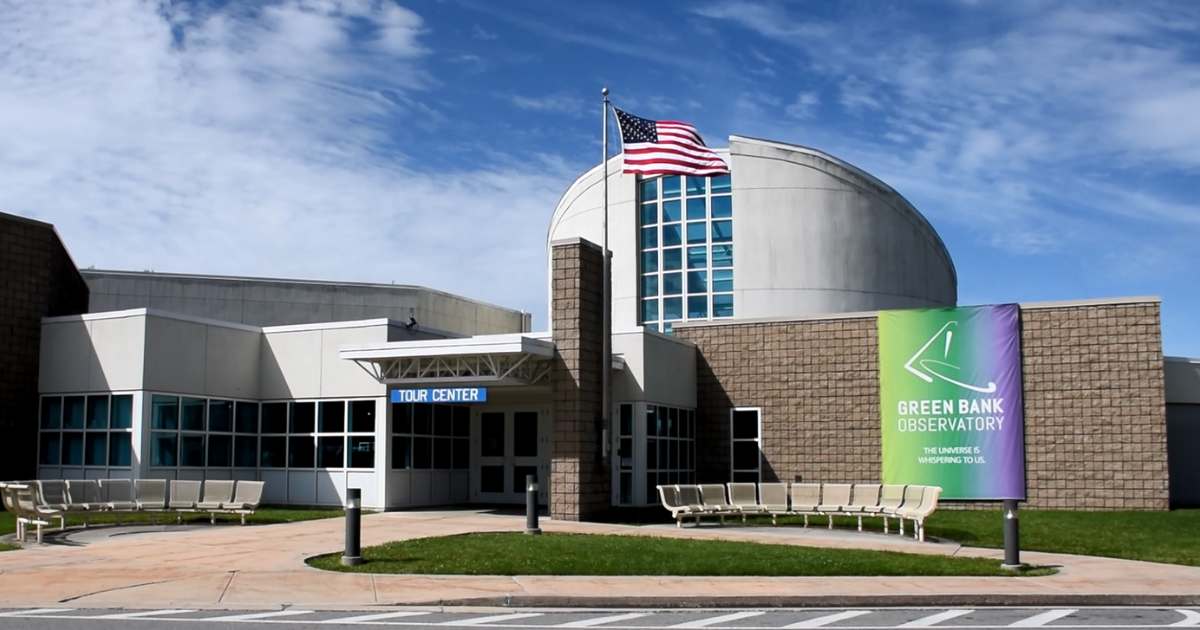
Green Bank Observatory Science Center (Credit: greenbankobservatory.org/)
Green Bank Observatory Science Center (Credit: greenbankobservatory.org)

This is not the first time a large ground-based radio telescope has supported a NASA mission in space, and the GBT’s role in Artemis II is the latest example of inter-agency coordination. Back in 2022, when NASA carried out the Double Asteroid Redirection Test (DART) mission, the National Science Foundation (NSF), using GBT, stepped in to aid the mission by offering radar support throughout. DART was the world's first planetary defense mission, where NASA intentionally crashed a spacecraft into the asteroid Dimorphos in a bid to demonstrate the capability of current technology to forcefully deflect an asteroid if it ever posed a threat to Earth. Thankfully, DART, too, was a massive success.

More on Starlust:

Artemis II was just the beginning; the hardest stretch for NASA’s Moon ambitions begins now

Not everyone can fly on Artemis missions, but even middle schoolers can contribute to NASA science—here's how

Artemis III SLS core stage arrives at Kennedy Space Center as Artemis II spacecraft undergoes study

MORE STORIES

The spacecraft will be docked at the ISS for a month before heading for splashdown with time-sensitive research and cargo.
21 hours ago
The spacecraft is en route to a mysterious object and needs Mars' gravity to give itself a boost.
3 days ago
The 6:05 pm EDT target time on Friday comes after two weather-related delays earlier.
3 days ago
This should be seen as progress for NASA's Artemis program, which plans to use Starship.
4 days ago
The Space Launch System rocket to be used for Artemis III will fly with a sort of dummy upper stage.
4 days ago
Where the rivalry of the 50s and 60s played out as a race of 'firsts,' the US-China rivalry is about sustained presence on the Moon.
5 days ago
Researchers are designing 3D-printed kinetic sponges to help spacecraft survive debris impacts.
6 days ago
According to a report by UK engineering components company Accu, China, the Commonwealth of Independent States (CIS), and the United States are responsible for almost all of the space junk today.
6 days ago
Slated to reach its target in late 2029, the Psyche spacecraft will fly past Mars on 15 May, 2026.
7 days ago
Tianzhou-10 is carrying 6.3 tons of cargo, which includes a brand-new spacesuit for the Taikonauts.
7 days ago