China's Shenzhou-20 crew's return may be postponed after suspected debris impact
China's space agency stated that damage to the Shenzhou spacecraft, carrying three astronauts, is suspected to be the result of a 'tiny piece of space debris.'
UPDATED NOV 14, 2025
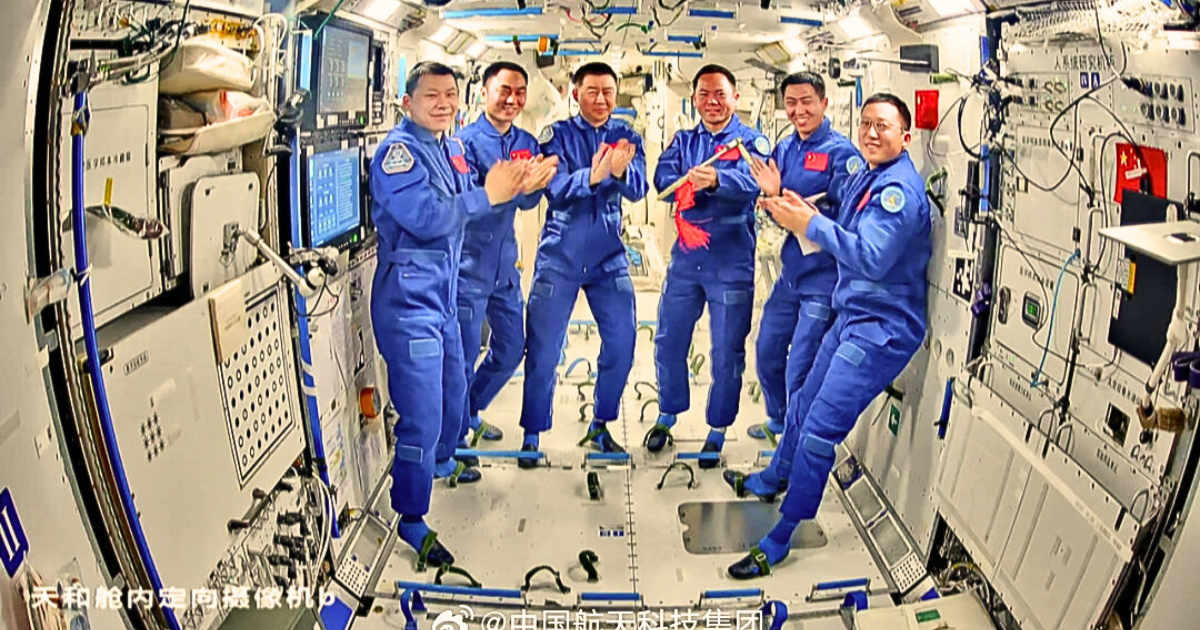
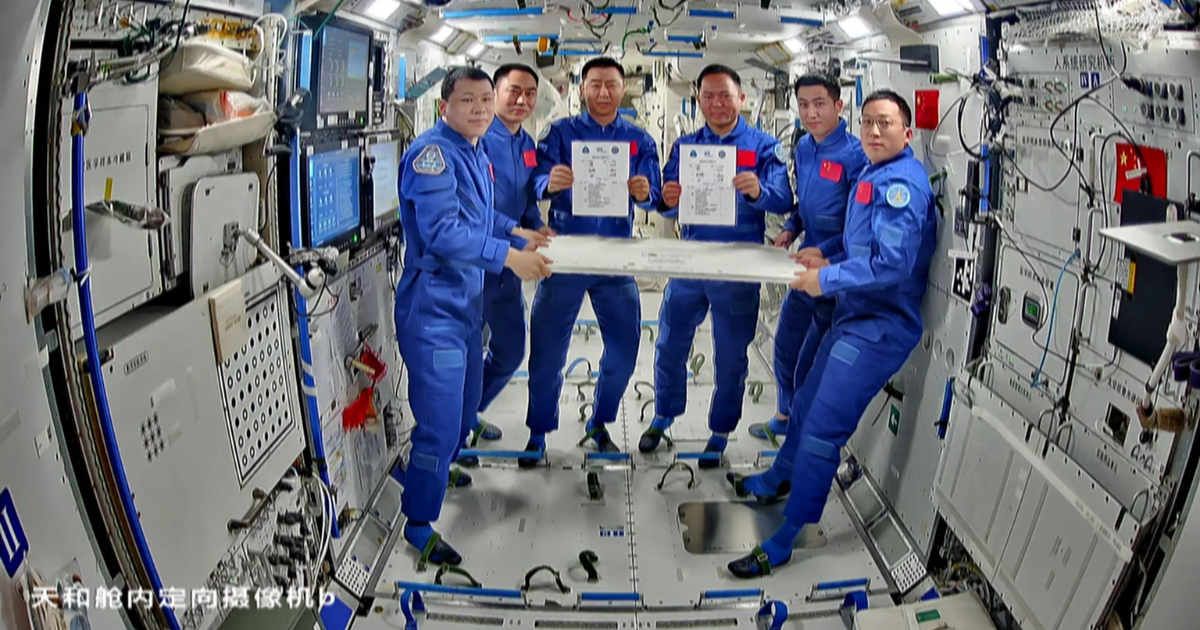
On November 4th, 2025, Beijing time, the Shenzhou-20 and Shenzhou-21 crew underwent a handover ceremony, with the two crews transferring the keys to the Chinese space station(Cover Image Source: Weibo | Manned Spaceflight Speaker)

China's space agency for crewed missions announced Wednesday the immediate postponement of the Shenzhou-20 crewed return mission following a suspected strike by small orbital debris, as per the agency's statement on Weibo, the Chinese social media platform.
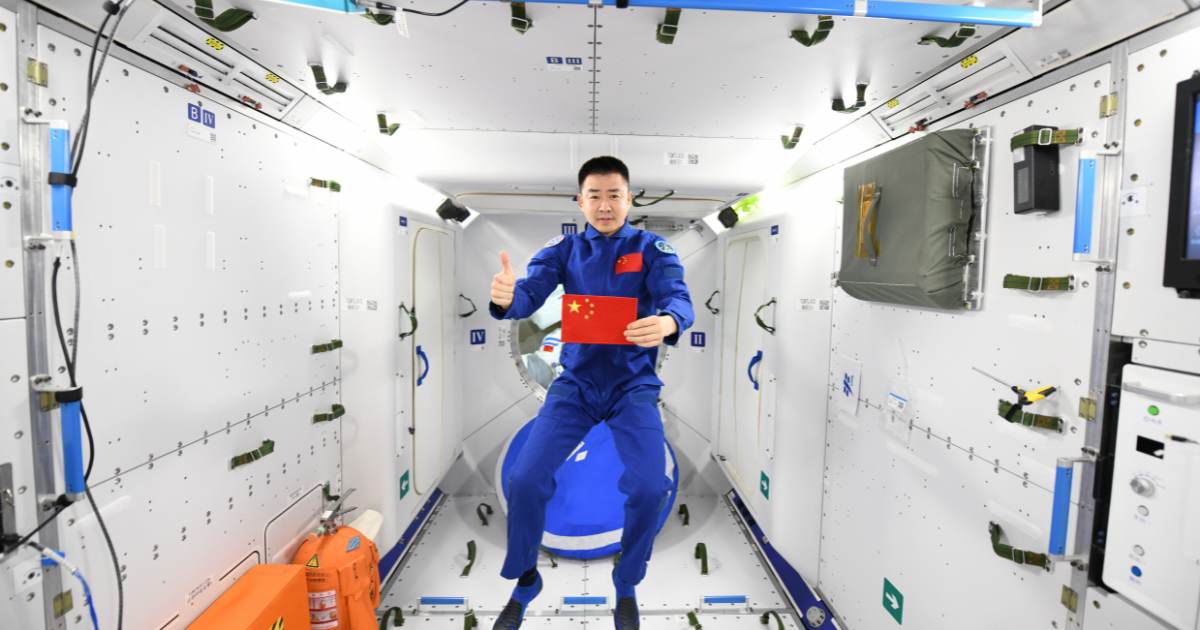
Commander Chen Dong has become the first Chinese astronaut to stay in orbit for over 400 days. (Image Source: Weibo | CNSA)
Commander Chen Dong has become the first Chinese astronaut to stay in orbit for over 400 days. (Image Source: Weibo | Manned Spaceflight Speaker)

The China Manned Space Agency (CMSA) confirmed that the spacecraft, carrying three astronauts, may have sustained damage from a "tiny piece of space debris." An ongoing impact analysis and risk assessment are underway to determine the full extent of the situation before authorizing the descent, per phys.org. The scheduled November 5, Wednesday landing at the Dongfeng landing site in Inner Mongolia has been officially delayed to prioritize the crew's well-being. As of the announcement, no revised return date has been set for astronauts Chen Dong, Chen Zhongrui, and Wang Jie. 
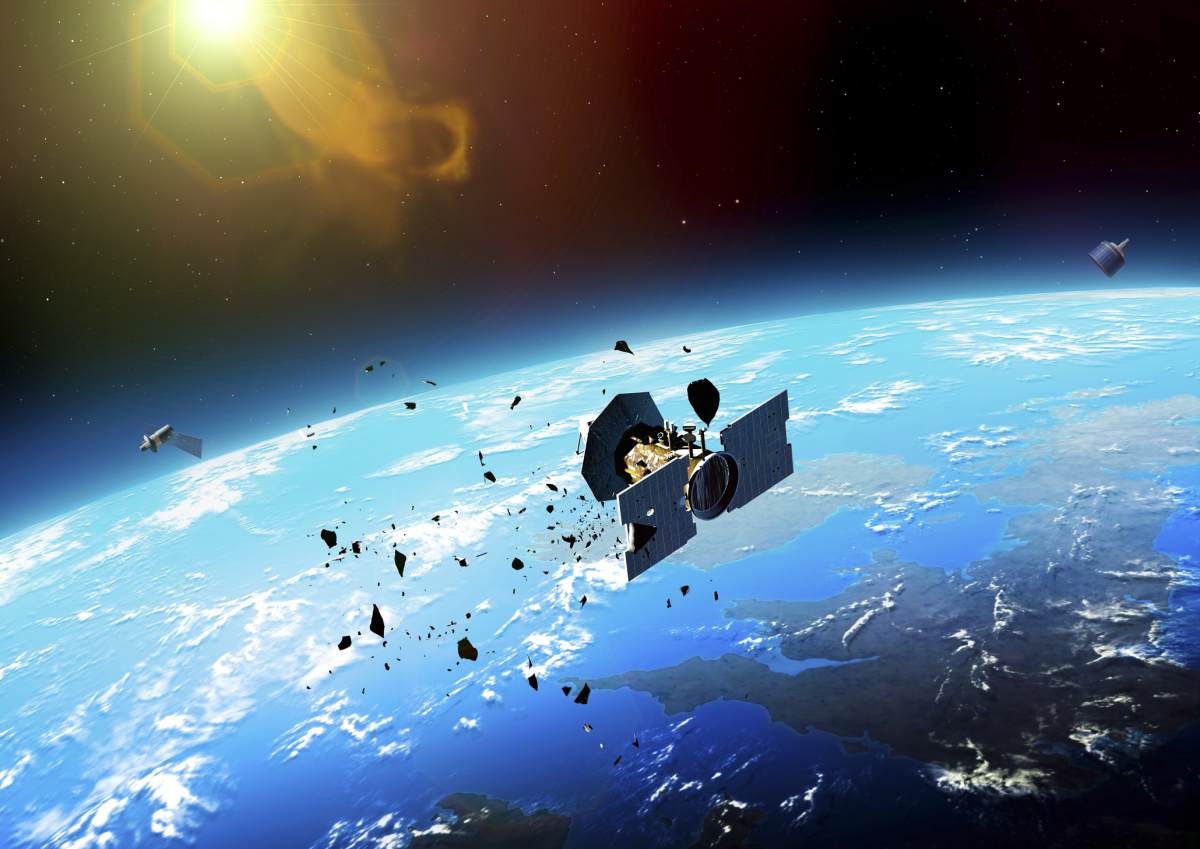
Since the late 1950s, the amount of junk in orbit around the Earth has escalated dramatically (Representative Image Source: Getty | MARK GARLICK/SCIENCE PHOTO LIBRARY)

The unexpected delay means the Shenzhou-20 crew will remain on the Tiangong space station alongside their successors, the Shenzhou-21 crew. The Shenzhou-21 mission, which launched on October 31 to begin its own six-month rotation, arrived just in time for a formal change-of-command ceremony. During this handover, Dong passed command of the station to Zhang Lu, the new commander from the Shenzhou-21 team, according to Space.com

This image, captured at the Beijing Aerospace Control Center on November 1, 2025, shows the crews of the Shenzhou-20 and Shenzhou-21 spaceships communicating with each other. (Image Source: Weibo | China National Space Administration)
This image, captured at the Beijing Aerospace Control Center on November 1, 2025, shows the crews of the Shenzhou-20 and Shenzhou-21 spaceships communicating with each other. (Image Source: Weibo | Manned Spaceflight Speaker)

Both crews are now simultaneously occupying the station while mission controllers assess the risk of debris. During their six-month tenure, the outgoing Shenzhou-20 crew completed four significant spacewalks to install external equipment and debris shielding. They also took time to observe cultural milestones, including celebrating the Mid-Autumn Festival with a special meal aboard the station. Shenzhou-20 marks Dong's third spaceflight, while it is the first for Zhongrui and Jie. This mission is China's ninth crewed flight to Tiangong, the station whose construction began in April 2021 with the launch of the Tianhe core module. Once the technical assessment is complete and a safe departure window is established, Shenzhou-20 will return to Earth, deploying its parachutes for a final landing in the Inner Mongolia Autonomous Region. 

NASA astronaut Scott Kelly is seen floating during a spacewalk on December 21, 2015. (Representative Photo by NASA via Getty Images)

While the focus remains on the delayed return of Shenzhou-20, the follow-on crew, Shenzhou-21, completed its ascent. The spacecraft lifted off late last week, 11:44 p.m. Beijing Time (11:44 a.m. EDT), from the Jiuquan Satellite Launch Center in China's northwest. This mission is notable for its record-breaking crew composition and the inclusion of the nation's first-ever rodent subjects for in-orbit biological experiments. The Shenzhou-21 carried four mice, two male and two female, marking a significant scientific step as they participated in these inaugural space biology tests. 
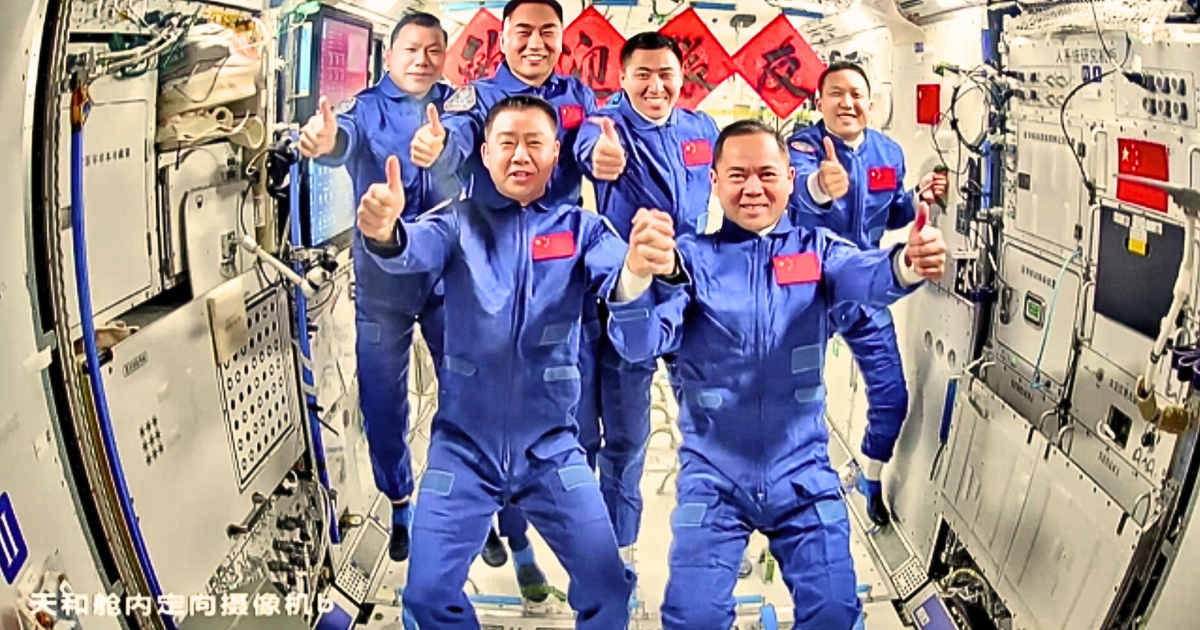
At 4:58 AM Beijing time on November 1, 2025, the Shenzhou-20 astronaut crew, performing their mission in orbit, successfully opened their
At 4:58 AM Beijing time on November 1, 2025, the Shenzhou-20 astronaut crew, performing their mission in orbit, successfully opened their "home door," welcoming the Shenzhou-21 astronaut crew who had traveled a long way to the Chinese space station. (Image Source: Weibo| MSS)

The launch underscores Beijing's accelerated push toward its "space dream," strongly backed by President Xi Jinping, which prioritizes landing a crew on the Moon by 2030 and establishing a permanent lunar base. Reaffirming this commitment on Thursday, the CMSA confirmed that "crucial upcoming tests" involving the Lanyue lunar lander and the Mengzhou manned spacecraft are actively in progress. Shenzhou-21’s deployment was the sixth crewed flight since China's space station entered its application and development phase, bringing the total number of crewed missions in the nation's spaceflight program to 37.

More on Starlust

China plans advanced mission to hit an asteroid with spacecraft and alter its course 
The 'Three-Body Computing Constellation' begins as China sends its first AI supercomputer satellites to orbit

MORE STORIES

The tests, aimed at assessing the safety of lunar landings, will continue till the spring of 2026.
1 day ago
Liftoff is scheduled for 8:30 AM CST (14:30 UTC) from Launch Site One, with the live mission webcast beginning 40 minutes prior to the target time.
1 day ago
The record-breaking run concluded with the Long March 3B rocket launched from the Xichang Satellite Launch Center.
3 days ago
The powerful rocket launched Tuesday at 2:16 p.m. ET from Space Launch Complex 40 at Cape Canaveral Space Force Station.
3 days ago
The new year will bring a plethora of space missions, some more exciting than others.
3 days ago
The spacecraft carrying astronaut Kim, cosmonaut Ryzhikov, and cosmonaut Zubritsky pulled away from the orbiting complex at 8:41 p.m. EST on Monday.
4 days ago
SpaceX confirmed construction is already underway at the Space Launch Complex 37 site, following the approval.
4 days ago
The satellites were onboard a Falcon 9 rocket that launched from Space Launch Complex 40 at the Cape Canaveral Space Force Station.
Dec 3, 2025
NASA astronaut Chris Williams, along with Roscosmos cosmonauts Sergey Kud-Sverchkov and Sergei Mikaev, safely arrived at the ISS.
Nov 28, 2025
The Soyuz MS-28 will carry NASA astronaut Chris Williams and Roscosmos cosmonauts Sergei Mikaev and veteran Sergey Kud-Sverchkov.
Nov 27, 2025