Scientists find evidence a supermassive black hole existed long before the galaxy around it took shape
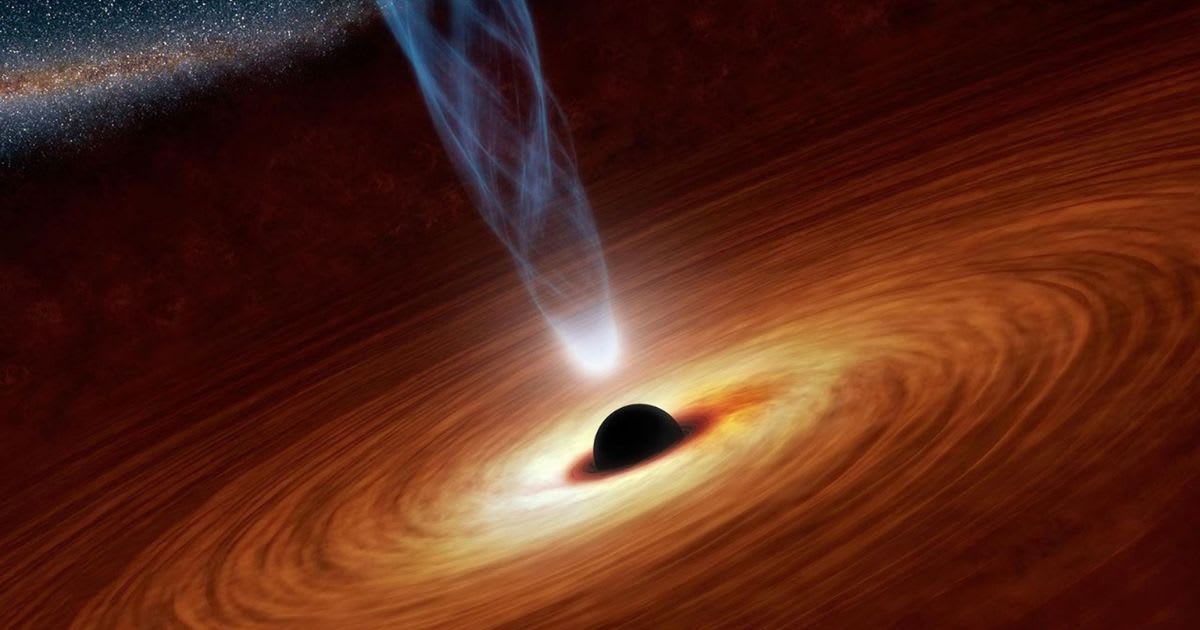
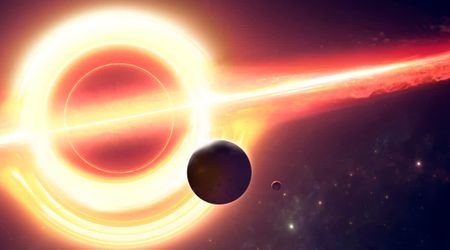
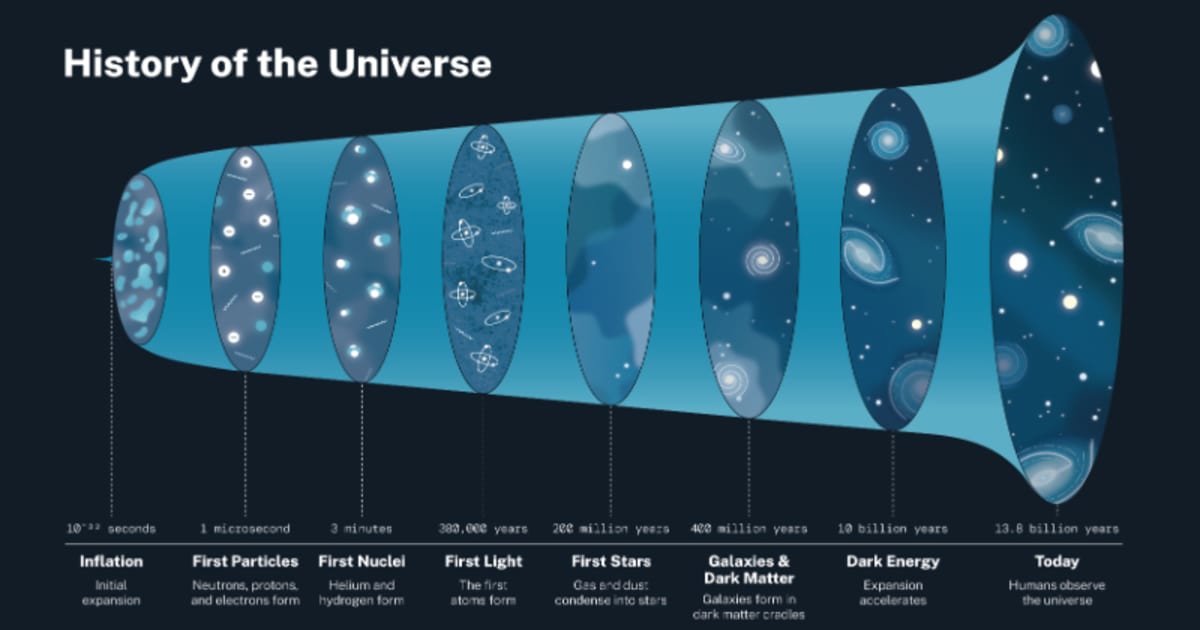
After the Big Bang, particles formed, which gradually coalesced to form clumps of matter that further collapsed under gravity to spawn the first stars. Then the stars created galaxies. Some of those stars, which are much heavier than the Sun, exploded and ended up life as black holes. A new study reveals an astonishing finding that contradicts this sequence of events. The study shows that one supermassive black hole (SMBH) was born long before a galaxy evolved around it. A research team, led by Roberto Maiolino at the University of Cambridge, did this study and reported their results in Monthly Notices of the Royal Astronomical Society.
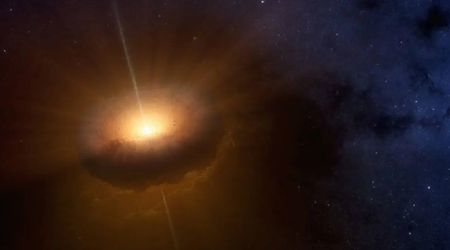
Most large galaxies, including the Milky Way, have supermassive black holes at their centers. Each of these black holes has a mass that is billions of times the mass of the Sun. Existing theory reveals that black holes form through supernova explosions, which happen when massive stars end their lives. After birth, black holes suck in gas from their surrounding accretion disks. But their growth is restricted by a brightness threshold called the “Eddington limit”. Beyond this limit, the outward pressure from radiation becomes stronger than the gravitational tug, and material is spilled into space.
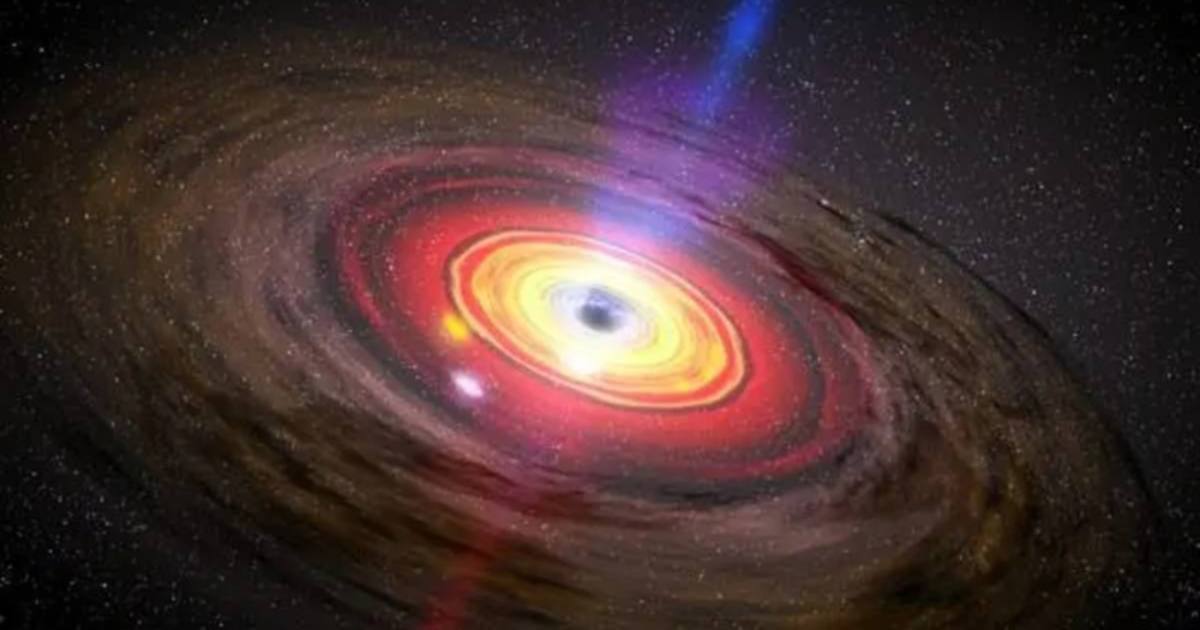
But SMBHs have been observed to pop up just a few hundred million years after the Big Bang. On a cosmic scale, this is too early to form for such massive objects under the restrictions imposed by the Eddington limit. To solve this, the researchers have proposed several scenarios. They said about the formation of small ‘seed’ black holes, which might have gone through rapid growth. There is also a possibility of intermediate-mass black holes merging in dense stellar systems. The third scenario is the formation of SMBH via massive "heavy seed," black holes. This indicates that SMBH formed through the direct collapse of vast clouds of material under the harsh conditions of the early universe or from ‘primordial’ black holes, dense matter that formed after the Big Bang, according to a theory first propounded by physicist Stephen Hawking.
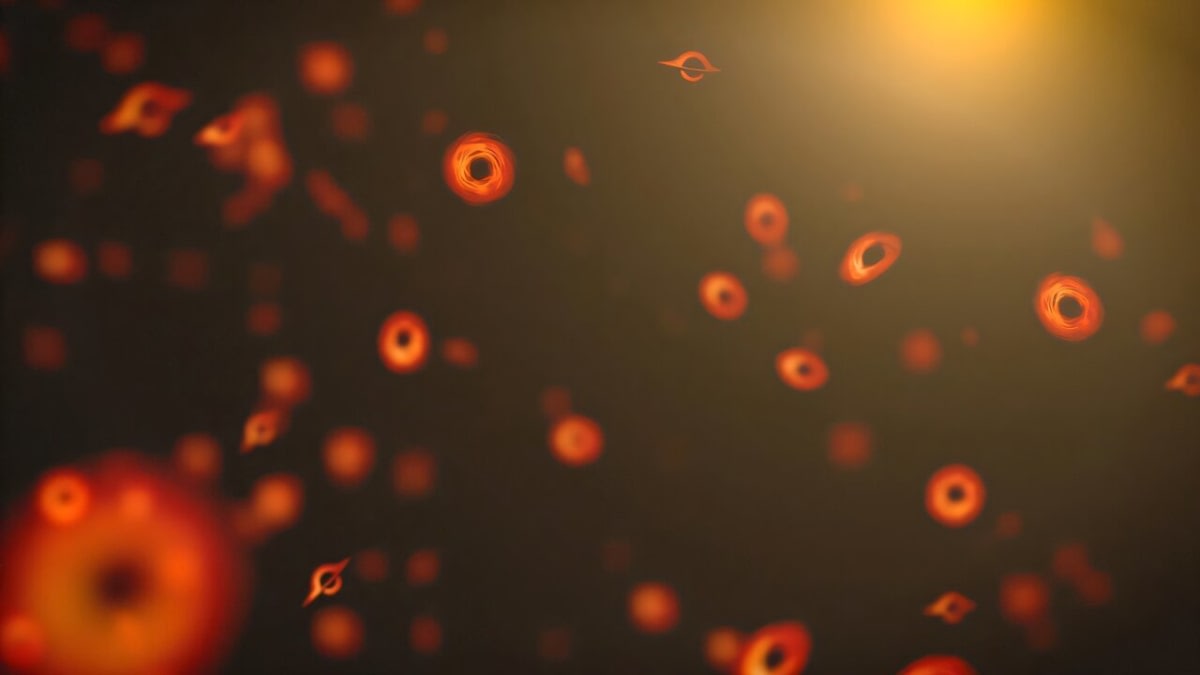
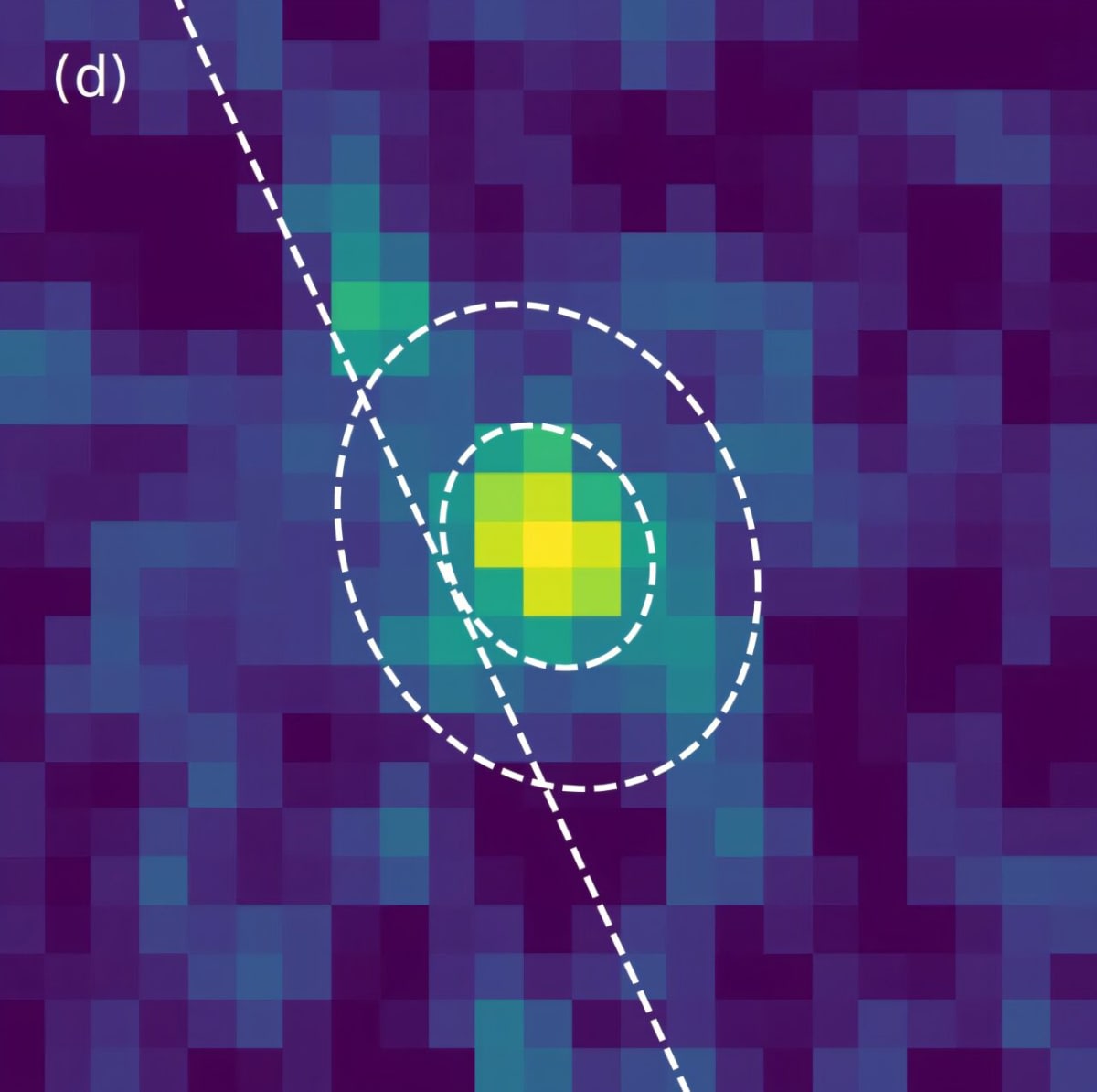
To explore how this could happen in the early universe, the team analyzed QSO1: a SMBH present when the universe was around 700 million years old. It is only visible via light emitted by its accretion disk. QSO1 is found in a class of objects known as Little Red Dots—enigmatic sources first observed by the James Webb Space Telescope. The Red Dots are primordial galaxies that contain newborn SMBHs. But these black holes don’t emit X-rays. The reason for selecting this object is that it is magnified by a foreground galaxy cluster through a process called gravitational lensing.
The researchers studied the black hole more intimately using a combination of high spatial and spectral resolution. This gave them clues about its mass. The same data revealed information about emissions from ionized hydrogen and oxygen, revealing the chemical composition of the gas surrounding the black hole. After the Big Bang, the first atoms that formed were entirely of hydrogen, helium and traces of lithium. But heavier elements can only form through nuclear fusion inside the fiery cauldron of stars. The researchers found QSO1 is embedded in an environment where the abundance of oxygen relative to hydrogen is less than 1% of the value measured in the Sun.
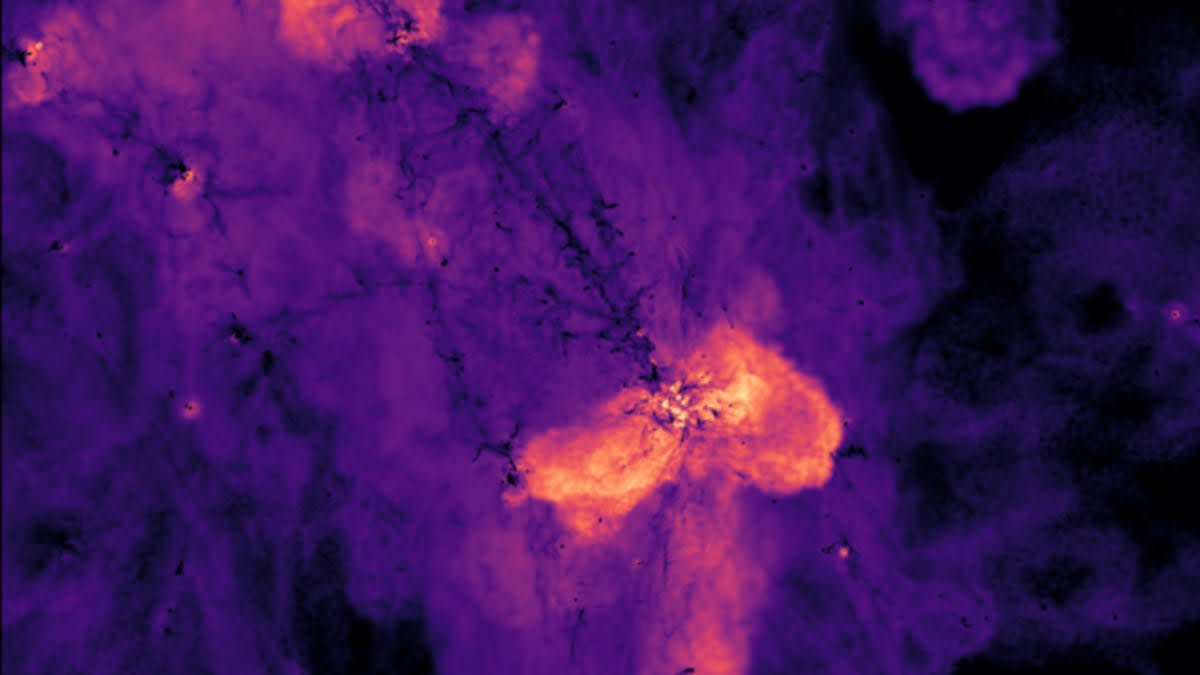
This suggests that such an environment can only prevail in the early universe. This means very few stars were around QSO1, indicating that the black hole is more massive than the celestial system around it. This points to an environment where the black hole formed before the formation of the bulk of its galaxy. Since the black hole is very massive at birth, this finding most closely aligns with the "heavy seed" scenario.
More on Starlust
A new simulation shows what happens when a supermassive black hole tears a star apart
Were we born from exploding primordial black holes? New study suggests so