Astronomers spot rare cosmic blast that may have completely erased a giant star
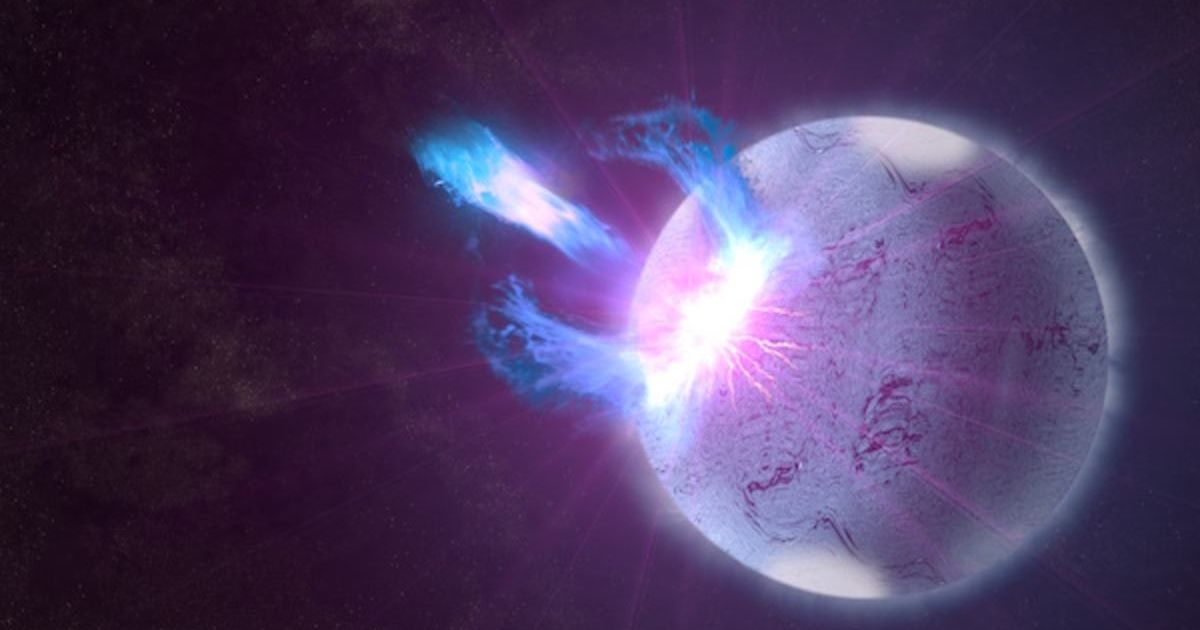
Astronomers might have just come across one of the strongest pieces of evidence of a rare ‘pair instability’ supernova—a catastrophic explosion that leads to the complete destruction of some of the most massive stars in the universe. What's curious, however, is that when such a phenomenon occurs, it usually leaves behind no remnants. A paper summing up the properties of the rare occurrence was posted on the arXiv preprint server on May 15, 2026.
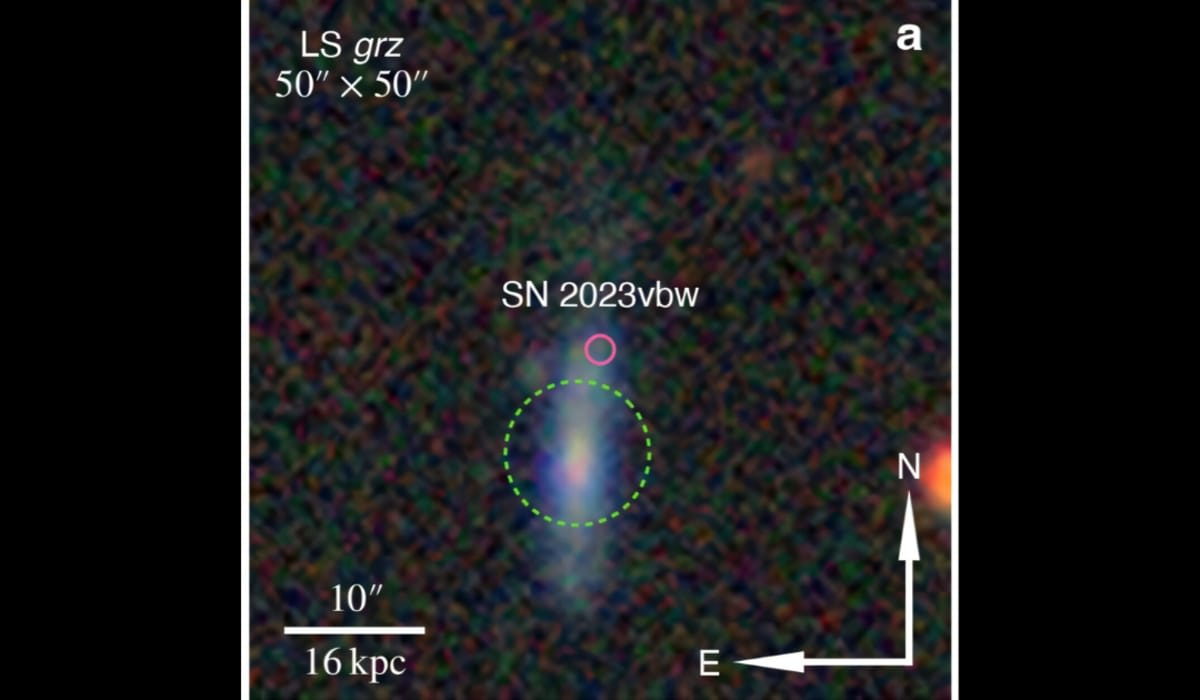
It was the Zwicky Transient Facility that had first detected the phenomenon, dubbed SN2023vbw, back in October 2023 on the edge of a small, metal-poor dwarf galaxy located approximately 1.3 billion light-years away from the Earth. At first, it was classified as a Type II supernova—one that is created when a massive star depletes its nuclear fuel and crumbles under gravity, triggering an explosion. However, further studies revealed that a lot of SN 2023vbw’s characteristics did not match the typical behavior of a Type II supernova. And so, a team of researchers modeled the SN 2023vbw to track down its true nature. One of the biggest hints that the scientists got, which made them believe that something unusual was occurring, was the behavior of its light curve. Unlike a typical Type II supernova’s brightness, which has a plateau-like rise after an initial cooling phase, SN 2023vbw gradually brightened and reached peak luminosity at around 190 days.

Interestingly, the peak brightness had a rapid decline between the 190-day and 230-day marks. And as it faded away, the curve of the explosion transitioned into a gradually declining plateau, which is referred to as a ‘tail.’ What intrigued the researchers is that the total radiated energy came to around 3 × 10⁵⁰ ergs, which is 10x more than a usual Type II supernova. During the rise to peak brightness, the explosion maintained an almost constant temperature despite the outer shell expanding continuously. Such a phenomenon would require a sustained, internal heating source, a characteristic differing from that of a typical Type II supernova.

As the supernova faded, forbidden emission lines gradually emerged. Additionally, in the tail phase, the hydrogen lines developed a complex, multicomponent structure, which also included a redshifted component. This suggested that the ejecta were interacting with a disk-like circumstellar shell that the star had expelled prior to its death. As the team modeled the light curve, it suggested that the likely source of the explosion is a blue supergiant star. Delving deeper, the team found out that the morphology of the curve bears a strong resemblance to that of SN 1987A. This is a Type II supernova that also originated from a compact blue supergiant progenitor. But in the case of the SN 2023vbw, it exhibited a significantly higher brightness alongside a longer timescale, which suggests a significantly more massive progenitor.
The study also estimated the ejecta mass to be between 170 and 350 solar masses. The explosion also released kinetic energy, which is roughly 60-130 times more than the estimated upper limit of a conventional iron-core collapse supernova. Additionally, the host environment’s low metallicity, which is roughly one-tenth of the Sun’s, does align with the theoretical expectations that define a pair-instability supernova. The team also suggested that the blue supergiant progenitor might be the result of the merger of two massive stars in a binary system. Such a formation channel would naturally explain the dense, disk-like circumstellar shell, which interacted with the ejecta. That being said, the researchers have stated that their paper still has some unanswered questions. For example, it is not known for sure whether very massive stars conclude their lives as red or blue supergiants. Moreover, even if they do, the exact timeline for the merger still remains under wraps.
More on Starlust
Astronomers unveil stunning first image of rare dead star that had two massive explosions