Scientists have found a way to weigh newborn planets—the key is to read 'between the rings'
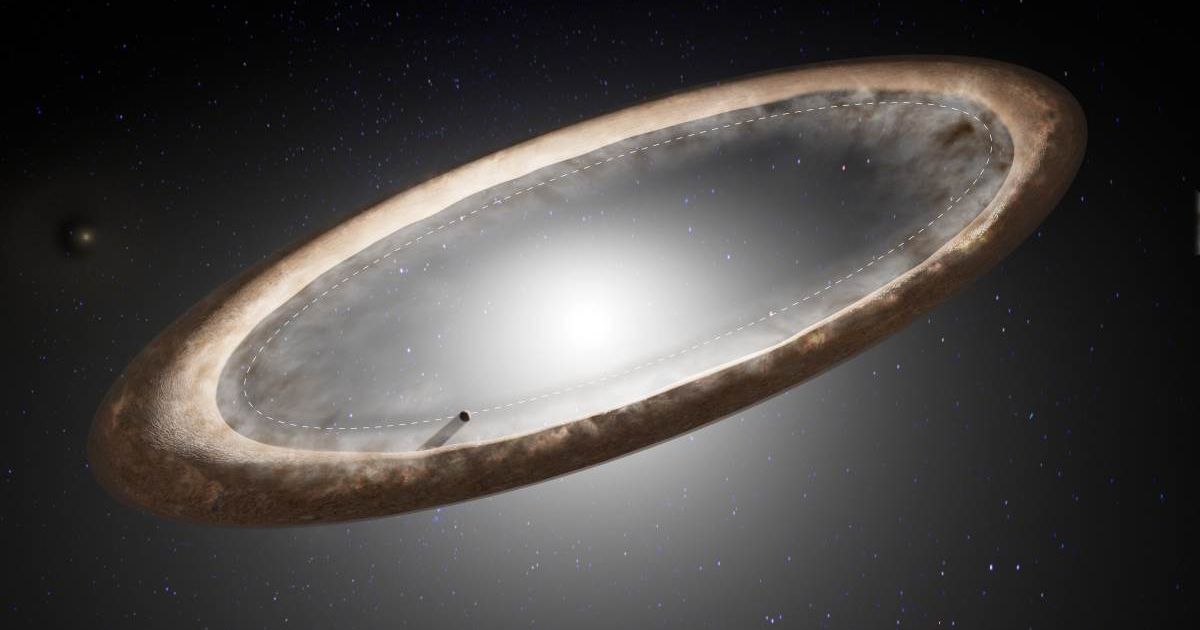
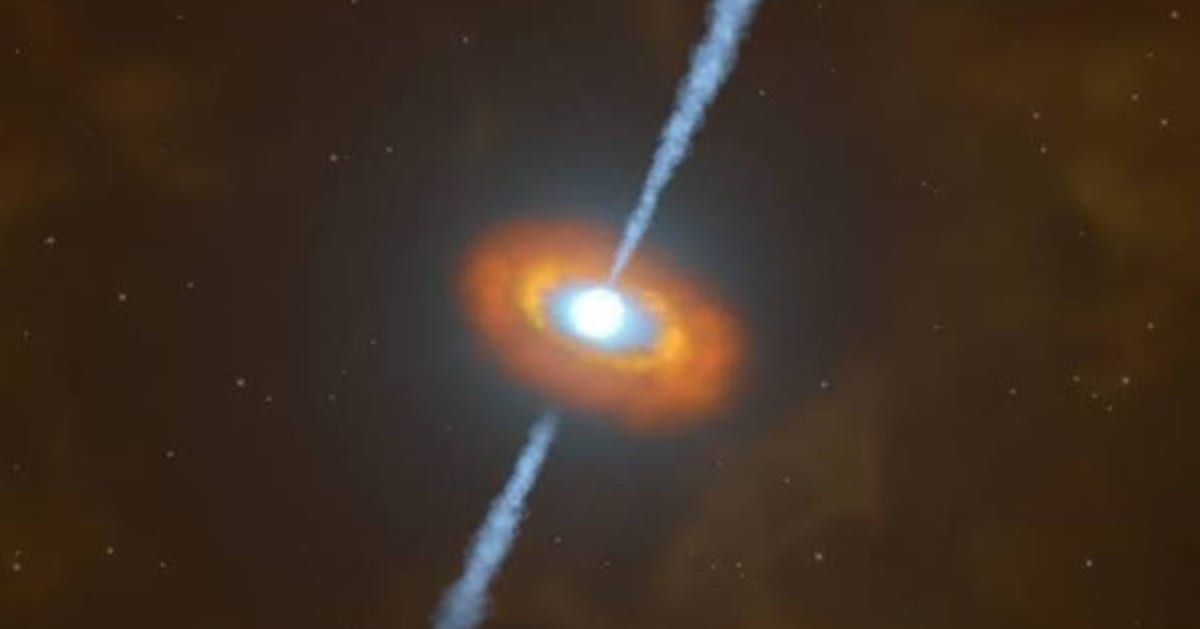
For years, astronomers have known that forming planets leave behind bright rings of dust around their young stars. But those rings could only confirm that a planet was there. This limitation meant that any planet that was too faint or too deeply buried to photograph directly was essentially out of reach for detailed examination. A new study published on May 28 in The Astrophysical Journal, however, changes that. Researchers from the University of Warwick, MIT, and McMaster University have now figured out a way to calculate the mass of hidden planets from the characteristics of these rings. "These bright rings are not just beautiful structures—they are essentially planetary fingerprints," said lead author Amena Faruqi, a PhD student at the Astronomy and Astrophysics Group, University of Warwick, in a statement.
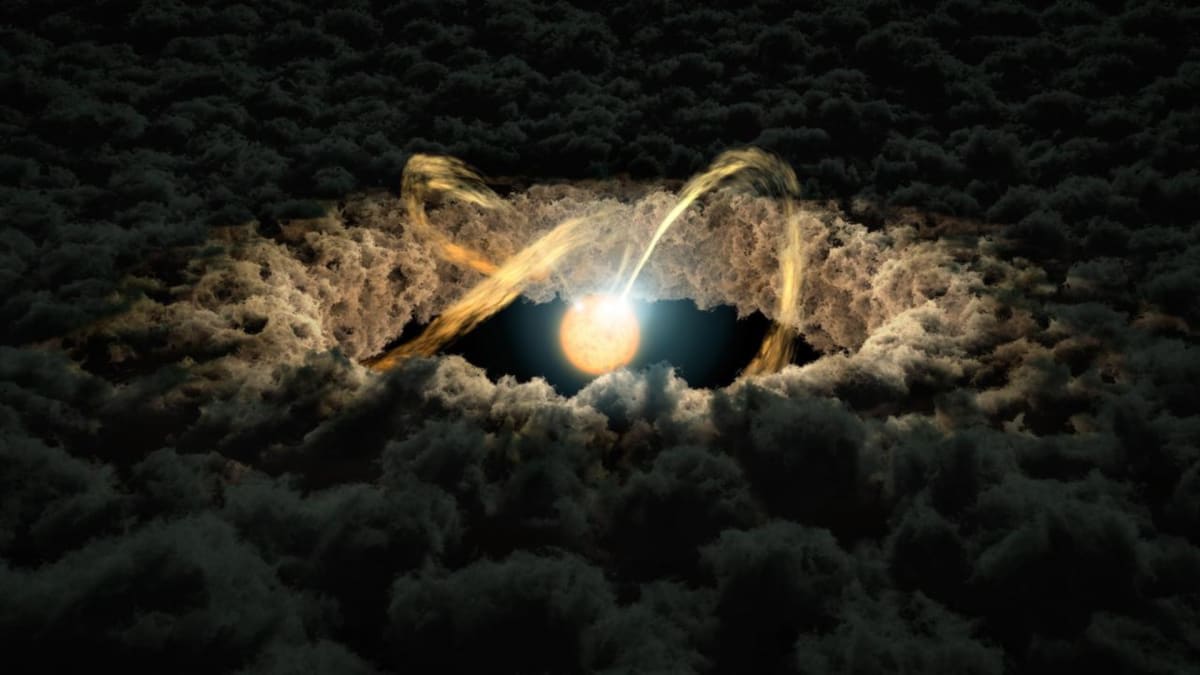
Commenting on the core finding, Faruqi added, "We've long understood that the rings could be created from concentrated dust that piles up just beyond the orbit of young, embedded planets, but we've been so far unable to link features of these rings to planet masses. By reading 'between the rings,' we have now found a way to reconstruct the masses of the planets that create the rings, even when those planets are too faint or too embedded to observe directly."
The method that makes it work
For this study, the team ran computer simulations to map out how planets of different masses shape the rings they create. They found that the width of a dust ring, the location of its brightest point, and the mass of dust contained in that ring can be used to find the mass of the planet that produced it. For instance, the location of a ring's brightest point and the mass of its host planet were found to be connected by a rather simple mathematical relationship—one that holds irrespective of the observation wavelength and the size of the dust grains. Now, this is good news. That's because it means that detailed knowledge of disk conditions is not required to apply this method to existing observations.
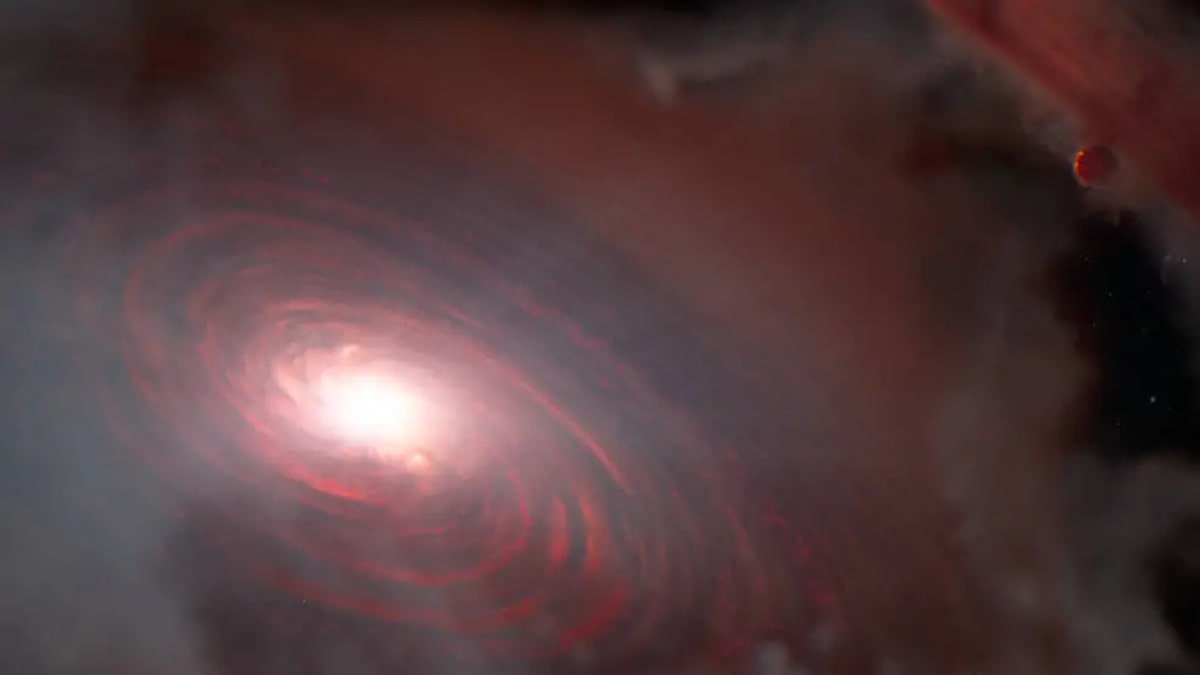
To verify the method, the team applied it to PDS 70, a star system 370 light-years from Earth, where planets inside their disks have been imaged directly. Their ring-based estimate for the planet PDS 70 c came in at roughly 7.5 times the mass of Jupiter, in line with existing estimates. Speaking on the merits of the research, co-author Dr. Jessica Speedie, a Postdoctoral Fellow at MIT, said, "One of the strengths of this work is that it doesn't stay in the realm of theory; we've been able to take these simulation results and apply them directly to real observed systems, giving us confidence that these methods are genuinely ready to be applied widely as soon as possible."
What’s next?
"Another striking result of the simulations is that, in typical discs, more massive forming planets can trap as much as 20 times the mass of Earth of dust within these rings," noted senior co-author Ralph Pudritz, a Professor Emeritus at the Department of Physics and Astronomy, McMaster University. "This confirms ALMA observations—but raises the question of why new planets have not been detected in the trapped dust and pebbles of the ring. Our results suggest that the dust is sufficiently abundant and concentrated enough to potentially kick off planet formation. This is an important insight that will initiate further observations and theory."
This work could eventually help explain how our own solar system took shape roughly 4.6 billion years ago. Senior co-author Dr. Farzana Meru, a Reader at the Department of Physics in the University of Warwick, said, "This work gives observers a new practical toolkit for connecting what we see in dust rings directly to the masses of the planets creating them. What excites me most is the timing. With ALMA delivering increasingly detailed disk images and future facilities on the horizon, there has never been a better moment to develop these methods. Combining our dust-based diagnostics with gas pressure observations will open up a powerful new window onto the hidden planets shaping these disks and the diverse planetary systems they will go on to form."
More on Starlust
James Webb Space Telescope has found a stellar bar that should not exist
Astrophotographer captures stunning image of Horsehead Nebula after over 115 hours of observation