NASA's Hubble provides spectacular views of a barred spiral galaxy 380 million light-years away
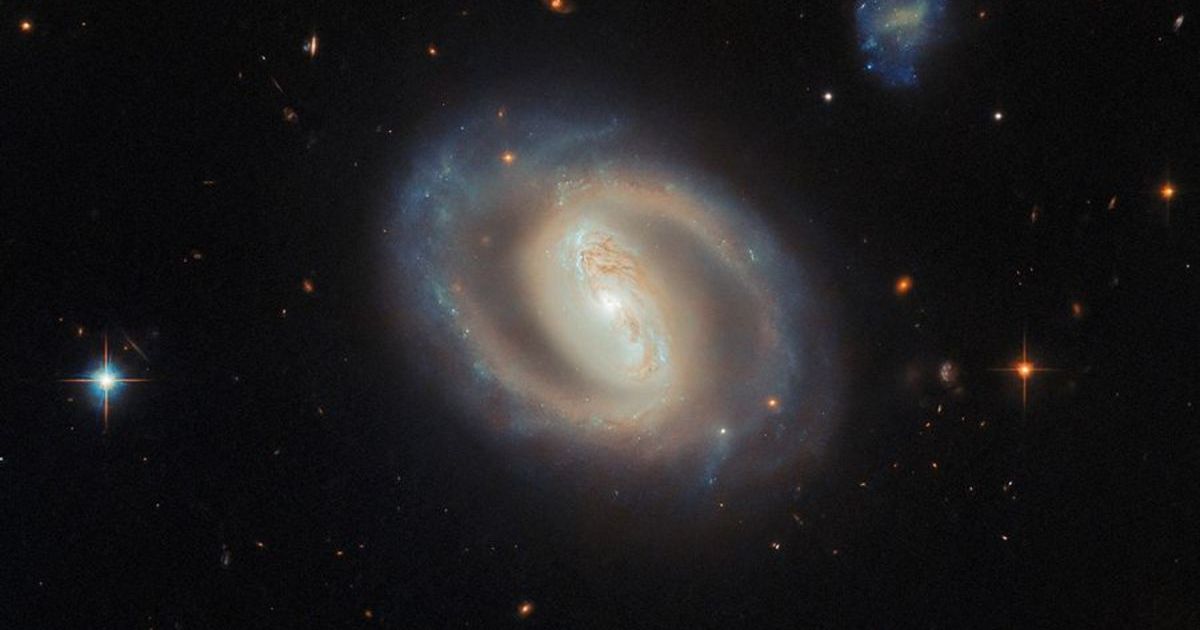
The Hubble Space Telescope has captured spectacular images of a barred spiral galaxy called IC 486, according to a press release by NASA. It is located on the edge of the constellation Gemini (the Twins), around 380 million light-years from Earth. The galaxy has a bar-shaped central region from which its spiral arms sprout and then wrap around the core, forming a ring-like pattern. Hubble’s sharp vision detects subtle color variations across the galaxy. Its center, dominated by old stars, is pale and luminous. Faint bluish regions that surround the center contain pockets of recent star formation. Wispy dust threads through the galaxy’s structure, gently dimming light and tracing regions of increased molecular gas – the birthplace of stars.
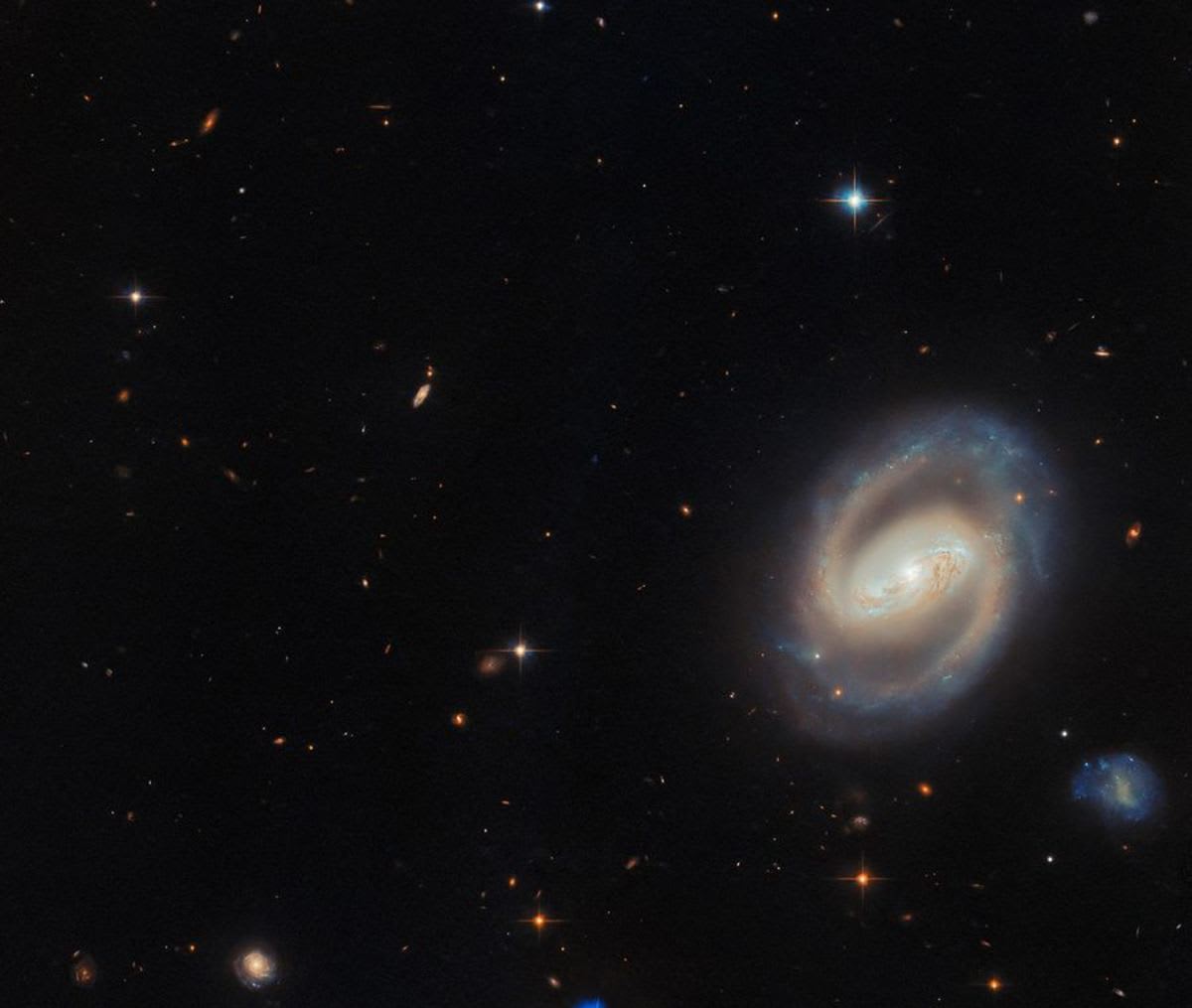
The galaxy’s center is incredibly bright, giving off a white glow. Such brightness outshines the starlight around it. The bright light emanates from IC 486’s active galactic nucleus (AGN), which is powered by a supermassive black hole. The black hole’s mass is more than 100 million times the mass of the Sun. A supermassive black hole sits at the center of every large galaxy. But some of these black holes swallow matter and light ravenously, forming swirling accretion disks of gas and dust. In the accretion disks, particles collide with each other, generating heat and intense radiation, including X-rays. Such radiation lights up and outshines the rest of the galaxy. This type of galaxy is known as an active galaxy, with an AGN in its center.

Astronomers use Hubble’s electronic gaze to scan nearby active galaxies like IC 486 and capture detailed, high-quality images of their central black holes and stars. By combining Hubble’s sharp imaging capabilities with large, comprehensive samples, they carry out exhaustive studies of how stars, gas, dust, and black holes interact in galaxy centers. One of the main objectives of this work is to learn how galaxies grow by linking large-scale structures, such as bars and spiral arms, to active galactic nuclei. For this, research teams take the help of experts as well as citizen science through Galaxy Zoo. This is a project whose database will ultimately be released to the public. Researchers are also using Hubble images to test how large language models and other machine learning techniques can reproduce classification done by humans. This will offer a smart way to scale galaxy morphology studies to the largest surveys that telescopes like Euclid and the Vera Rubin Observatory are performing and NASA’s Roman Grace Telescope will do.

The image of IC 486 is peppered with distant background galaxies and stars. Some stars twinkle against the backdrop of reddish smudges that are distant galaxies. At first glance, IC 486 looks calm, but it is dynamic and evolving. As the galaxy continues to evolve, new stars form, age, and die, shaping and contributing to the ongoing galactic life in the universe.
More on Starlust
Scientists have found the most 'pristine' star in the universe—and it's right here in the Milky Way
Andromeda is headed toward the Milky Way, while other galaxies are moving away—and now we know why