NASA's SPHEREx observes ice on dust particles in a turbulent star-forming region of the Milky Way
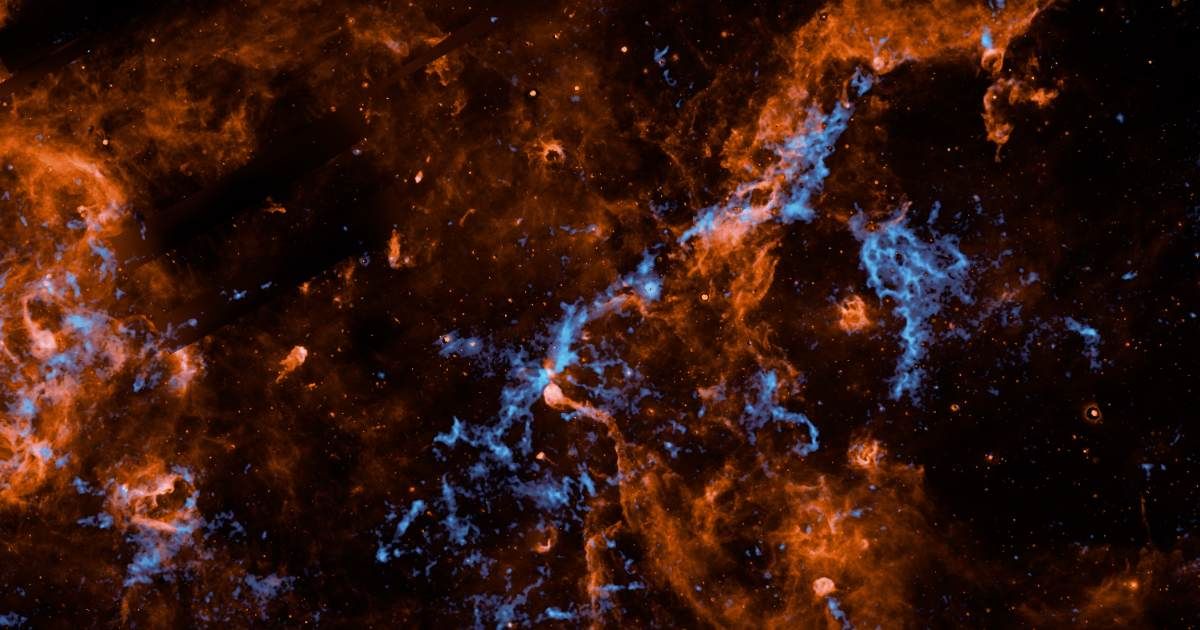
Infrared maps composed from observations by NASA's SPHEREx mission of Cygnus X, one of the most active and turbulent star-forming regions of our galaxy, have revealed a correlation between dust and ice. According to the study published on April 15, 2026, the most dusty regions of this region were also observed to have the highest ice densities, underpinning the hypothesis that ice forms on the surfaces of microscopic dust particles. According to the Jet Propulsion Laboratory, which manages the SPHEREx mission, the dust particles in question are no larger than the smoke particles released when a candle is lit. The study also reveals that the presence of dust acts as a shield for the ice against ultraviolet light from newly formed stars.

The distribution of icy molecules within the mapped region was found to resemble complex wisps described by the researchers as ‘filamentary spatial distributions.' Widefield Infrared Spectral Mapping was used to find these chemical signatures of the molecules, which were also accompanied by polycyclic aromatic hydrocarbons. Observations of Cygnus X also included that of the North American nebula. The maps generated by SPHEREx were ‘the largest of their type ever compiled in the near-infrared,' per the authors of the research paper. The wavelengths of light used to capture these maps are known to be in the range of 0.75–5 μm. Water ice can be detected using a 3 μm wavelength, while carbon dioxide is detected at 4.27 μm, and 4.67 μm is the wavelength used for detecting carbon monoxide. Similarly, the wavelength associated with the detection of the aforementioned hydrocarbons is 3.28 μm.
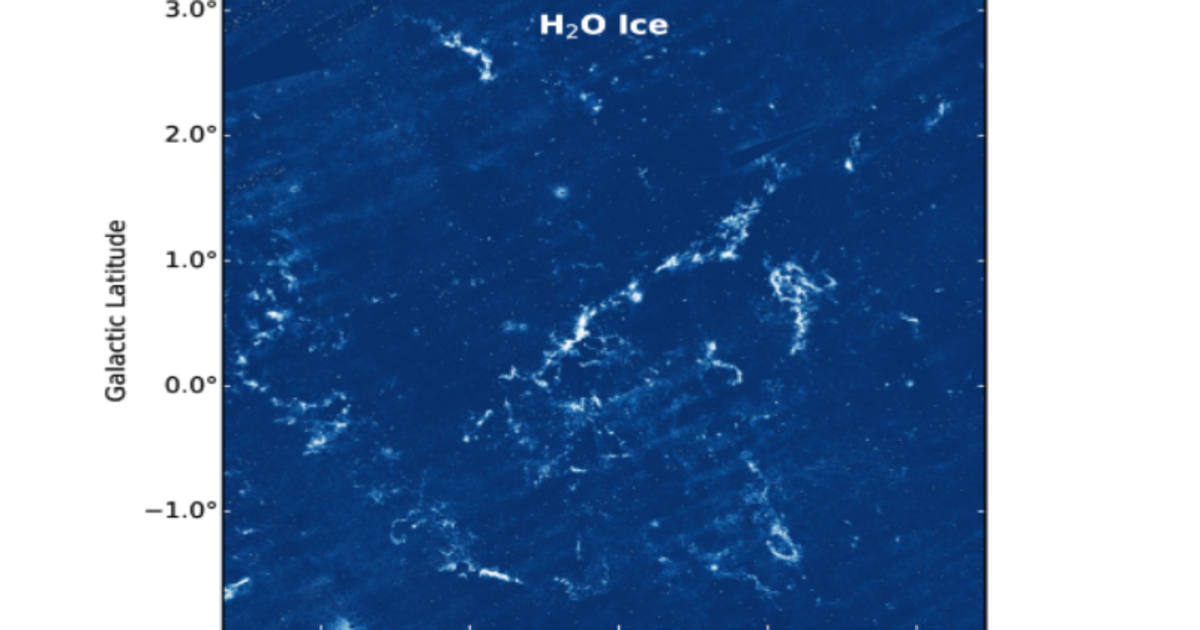
These are known as the absorption wavelengths, as the presence of the respective molecules means light in these wavelengths is reflected the least. This lets scientists know about the presence of certain molecules. Densities and compositions within the columns of the ice distribution can also be characterized by scientists using the methods described in the study. SPHEREx’s presence in space also means that the spectral features at wavelengths greater than 2.5 μm can be observed, where most of the absorption wavelengths of the molecules being detected are. This is something that is made difficult from Earth-based observations due to high thermal backgrounds from the sky and other telescopes, as well as the atmosphere.
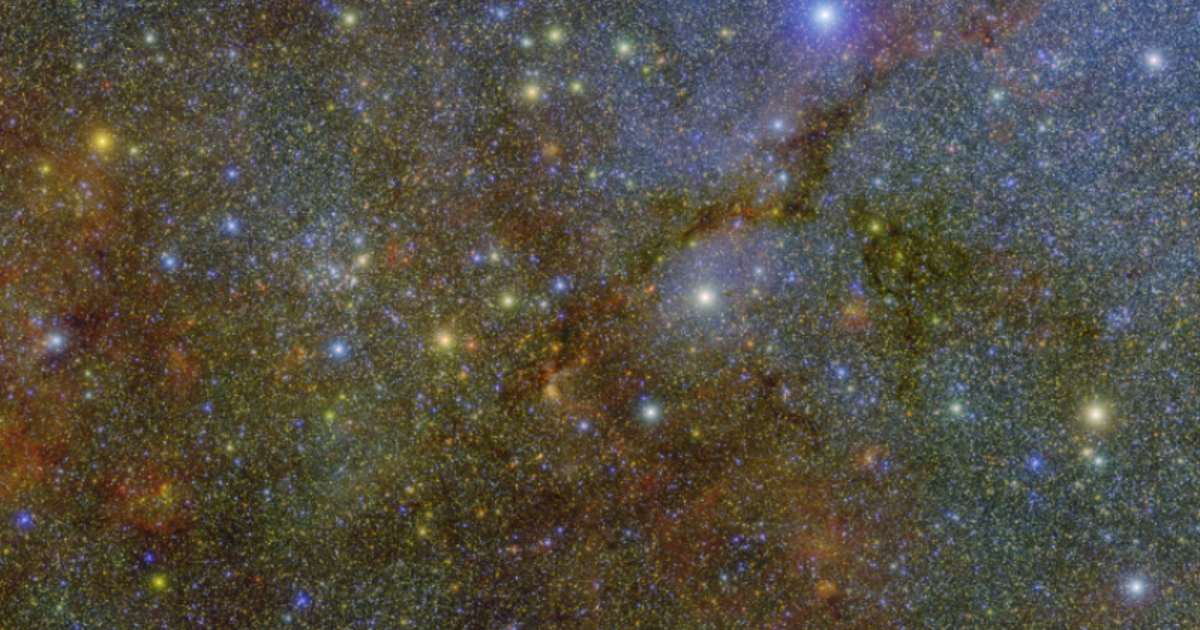
The research paper also featured a second image of Cygnus X and surrounding regions that contains three different colors, which are blue, green, and red. SPHEREx images that are a composite of different wavelengths are assigned different colors so as to allow researchers to understand the composition of the subjects being observed. The way the observatory works is by combining six images that are created with infrared light, with each exposure containing up to 102 colors. This vast array of wavelengths allowed the probe to capture the entire sky in as many colors late last year.
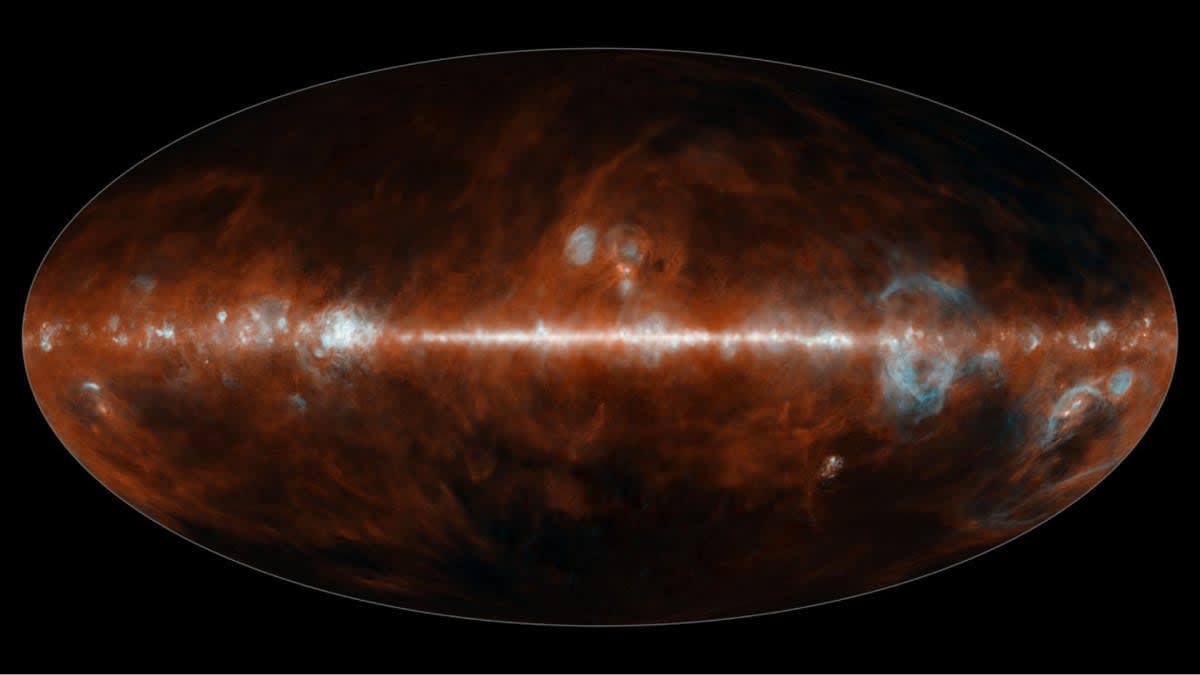
SPHEREx is an acronym for Spectro-Photometer for the History of the Universe, Epoch of Reionization, and Ices Explorer. What makes this mission stand out from space telescopes is its higher spectral resolution, as well as the ability to map the skies in infrared. While other space telescopes, like the James Webb Space Telescope, have also previously also found dry ice, carbon monoxide, and water ice, this mission is dedicated to detecting these molecules over vast expanses of the sky, previously reported to be about 20 times the width of the full Moon. Besides mapping the universe and helping scientists understand the evolution of the universe, SPHEREx also captured the much-documented 3I/ATLAS comet, revealing many unknown aspects of its existence as well.
More on Starlust
NASA’s SPHEREx images 3I/ATLAS again, detects organic molecules in the interstellar comet
SPHEREx images show a marked difference in 3I/ATLAS' activity before and after perihelion