A new simulation shows what happens when a supermassive black hole tears a star apart
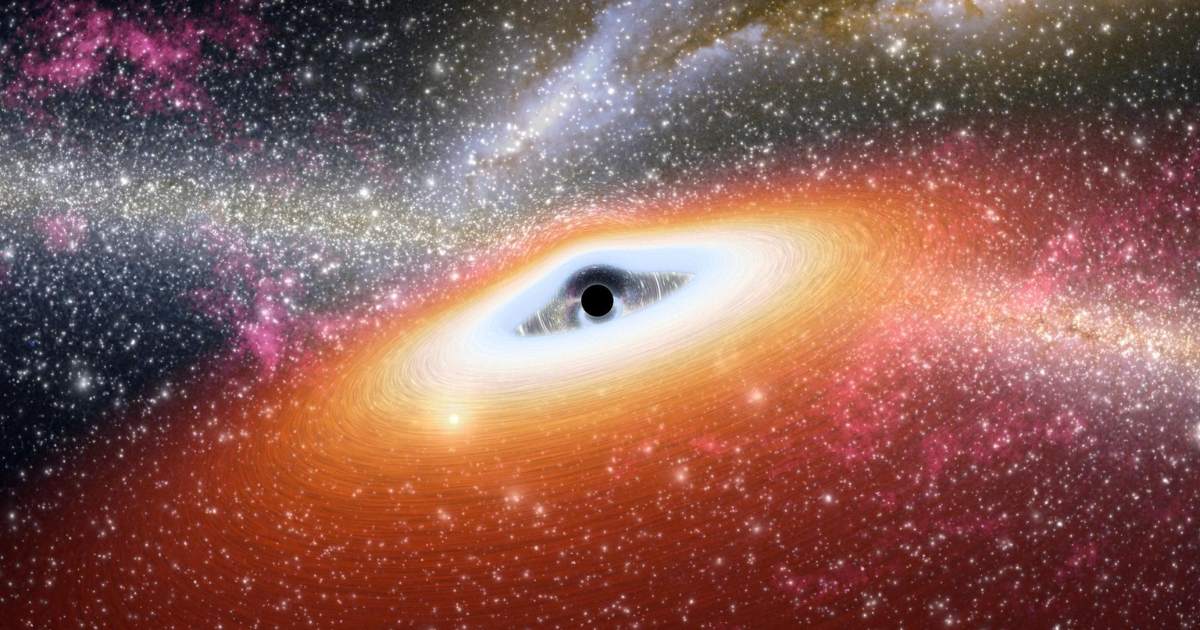
Supermassive black holes lurk at the centers of most large galaxies. Weighing millions or even billions of times the mass of the Sun, they are some of the most mysterious objects in the universe. These black holes don’t emit light. Their presence can be felt indirectly through their effects on nearby stars and gas. But what happens when a star flies too close to a black hole? A new study, published in The Astrophysical Journal Letters, has the answer.

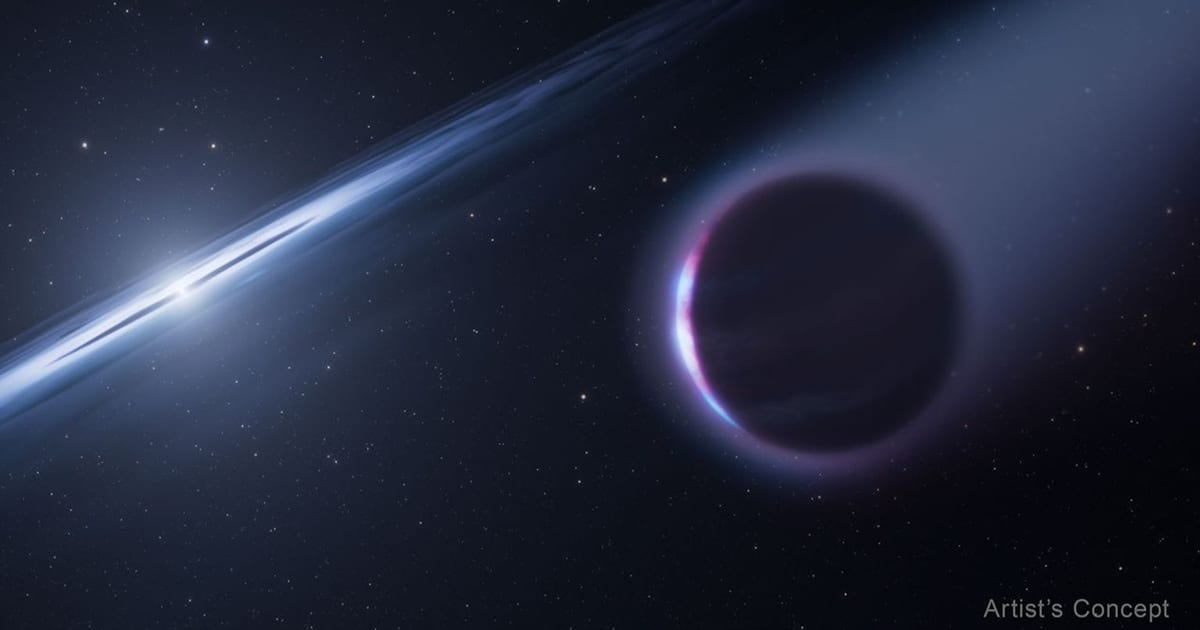
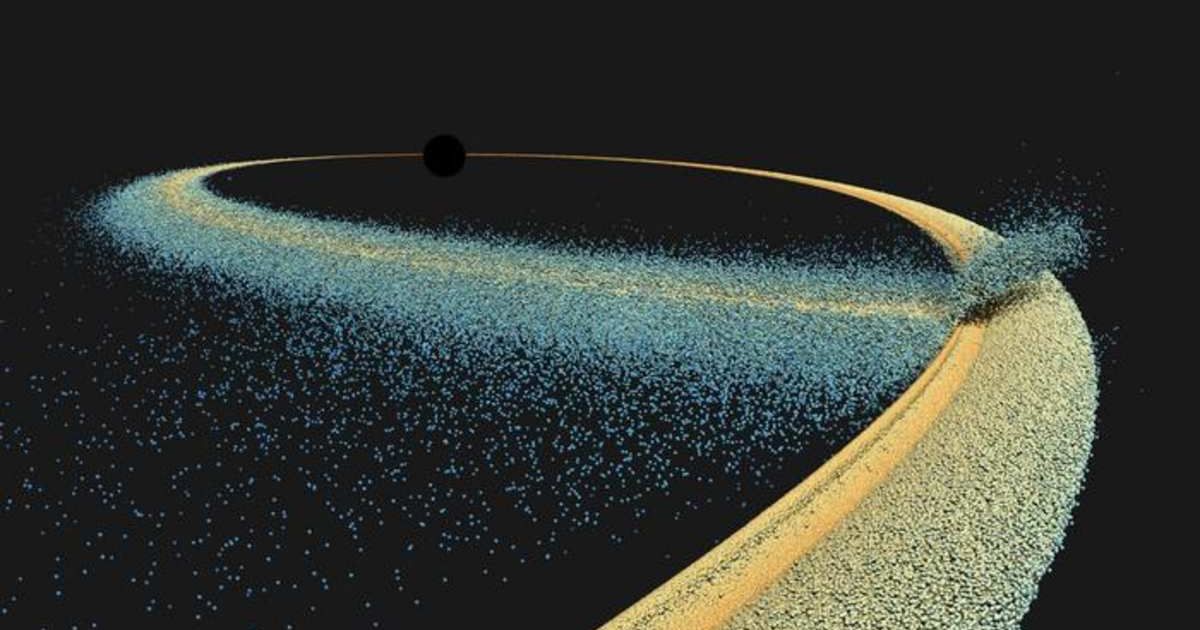
Instead of devouring a star in a single gulp, a supermassive black hole’s immense gravity tears it apart into a long, thin debris stream that wraps around the black hole. Parts of the debris stream then crash into one another while spiraling into the black hole. The collision and subsequent entry into the black hole generate intense radiation that can briefly outshine the entire galaxy in which the event takes place.

Such events are called tidal disruption events, or TDEs. TDEs give a unique opportunity to astronomers to study supermassive black holes like Sagittarius A*. “We can study tidal disruption events to learn more about black holes hidden from view,” says co-author Eric Coughlin, assistant professor of physics in Syracuse University’s (SU) College of Arts and Sciences, per a press release by SU. TDEs generate massive flares, which astronomers can read out like a fingerprint. Measuring how a flare forms, rises, peaks, and then dies can give clues about a black hole’s mass and its spin. But it is difficult to simulate a flare. This is where the simulation developed by the team led by Lucio Mayer at the University of Zurich gave the desired breakthrough. Using a methodology called smooth particle hydrodynamics, the team's study broke a star into billions of particles to simulate its gas in detail. This gave them an excellent view of what happens after a star is minced by a black hole.

The new simulation revealed that three properties of a supermassive black hole and the star’s orbit can exert effects on the outcome of a TDE. One is the black hole’s mass, and the others are how fast it spins and the orientation of that spin relative to the incoming debris. These properties determine when the flare begins, its brightness, and its duration.
The study reveals that each TDE has its distinct features. “Some rise quickly and fade fast. Others unfold more slowly. Some are brighter, some dimmer. Some behave in ways that are still hard to classify,” notes the release. Astronomers use TDEs to shed light on the lives of supermassive black holes whose true identity and characteristics otherwise remain hidden. Better simulations, coupled with powerful telescopes, help them learn more about these elusive celestial monsters.
More on Starlust
Scientists discover three types of binary black hole mergers in the universe—here's what they are
Were we born from exploding primordial black holes? New study suggests so