James Webb Space Telescope has found a stellar bar that should not exist
![Barred spiral galaxy NGC 1300 as imaged by the Hubble Space Telescope. [Representative Cover Image Source: NASA/ESA/The Hubble Heritage Team (STScI/AURA); Acknowledgement: P.Knezek (WIYN)]](https://d3hedi16gruj5j.cloudfront.net/805256/uploads/c7d06340-5d91-11f1-8936-1f4df60e5445_1200_630.jpeg)
Using the James Webb Space Telescope, astronomers have discovered a stellar bar in GN20, which is a massive galaxy spotted only about 1.5 billion years following the Big Bang. While these bars—elongated and rigid structures of stars and gas—are pretty common in the nearby universe, the time period to which the bar in question belongs should not have let it to form in the first place. The researchers have reported their findings in a paper, which was submitted to the arXiv preprint server on May 14, 2026.
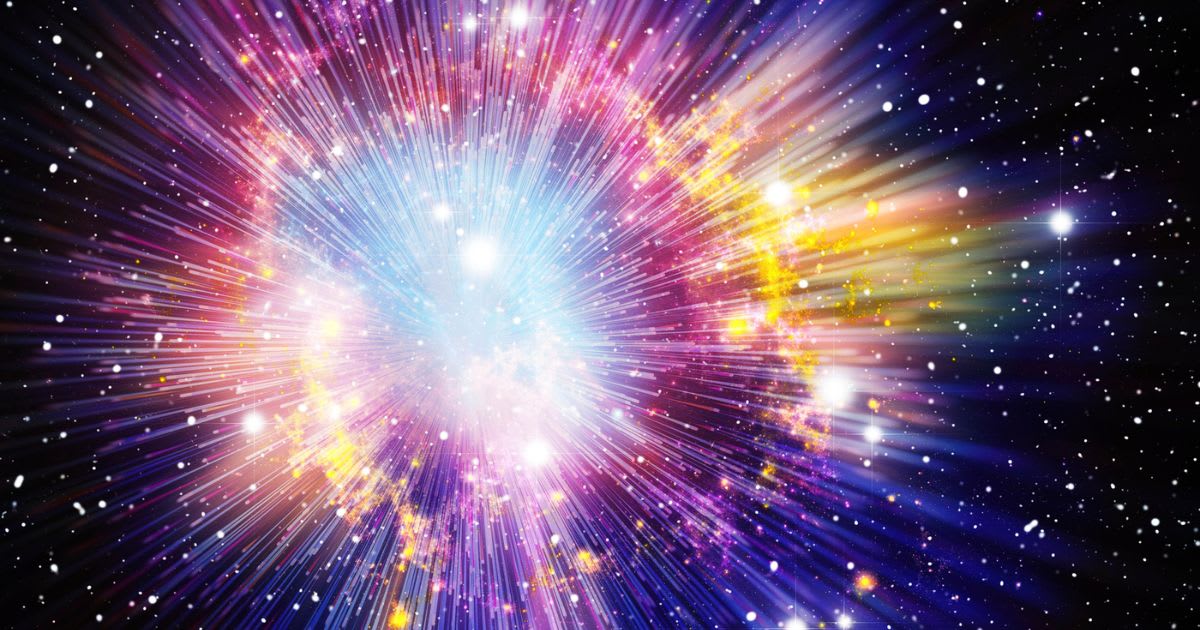
Stellar bars rotate as a single unit, and while spinning, they display properties of a funnel, pulling in gas inward towards the galactic nucleus. This process can trigger intense star formation, feeding the central black hole while building a dense core. The entire process of bar formation, however, is presumed to be a slow one, possibly spanning billions of years. Additionally, the early galaxies were remarkably rich in gas, which is believed to have slowed down the process of bar formation. Thus, when the astronomers discovered a stellar bar had formed within just 2 billion years after the Big Bang, the existing theories and standard models were heavily challenged.
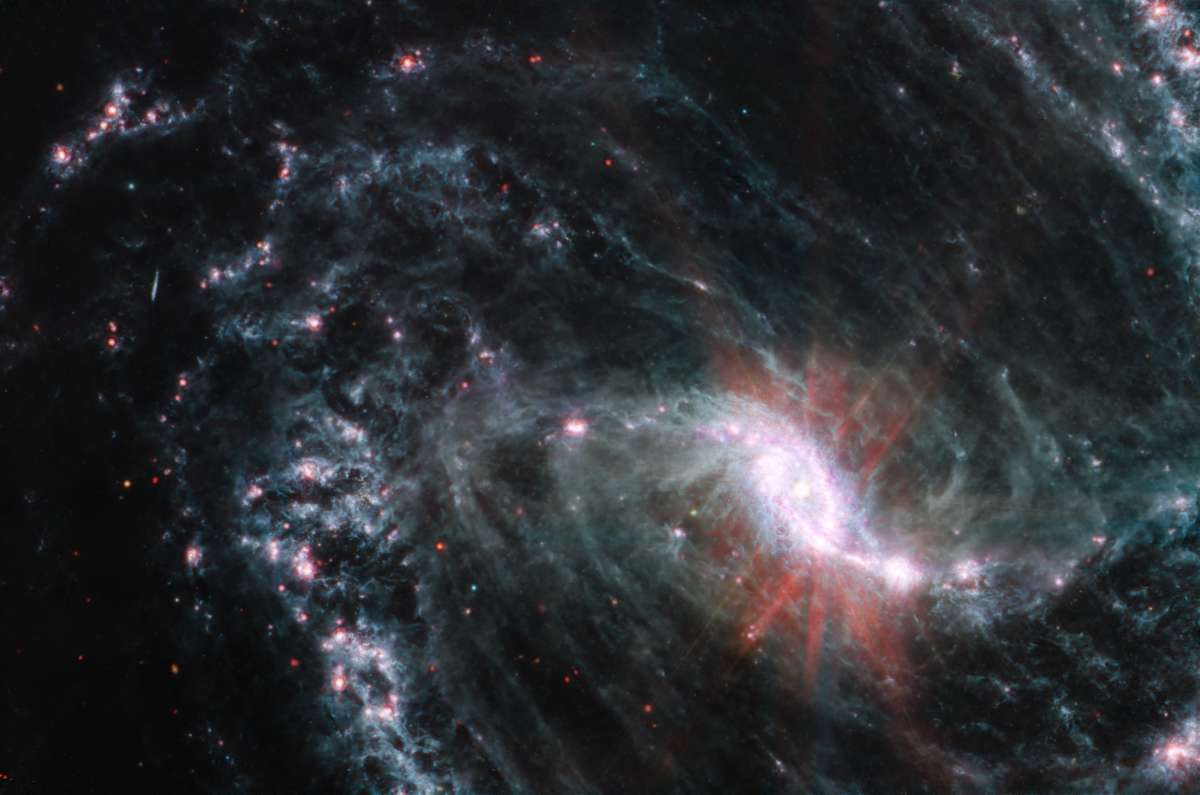
Trying to decode the phenomenon, Leiden University’s Leindert A. Boogaard and team closely studied GN20, which is a massive, gas-rich galaxy at redshift 4. GN20 is quite distant and is surrounded by heavy layers of dust. Thankfully, the Mid-infrared instrument and Near-infrared camera of the JWST helped the researchers to study GN20 by turning the dust transparent while revealing the internal structure. The astronomers under the leadership of Boogaard used isophotal analysis to discover a clear bar structure that spanned seven kiloparsecs from end-to-end. For the uninitiated, an isophotal analysis examines how a galaxy’s light distribution changes in shape and orientation from the center outward.

The scientists also analyzed the light pattern in a completely separate mathematical model, which also provided independent evidence supporting the bar interpretation. Interestingly, the bar feature was also dust-mapped by the NOrthern Extended Millimeter Array (NOEMA). Such a discovery contradicts the existing theories in three different ways. First up, these bars are so strong that they would usually crumble under their own weight. Next, even if one such bar does not collapse, stretching to seven kiloparsecs must take at least billions of years. Lastly, the amount of gas present is theorized to have either prolonged or suppressed the formation of the bar structure.
![The barred galaxy NGC 2217 as imaged by the NASA/ESA Hubble. [Representative Image Source: ESA/Hubble & NASA, J. Dalcanton; Acknowledgement: Judy Schmidt (Geckzilla)] (Black Background added on Canva)](https://de40cj7fpezr7.cloudfront.net/b894db21-63e5-4260-880a-bd11379407b9.png)
Reflecting on their study, the team wrote, “Our new results demonstrate that all three of these obstacles can be overcome by a single ingredient directly implicated by the observations: the presence of highly turbulent gas across the inner disk at high gas fraction.” The team also observed the point where the star formation was concentrated. As the bar meets the southern outer disk, gas accumulates, creating ideal conditions and triggering a hotspot of intense star formation. The bar sweeps in material inward, sustaining a nuclear starburst and potentially feeding a central, supermassive black hole. This continuous inflow of gas is likely to be a key factor in GN20’s exceptional star-formation rate, which exceeds 1000 solar masses per year.

“Part of this high SFR is likely being driven by the bar funneling gas and dust into the center, where it triggers an intense nuclear starburst in the gas-rich disk, and fuels the potential active galactic nucleus," explained the team. As impressive as the study is, the researchers also pointed out that calculating the stellar mass of the bar and its core regions is a very difficult process due to the extreme dust. Thus, in some cases, better data will come in handy to pin down certain measurements. That being said, the scientists clarified that the primary conclusion of the paper is that the GN20 is a gas-rich system and the presence of the stellar bar is real.
More on Starlust
Scientists find evidence our Sun may have migrated from the galaxy center with stellar 'twins'
Massive star clusters destroy their birth clouds faster, James Webb and Hubble find