NASA's JWST discovers massive Milky Way-like spiral galaxy just 1.5 billion years after the Big Bang
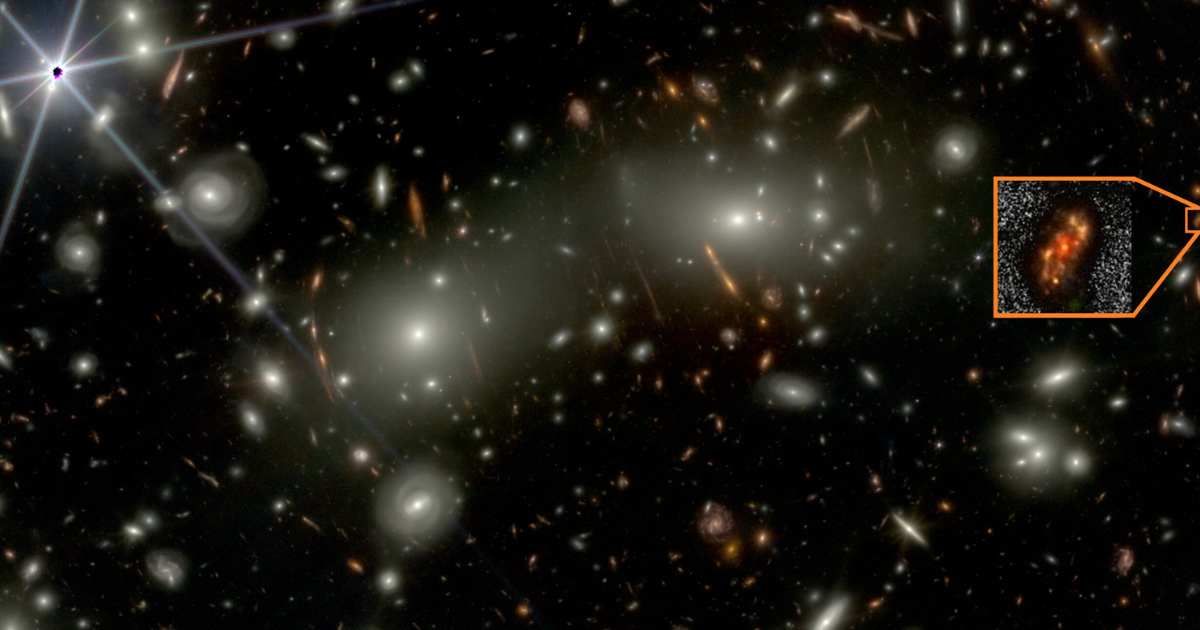
Astronomers at the National Centre for Radio Astrophysics (NCRA-TIFR) based in Pune, India, discovered a spiral galaxy, titled Alaknanda, using the James Webb Space Telescope (JWST). Announced in December 2025, the title of this newly discovered galaxy is based on the Himalayan river of the same name, which is a twin headstream of the Indian river Ganga, along with Mandakini (the Hindi name for Milky Way).
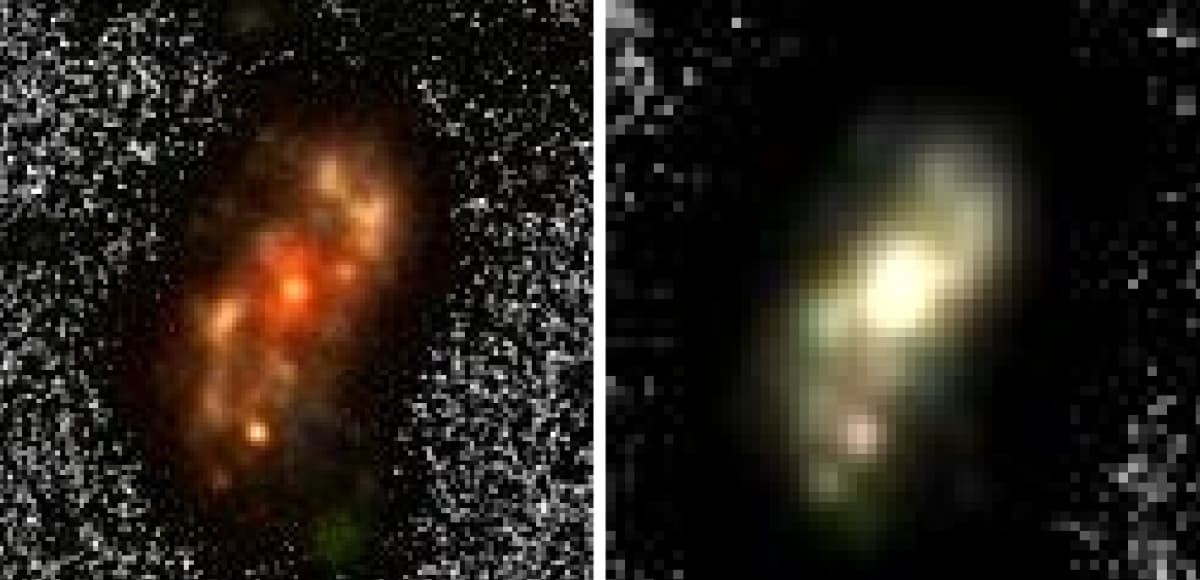
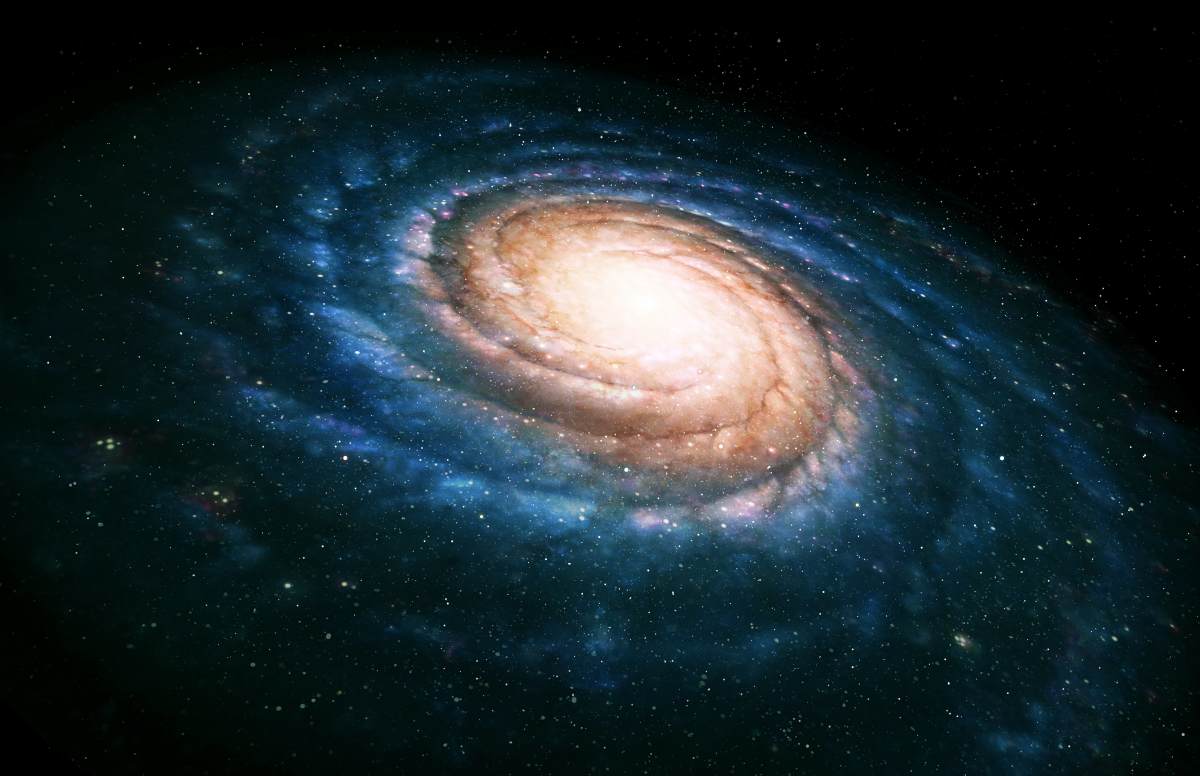
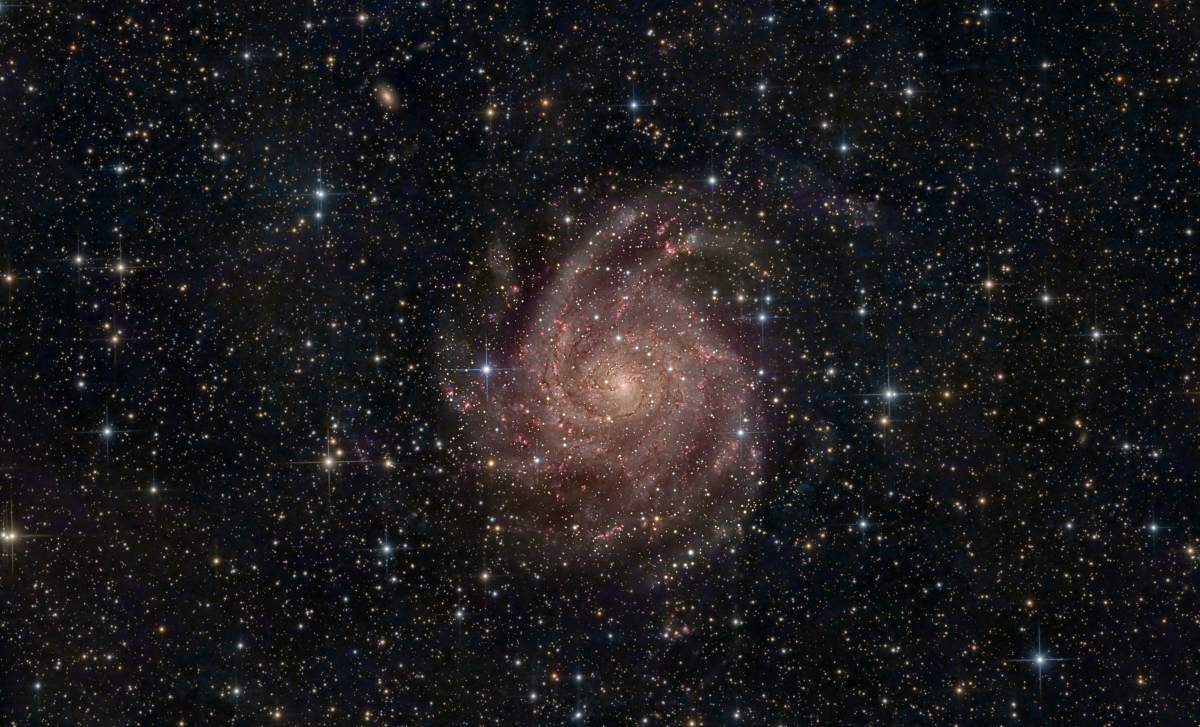
The study was published in Astronomy & Astrophysics on November 10, 2025. Researchers Rashi Jain and Yogesh Wadadekar used the James Webb Space Telescope’s powerful infrared imaging and studied deep-sky survey fields. They found that Alaknanda is a “grand-design spiral galaxy,” which means that it has a clearly defined disk along with two symmetric spiral arms, and a bright central bulge, similar to our own Milky Way galaxy.
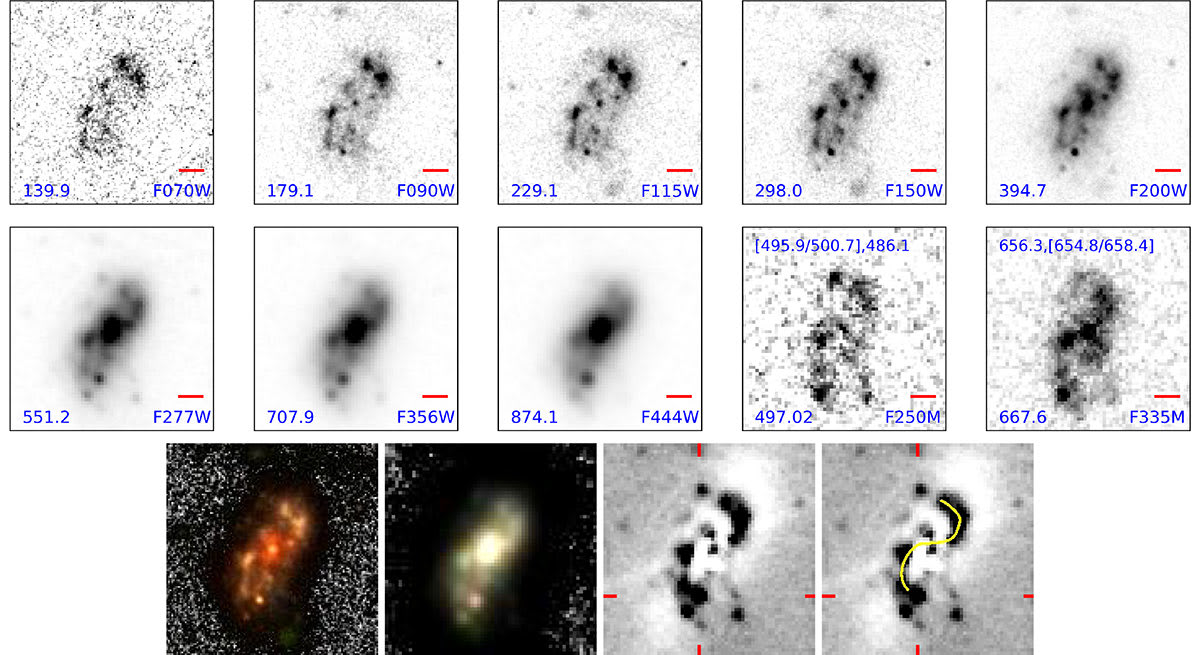
The researchers looked at Alaknanda using 21 different filters (or simply, 21 different colors of light) to confirm the accuracy of the findings. The findings show a clear “beads-on-a-string” pattern along the galaxy’s arms, consistent with the shape of spiral galaxies. What makes this discovery significant is the galaxy’s estimated age: the light detected from Alaknanda comes from a time when the universe was only about 1.5 billion years old (about one-tenth of its current age).
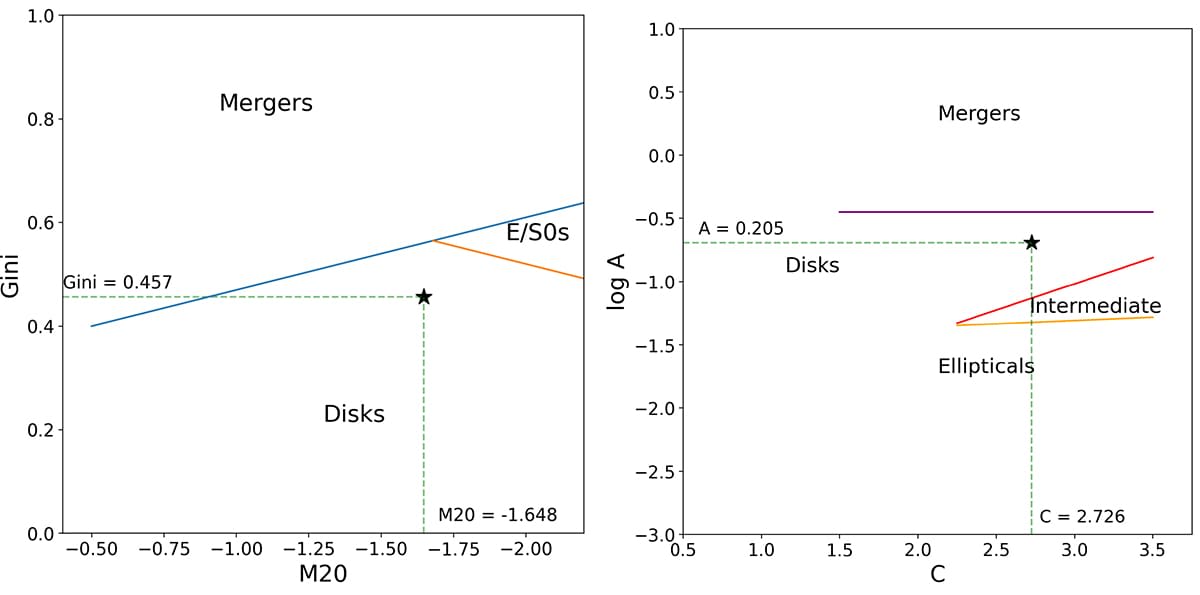
Previously, galaxies from such an early cosmic time were thought to be chaotic, irregular clumps, taking billions of years to form a clearly defined galaxy. But Alaknanda shows a mature, well-ordered structure, with its disk, arms, and bulge (classic spiral features) already fully formed just 1.5 Gyr (gigayear) after the Big Bang. The research further found that Alaknanda formed stars hundreds of times faster than other mature galaxies, about 57-60 solar masses per year. Results from spectral-energy analysis show that about half of its stars formed roughly within 200 million years, hardly any time in the cosmic sense. The galaxy’s structure spans approximately 30,000 light-years across.
According to Rashi Jain, the lead researcher, “Alaknanda has the structural maturity we associate with galaxies that are billions of years older.” Alaknanda was discovered behind a group of galaxies called Abell 2744, or Pandora’s Cluster. This cluster is so big that its gravity bends and expands the light of the objects behind it. Defined as gravitational lensing, it makes Alaknanda look twice as bright, which ultimately helped JWST capture its spiral shape in great detail. This discovery has deep implications for the understanding of the wider universe. If spiral galaxies can emerge so quickly, then present galaxy formation models must account for quicker, more efficient disk and structure formation, maybe through rapid gas cooling, efficient angular-momentum transfer, or quiescent early environments. This might mean that galaxies during the early years after the Big Bang might have matured faster than previously assumed.
However, it's important to be cautious, because the research uses colors to estimate the galaxy’s age. It's photometric and an indirect measurement, meaning that the galaxy could be younger or older. There is also a possibility that two galaxies are overlapping, and the resulting image is mimicking spiral arms. Further study is needed to be 100% certain that it is, in fact, a spiral disk. Additionally, only a couple of early-universe spiral galaxies have been found as of yet. Alaknanda could be a unique example of a spiral galaxy, or a part of a huge group of spiral galaxies that formed much quicker than previously thought. If this study is confirmed, this would mean that giant, well-structured galaxies may form much quickly than current galactic-evolution models show. This will likely push the scientific community to rethink how disks form, how spiral arms emerge, and how early star creation and gas dynamics behave in young galaxies.