Many planets have 'diesel engines' that fill their atmosphere with soot, new study finds
![An illustration showing WASP-12b, one of the darkest known exoplanets, orbiting a star like our Sun. [Representative Cover Image Source: NASA/ESA/G. Bacon (STScI)]](https://d3hedi16gruj5j.cloudfront.net/805594/uploads/0b157900-5fd7-11f1-9582-0fb2cb8f8b86_1200_630.jpeg)
Our Earth might be an exception rather than a rule. Of course, it's the only planet known to harbor life. But that's not the only reason. A study published in The Astrophysical Journal Letters says that many planets in the universe may be shrouded in soot, thanks to their high pressures and temperatures. "It's like you have a natural diesel engine in the deep atmosphere of a planet," said Jeehyun Yang, first author on the paper and postdoctoral scholar at the University of Chicago, in a statement.
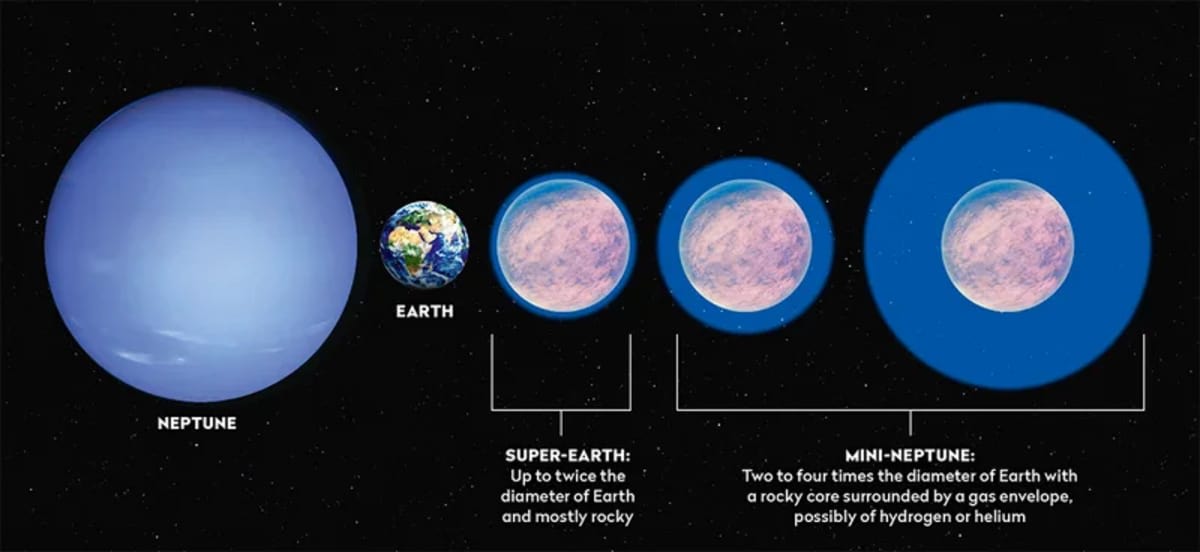
While cataloging planets in distant star systems, scientists have found that a third of them are of a strange type that has no equivalent near us. These planets are popularly called 'mini-Neptunes' as they are a little larger than Earth but smaller than Neptune. Thick atmospheres blanket them. In fact, a curve in the data obtained by the James Webb Space Telescope, which has furnished us with a great deal of information on these planets, suggests that those belonging to a particular temperature have atmospheres that are opaque. That being said, no one knew what in the atmospheres caused such a curve to appear. However, it intrigued Yang, who did his doctoral research on combustion engines as a chemical engineer. He had encountered thousands of such curves while working with jet engines, diesel engines, and gasoline engines. There's one thing such engines have in common—all of them produce similar curves as the temperatures at which they are burning are varied.

"When you burn these fuels you get black smoke, and if you look at the particles with advanced microscopes you see these beautiful honeycomb-like structures," Yang said. The honeycomb structures are basically made of complex molecules known as polycyclic aromatic hydrocarbons, which are formed through interactions of hydrogen, carbon, and oxygen at high temperatures. Such molecules frequently show up as soot in truck exhaust or a car’s engine oil filter. However, the temperatures that make PAH-based soot on Earth don’t match those of the far-away planets. But then Yang and his colleagues wondered what could have made the planets’ atmosphere thick and heavy. They realized that deep inside those planets, temperatures and pressures soar to the extent that they match the conditions to make soot. "The peak exactly matches," Yang said. "All of the current observations for planets match with our framework."
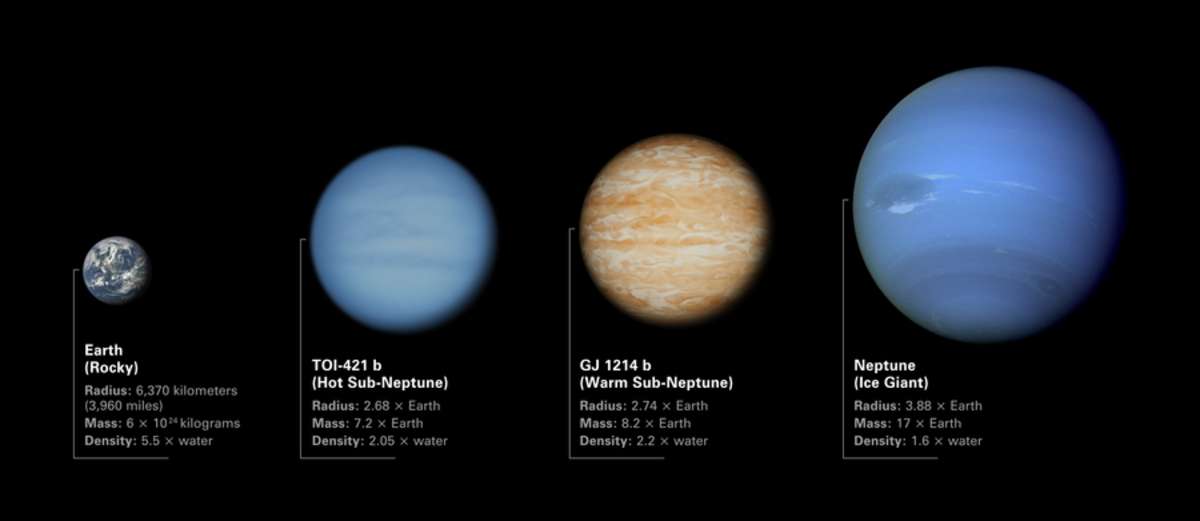
Soot-filled atmospheres of mini-Neptunes may not be interesting to us because they render the planets uninhabitable. The stars they orbit scorch their atmospheres, forming seas of magma that may harden under high pressures. But the ratio of carbon and oxygen on such planets may shed light on how and where the planets were born in their solar system. These insights into planetary formation may even help us to narrow down our search for habitable planets. "As far as I know, this is the first time anyone has applied chemical engineering to the field of exoplanet study," Yang said. "I think it's a great case study that shows why having people from all different backgrounds can help us untangle these mysteries."
More on Starlust
Magma ocean on an alien planet could reveal clues to Earth's turbulent history
Supermassive black holes could be making exoplanets unsuitable for life, finds new study