Rogue planet 10 times Jupiter's mass found devouring six billion tons of gas and dust every second
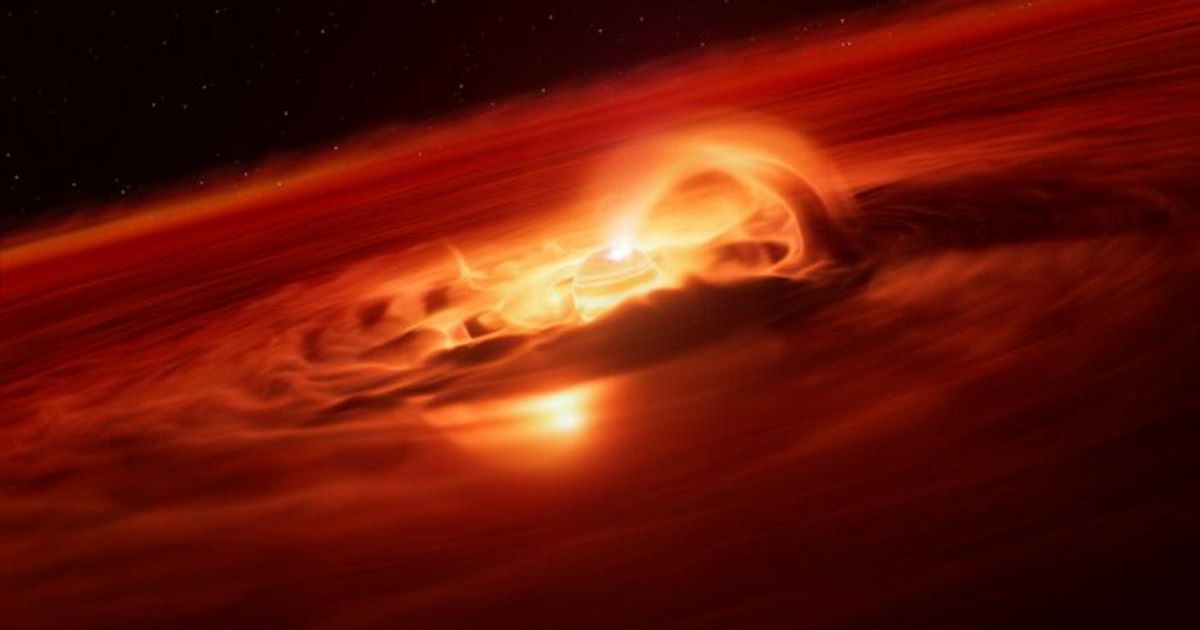
Astronomers achieved the stunning observation using the European Southern Observatory’s VLT in Chile, with the James Webb Space Telescope providing crucial supplementary data.
PUBLISHED OCT 3, 2025
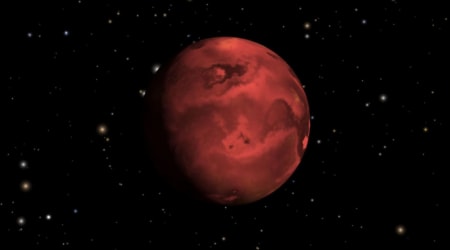
An artist’s impression shows Cha 1107-7626. Located about 620 light-years away, this rogue planet is about 5-10 times more massive than Jupiter and doesn’t orbit a star (Cover Image Source: ESO)

Astronomers have captured a "rogue" planet, untethered by any stellar orbit, undergoing the most extreme accretion event ever recorded for a world of its size. According to ESO, the free-floating object, estimated to be up to ten times Jupiter's mass, is violently drawing in gas and dust at a staggering rate of six billion tonnes every second, an intake eight times faster than it was just months prior. 

The stunning observation, detailed in The Astrophysical Journal Letters, was made using the European Southern Observatory's Very Large Telescope (VLT) in Chile, with supplementary data from the James Webb Space Telescope. The object, officially designated Cha 1107-7626, is located approximately 620 light-years away in the constellation Chamaeleon. “People may think of planets as quiet and stable worlds, but with this discovery, we see that planetary-mass objects freely floating in space can be exciting places,” said lead author Víctor Almendros-Abad, an astronomer at the National Institute for Astrophysics (INAF) in Italy. 
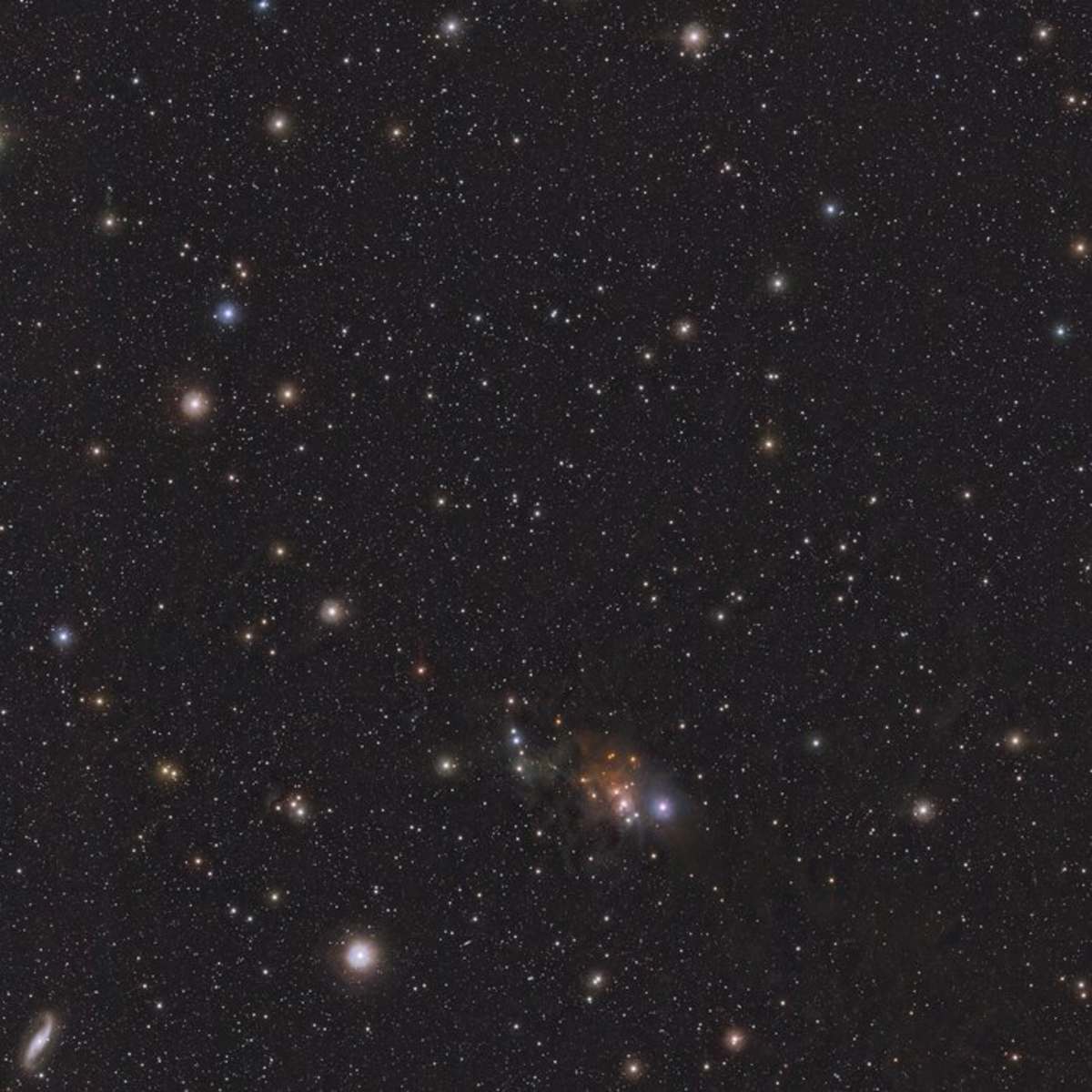
This infrared image, taken with ESO’s Visible and Infrared Telescope for Astronomy (VISTA), shows the position in the sky of the rogue planet Cha 1107-7626 (Image Source: ESO | L. Calçada)

The intense feeding frenzy offers crucial evidence in solving a long-standing cosmic mystery: the true origin of rogue planets. These solitary worlds are either massive planets violently ejected from their young star systems or the lowest-mass objects that formed independently, much like stars. The current findings strongly suggest the latter. Bursts of accretion, like the one observed, are a characteristic feature of young stars, not traditionally planets. 
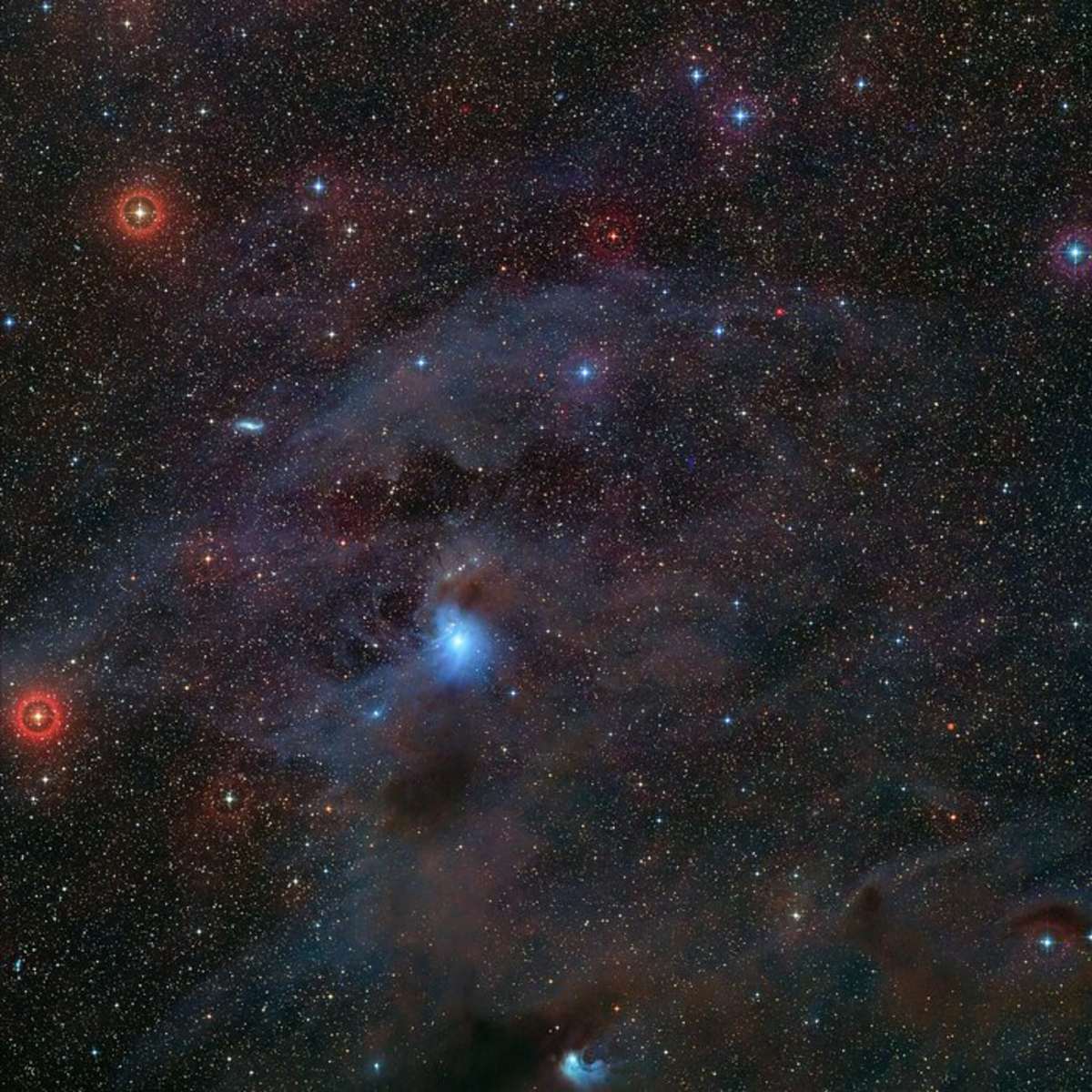
This visible-light image, part of the Digitized Sky Survey 2, shows the position in the sky of the rogue planet Cha 1107-7626. The planet (not visible here) is located exactly at the centre of the frame (Image Source: ESO | Digitized Sky Survey 2)

“This discovery blurs the line between stars and planets,” noted co-author Belinda Damian of the University of St Andrews. Intriguingly, the data indicate that magnetic activity is playing a significant role in driving the colossal infall of material, a mechanism previously only observed in forming stars. Furthermore, the chemistry of the surrounding disc dramatically changed during the burst, with water vapor detected, another phenomenon previously exclusive to young stars. 
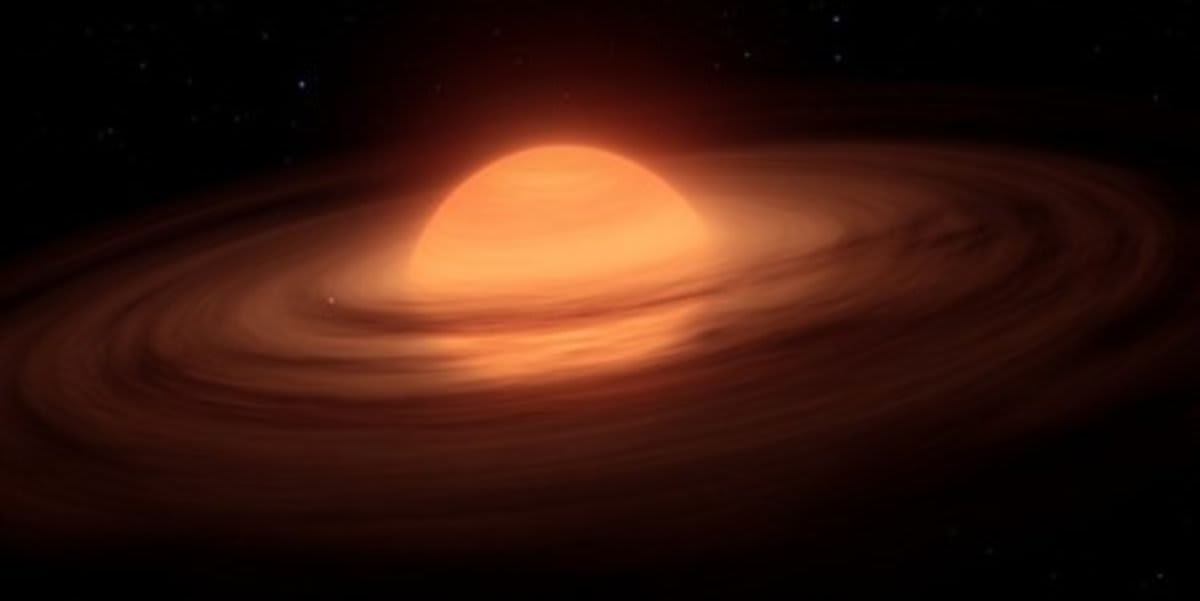
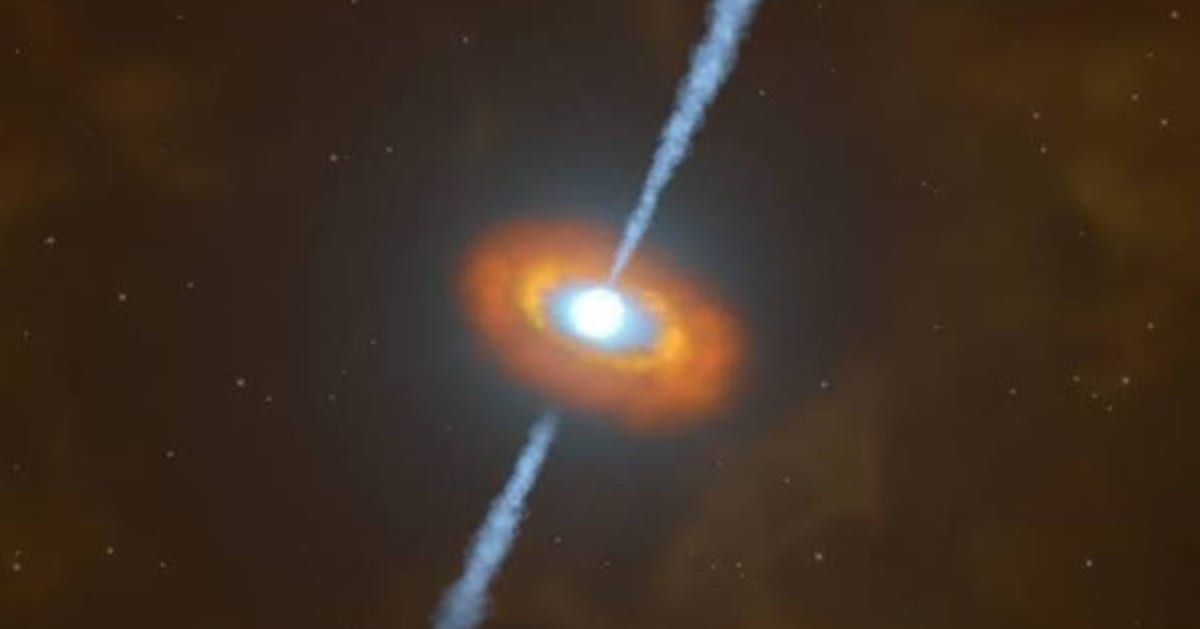
AI-generated image of a young free-floating planetary-mass object surrounded by a dusty disk (Representative Cover Image Source: University of St Andrews)
AI-generated image of a young free-floating planetary-mass object surrounded by a dusty disk (Representative Image Source: University of St Andrews)

The identification of such powerful magnetic fields on a low-mass object, according to Almendros-Abad's team, provides a "sneak peek into the earliest formation periods of rogue planets." The discovery highlights the challenges in tracking these faint, isolated worlds, but astronomers anticipate that the upcoming Extremely Large Telescope (ELT) will revolutionize the study of these "lonely planets" and further illuminate how star-like they truly are. 
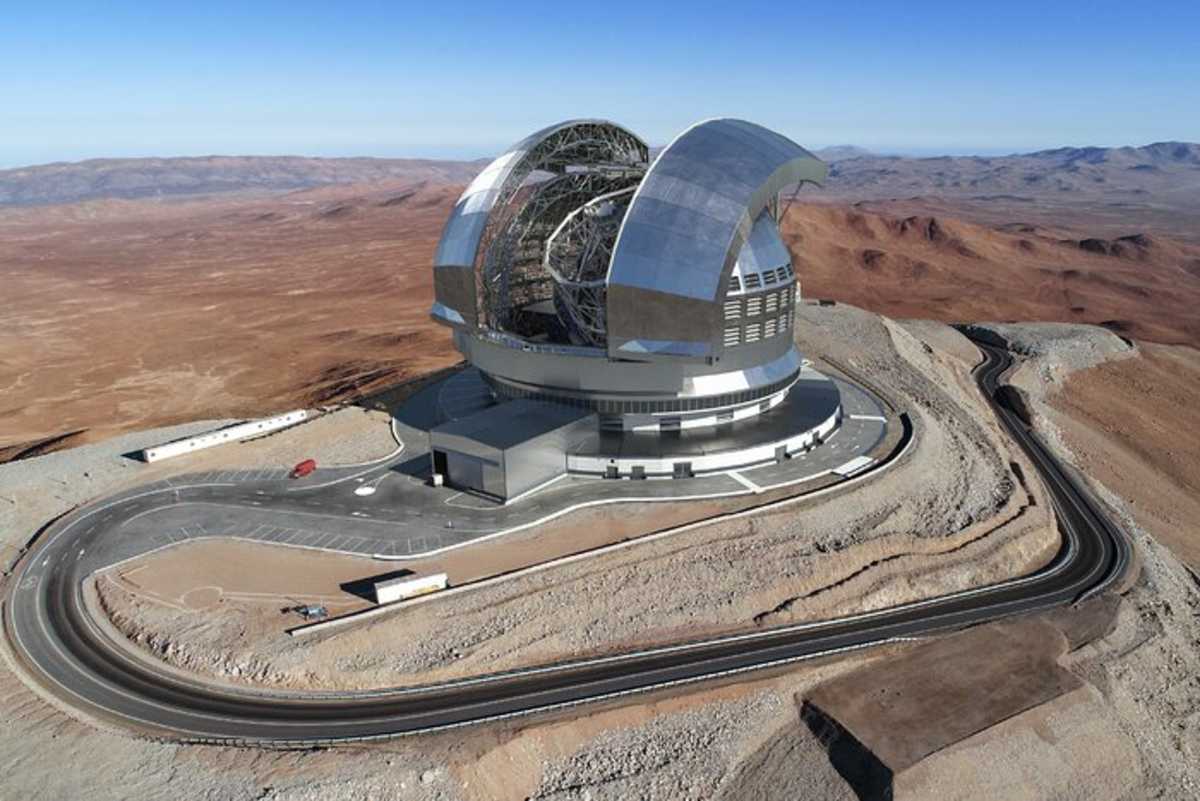
The Extremely Large Telescope (ELT) will sit on top of Cerro Armazones, approximately 3046 metres high in Chile’s Atacama Desert, surrounded by breathtaking views of the plains below (Image Source: ESO)

In a separate but related breakthrough on the nature of these isolated worlds, the James Webb Space Telescope (JWST) has provided the most precise atmospheric analysis to date of another searing-hot, free-floating world, SIMP-0136. Astronomers from Trinity College Dublin leveraged JWST's sensitivity to map changes in the planet's temperature and chemical composition as it rotated. The key discovery was the presence of intense auroras, similar to the Northern Lights on Earth and Jupiter, that are dramatically heating the planet's upper atmosphere. By tracking minuscule variations in brightness, researchers were able to create a groundbreaking "weather report" for SIMP-0136, further establishing the powerful influence of magnetic activity on rogue planet environments.

More on Starlust

Webb Telescope makes 'invaluable discovery' solving mysteries of Moon formation from distant worlds
Astrophysicists reveal 'Earth-sized' exoplanet TRAPPIST-1e may have atmosphere and liquid water to support life

Dark Energy Camera captures Chamaeleon I, a star-forming cloud — and it looks like a celestial painting

MORE STORIES

This newly discovered explosion from the dawn of time is helping scientists map the chemical evolution of the first galaxies.
1 day ago
The galaxy in question dates back to about 3 billion years after the Big Bang.
4 days ago
'We're still trying to figure out why black holes are suddenly more common in galaxies like our own,' said one of the scientists.
5 days ago
The four planets orbit a very young star, V1298 Tau, and have already lost much of their atmospheres.
Jan 8, 2026
Astronomers detect the earliest known galaxy cluster gas from just 1.4 billion years after the Big Bang.
Jan 8, 2026
The James Webb Space Telescope has identified massive, short-lived stars that are essentially 'seeds' for the universe's first supermassive black holes.
Jan 7, 2026
These newly-discovered objects look like stars but behave like galaxies.
Jan 7, 2026
Astronomers used the XRISM mission to separate signals and analyze the extreme gravitational forces at work in active galactic nucleus MCG–6-30-15.
Jan 7, 2026
Astronomer had been trying to solve the mystery behind Betelgeuse's behavior for decades.
Jan 6, 2026
The Champagne Cluster was discovered back on December 30, 2020.
Jan 5, 2026