Astronomers discover fastest-spinning asteroid making one rotation within 5 minutes—here’s why it’s unusual
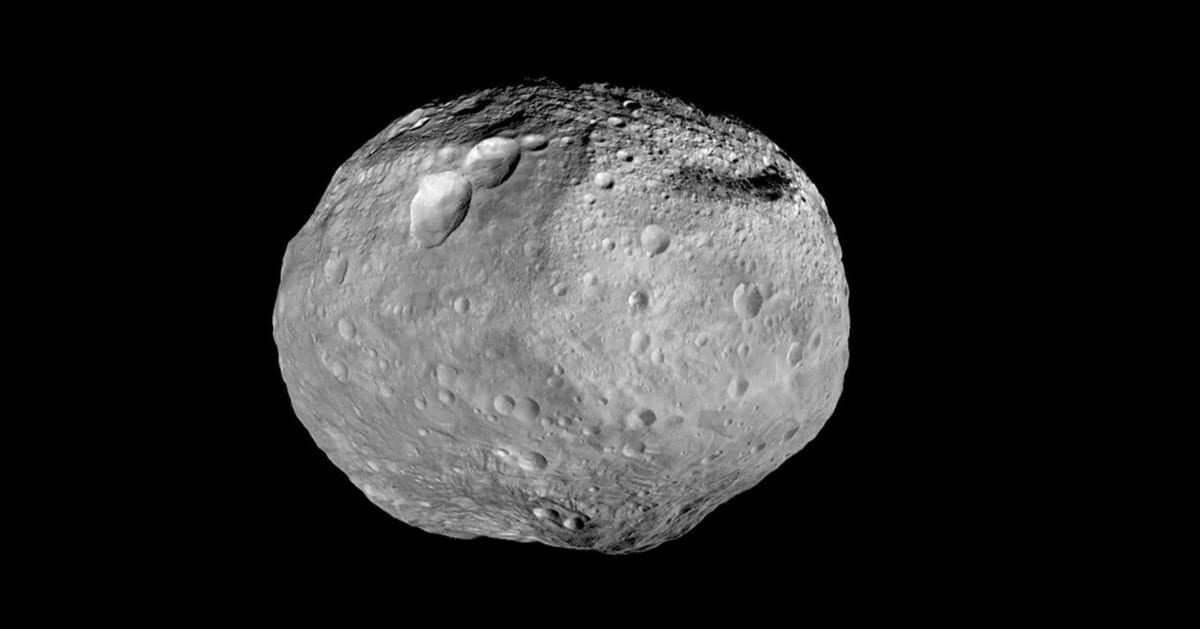
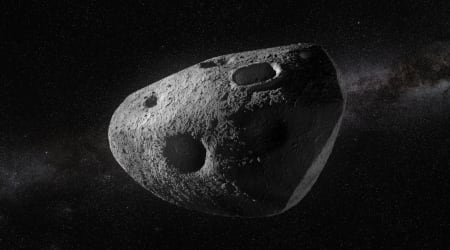
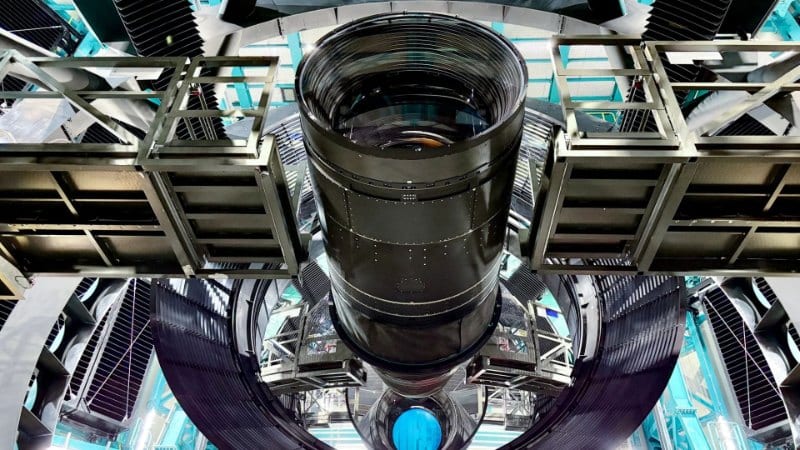
Astronomers have discovered the fastest spinning asteroid that has shed new light on how space rocks remain intact despite their enormous size and extraordinarily quick rotation. In a paper available as a preprint on Arxiv, the authors revealed that the asteroid designated 491384 completes one full rotation under five minutes which is very unusual for a rock of its size. It rotates at approximately 4.18 minutes and measures about 1.55 miles (2.5 km) and scientists are surprised how it hasn’t ripped apart yet. This discovery was made using the Vera C. Rubin observatory’s LSST camera—the world’s largest 3,200-megapixel digital camera designed to created a detailed 3D map and a timelapse movie of the southern sky.
Why this discovery is unusual
Most asteroids that are larger than 150 meters (492 feet) in diameter do not rotate faster than 2.2 hours—this is called a spin barrier. Any asteroid spinning faster than 2.2 hours could get broken apart due to the force generated by their rotation (centrifugal force) that can overcome gravity if their material are not bound together firmly. Besides, asteroids are generally thought to be loose rubble piles but the fact that 491384 is intact suggests it has significant internal cohesion.
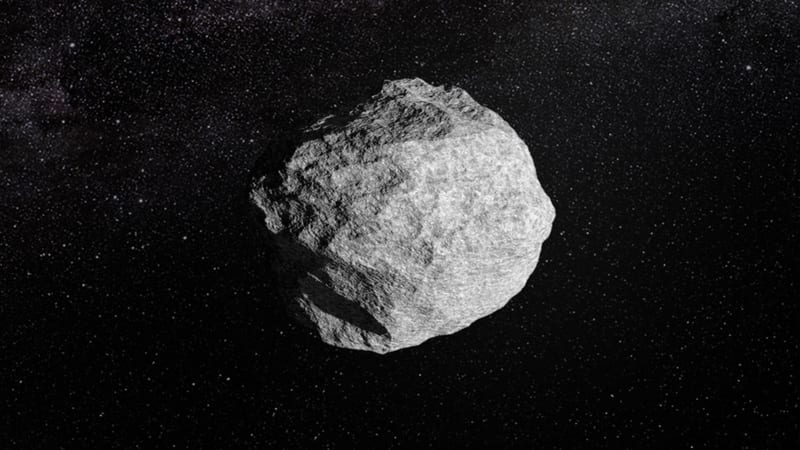
For this research, scientists analyzed data from the Rubin observatory’s catalog containing over 9,400 asteroids. Out of the sample, they shortlisted 1,221 candidate asteroids using a computer model that helped confirm how trustworthy each asteroid’s calculated rotational speed was. Applying further filters revealed 66 of them as 'super-fast rotators' with spin faster than the classical 2.2-hour spin barrier. Interestingly, five asteroids were classified as 'ultra-fast rotators' that were spinning once in less than five minutes—asteroid 491384 being one of them.
Another asteroid that caught the authors’ eye was 566130 with a rotational period of just 5.34 minutes. This rock has a diameter of 1.24 miles (2 km) and it also survived the rotational force that should have caused it to disintegrate. “Neither body could survive such rapid spin without substantial internal cohesion,” the researchers wrote in the paper. “Given how exceptional both of those objects are, we recommend dedicated follow-up observations to confirm their periods independently,” they wrote further.
In June this year, the LSST camera official began its observations with an objective to conduct a 10-year survey of the southern sky. While in its commissioning phase, it discovered over 11,000 new asteroids while measuring precise orbits for tens of thousands more. Moreover, the National Science Foundation (NSF) which jointly runs the observatory with Department of Energy captured more than 500,000 galaxies of different kinds and 50,000 stars, covering around one-sixth of the entire Southern Hemisphere sky. Over the next decade, the observatory will image billions of galaxies and other cosmic objects, and its data will be complemented with those from other telescopes to reveal not only what distant galaxies look like but also how the sky evolves over time.
More on Starlust
NASA's Webb helps pinpoint location of farthest fast radio burst—it's not what scientists expected
Supermassive black hole-powered blazar breaks record for most distant object of its kind ever found