Evidence of ‘standing shocks’ in black hole accretion flows rewrites our understanding of cosmic signals
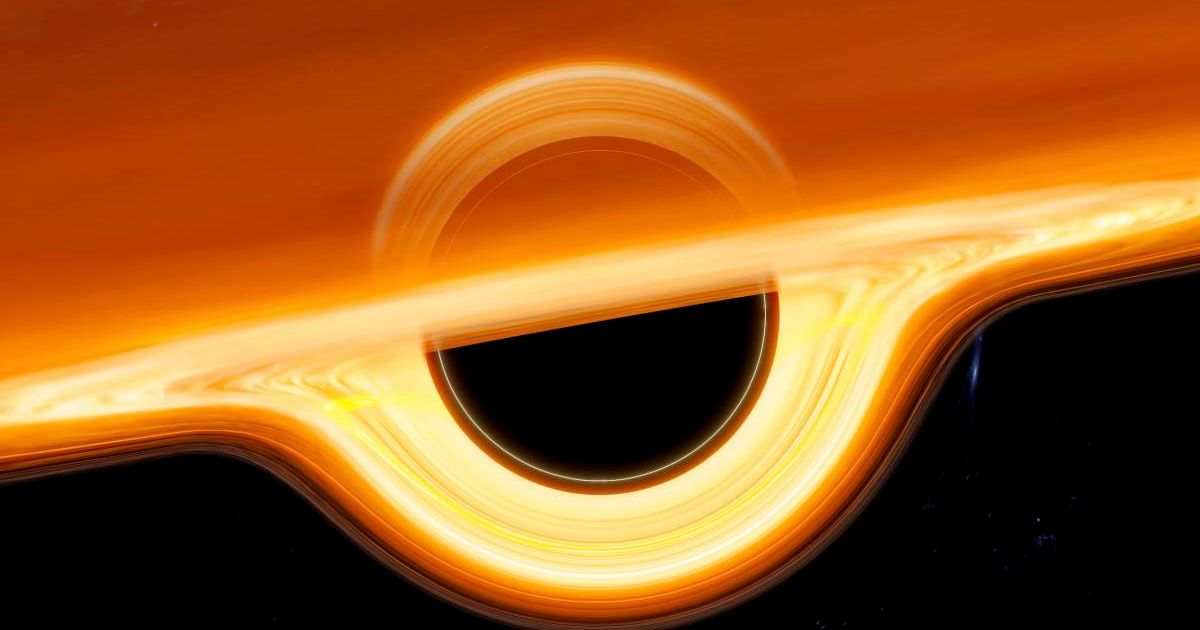
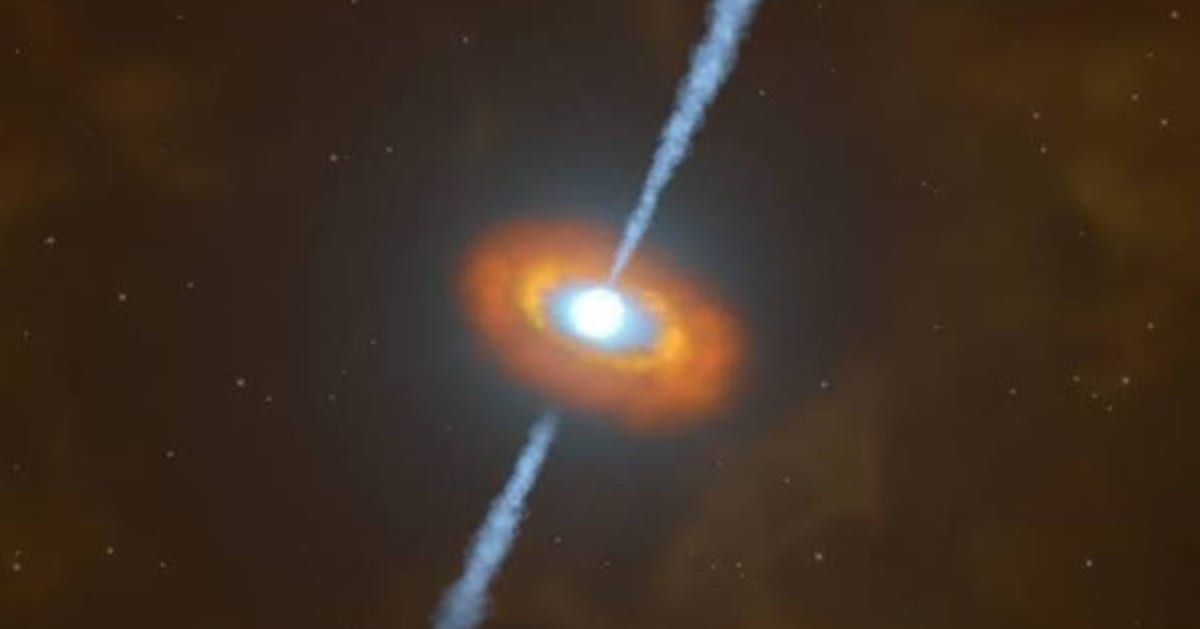
A team of researchers led by Yunnan Observatories of the Chinese Academy of Sciences took a peek into an aspect of black holes. The low-angular-momentum accretion flow around black holes could reveal much about other aspects if studied. A study in The Astrophysical Journal hints at how it explains extreme plasma behavior in strong gravity. This is where shock formation is naturally able to create signature variations that help distinguish processes. Accretion flow simulations to investigate its dynamics closer to the center of a black hole revealed something new.

The study confirmed the presence of a standing shock in low-angular-momentum black hole accretion modes. It used general relativistic magnetohydrodynamic (GRMHD) simulations to arrive at this conclusion. The study collaborated with international researchers and was led by Prof. MAO Jirong from the Yunnan Observatories. According to the Chinese Academy of Sciences, accretion takes place around compact objects because of strong gravitational fields. The accretion dynamics were central to the understanding of how galaxies formed and evolved.
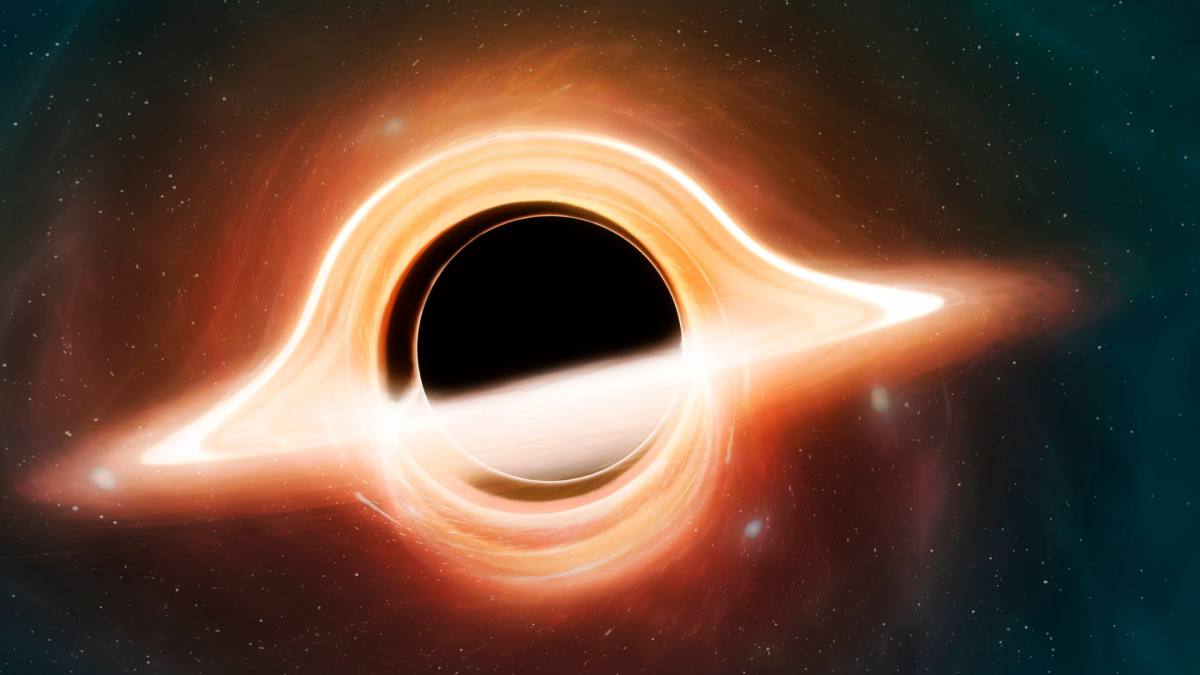
The formation of shocks in accretion flows near central black holes was previously hypothesized, but was not conclusively proved. However, regardless of being elusive, "standing shocks" were defined by their fixed positions. To put the matter to rest, the team conducted MHD simulations in two and three dimensions. This was done within the framework of general relativity with a focus on black hole accretion dynamics. Direct evidence for standing shocks was found with the formation of a consistent shock near the central black hole, which held a stable position.

The stability was maintained throughout the accretion process in low-angular-momentum accretion modes. The study also concluded that standing shocks take place in "standard and normal evolution" (SANE) accretion disks. However, they are absent in "magnetic arrested disk" (MAD) systems, a difference to be updated in black hole accretion models. The existence of standing shocks has implications for the behavior of black hole matter and signal detection. It influenced the dynamics of accretion, which is at the center of high-energy astrophysical research.
This comes into play with the connection created between standing shocks to quasi-periodic oscillations (QPOs). The latter is a well-documented pattern of emission fluctuations detected in certain X-ray binaries and active galactic nuclei. This was affected by the standing shocks that oscillate between two fixed points. This oscillation accelerates charged particles, and the radiation emitted by these particles is linked to the origin of QPO. This radiation matches the periodic signals that are observed in said X-ray binaries and active galactic nuclei.

"This study advances our understanding of accretion physics, a field central to unraveling black hole behavior and galaxy evolution," explained Prof. MAO. The study of accretion near a black hole's event horizon has been a priority since the first images of black holes. The Event Horizon Telescope (EHT) captured the first image of a black hole's shadow in 2019. The research and its work were aided by the National Key R&D Program of China, the Natural Science Foundation of China, and the Yunnan Revitalization Talent Support Program. The study addresses a gap in black hole knowledge and brings about a scientific consensus on standing shocks.