NASA's James Webb Telescope reveals glowing auroras and stormy skies on a starless alien world
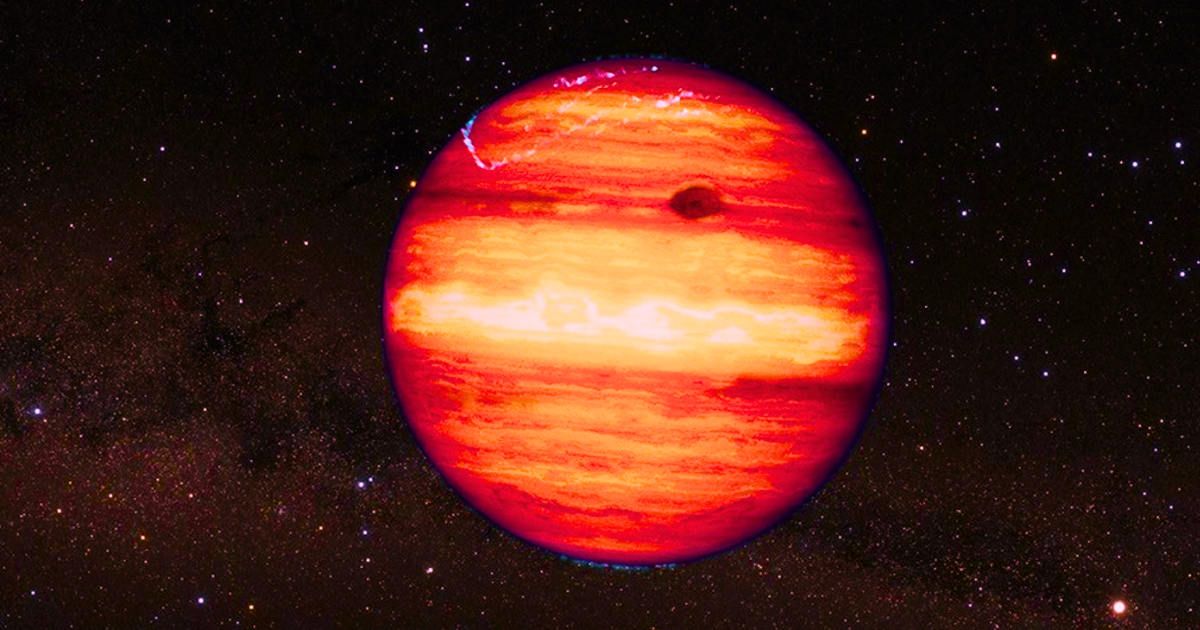
In a groundbreaking "weather report" from beyond our solar system, the James Webb Space Telescope (JWST) has provided the most precise atmospheric analysis to date of a searing-hot, free-floating world. A team of astronomers from Trinity College Dublin leveraged the telescope's unprecedented sensitivity to study SIMP-0136, a rogue planet that orbits no sun, as per Trinity College Dublin.
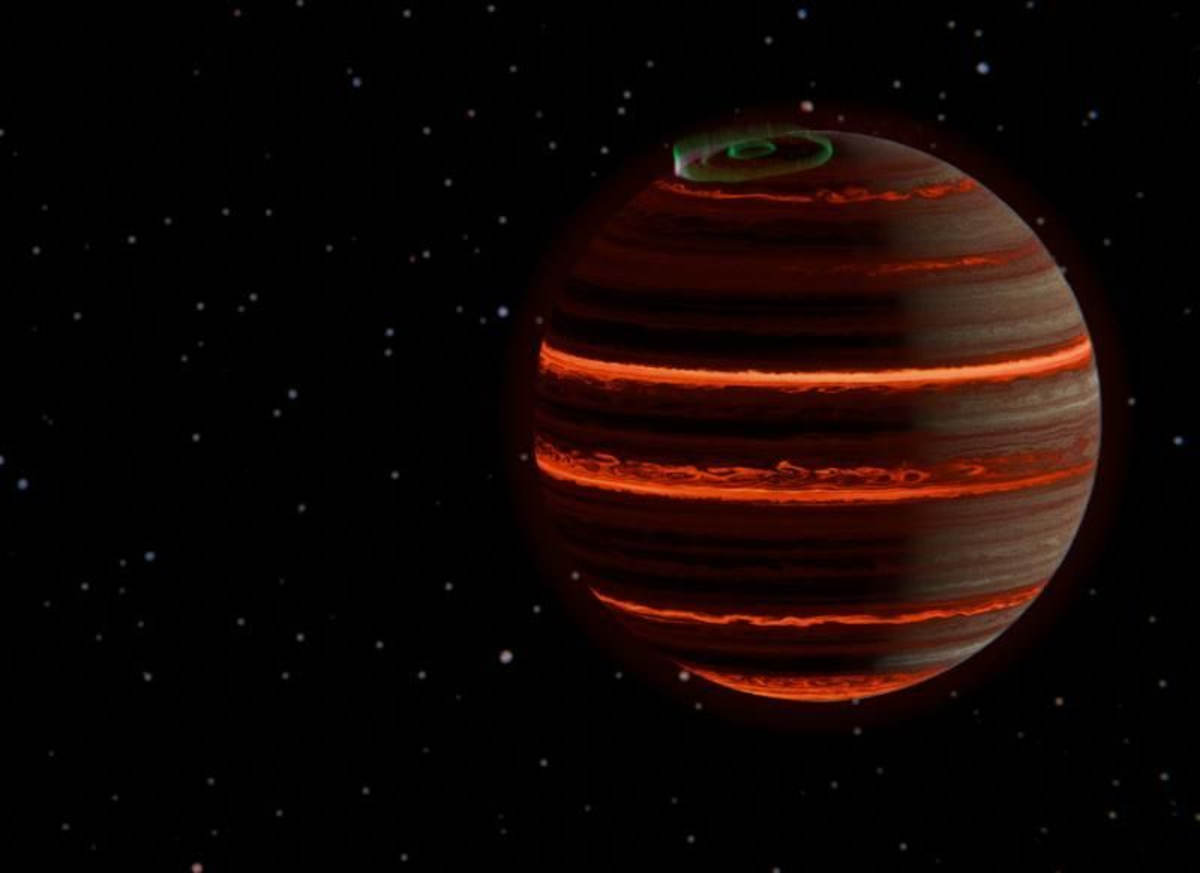
The key takeaway from the new data is the discovery of intense, Northern Lights-like activity, characterized by powerful auroras that dramatically heat the planet's upper atmosphere, similar to the displays observed on Earth and Jupiter. The observations, which tracked minuscule variations in the planet’s brightness as it rotated, allowed researchers to map changes in its temperature and chemical composition. The findings, published in Astronomy & Astrophysics, paint a picture of a turbulent world.

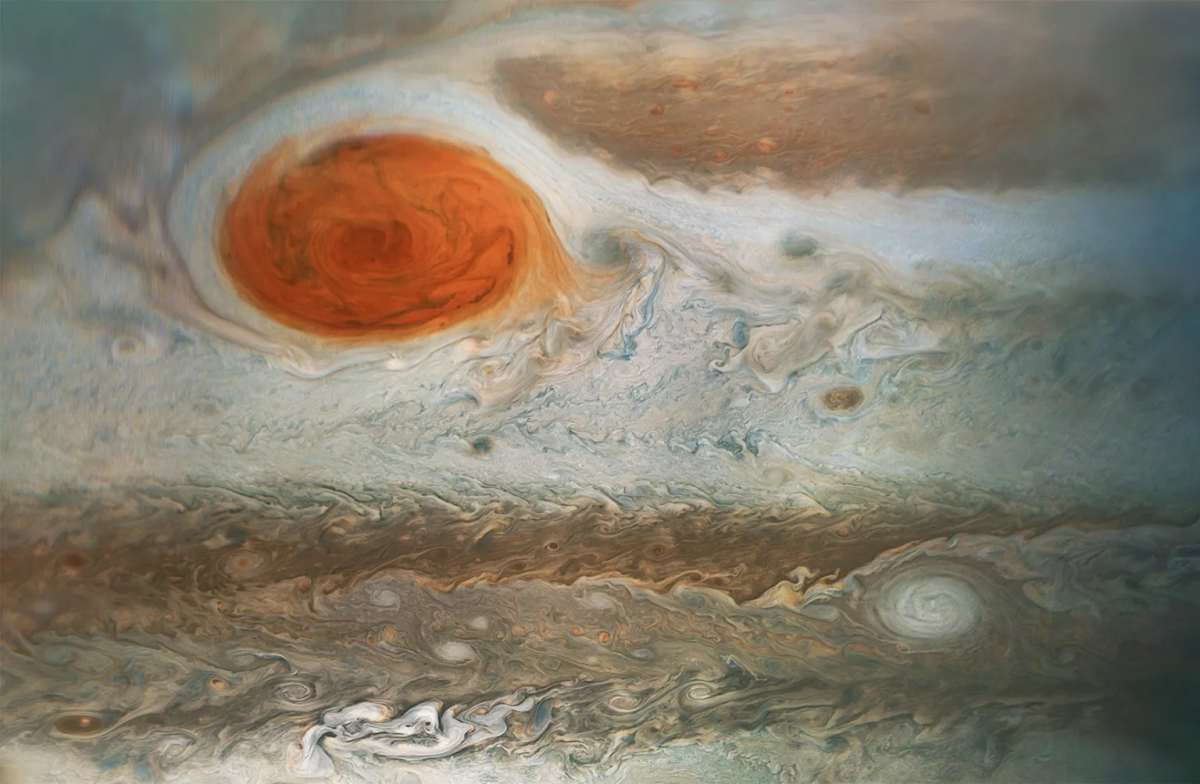
"At over 1,500° C, SIMP-0136 makes this summer’s heat wave look mild,” stated lead author Dr. Evert Nasedkin, a Postdoctoral Fellow in Trinity’s School of Physics. The subtle temperature fluctuations, measured to within 5 degrees Celsius, suggested the presence of rotating atmospheric disturbances resembling Jupiter's Great Red Spot. Surprisingly, however, the planet’s heavy cloud cover remained uniformly constant across its surface. These aren't water clouds; given the extreme heat, they are made of silicate grains, the same material found in sand.
By analyzing the light across different wavelengths, the team was able to infer the weather dynamics, from the atmospheric temperature and chemical makeup to the precise location of the clouds. The findings demonstrate the immense power of combining JWST's cutting-edge datasets with advanced modeling techniques.

SIMP-0136 is a behemoth located just 20 light-years from Earth in the constellation Pisces, according to NASA. While it possesses the structure and composition of a gas giant, it holds the unusual designation of a rogue planet because it is not gravitationally bound to any host star. This free-floating giant is roughly 13 times the mass of Jupiter and is estimated to be approximately 200 million years old, making it one of the brightest isolated planets or brown dwarfs visible from the Northern Hemisphere. Despite its scorching surface temperature of approximately 825° C (about 1,500° F), it is relatively cool compared to stars. This means it emits insufficient visible light to be seen from Earth, nor does it have a sun to illuminate it.
🆕 Webb has shed light on a starless super-Jupiter! Read more: https://t.co/0eUcce7mHd or 🧵👇 pic.twitter.com/zvGx9QpQd1
— ESA Webb Telescope (@ESA_Webb) March 3, 2025
Researchers carefully monitored SIMP-0136's brightness over two full rotations in July 2023. By tracking the subtle variations in light across different wavelengths, they could detect a variety of atmospheric phenomena as different sides of the object rotated into view. This analysis not only revealed the varying cloud cover at different atmospheric depths and the precise temperature changes in the high atmosphere but also illuminated shifts in its carbon chemistry, providing a detailed picture of the giant’s complex atmospheric dynamics. The ability to map such detailed changes on a world so distant and dark underscores a revolutionary step in understanding exoplanetary science.
More on Starlust
Webb Telescope makes 'invaluable discovery' solving mysteries of Moon formation from distant worlds