A dead star is leaving behind a bizarre 42-light-year-long trail, China’s Einstein Probe finds
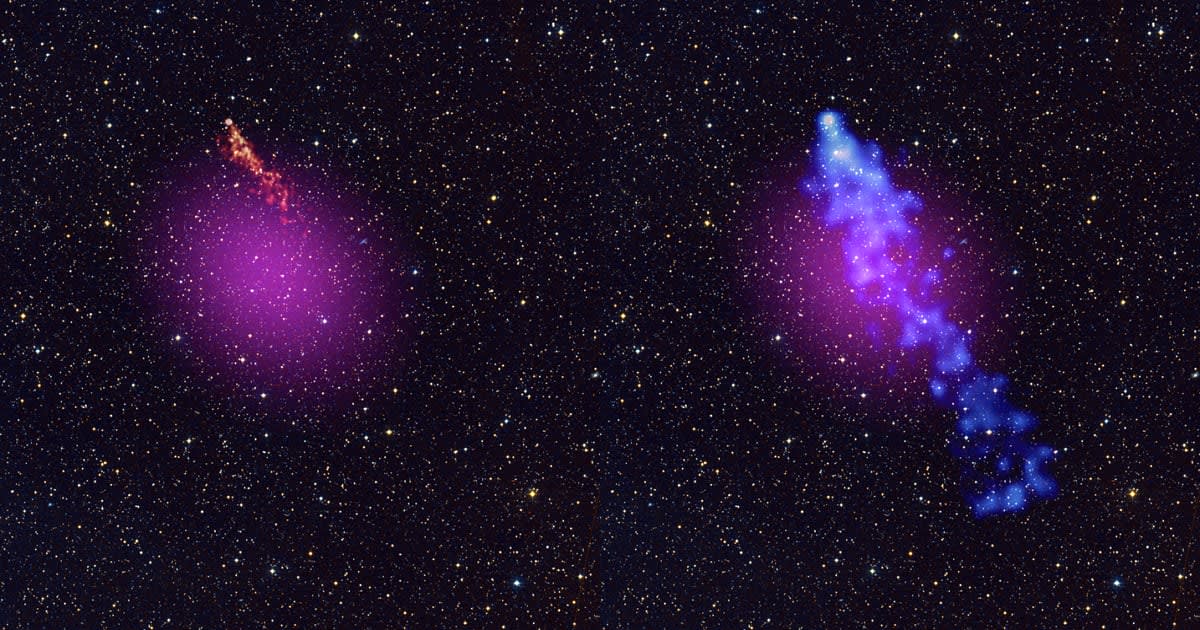
Astronomers have discovered an X-ray trail nearly 42 light-years long around a pulsar, making it the longest trail ever observed from a pulsar wind nebula. These high-energy particles have been found to be moving along the trail instead of spreading randomly. China's Einstein Probe satellite and LHAASO (Large High Altitude Air Shower Observatory) made joint observations that found this extensive trail.

What created this enormous X-ray trail?
A new study published on September 21, 2026, in Science China: Physics, Mechanics & Astronomy discusses the new observations about this X-ray trail. This huge X-ray trail is coming from the pulsar called PSR J1740+1000, located around 4,600 light-years away from Earth. A pulsar is a fast-spinning neutron star that releases high-energy particles into space. These particles travel around the pulsar and release energy in the form of X-rays. That is why astronomers can observe a bright X-ray trail around the pulsar.
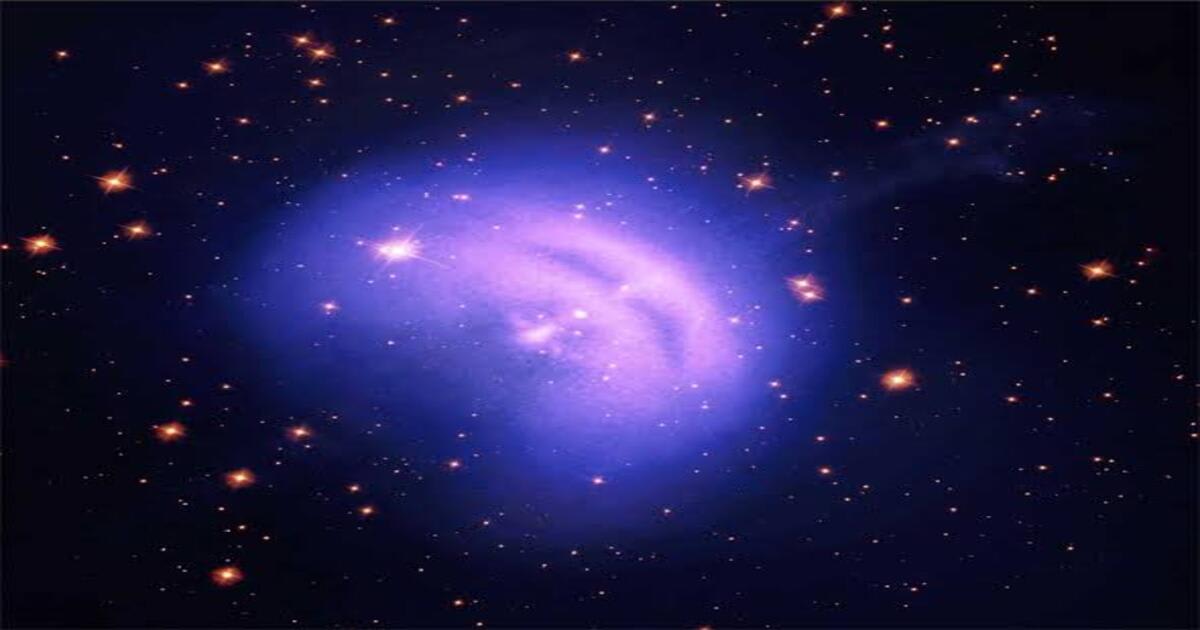
A pulsar wind nebula, meanwhile, is the region around a pulsar filled with particles released by the neutron star. Previously, astronomers had looked at a very small part of this trail. But China's Einstein Probe satellite traced the trail much farther, observing this region for around 70,000 seconds. Its newly found, 42-light-year extent makes it the longest X-ray trail ever observed from a pulsar wind nebula.
But the length of the trail was not the only thing that caught scientists' attention. Scientists observed that the X-ray trail is extending in a particular direction. In the same direction, LHAASO detected ultrahigh-energy gamma rays—the most energetic form of light. This suggests that both signals may have some connection.
The X-ray trail is not spreading randomly
Normally, when high-energy particles enter interstellar space, they slowly spread in different directions due to changes in magnetic fields. But in this case, scientists found that the particles were maintaining a clear direction even after traveling huge distances.
Given this peculiarity, scientists have proposed two possible explanations for this. The first possibility is that the magnetic field of interstellar space is highly ordered, which allows particles to move in a particular direction and stops them from moving sideways. This acts like a "magnetic track." Another possibility is that a fast and narrow outflow is coming out of the pulsar wind nebula, which moves the high-energy particles in a particular direction. As of now, scientists have not been able to confirm which mechanism is responsible for this. However, these observations show that high-energy particles do not always spread randomly.
What this discovery means for our understanding of cosmic particles
This discovery is crucial for scientists to understand how these highly energetic particles travel when they leave their source. Until now, scientists had limited direct observational evidence of how high-energy particles move after leaving their acceleration site and travel through space.
One important implication of this finding is a better understanding of these gamma-ray sources. If the point where gamma rays are detected is not the original source of the particles, scientists can use this information to trace their journey back and find their possible origins. This could provide a different approach to better understand these ultrahigh-energy gamma particles.
More on Starlust
NASA's Hubble Space Telescope captures the 'clearest' image yet of Egg Nebula
Is the universe shaped like a doughnut? Here's what researchers say