ALMA captures first-ever video of spiraling dust around a young star
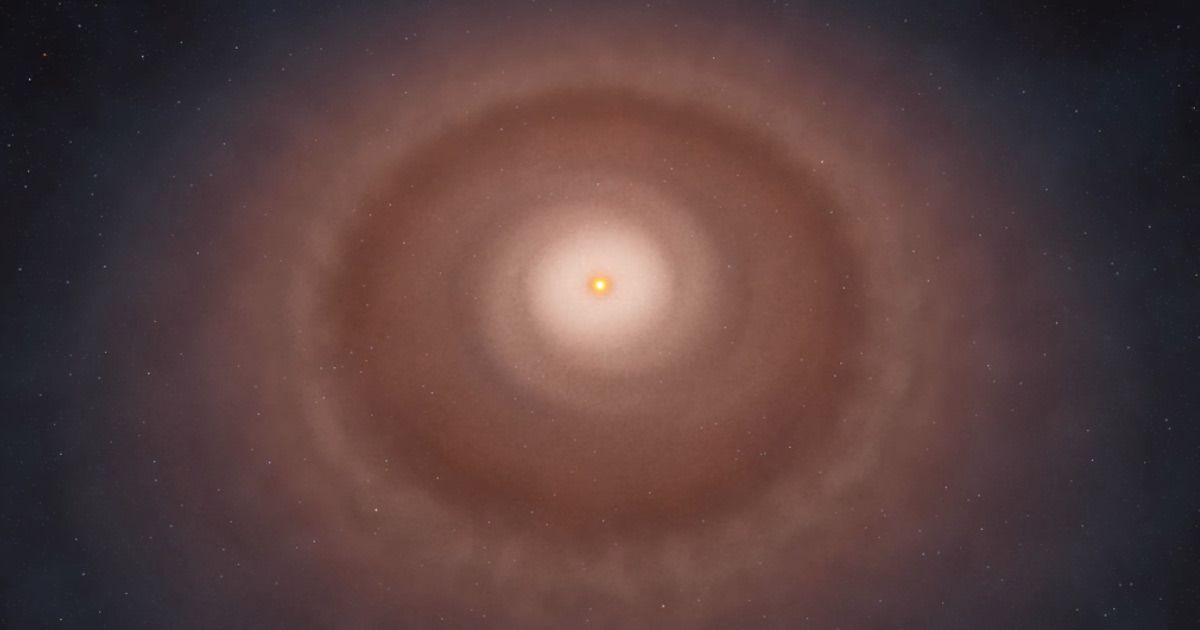
An international team of researchers has achieved a world-first by successfully producing a time-lapse video revealing the dynamic action inside a planet-forming region, offering an unprecedented look at the moments just before a planet is born, as per ALMA.
Video images of a planetary formation site have been successfully captured for the first time by using ALMA observation data acquired over a seven-year period. The dynamic motion of a spiral structur has been shown.https://t.co/crVttd9h6c
— NAOJ ALMA project (@NAOJ_ALMA_en) September 25, 2025
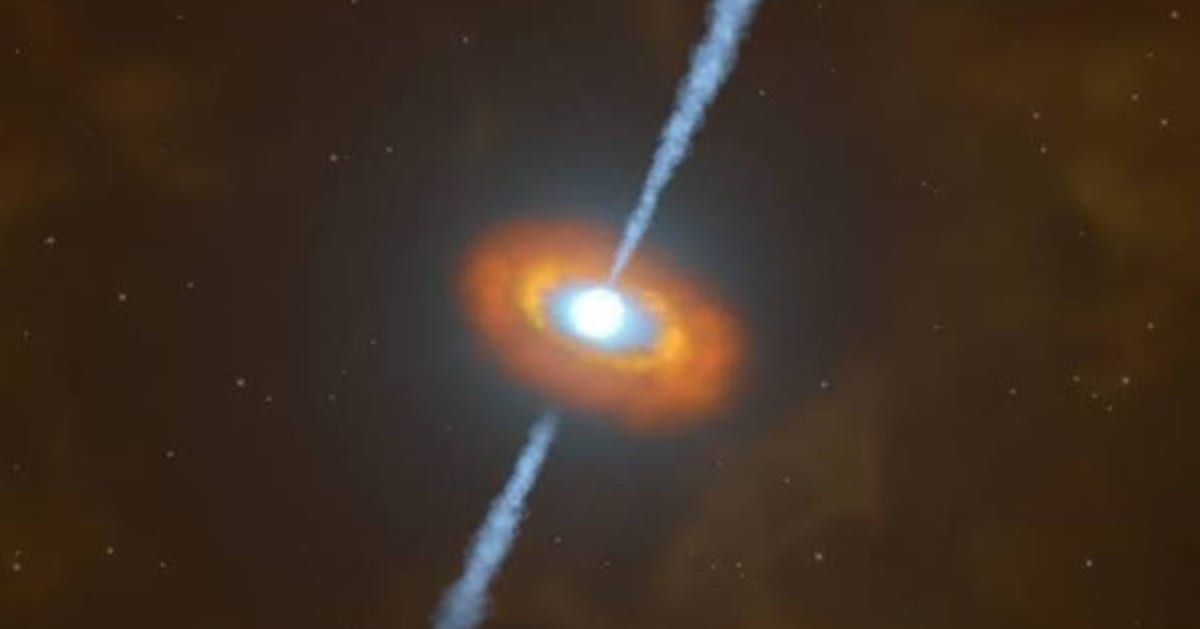
Led by graduate student Tomohiro Yoshida of SOKENDAI and the National Astronomical Observatory of Japan (NAOJ), the team utilized seven years of data from the Atacama Large Millimeter/submillimeter Array (ALMA) to construct the footage. The resulting video clearly demonstrates the winding motion of a spiral structure within a protoplanetary disk, which is theorized to be a crucial incubator for nascent planets. While thousands of exoplanets have been discovered, the precise mechanism by which planets emerge from the swirling gas and dust of a protoplanetary disk, the dense, rotating cloud surrounding a young star, remains a major question in astrophysics.
A key feature in these disks is the presence of spiral arms. However, these spirals pose an observational challenge because they can be formed in two ways: either by the disk's own gravitational influence before planet formation, or by the presence of a massive, newly-formed planet after formation has begun. Without being able to differentiate the two, scientists struggled to pinpoint the true onset of planetary growth. The research team overcame this hurdle by relying on a theoretical prediction: Spirals created by the disk's gravity will dynamically wind and eventually dissipate, while those caused by an established planet will maintain a static shape and simply rotate with the planet.
To test this, the researchers focused on the protoplanetary disk surrounding the young star IM Lupi, a system with a long-debated spiral feature. By stitching together four sets of high-resolution ALMA images captured between 2017 and 2024, they created a sequential view of the disk's evolution. The analysis revealed the spiral arms were, in fact, exhibiting a pronounced winding motion. Furthermore, the measured winding speed precisely matched the rate predicted by the theory for a self-gravitating spiral, as mentioned by the outlet.
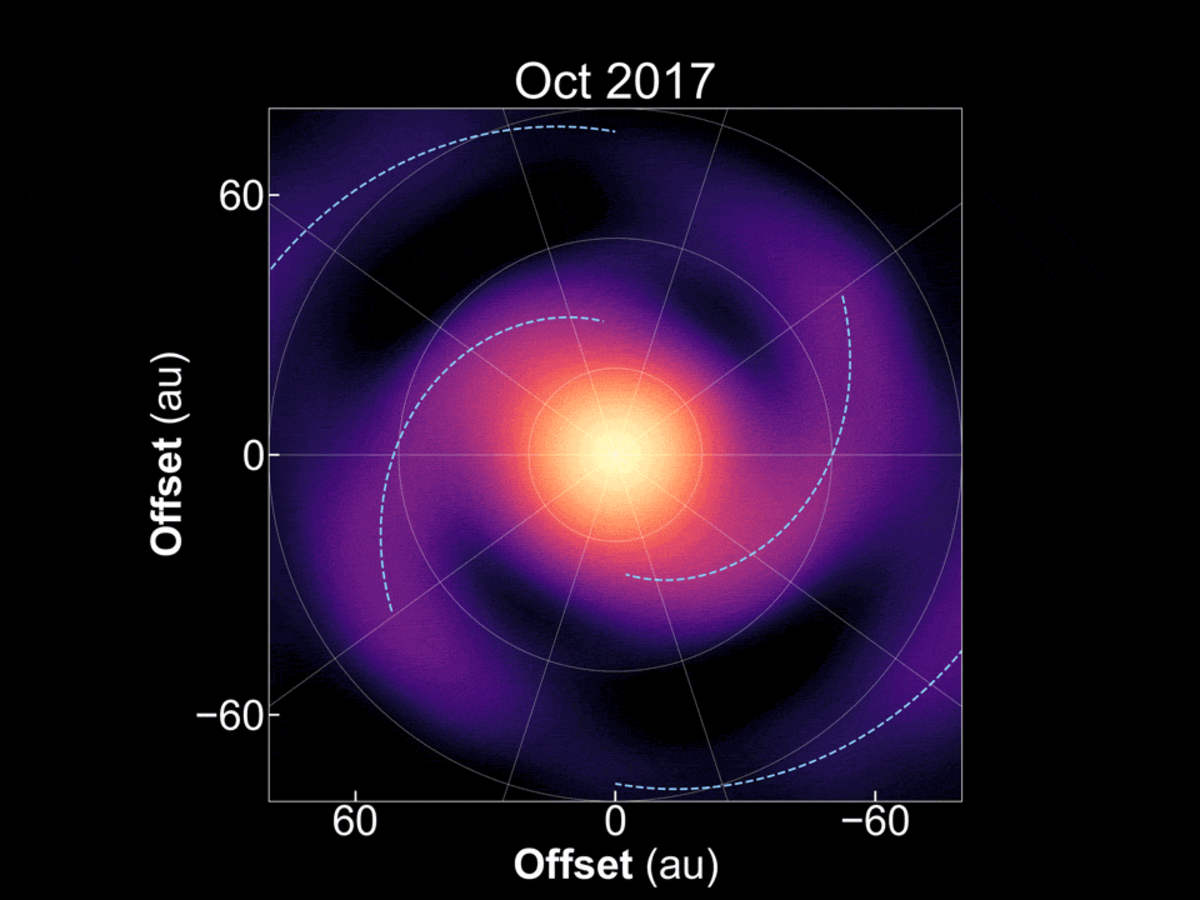
This definitive finding strongly indicates that the structure in the IM Lupi disk is not the result of an already-formed planet. Instead, it confirms the disk is currently in the pre-planetary phase, a perfect location for studying the initial accretion process. “When I saw the outcome of the analysis —the dynamic visualization of the spiral in motion— I screamed with excitement," said Tomohiro Yoshida, the lead researcher. He credited the stability and performance of the ALMA telescope for making the long-term observation possible. The team now plans to apply this methodology to other disks, aiming to construct a "documentary" of the entire planetary system formation process.
This finding provides a direct glimpse into the origins of planets, including our own Earth, answering fundamental questions about how solar systems are created. By better understanding planet formation, scientists can refine models for detecting and characterizing potentially habitable exoplanets around other stars.
More on Starlust
Protoplanetary disks are not so flat after all, suggests compelling evidence from ALMA
NASA just confirmed 6,000 alien worlds—and 8,000 more waiting to be verified