November’s New Moon will be the most distant from Earth until 2043
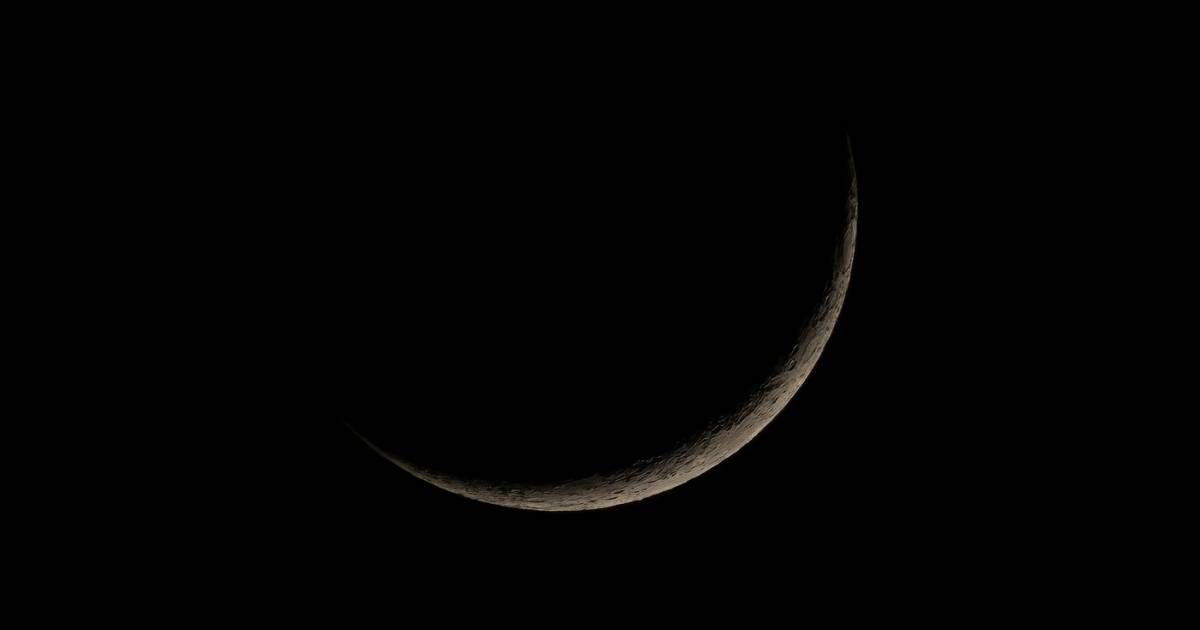
The celestial event this month is a rare one, with the Moon retreating to an apogee from Earth's center.
March waxing crescent moon rises over Boise in the evening of late winter season (Representative Cover Image Source: Getty | 	Darwin Fan)
March waxing crescent moon rises over Boise in the evening of late winter season (Representative Cover Image Source: Getty | Darwin Fan)

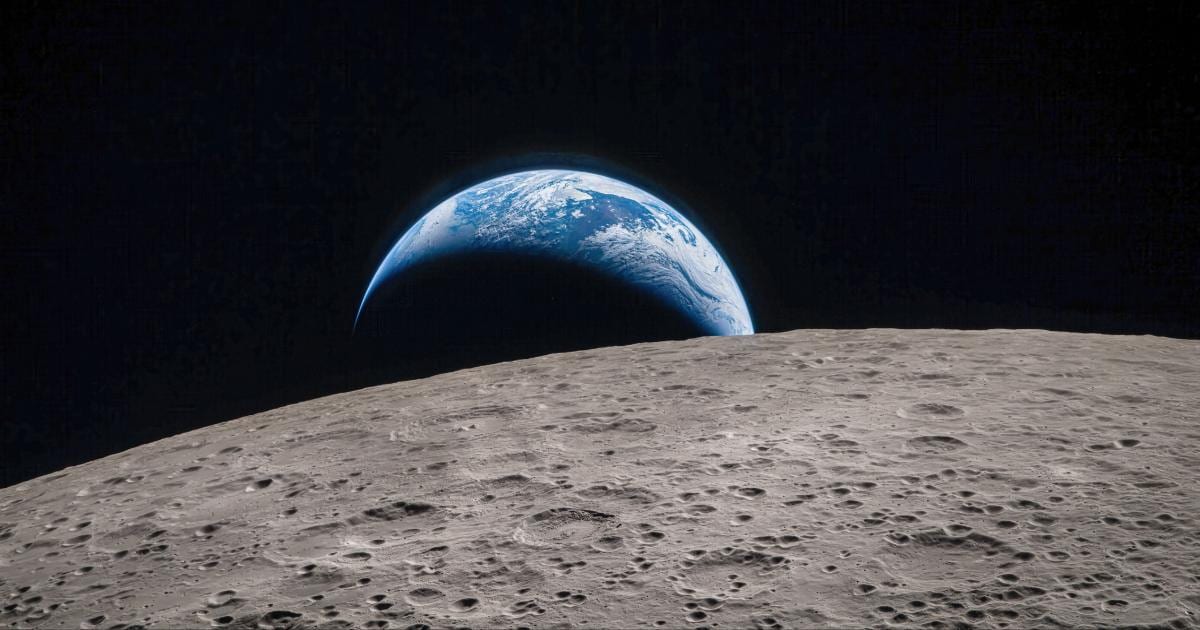
On November 20, 2025, skywatchers can look forward to a unique celestial event: the New Moon will be at its farthest distance from Earth for the next 18 years. This impressive distance highlights how the Earth-Moon system is always changing, according to TimeAndDate

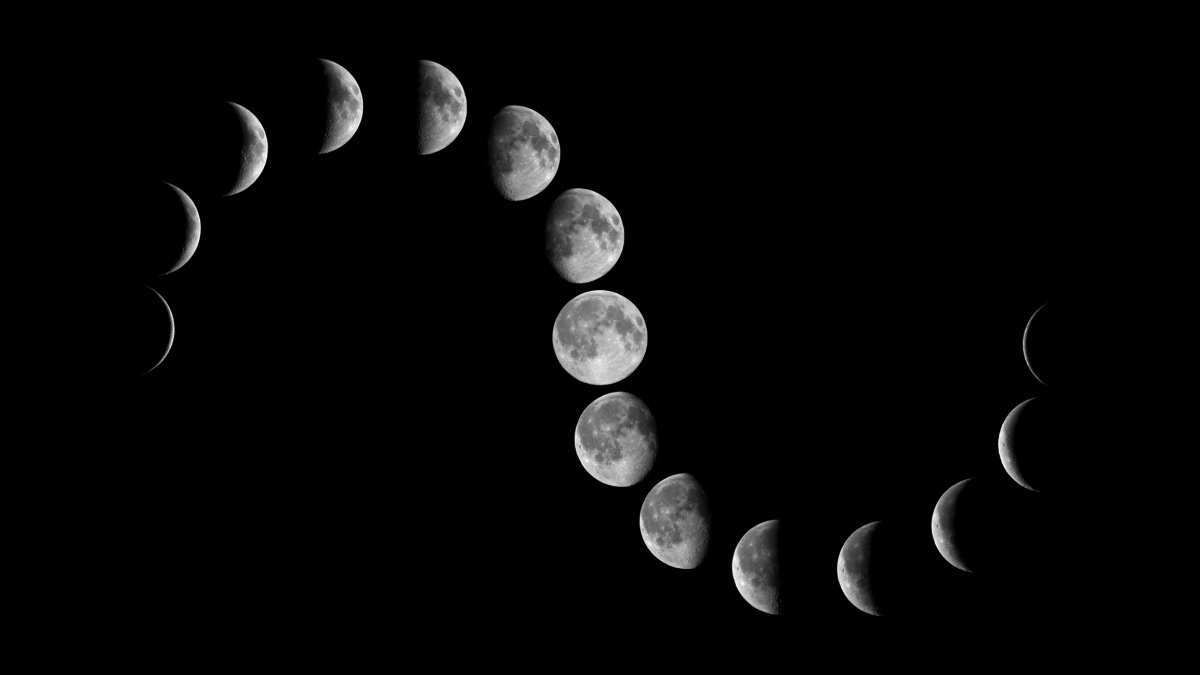
All phases of Moon: Waning Crescent, Third Quarter, Waning Gibbous, Full Moon, Waxing Gibbous, First Quarter and Waxing Crescent on one big mosaic against black background (Representative Image Source: Getty | dzika_mrowka)

The Moon's orbit is not in a perfect circle; it actually follows an elliptical path, so its distance from us isn’t constant. When it reaches its farthest point, called apogee, we experience what's known as a 'Micromoon.' This month’s event is especially noteworthy because the Moon will be about 252,706 miles (or 406,691 kilometers) away from the center of Earth, per timeanddate.com. That's pretty close to the record for its farthest position, and we won't see another one like it until December 2043.
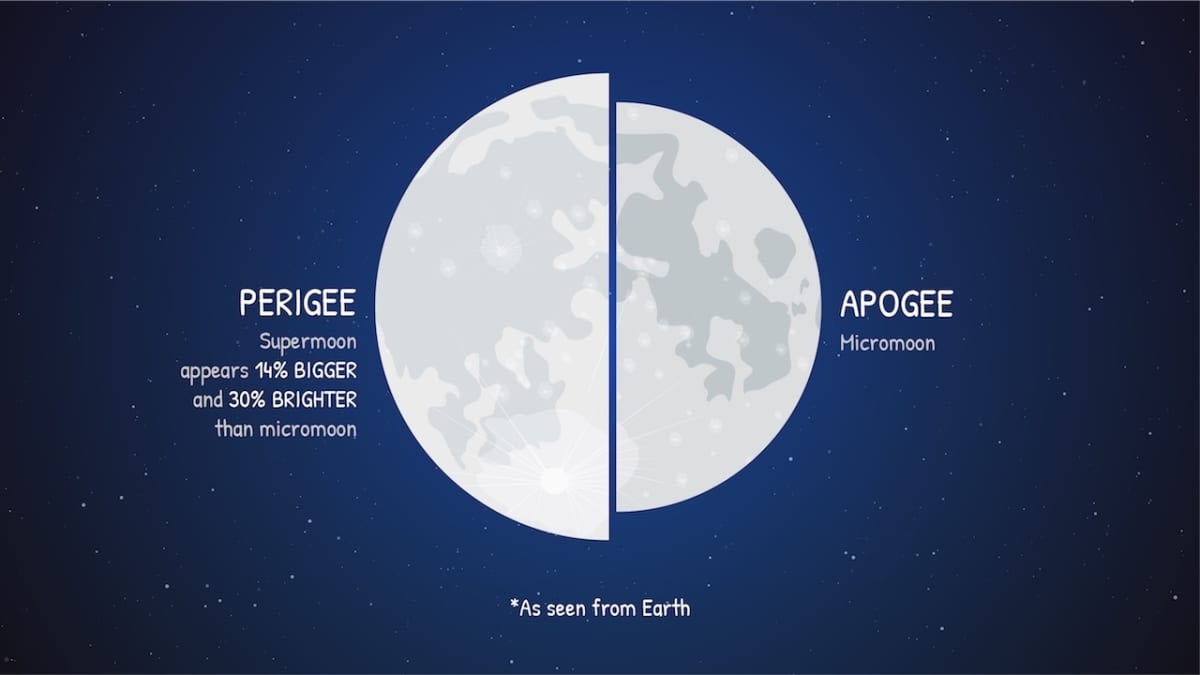
It's nearly impossible to compare the apparent size of the supermoon with a micromoon from memory, but when seen side-by-side as in this graphic, it becomes clear (Image Source: NASA/JPL-Caltech
It's nearly impossible to compare the apparent size of the supermoon with a micromoon from memory, but when seen side-by-side as in this graphic, it becomes clear (Image Source: NASA/JPL-Caltech)

After this event in November, we won't see the Moon this far away again until December 1, 2043, when it's predicted to be around 252,714 miles (or 406,704 kilometers) from Earth, per timeanddate.com. Usually, we experience the furthest apogees and closest perigees (the points where it's nearest) during the New or Full Moon. This happens because the Sun's gravity comes into play, lining up with both the Earth and Moon during those phases, which stretches the Moon’s orbit a bit. What's intriguing is that the apogee on November 20 will occur just four hours before the New Moon.

The official distance to the Moon is figured from its center to the Earth's center, but where you are on Earth changes how far it seems. At its farthest point (which is at 02:46 UTC on November 20), the Moon will be right overhead in Western Australia. Because of the Earth’s curve, people in this area will actually be the closest to the Moon’s surface. On the other hand, the place that will be the farthest from the Moon is out in the North Atlantic Ocean, southeast of Bermuda, with a distance of about 255,600 miles (or 411,300 kilometers) to the Moon's surface.  
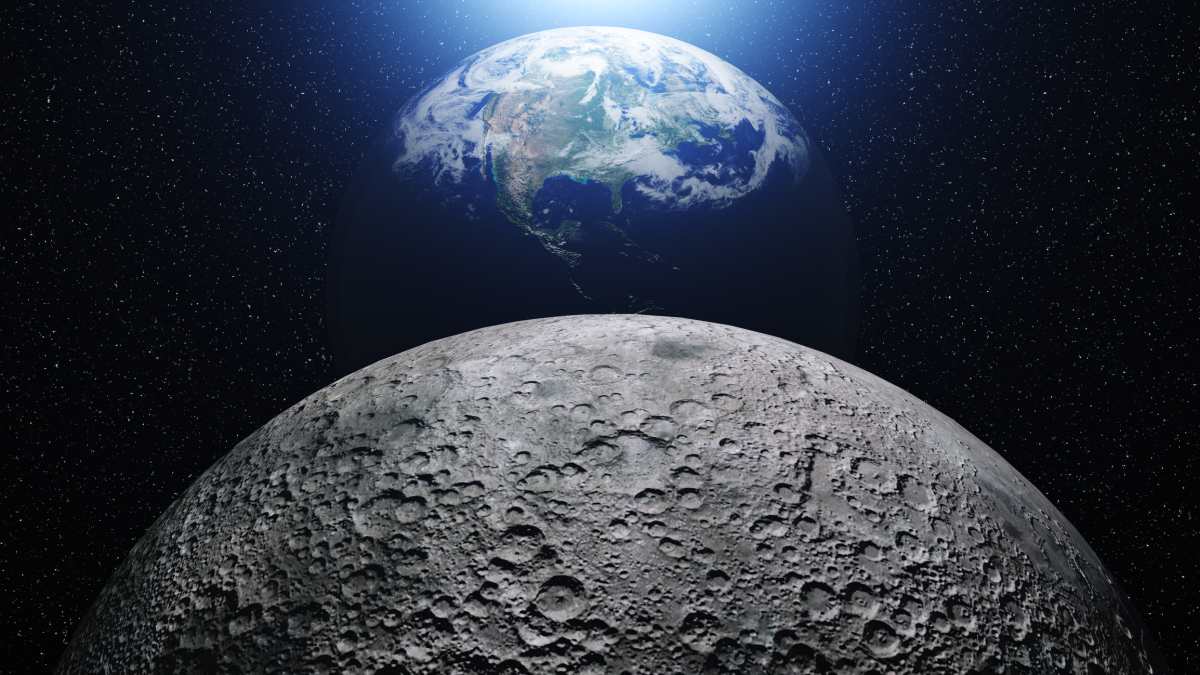
3d rendered image of planet Earth with the Moon (Representative Cover Image Source: Getty | mikiell)

That notable distance we see in November is just a glimpse of a bigger trend: the Moon is always drifting away from Earth. This happens because of tidal friction, where there’s a constant pull-and-push between Earth’s oceans and the Moon's gravity. As the Moon pulls on the oceans, it causes tidal bulges in the water, but because Earth spins, those bulges end up slightly ahead of where the Moon is directly overhead. This misalignment slows down Earth's rotation a bit and, in turn, nudges the Moon into a higher and slower orbit.
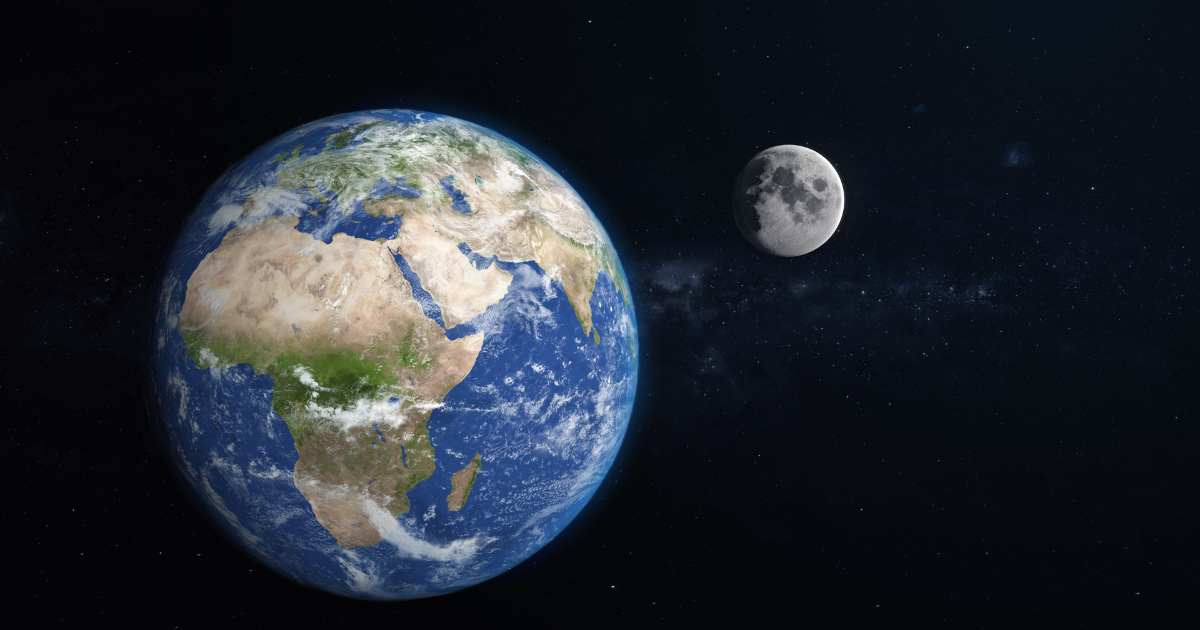
A close-up 3D render of the planet Earth, with the Moon emerging from behind it, set against a backdrop of a galaxy in deep space (Representative Cover Image Source: Getty | Jaiphet Seehawong)
A close-up 3D render of the planet Earth, with the Moon emerging from behind it, set against a backdrop of a galaxy in deep space (Representative Image Source: Getty | Jaiphet Seehawong)

It means that the Moon is slowly moving away from us at about 3.8 centimeters, or 1.5 inches, each year. Although other factors like the Sun's gravity and the shape of the Moon's orbit play a part, the main reason for this gradual drift is the tidal interaction.

More on Starlust

What would happen if Earth became tidally locked to the Moon?

Here's when the final supermoon of 2025 will light up December's night sky

MORE STORIES

The metal deposits date back to a time when Mars' climate was changing from wet to dry
3 days ago
Scientists have found that liquid-water habitable zones can overlap with ultraviolet habitable zones around low-mass stars.
3 days ago
Although Uranus possesses rings, they are not as structured and bright as the rings of Saturn. They are rather dark, narrow, and tough to study.
4 days ago
ISS Expedition 74 aims to boost space health and future medical breakthroughs on Earth.
4 days ago
Citizen scientists will look for warped spacetime using data from the European Space Agency's Euclid telescope.
5 days ago
A boxful of soil-living worms was sent to the International Space Station to assess the dangers.
6 days ago
The ancient ocean on Mars probably occupied a third of its surface.
7 days ago
April skies light up as a comet with bright tail and rare visibility reaches perihelion.
Apr 18, 2026
Scientists predict wave behavior using factors like gravity, atmosphere and liquid composition.
Apr 18, 2026
Parker Solar Probe has uncovered new details about how magnetic reconnection on the Sun flings charged particles at insane speeds.
Apr 17, 2026