How fast is the Moon moving away from Earth each year?
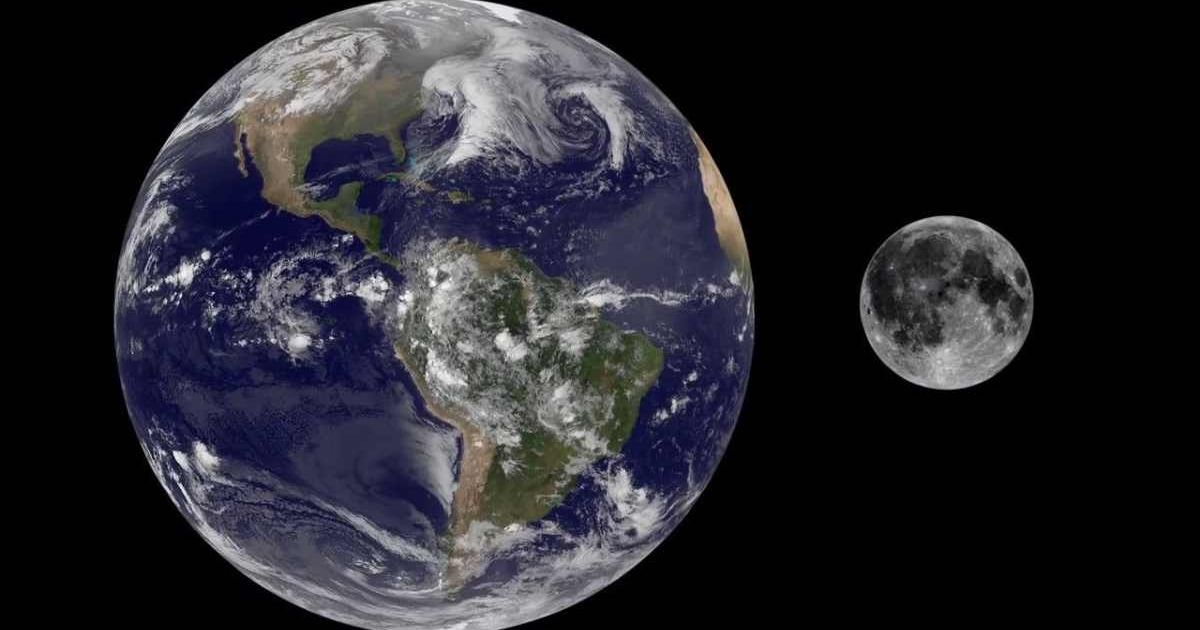
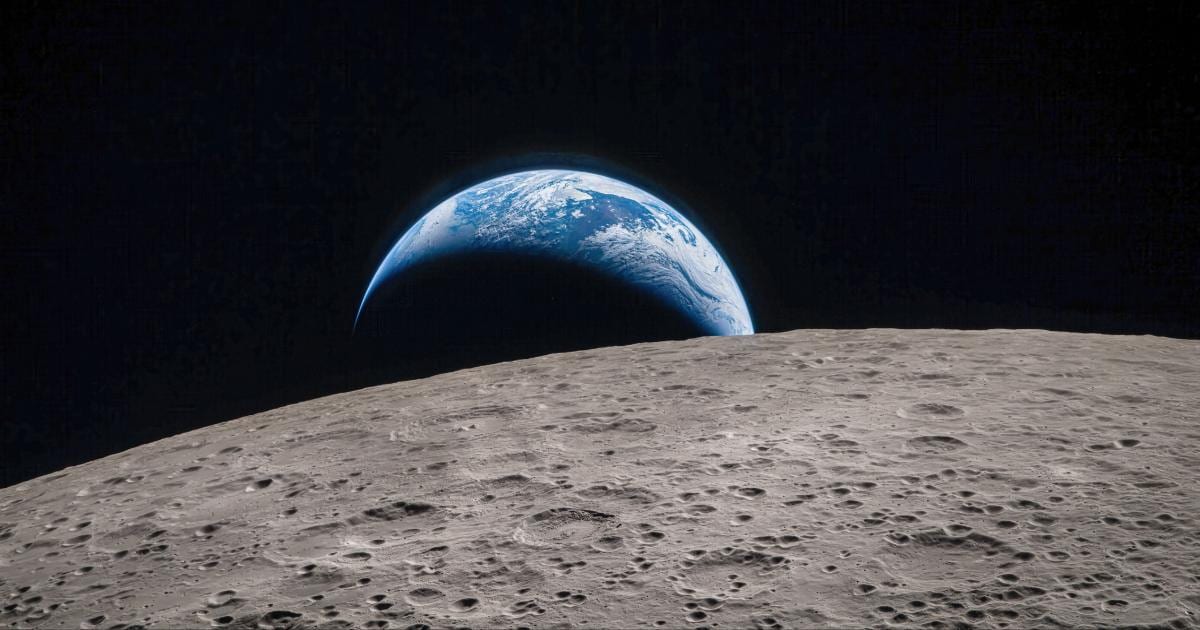
The Moon is slowly drifting away from Earth, a continuous process driven primarily by the gravitational tug-of-war between our planet's oceans and its lone natural satellite. At a rate of approximately 1.5 inches (4 cm) per year, the Moon is gradually retreating, a consequence of the tidal forces it exerts on Earth, as per NASA.
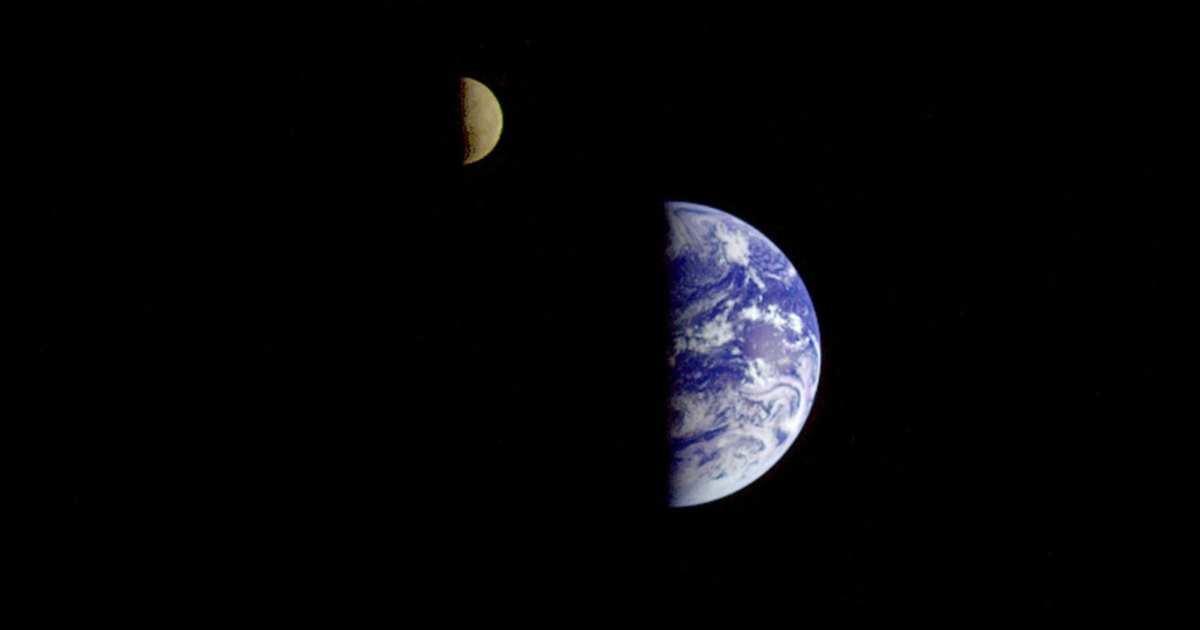
As the Moon's gravity pulls on the oceans, it causes them to bulge. This bulge, however, does not perfectly align with the Moon's position due to the time it takes for the massive amount of water to shift. This misalignment creates a constant friction that gradually slows Earth's rotation. In a reciprocal effect, this interaction also alters the Moon's orbital speed, causing it to spiral farther out into space.
While other minor factors like the Sun's gravity and the Moon's orbital shape also play a role, their influence on this process is subtle. This slow but steady process is a fundamental aspect of the Earth-Moon system's dynamic relationship. Looking far into the future, scientific models suggest that if the Earth and Moon were to survive the eventual death of the Sun, they would become tidally locked to each other in roughly 50 billion years, a state where the Moon would be visible from only one half of the Earth.
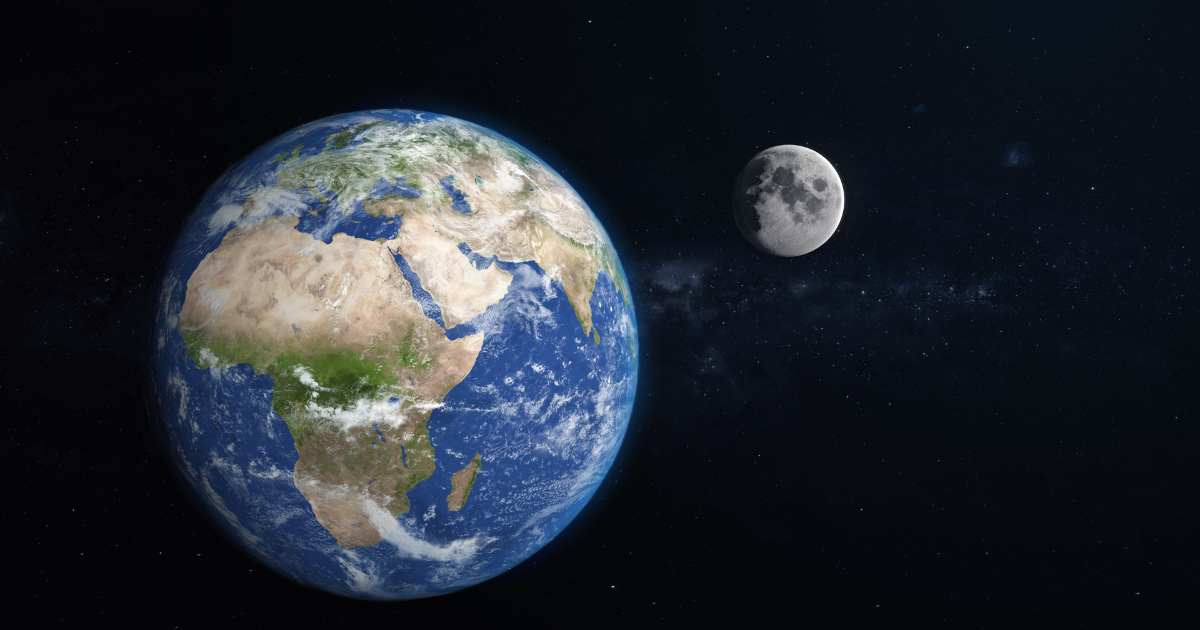
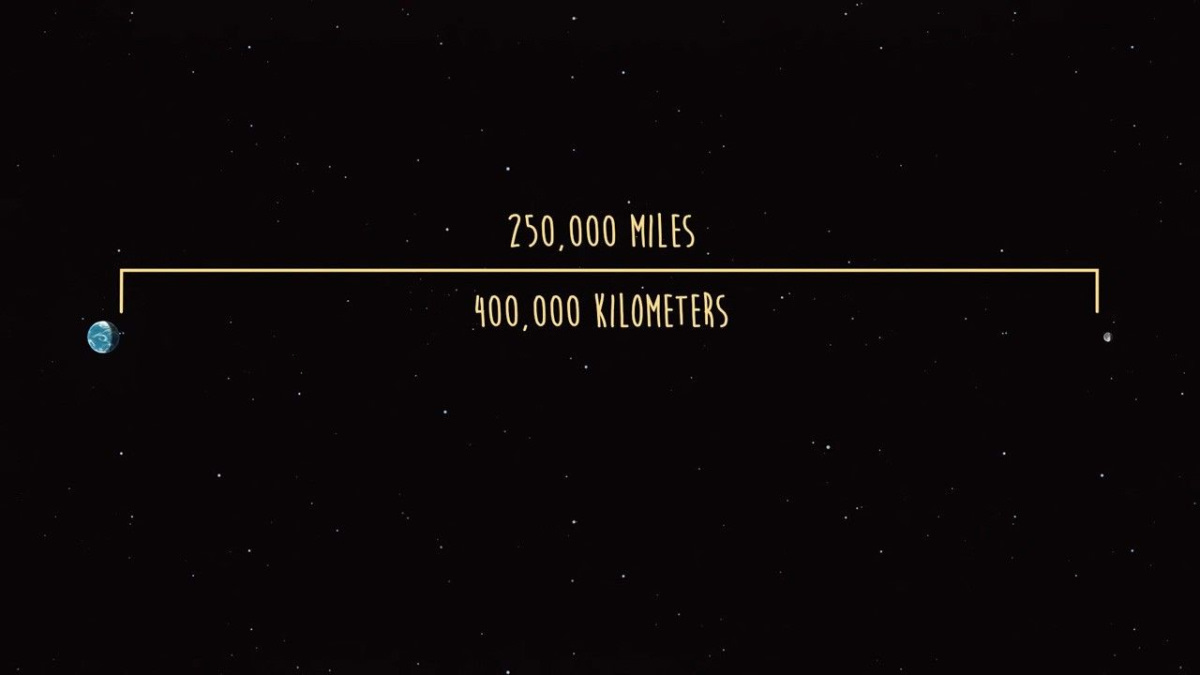
Despite its prominent appearance in the night sky, the Moon is surprisingly small and distant. With a radius of about 1,080 miles (1,740 kilometers), it's less than a third the width of Earth, per NASA. To put that into perspective, if the Earth were the size of a nickel, the Moon would be no larger than a coffee bean. The average distance between the Earth and the Moon is an astonishing 238,855 miles (384,400 kilometers). This vast expanse means that you could fit all 30 of the other planets in our solar system's planetary family side-by-side in the space between Earth and its moon.
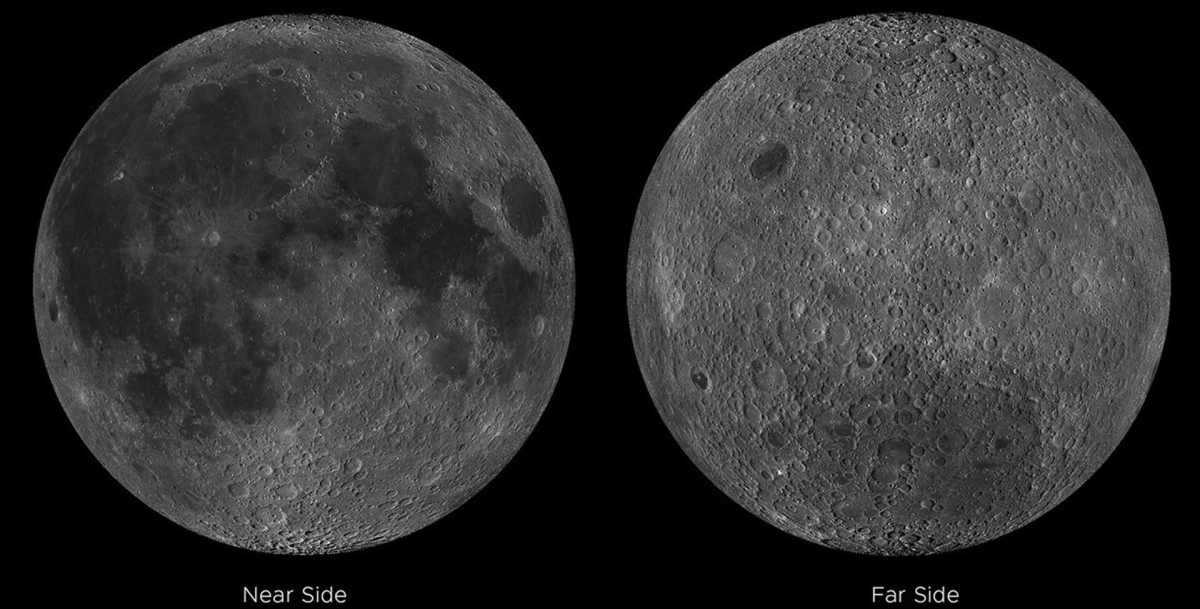
Have you ever wondered why we only ever see one side of the Moon? This isn't a cosmic coincidence; it's a phenomenon known as synchronous tidal locking, as per NASA. The Moon rotates on its axis at the same rate it orbits the Earth, a remarkable orbital dance that ensures it always presents the same face to us. This isn't just a quirk of our celestial neighbor. Tidal locking is incredibly common throughout the cosmos. Almost all of the large moons in our solar system, and even some binary star systems and exoplanets, are tidally locked. It's an inevitable result of gravitational forces and energy dissipation. For our Moon, this process began billions of years ago. It's believed that after the Moon's formation from a massive collision with early Earth, it was a rapidly spinning, molten body.
Earth's immense gravity stretched the Moon into a slight football shape. As the Moon spun, this gravitational bulge was constantly pulled back toward Earth, a tug-of-war that created friction and dissipated energy as heat. This process gradually slowed the Moon's rotation until it reached a stable state where its spin rate matched its orbital period. At this point, the bulge no longer shifted relative to Earth, and the rotational slowing ceased. Interestingly, while this tidal interaction was slowing the Moon's rotation, it was also simultaneously adding energy to its orbit, contributing to the Moon's slow drift away from us.
More on Starlust
Moon phases 2025: When is the next new moon