Neutron star mergers produce gold and platinum—and scientists may now know why
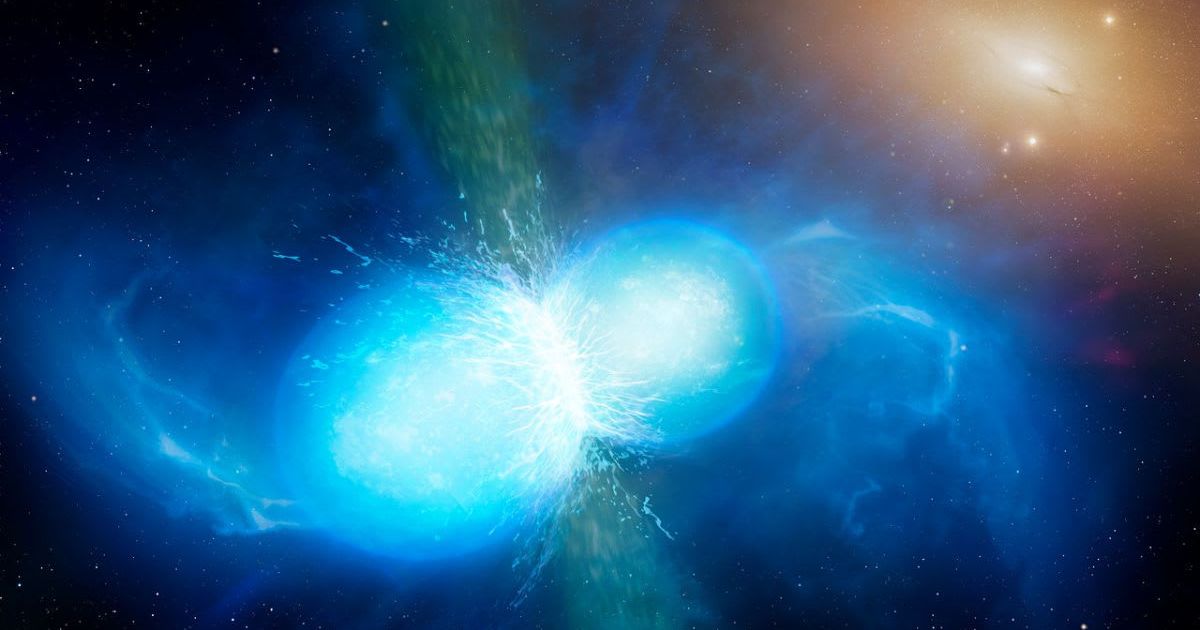
The fiery cauldron of stars cooks up elements up to iron. But where do the elements heavier than iron come from? Researchers at Technische Universität Darmstadt have taken a step closer to answering that question by simulating neutron star mergers, which churn out heavy elements such as gold and platinum. They have published their findings in Physical Review Letters.
Scientists think that half of heavy elements heavier than iron are produced through the rapid neutron-capture process (r-process), during which nuclei are bombarded by neutrons within a very short span of time. This process occurs under extreme conditions, such as when two neutron stars collide. But since many such nuclei are extremely neutron rich, they cannot be produced in laboratories, thus making theoretical models essential. But these models often have significant disagreements among themselves. Research facilities such as GSI-FAIR, a powerful particle accelerator facility in Germany, can generate some of these exotic nuclei, but many remain beyond such set-ups.
As a workaround, the researchers devised a new model using a modern ab initio approach. This allowed them to study fundamental interactions between protons and neutrons, providing them a way to quantify theoretical uncertainties. The team calculated the properties of 70 particularly important nuclei using a method called Valence-Space In-Medium Similarity Renormalization Group (VS-IMSRG). This group of nuclei, which falls around the magic neutron number N = 82, plays a pivotal role in contributing to the second r-process, which is responsible for the accumulation of certain heavy elements observed in the universe.
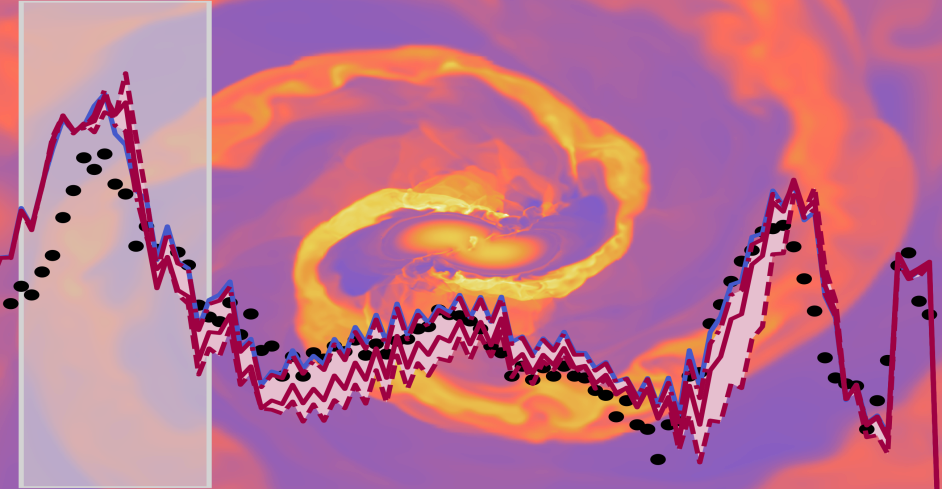
The researchers then incorporated the calculations into simulations that recreated scenarios in neutron star mergers and other extreme cosmic events. They found that, with new calculations of nuclear masses, the flow of matter that feeds the r-process slows down more than earlier models predicted. This causes matter to take longer to accumulate before the making of heavy elements can continue. "Even relatively small changes in nuclear masses can significantly influence the predicted abundances of heavy elements in the universe," says Jan Kuske, the study's first author, in a statement. He predicts a pronounced second peak and a shift in the third one. This, in turn, yields new insights into how neutron star collisions make heavy elements such as gold and platinum.
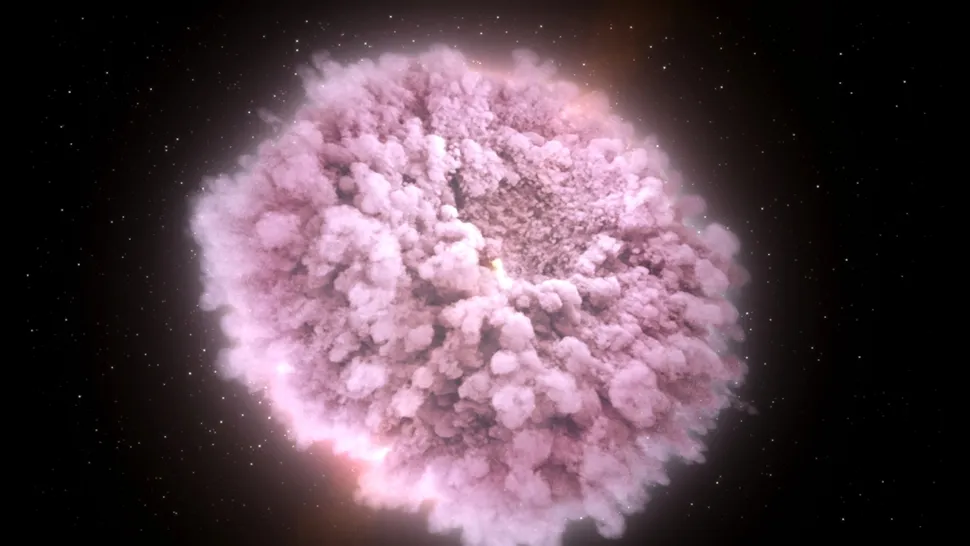
The researchers say that model-based studies will be very handy since it is difficult to recreate the many nuclei relevant to the r-process even using next-generation particle accelerators. "This study also demonstrates that the greatest scientific progress can be achieved by combining new experimental data with state-of-the-art theoretical models in key regions for neutron-rich nuclei,” says Almudena Arcones, professor of theoretical astrophysics at TU Darmstadt. “These calculations are therefore crucial for identifying the most relevant isotopes that should be targeted in future experiments."
More on Starlust
Scientists simulated neutron star reaction in a lab. The results fixed a major 'roadblock.'
First-ever oval orbit detected in neutron star–black hole merger