NASA tests lunar spacesuit underwater in simulated Moon gravity for the very first time

NASA has initiated groundbreaking underwater testing of a lunar spacesuit, marking a critical step in its preparation for future Moon missions. The innovative trials, conducted at NASA's Neutral Buoyancy Laboratory (NBL), simulate lunar gravity to assess the performance of the Axiom Extravehicular Mobility Unit (AxEMU), according to an X post by NASA's Johnson Space Center.
This summer is off to a splash 🌊
— NASA's Johnson Space Center (@NASA_Johnson) July 8, 2025
Preparations for @Axiom_Space’s future lunar spacesuit testing has kicked off under water at @NASA’s Neutral Buoyancy Laboratory where the spacesuit has been tested underwater in a simulated lunar surface gravity for the very first time. pic.twitter.com/meVV4O9klB
These initial underwater evaluations, which began in June, saw Axiom Space astronaut and Chief Technology Officer Koichi Wakata as the first to don the AxEMU. He was followed by NASA spacesuit engineers Kristine Davis and Richard Rhodes, per Axiom Space. The primary objective of these tests was to integrate the AxEMU with the NBL facility, one of the world's largest indoor pools designed for astronaut training and mission simulations.
Axiom Space’s Next-Gen Spacesuit is Crew Tested for First Time in NASA’s Neutral Buoyancy Lab! #AxEMUhttps://t.co/ildg8ubrXx pic.twitter.com/STdMyI7EUh
— Axiom Space (@Axiom_Space) July 8, 2025
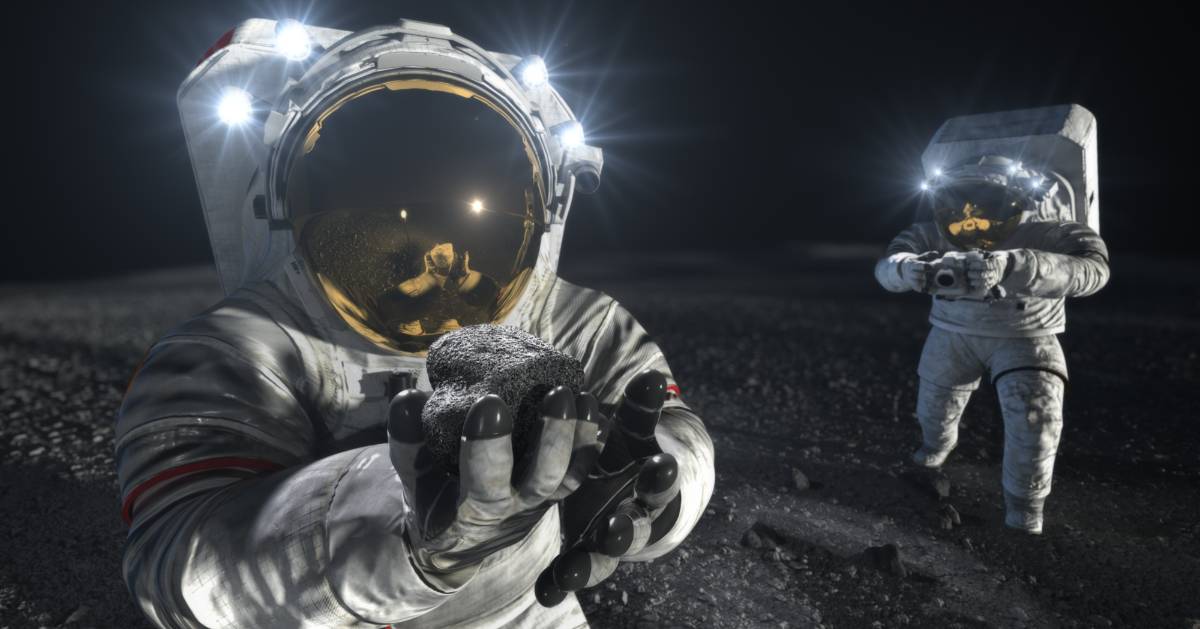
The Axiom Space-developed suit is slated to enable astronauts to explore the lunar surface for the first time in over five decades during the upcoming Artemis III mission to the Moon's south pole. During the NBL sessions, the Axiom Space Extravehicular Activity (EVA) program team rigorously tested the suit's communication, breathing, and cooling systems. The team also focused on acquainting NBL divers with AxEMU's operational requirements and support systems.

Ongoing collaboration between Axiom Space and NASA's Artemis Program teams will continue at the NBL to prepare for EVA tasks on the lunar surface as part of the Artemis III mission. This year alone, the EVA program has achieved significant milestones, including three crewed NBL tests, 23 tests within NASA's Active Response Gravity Offload System (ARGOS) for simulated reduced gravity, numerous field evaluations with lunar tools, and successful lunar regolith challenge testing. The spacesuit is also undergoing tests with Lunar Terrain Vehicles (LVTs) and is scheduled for a Critical Design Review (CDR) later this year.

The Axiom Space AxEMU spacesuit marks a revolutionary advancement in astronaut wear, promising substantial advantages for astronauts, space agencies, and commercial space ventures alike. Its innovative design boasts enhanced sizing and adjustability, ensuring a superior fit for a broader range of individuals. This improved fit translates to great comfort and an amplified ability for astronauts to execute their tasks effectively, as mentioned by Axiom Space.

Conceived as a cost-effective and multipurpose spacesuit, the AxEMU is engineered to be mission-agnostic, capable of adapting to various environments with minimal modifications. It prioritizes enhanced safety and agility, meeting the stringent demands of diverse space conditions. The suit incorporates specialized features to endure the abrasive and dusty lunar surface while maintaining crucial interfaces vital for safe and efficient extravehicular activities in microgravity.
The development of the AxEMU is a testament to extensive collaboration, with each hardware component, fabric panel, and integrated system benefiting from the combined experience of diverse professionals across multiple industries. Building the next-generation spacesuit for lunar exploration has brought together the expertise of sewers, technicians, engineers, medical personnel, and many others, all working in unison to make history. Learning from past spacesuit designs, the AxEMU integrates cutting-edge technology to deliver superior safety and reliability. Its astronaut-centric architecture includes redundant components to mitigate single-point failures, meticulously optimized to ensure the user's safety during critical operations and their return to the spacecraft.