‘Like going from steam to combustion engine’: NASA’s PUNCH mission stuns scientists with solar storm prediction
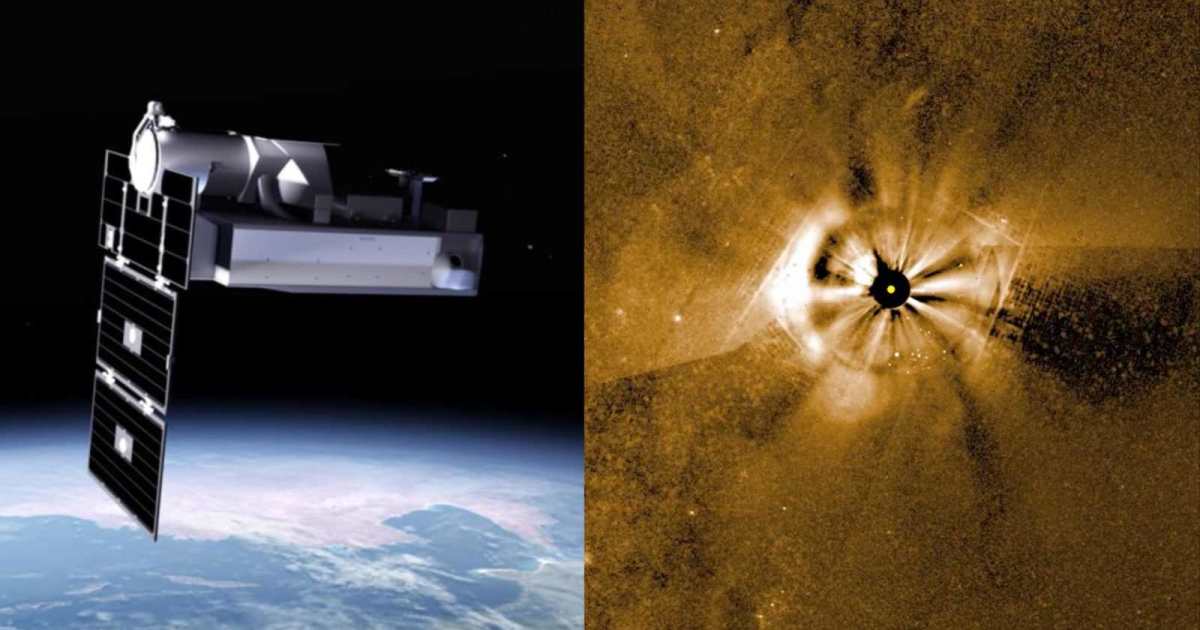
Scientists recently completed a test for space weather prediction using NASA’s PUNCH satellites, and the results have left them surprised. Thanks to the continuous imagery obtained by the satellites, they were able to predict the arrival of a coronal mass ejection (CME) to Earth with a prediction error of less than 30 minutes.
Craig DeForest, principal investigator for PUNCH at Southwest Research Institute’s Solar System Science and Exploration Division, said in a statement, “We thought PUNCH would be good at this, but it’s a stunning result.” He even said that the advancement could be “the space weather equivalent of going from a steam engine to a modern internal combustion engine.”
What is a CME (Coronal Mass Ejection)?
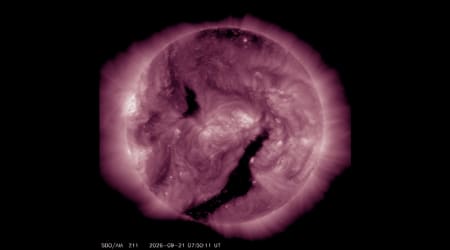
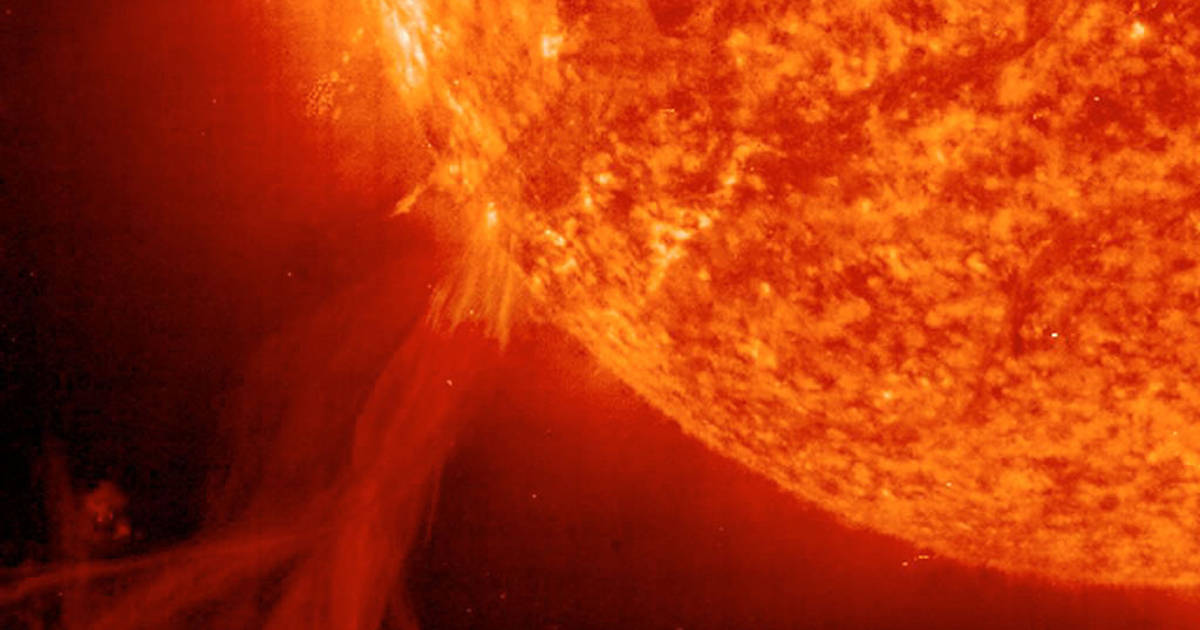
A coronal mass ejection is the expulsion of charged gas called plasma from the Sun. According to NASA, a CME can contain a billion tons of matter that can be accelerated to many million miles per hour. The frequency of CMEs increases when the Sun is more active, i.e., during the solar maximum phase in its 11-year cycle. Besides, CMEs are also responsible for creating auroras on Earth when they interact with atmospheric gases.
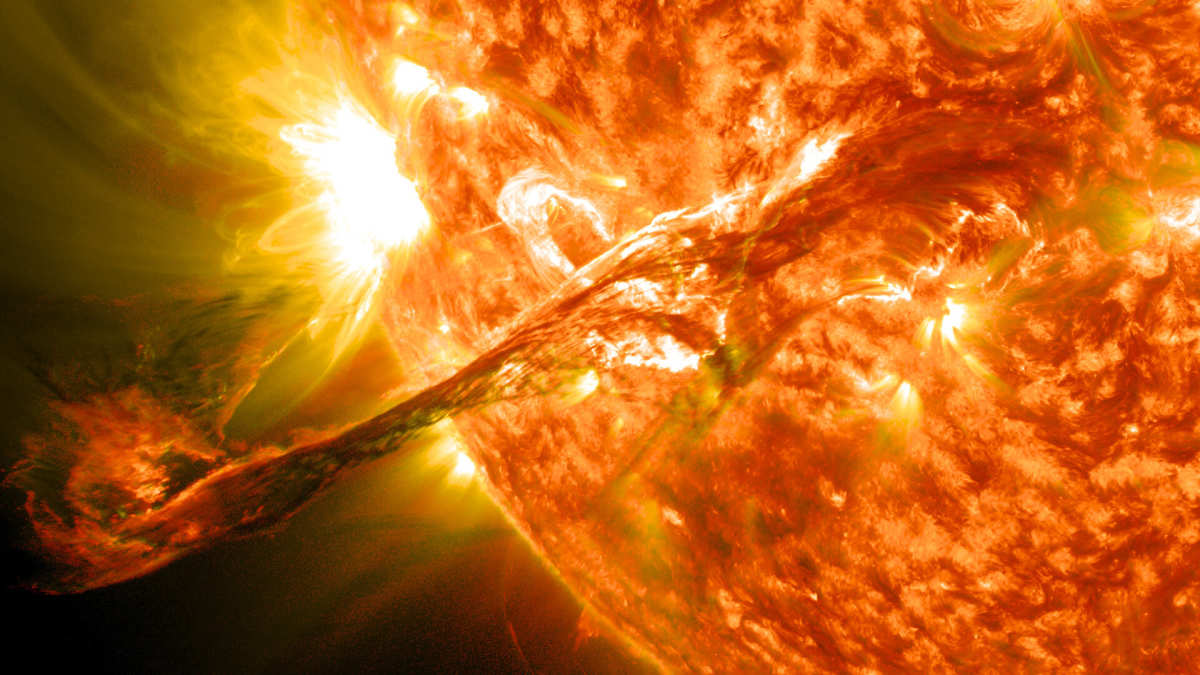
These CMEs pose considerable danger because when they’re strong enough, they can knock out power grids and satellites and impact the International Space Station housing astronauts.
What was the breakthrough test with PUNCH?
The test proved that pictures captured by PUNCH can help predict the arrival of CMEs now better than ever. The PUNCH mission consists of four satellites in low-Earth orbit that are designed to make continuous 3D observations of the inner solar system. Earlier, scientists could track a CME only for the first part of its journey (about 20 percent of the distance from the Sun), but PUNCH can now capture wide-field imagery almost the entire way by taking pictures every four minutes.
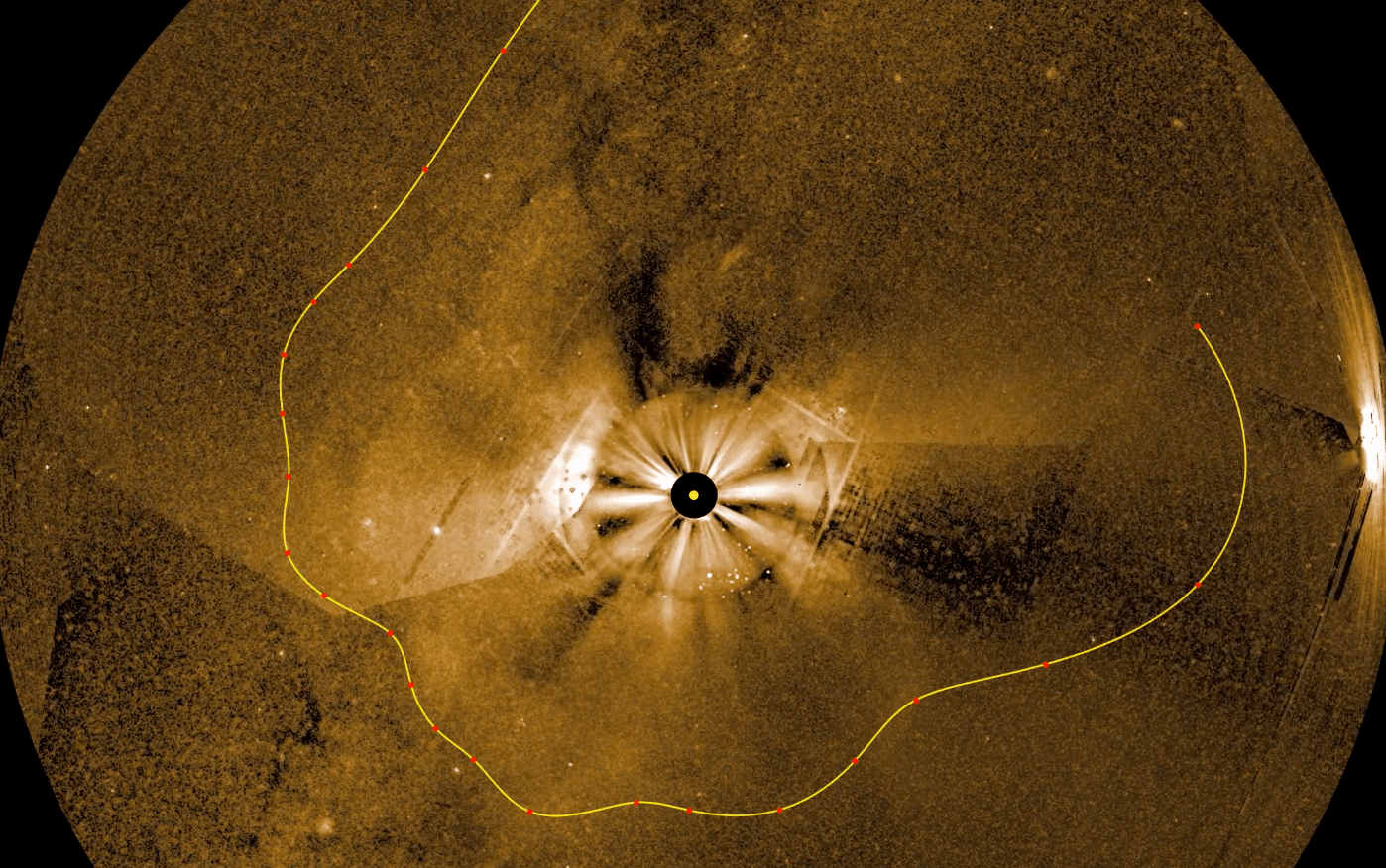
For the latest test, the results of which were presented at the Committee on Space Research Scientific Meeting and are under review at the journal Space Weather, scientists used PUNCH images of a coronal mass ejection that left the Sun on May 31, 2025. They fed hundreds of pictures of the CME into a computer model, which analyzed its leading edge as well as its speed to pinpoint the estimated time of arrival. About 12 hours later, the model predicted that the CME would reach Earth in eight hours, and this prediction was accurate to within 30 minutes.
“We accomplished an order of magnitude better result than the state-of-the-art method with a really basic process, just informed by the fact that the coronal mass ejection could be tracked continuously across the solar system,” DeForest said. The images captured by PUNCH also revealed new structures in CMEs, which appear to be clumpier than previously thought, and they evolve as they move across the solar system. Scientists are also hopeful of getting more insights into the movement of plasma across space in star-forming regions.
More on Starlust
Scientists find a new way to predict space weather based on how the Sun goes to 'sleep'
Scientists discover the Sun has more silver than previously estimated