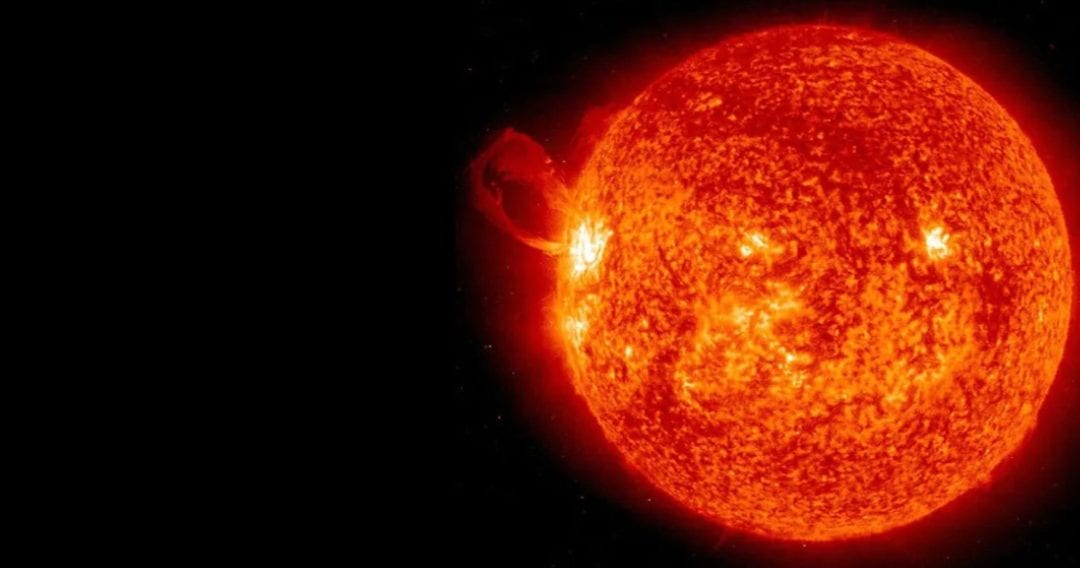
Mysterious asteroid 44 Nysa may be the first known three-lobed world. It even has a moon.
Asteroids like Nysa are called E-type asteroids, which are believed to preserve records of the early solar system and secrets of our planet's formation.
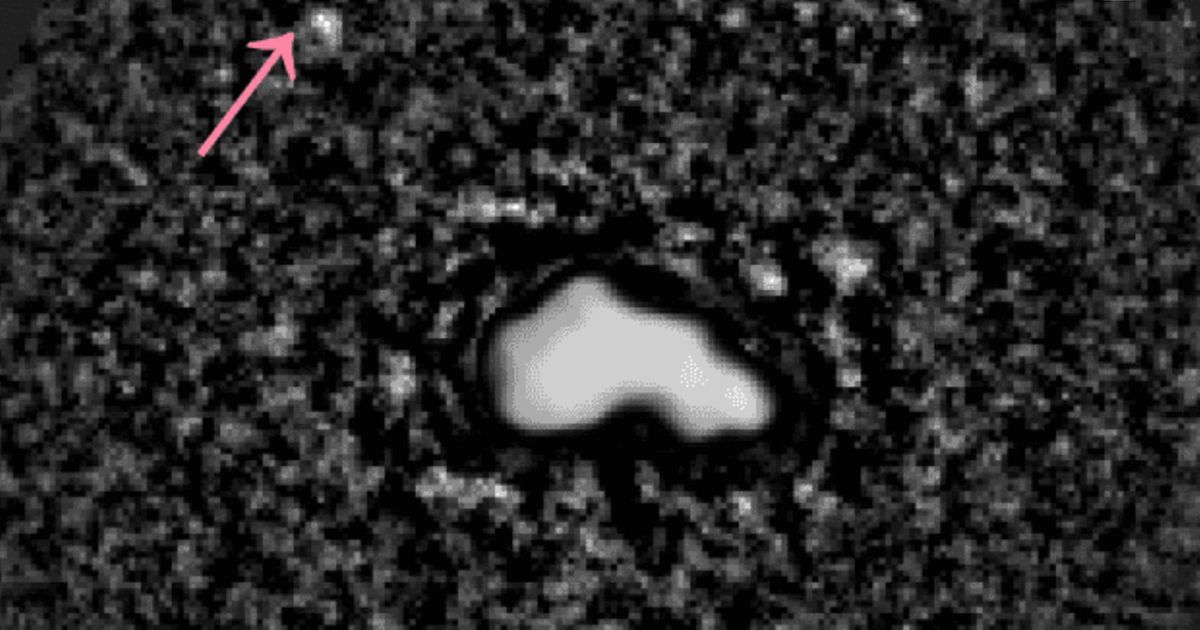
Asteroid 44 Nysa photographed by the Large Binocular Telescope on February 15, 2026. Its tiny moon is marked with an arrow. (Cover Image Source: Very Large Telescope/Large Binocular Telescope/Minker et al., 2026)

In a new study, available on the arXiv preprint server, a team of astronomers has found evidence that the object 44 Nysa, discovered in 1857, is a triple-lobed asteroid with a moon—the first known object of its kind. For the longest time, the 75-km-wide (47-mile-wide) Nysa was a subject of interest due to its unusual brightness and composition, and past observations suggested that it has an elongated or potentially bilobate shape. 
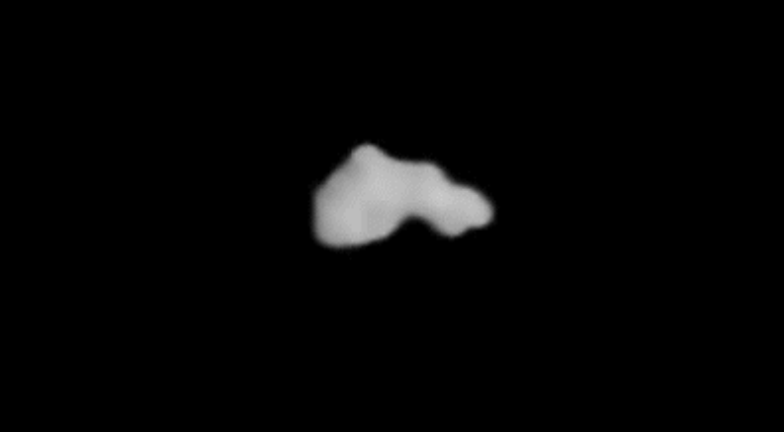
The asteroid 44 Nysa is seen as a triple-lobed object in this image by the Large Binocular Telescope, March 21, 2026.
The asteroid 44 Nysa is seen as a triple-lobed object in this image by the Large Binocular Telescope, March 21, 2026. (Image Source: Large Binocular Telescope/Very Large Telescope/Minker et al., 2026)

The latest findings come from investigations by the Large Binocular Telescope in Arizona and the European Southern Observatory’s Very Large Telescope in Chile. “The images reveal a remarkably unusual object,” lead author Kate Minker of Lowell Observatory said in a statement. “The most likely explanation is that Nysa is either a contact trinary, consisting of three connected components, or an extremely irregular coherent body unlike anything we’ve previously observed.” According to Minker, these images are of the highest quality by ground-based telescopes, rivaling those taken by spacecraft.
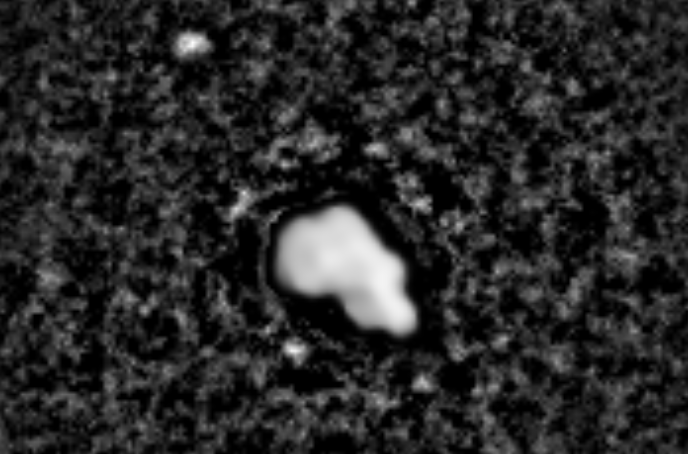
The asteroid Nysa with its Moon S/2026 (44) 1 photographed by the Large Binocular Telescope, February 15, 2026.
Image of asteroid Nysa optimized to show its moon S/2026 (44) 1 by the Large Binocular Telescope, February 15, 2026. (Image Source: Large Binocular Telescope/Very Large Telescope/Minker et al., 2026)

Thanks to the cutting-edge technology and advanced image processing, scientists also confirmed the presence of a moon around Nysa. Estimates suggest it measures roughly one kilometer (0.62 miles) in diameter and orbits Nysa from a distance of at least 170 kilometers (106 miles). The moon has been given a temporary designation of S/2026 (44) 1. Study authors say that future observations would help determine Nysa’s mass and density more precisely and ultimately uncover what gave it its current form. 
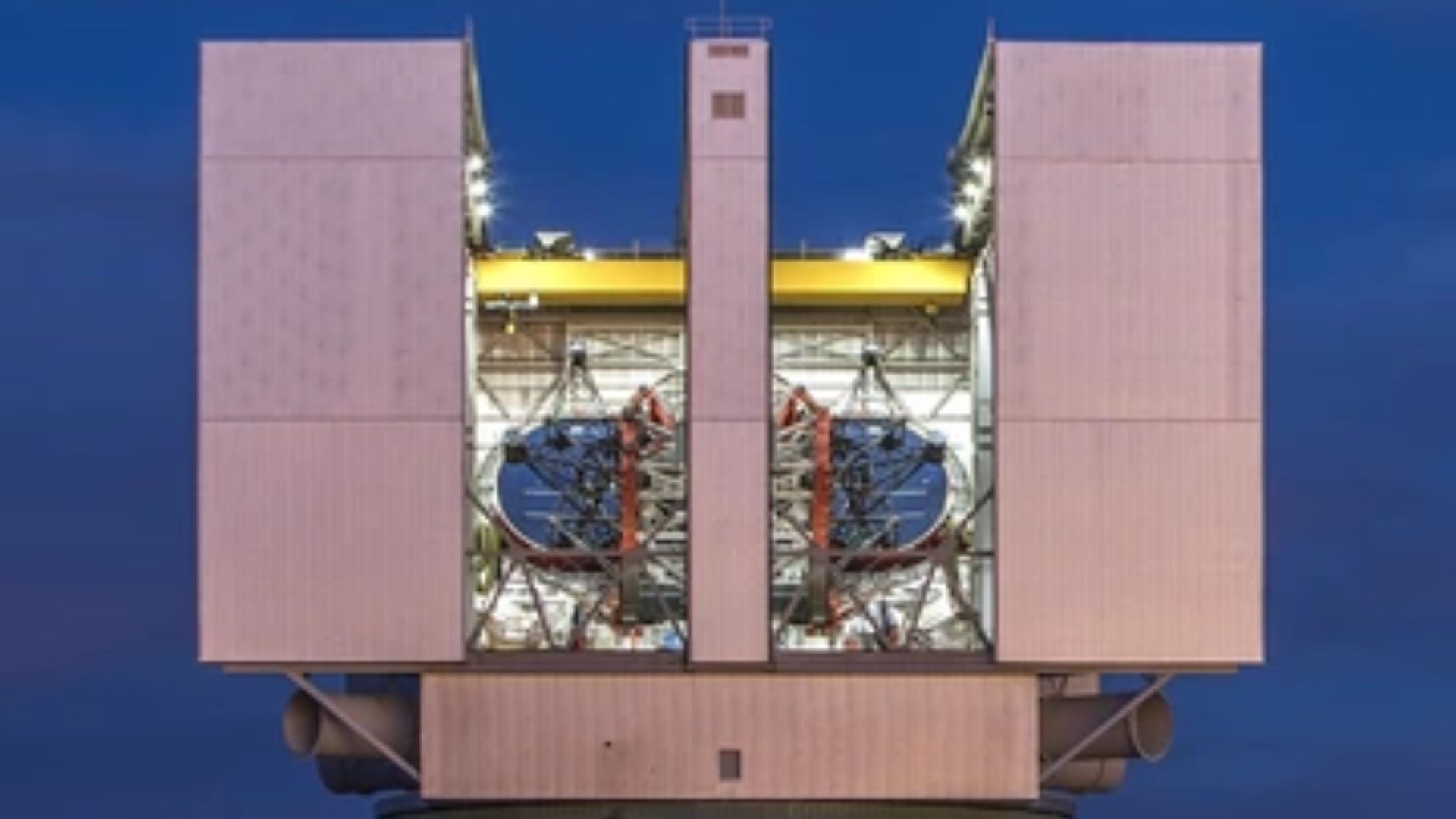
The Large Binocular Telescope atop Mount Graham in Southeastern Arizona. It is operated by the University of Arizona in Tuscon, US.
The Large Binocular Telescope atop Mount Graham in southeastern Arizona. It is operated by the University of Arizona in Tuscon, US. (Image Source: Large Binocular Telescope Observatory)

Explaining the shape of Nysa, the study authors have put forth two possible explanations. First is that the asteroid may have deformed through “low-velocity reaccumulation of fragments” after its collision with an ancient object, and second is that it could be a remnant of a “hit-and-run collision involving a larger parent body.” Al Conrad of the Large Binocular Telescope Observatory says that the images hint at Nysa truly being a unique object and that they can help determine if the asteroid is a deeply indented body or a true multi-lobed structure. 
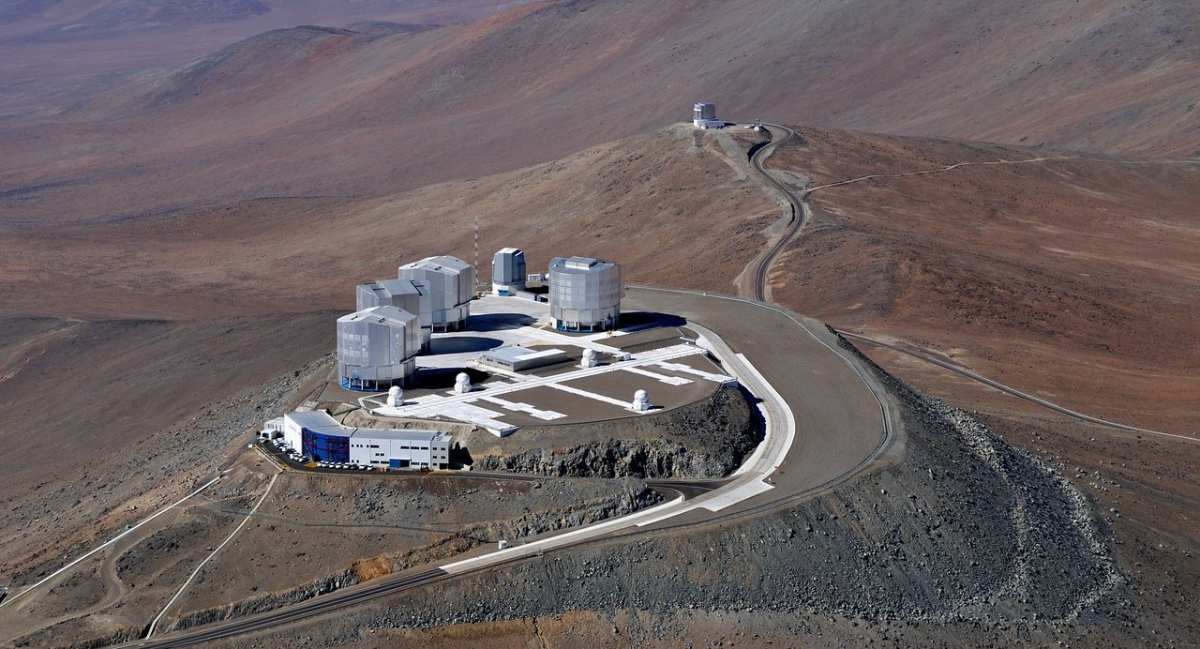
Aerial view of ESO's VLT. (Image Source: J.L. Dauvergne & G. Hüdepohl (atacamaphoto.com) | ESO)
Aerial view of ESO's Very Large Telescope in Chile. (Image Source: J.L. Dauvergne & G. Hüdepohl (atacamaphoto.com) | ESO)

Asteroids like Nysa are called E-type (enstatite-like) asteroids. This designation refers to their surface composition, which gives them their bright appearance and matches the light-reflecting signature of the iron-free mineral enstatite. These asteroids, believed to have formed near the Sun, may also share chemical traits with the building blocks of Earth and contain records of the enstatite-rich inner solar system. Understanding Nysa, therefore, could open a window into the processes that were in motion in the early days of our cosmic neighborhood.

More on Starlust

SpaceX Falcon 9 rocket debris to crash into the Moon on August 5 at 5,400 mph—can you see it?
Comet Tempel 2 to make its closest approach to Earth on August 3—viewing tips and its likely coordinates

MORE STORIES

The features have been photographed in a valley nicknamed ‘Valle Grande,' which Curiosity is currently exploring.
17 hours ago
The search for life on Jupiter's moon Europa just got a lot more complicated. Here’s why.
19 hours ago
The data from the weather satellites supplemented observations made by U.S. government sensors.
20 hours ago
Both spacecraft captured stunning images of Noachis Terra, an ancient cratered region of Mars.
1 day ago
A thick global blanket of dust from the impact insulated Earth's atmosphere, triggering global wildfires and killing off the mighty dinosaurs.
1 day ago
What if technosignatures and biosignatures are not the only ways intelligent alien life can make itself apparent?
1 day ago
The simulations indicate that rift valleys on Venus may still be actively forming today.
3 days ago
"The Moon is like a time capsule—it has preserved a record of events that have been erased from Earth by erosion, plate tectonics and other geological processes."
3 days ago
Scientists have long observed localized auroras on the Red Planet, but it wasn’t until now that they fully understood how they’re formed. 
7 days ago
Juno has revealed that there is significant heating underway beneath Io’s surface which is smoother than previously thought.
7 days ago