Perseverance captures incredible views of Earth vanishing behind Martian moon Phobos—see photos here
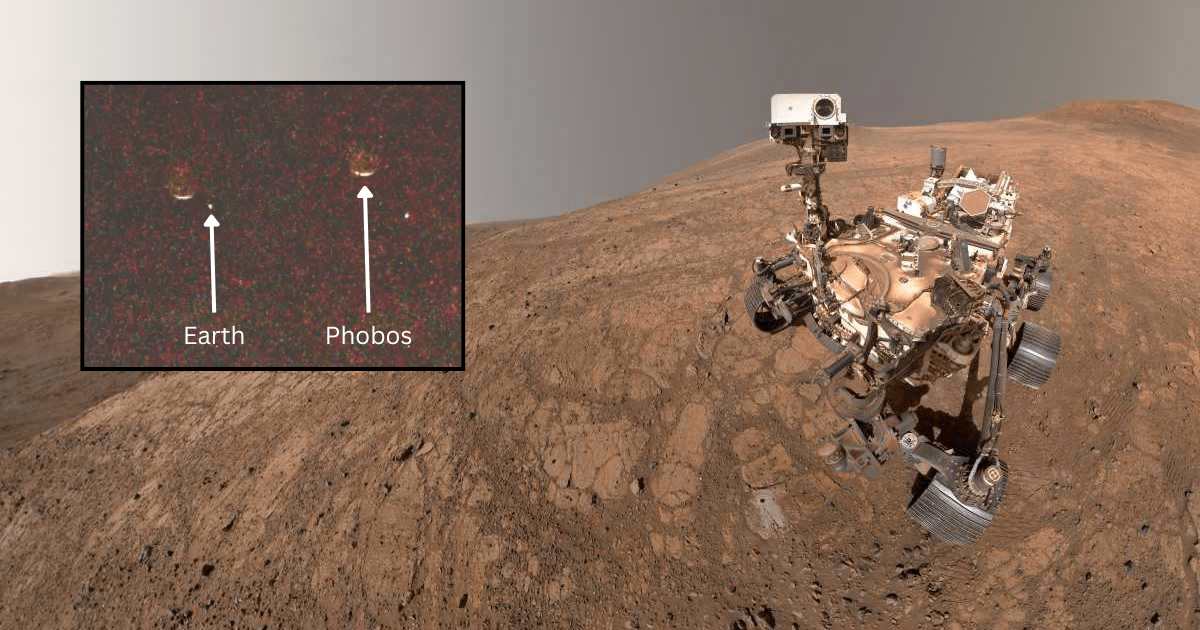
Our planet was about 195 million miles away from Mars when the pictures were taken.
NASA’s Perseverance took this selfie (inset image) at “Witch Hazel Hill” on Jezero Crater’s rim on May 10, 2025. — (Image Source: NASA/JPL-Caltech/MSSS)

NASA has shared a stunning image of an occultation between Earth and the Martian moon Phobos. The imagery was captured by the Perseverance rover on Mars on July 2 using the Mastcam-Z instrument and shows Earth, visible as a tiny speck of light, disappearing behind a crescent Phobos—the larger of the two moons of the Red Planet. An occultation happens when an object closer to the viewer has a larger apparent size and completely hides a distant object in the background.
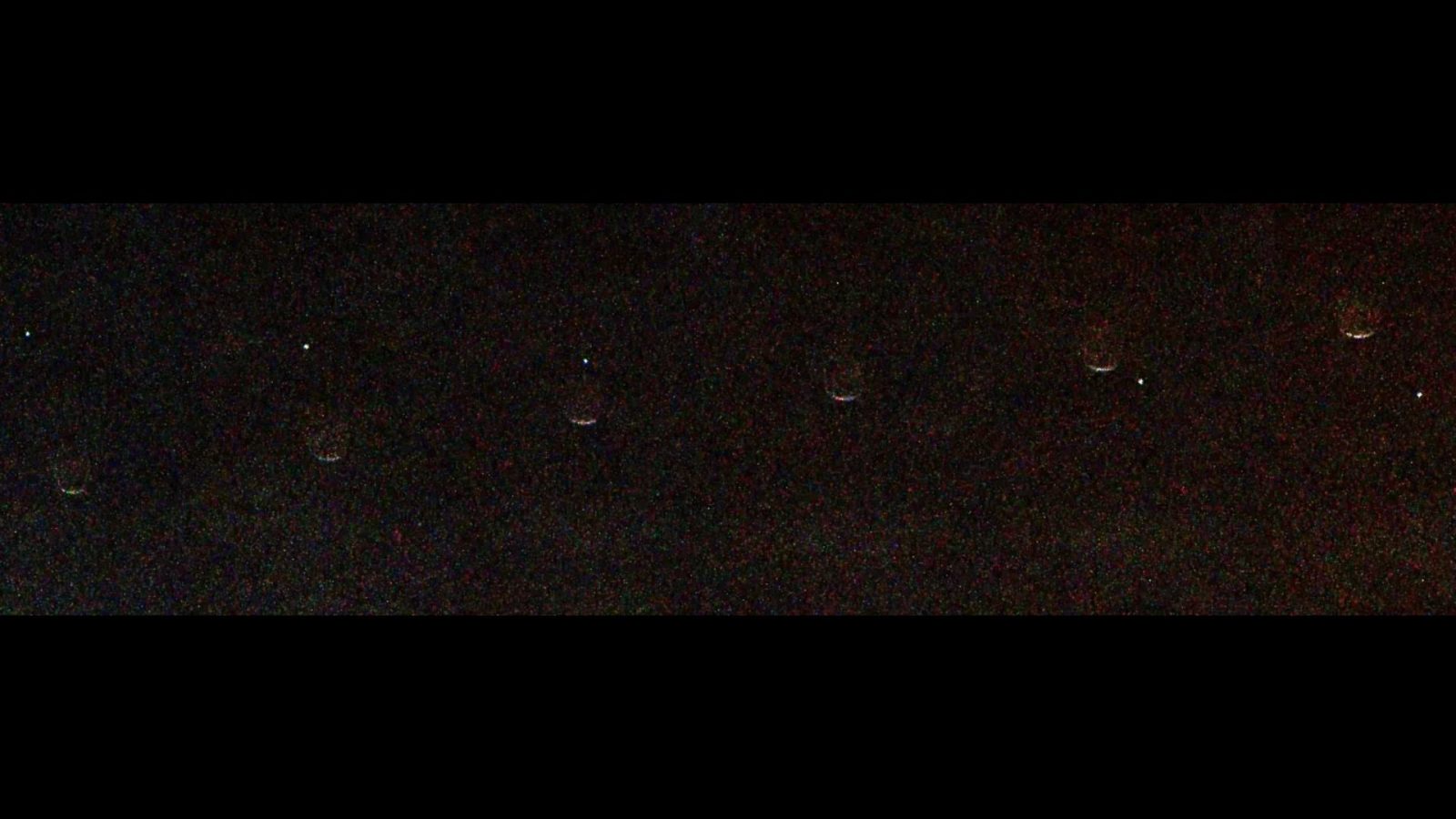
This composite of seven images show Earth (visible as a dot) passing behind the Martian moon Phobos during the occultation on July 2, 2026.
This composite of seven images shows Earth (visible as a dot) passing behind the Martian moon Phobos during the occultation on July 2, 2026. — (Image Source: NASA/JPL-Caltech/ASU/MSSS/SSI)

“The composite image makes for a unique Earth self-portrait, taken from the surface of another planet, with a Phobos photobomb,” Justin Maki, the Mastcam-Z deputy principal investigator and imaging scientist for Perseverance at NASA’s Jet Propulsion Laboratory (JPL), said in a statement. Interestingly, this is the first time that Earth has been captured disappearing behind an object from the surface of another planet. Mastcam-Z co-investigator Mark Lemmon, who planned the observation and assembled the composite, said, “Phobos crosses the Martian sky three times a day, and Earth is visible for months at a stretch, but catching one directly behind the other takes planning and a little luck.”
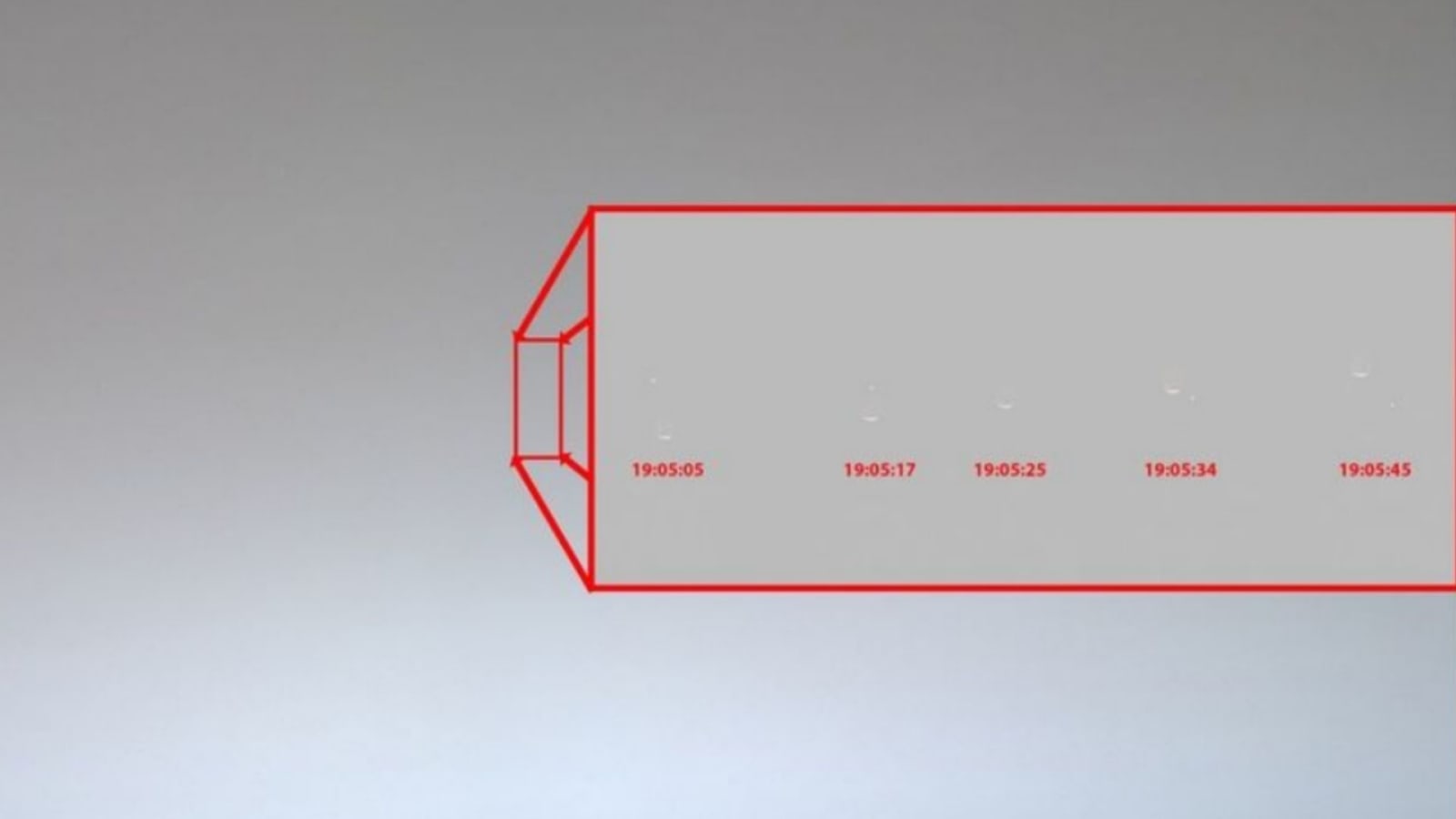
The timecode annotations in the inset show the local solar time on Mars during which five individual images of the occultation were captured by Perseverance rover.
The timecode annotations in the inset show the local solar time on Mars during which five individual images of the occultation were captured by Perseverance rover. — (Image Source: NASA/JPL-Caltech/ASU/MSSS/SSI)

The rover has captured multiple images that show different stages of the occultation. In the composite picture, Earth sweeps in from the left as a white dot and crosses behind Phobos before emerging again. Our planet was about 195 million miles (314 million kilometers) away from Mars when the pictures were taken. Phobos, on the other hand, appears roughly one-third the width of Earth’s Moon as seen from our planet.
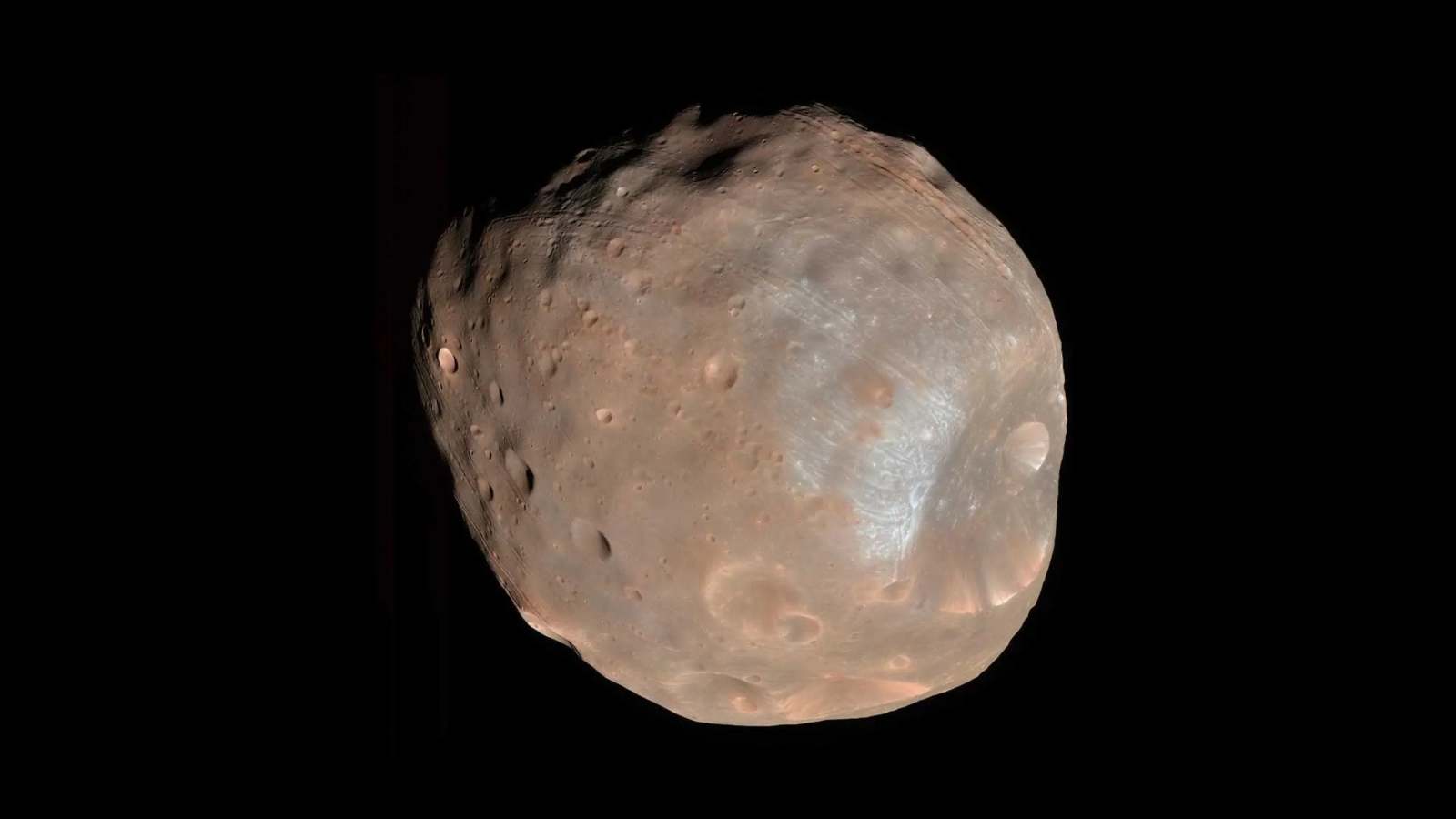
Phobos image taken by NASA's High Resolution Imaging Science Experiment (HiRISE) camera on the Mars Reconnaissance Orbiter.
Phobos image taken by NASA's High Resolution Imaging Science Experiment (HiRISE) camera on the Mars Reconnaissance Orbiter. — (Image Source: NASA/JPL-Caltech/University of Arizona)

Mars has another moon called Deimos. While Phobos measures 17 by 14 by 11 miles (27 by 22 by 18 kilometers) in size, Deimos measures 9.3 by 7.6 by 6.8 miles (15 by 12.2 by 11 kilometers). Phobos orbits Mars only 3,700 miles (6,000 kilometers) above the surface—which is the shortest distance of any known moon—and this has put it on a collision course with Mars. Scientists have estimated that in about 50 million years, it will either smash into Mars or break up into a ring.
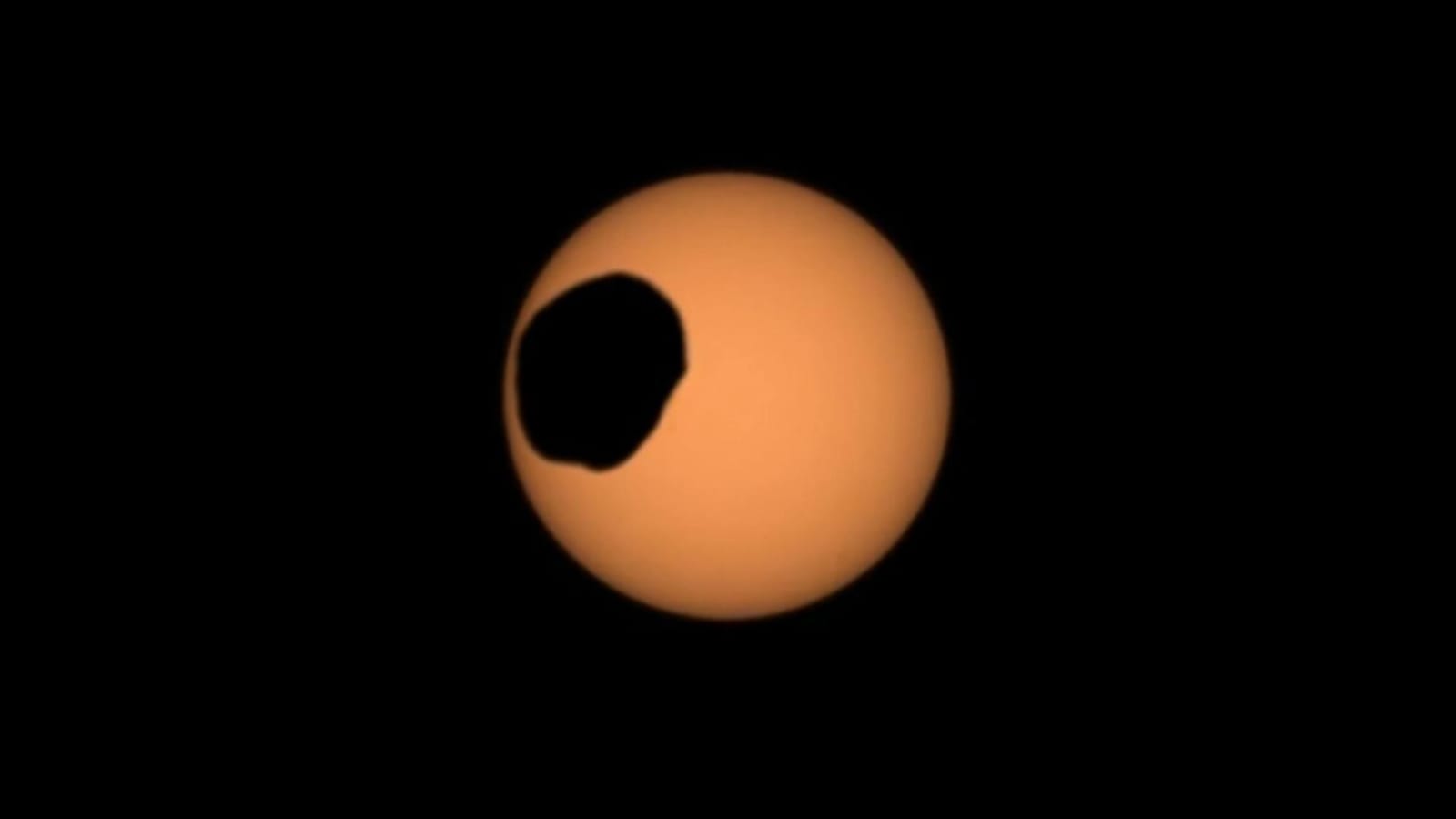
Phobos's transit of the Sun captured by Perseverance rover's Mastcam-Z camera on February 8, 2024.
Phobos's transit of the Sun captured by Perseverance rover's Mastcam-Z camera on February 8, 2024. — (Image Source: NASA/JPL-Caltech/ASU/MSSS/SSI)

While the latest observation involving Phobos was an occultation, it has also been captured during a transit—when a smaller-appearing object crosses the face of a large one. On February 8, 2024, Perseverance captured incredible images of Phobos transiting the Sun, offering scientists an opportunity to study the moon’s orbit and how it’s changing with time.

More on Starlust:

NASA Spirit rover data reveals fresh hidden clue that water once covered large parts of Mars

Earth-like waves a key driver of Mars' atmospheric loss, finds new study
MORE STORIES

From where did our solar system get its first solids? A research team from Caltech may have found the answer by analyzing pieces of a meteorite.
21 hours ago
Discovering water ice on the Moon will be a huge step toward building a sustainable, long-term human presence there.
2 days ago
With Mars thought to be wet and habitable once, the study is helping provide new insights into how it came to be the bone-dry planet we know today.
2 days ago
The composite image provides a clear view of the COSMOS field, which is a popular region in the sky located in the constellation Sextans.
3 days ago
A new study has found that the process of heavy metal formation in neutron star mergers proceeds more slowly than previously thought.
5 days ago
A neutron star is so dense that one sugar cube of its material would weigh around 1 trillion kilograms.
6 days ago
From meteor showers to solar eclipses and important space launches, August has a stellar lineup.
6 days ago
Asteroids like Nysa are called E-type asteroids, which are believed to preserve records of the early solar system and secrets of our planet's formation.
6 days ago
The features have been photographed in a valley nicknamed ‘Valle Grande,' which Curiosity is currently exploring.
6 days ago