Meteorite that broke over Mexico reveals how ancient stars sowed the seeds of our solar system
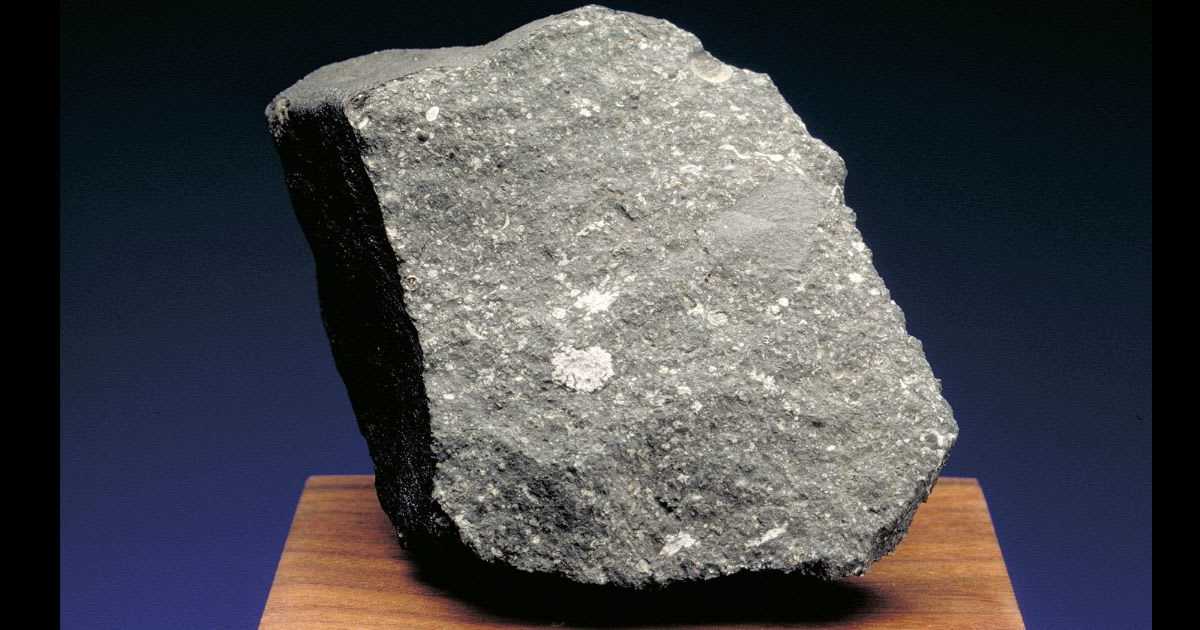
From where did our solar system get its first solids? A research team from Caltech may have found the answer by analyzing pieces of a meteorite that streaked through Earth’s atmosphere and then broke into fragments over Mexico in 1969. The analysis helped them figure out how leftovers of ancient stardust grains worked as the seeds to form the earliest solid particles of the solar system. They report their findings in a paper published in Science Advances.
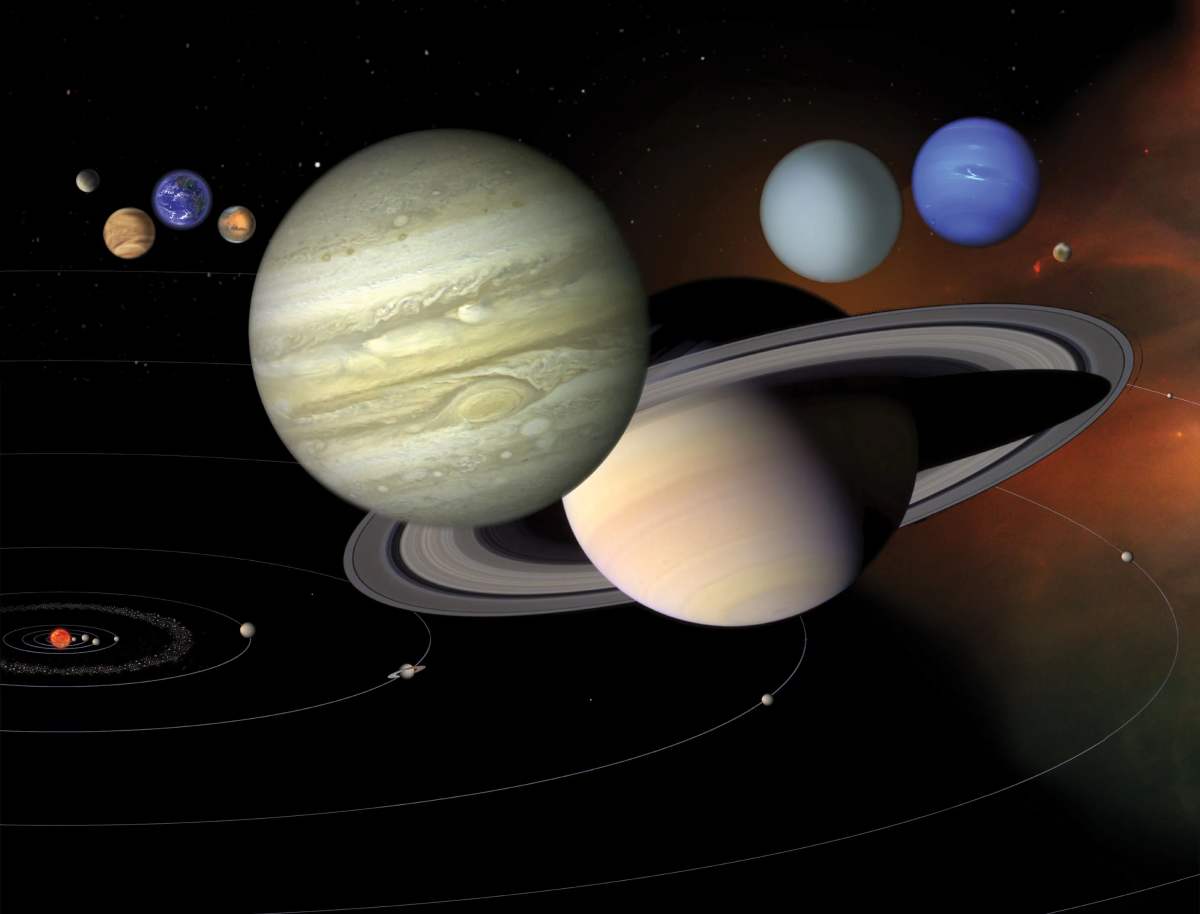
In 1969, the meteorite, named Allende, fell just before the Apollo astronauts were to return from the Moon with rock samples. It disintegrated and dispersed more than two tons of fragments over Mexico. Like fossils, meteorites preserve records of what the early solar system looked like when it formed around 4.5 billion years ago, after a swirling cloud of gas and dust, called the "solar nebula," collapsed upon itself.
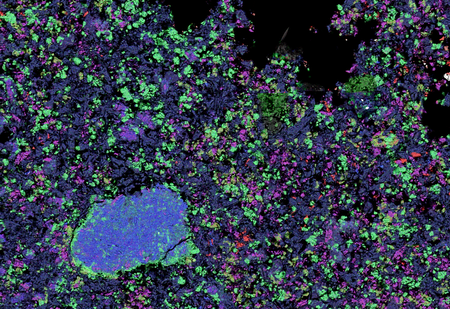
In the 1980s, researchers at the University of Chicago discovered the presence of nano-diamond grains with chemical compositions that don’t match anything in our solar system. The Chicago team described that the grains could be remnants of an ancient star that lived and died before the birth of the Sun. Since that discovery, a lot of pre-solar grains were found—all of them coming from the carbon-rich matrix in primitive meteorites, which formed under cooler conditions. Later, Ren Marquez, who was the first author on the Chicago study, analyzed tiny fractions of the Allende meteorite, called calcium-aluminum-rich inclusions (CAIs), that formed in the early days of the solar system when it was still hot. In a separate paper, Marquez and his colleagues reported that these CAIs, which are thought to be the very first solids to condense out of the hot environment of the early solar system, had signatures that indicated the presence of pre-solar stardust.
What the latest study did was confirm these findings, while also showing that these grains influence the makeup of the solar system materials found alongside them. The theory is that these early star fragments made it through the extremely hot years of our early solar system intact, acting as points of nucleation of coalescence around which the rest of the CAI arranged themselves.
"Nucleation is a very difficult process if there is no surface upon which to grow," explained Francois Tissot, a professor of geochemistry and Heritage Medical Research Institute investigator at Caltech, in whose laboratory the study was conducted. "Without the pre-solar dust grains disrupting an otherwise homogeneous mix of gases, minerals should take a long time to condense as the solar system cooled. Pre-solar grains acting as seeds for this early condensation solves an otherwise unaddressed problem in cosmochemistry." Moving forward, the researchers plan on looking into the exact chemical compositions of the pre-solar grains.
More on Starlust
Scientists find life-supporting organic compounds in meteorite that struck New Jersey home
Chicxulub impact: How the dino-killing asteroid may have burned everything in an hour or two