To save Artemis astronauts from electric shocks, NASA opens Lunar Grounding Challenge with $150K in prizes
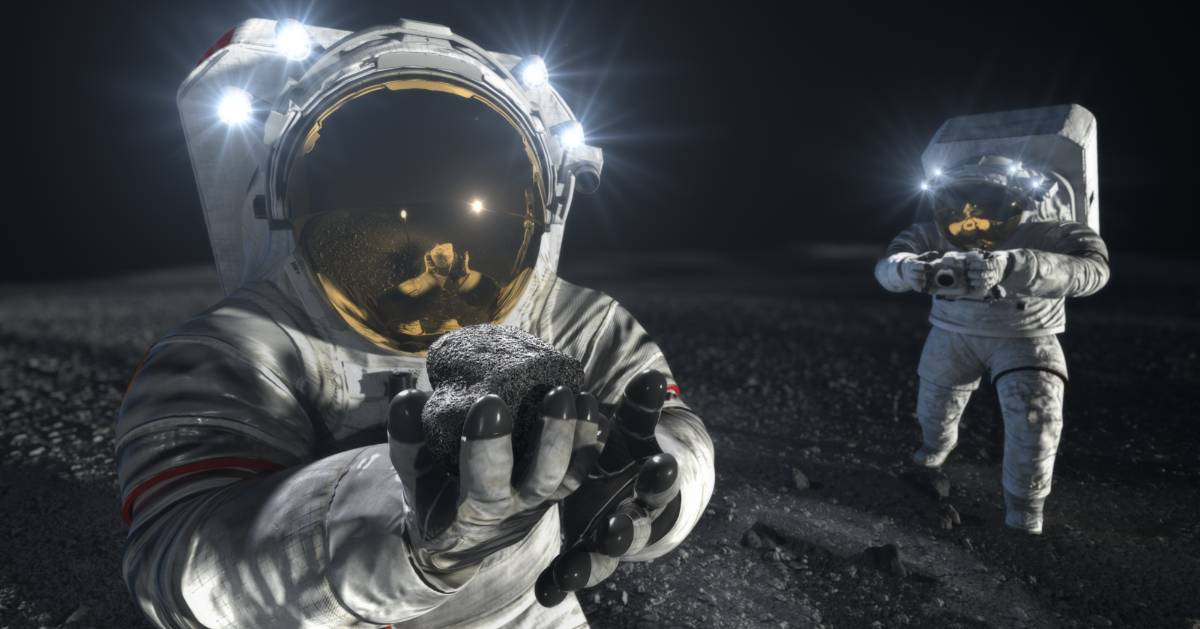
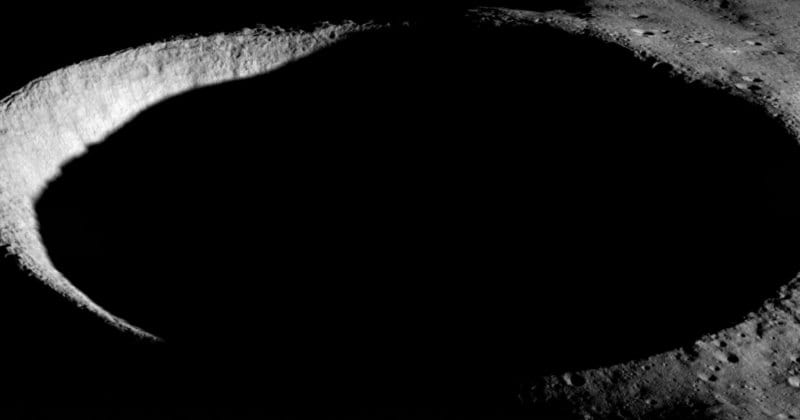
NASA is offering $150,000 in prizes to winners of its 'Lunar Grounding Challenge.' Through the contest, the agency is seeking ways to prevent astronauts from being zapped by electricity when they touch their landers after exploring permanently shadowed regions (PSRs) in the lunar South Pole. This phenomenon, called tribocharging, has been observed in simulations and discussed in several studies as well.
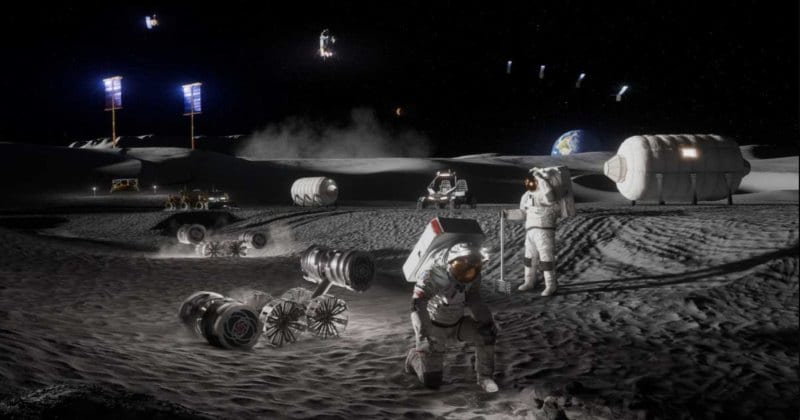
Why Triboelectric charging could be dangerous for Artemis astronauts
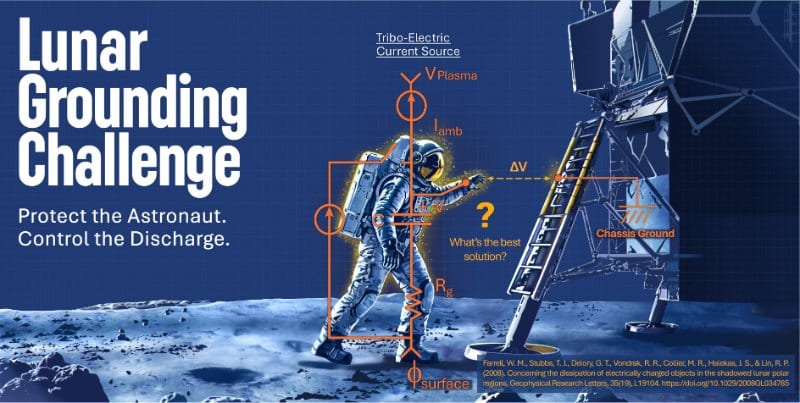
Triboelectric charging (or tribocharging) is the process through which objects accumulate electrical charge through contact. On the sunlit side of the Moon, this charge should dissipate quickly, but when an astronaut takes a walk in the darkness of the PSRs, their suit can develop a substantial negative charge due to the lack of photoelectron emission and ambient ion flux. "Because the lunar surface lacks a natural environmental mechanism to bleed the charge accumulated on spacesuit away, the astronaut may become a walking, high voltage capacitor," NASA said in its challenge description.
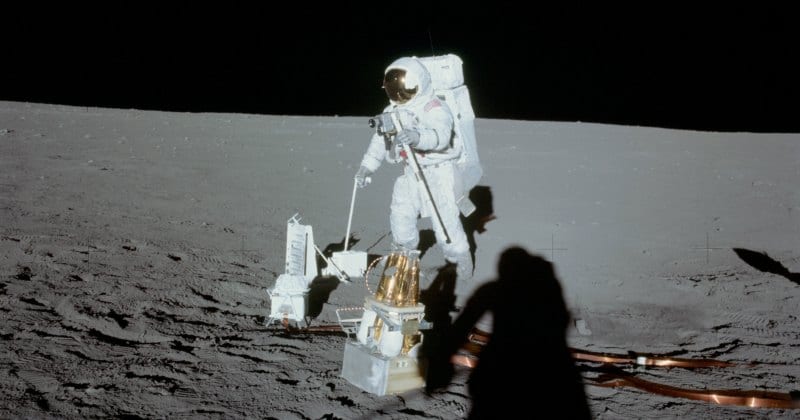
Since the agency is planning to explore these PSRs through its Artemis and Moon Base missions, it expects there to be a voltage difference between the astronauts' spacesuits and the spacecraft in the sunlit region, which will have a positive electrical potential. This difference in potential can trigger an electrostatic discharge (an electrical arc or spark) that can damage critical suit components, start a fire (given the suit will be filled with oxygen), or deliver electric shocks to the astronauts.
What are the requirements of the Lunar Grounding Challenge?
The solution being sought by NASA is to discharge a negatively charged spacesuit exceeding minus 100 kiloVolt to a lander charged at roughly 100 Volts. The discharge from this negative to positive value should be done in a way that does not produce an arc or spark. The passage of current felt in this discharge should also be below the levels of human perception, which has been outlined as 0.2 milliamperes. Participants must also keep in mind that suspended lunar dust can allow sparks to jump across larger distances than they would in a clean vacuum. Of course, the materials used to create a solution must be able to work in the frigid and inhospitable lunar conditions, while being less than 20 kilograms in weight (on Earth). The solution should also be able to support up to four extravehicular activities spread over ten days.
Once NASA creates a list of up to five concepts it finds promising, the selected finalists will be moved to Phase 2. At this stage, the selected participants will get written feedback from the Reviewer Panel, which will help them fill gaps or weaknesses in the concept. What the review will not do is propose solutions. The Phase 1 submission deadline is 11:59 pm EST on January 15, 2027. The selections from this phase will be announced on February 5, 2027, with submissions for Phase 2 opening on February 8, 2027 and closing on March 26, 2027.
The prizes are as follows:
1st Place: $75,000
2nd Place: $45,000
3rd Place: $25,000
Special Prize: $5,000.
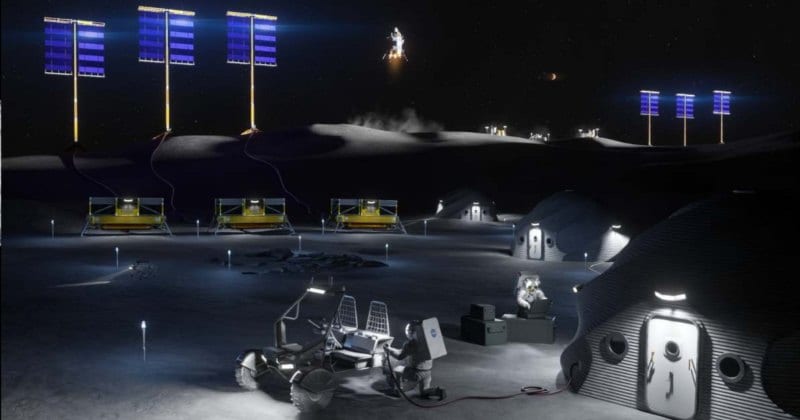
NASA is looking to expedite its actions ahead of what will be a historic return of humans to the Moon. Its Artemis IV and V missions are currently scheduled for 2028 amid a space race with China, which has a very similar goal of landing on the Moon before the end of the decade. Opening this challenge to the public perhaps speaks to this problem's difficulty and seriousness, especially when the agency is pressed for time.
More on Starlust
Can NASA restrict China's access around its Moon Base? Here's what space law says
Robot dogs on the Moon? China could use them to build and guard permanent lunar bases, says report