NASA's Perseverance rover detects giant sunspot 15 times wider than Earth rotating toward our planet
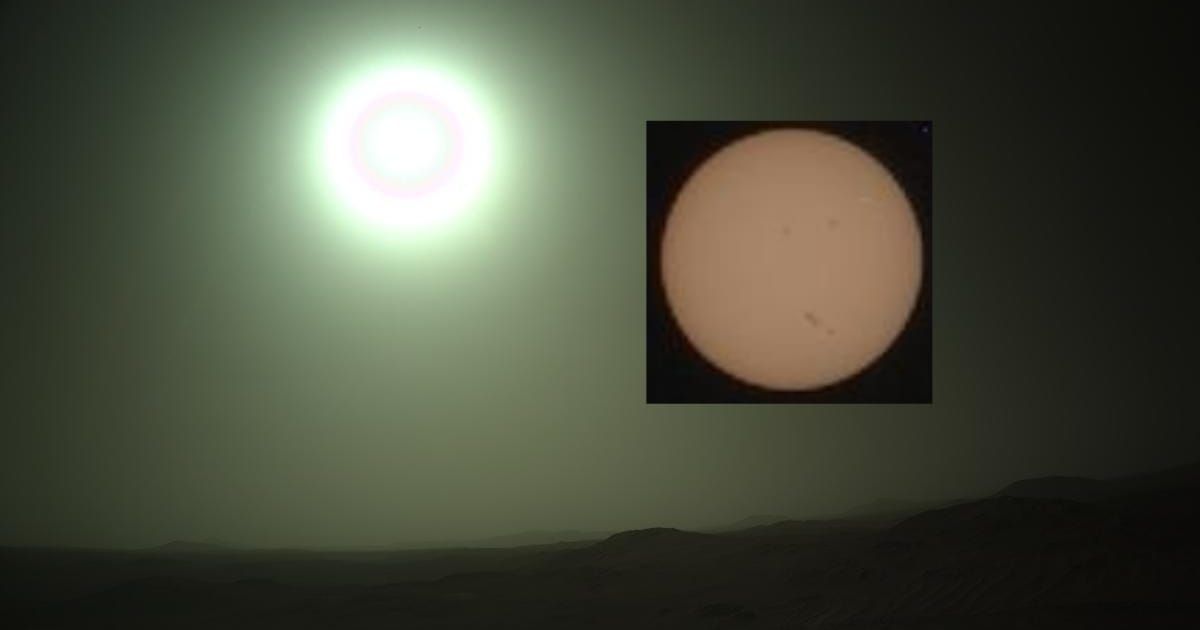
Perseverance's main job is Martian weather forecasting, but its routine solar scans on November 25 unexpectedly detected the large sunspot.
UPDATED NOV 27, 2025
NASA's Mars Perseverance rover acquired these images using its onboard Left Navigation Camera (Navcam). The camera is located high on the rover's mast and aids in driving (Cover Image Source: NASA/JPL-Caltech | Edited by Starlust staff)

NASA's Perseverance rover has captured images of a colossal sunspot, about 15 times wider than Earth, as it rotates to face our planet next week, according to Space Weather. The find was a bonus in the course of the rover's standard observations from its position in Jezero Crater, Mars.

NASA's Mars Perseverance rover acquired this image using its Left Mastcam-Z camera. Mastcam-Z is a pair of cameras located high on the rover's mast (Image Source: NASA/JPL-Caltech)
NASA's Mars Perseverance rover acquired this image using its Left Mastcam-Z camera. Mastcam-Z is a pair of cameras located high on the rover's mast (Image Source: NASA/JPL-Caltech/ASU)

Over the next couple of months, Mars will move behind the Sun in its orbit in a time period referred to as solar conjunction. It will place NASA's Perseverance in a unique position to have a clear view of the far side of the Sun—areas currently hidden from telescopes on Earth

Still image of NASA’s Perseverance rover as it touched down in the area known as Jezero crater on February 18, 2021, on the planet Mars. (Photo by NASA via Getty Images)

The rover's primary reason to look at the Sun is to forecast Martian weather, which involves measuring atmospheric dust with the Mastcam-Z camera. The Mastcam-Z was not designed to study the sun in high resolution, and so it captures only 90 pixels across the solar disk, but the sunspot is so large that it clearly registered in the images on November 25. 

Image of the Mastcam-Z camera (Image Source: NASA/JPL-Caltech)

Experts predict this giant sunspot will rotate into Earth's view next week and potentially cause a spike in solar activity, affecting Earth. Perseverance will remain an early warning system from the Red Planet throughout December 2025 and January 2026.
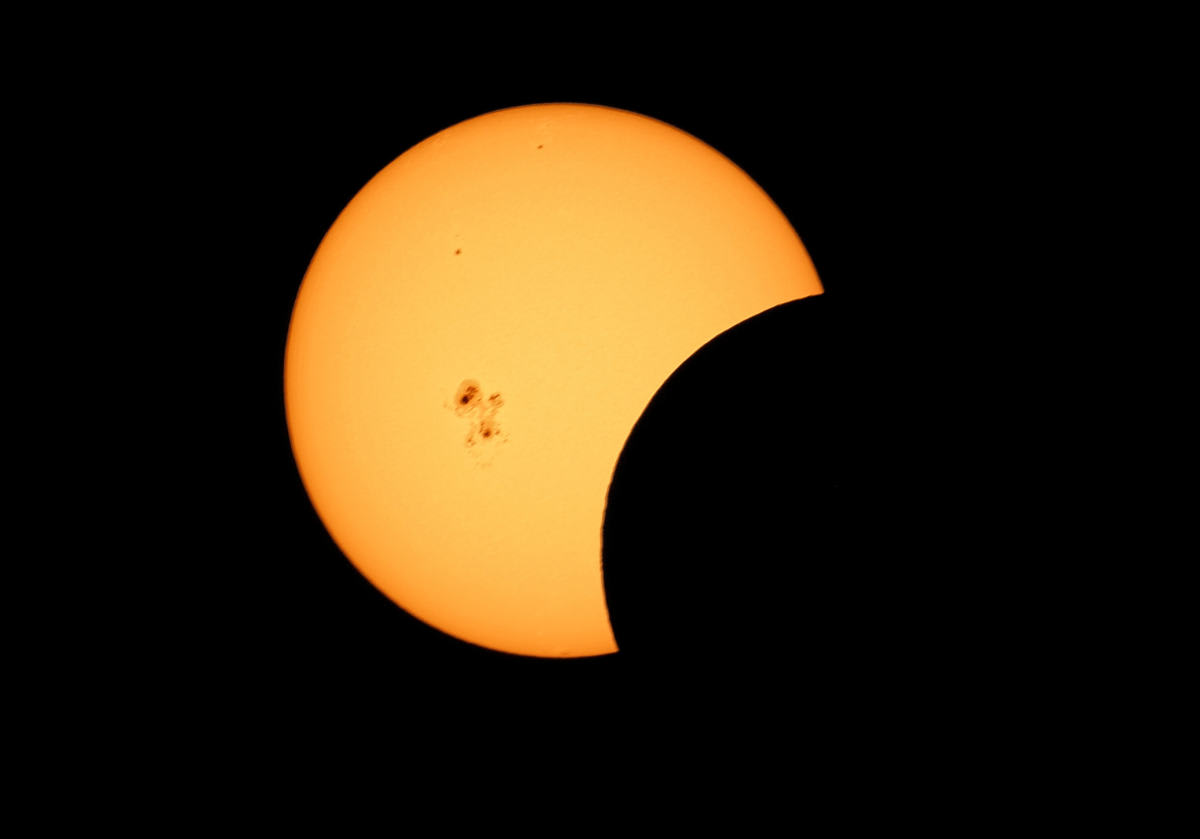
Partial solar eclipse with large sunspot as seen from southern New Mexico. (Image Source: Getty | potenciaverde)
Partial solar eclipse with a large sunspot as seen from southern New Mexico. (Representative Image Source: Getty | potenciaverde)

Sunspots are the large, dark patches on the surface of the Sunaccording to NASA. They are essentially cooler regions on the Sun's visible surface, which is called the photosphere. Their temperature is around 6,000 degrees Fahrenheit, compared to the surrounding area, which burns at about 10,000 degrees Fahrenheit.
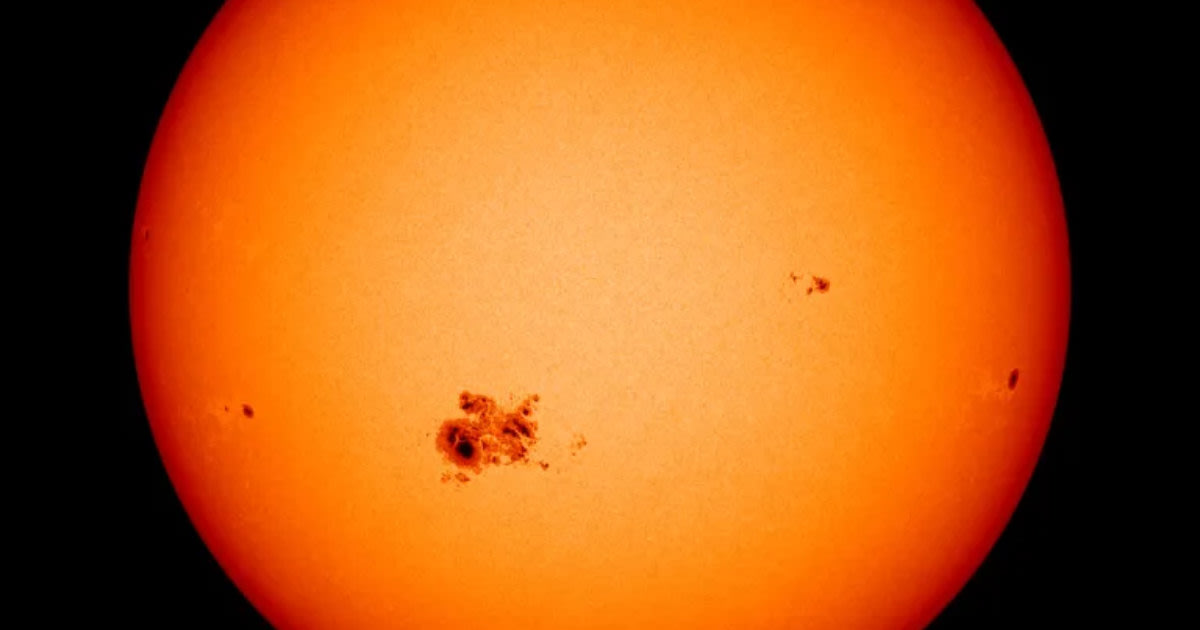
Sunspots are cooler regions on the Sun caused by a concentration of magnetic field lines (Image Source: NASA)

These cooler regions are created by highly concentrated magnetic fields. The Sun is composed of plasma, an electrically charged gas. As this gas moves, it twists and tangles the magnetic field lines. These magnetic snarls act like a plug, blocking heat from flowing to the surface, thus leading to the formation of these darker, cooler sunspots. Sunspots are the most visible part of what scientists call "active regions," which are areas with intense and complex magnetic fields that stretch out into the Sun's atmosphere. These active regions are the sources of major space weather events, including solar flares and coronal mass ejections (CMEs).

The frequency of sunspots has a natural ebb and flow over the Sun's 11-year cycle, and scientists monitor their activity closely. Since storms erupt from these magnetically active regions, the enormous sunspot spotted by Perseverance signals a high risk of powerful solar events that could impact spacecraft, astronauts, and key infrastructure back on Earth when it turns to face us next week. Sunspots are closely monitored by agencies like NASA and NOAA to predict the activity of the Sun through its regular cycle

Artwork of NASA's Mars 2020 mission. The mission consists of a rover called Perseverance and a smaller rotorcraft called Ingenuity. (Representative Photo by MARK GARLICK / SCIENCE PHOTO LIBRARY / Getty Images)

NASA also has a fleet of spacecraft at points around the solar system that study how the Sun's activity, as expressed in sunspots, impacts Earth and the other planets. Key missions involved in this whole solar system watch include NASA's Solar Dynamics Observatory (SDO) and the Solar Terrestrial Relations Observatory (STEREO). 

More on Starlust

Dual solar wind streams from two giant coronal holes could reach Earth on October 3

Highest-resolution images of solar flare and coronal loops captured by Inouye Solar Telescope

MORE STORIES

Flight controllers and technical specialists are racing to pinpoint the cause of the radio failure and restore contact with the orbiter.
2 days ago
The final milestone in construction was reached on November 25, as technicians carefully joined the giant telescope's inner and outer components.
5 days ago
The exoplanet is located seven times closer to its star than Mercury is to our own planet.
Dec 4, 2025
The rocks were determined to be kaolinite, which is found in tropical regions on Earth.
Dec 3, 2025
Five young stars in the Ophiuchus region were studied to detect ultraviolet radiation and understand its role in the formation of stars.
Dec 1, 2025
On September 23, 2025, NASA's OSIRIS-APEX successfully used an Earth flyby to slingshot toward its target: potentially hazardous asteroid Apophis.
Dec 1, 2025
The Hubble Space Telescope has been surveying space since 1990 and has captured some interesting cosmic elements in action.
Nov 28, 2025
The Moon's far side never faces Earth, so currently, radio signals cannot reach us directly. But it may change in the future.
Nov 28, 2025
The telescope's outer barrel and solar panels were subjected to a powerful acoustic blast reaching 138 decibels, louder than standing next to a jet engine during takeoff.
Nov 26, 2025
The spacecraft is on its way to study Jupiter's moon Europa.
Nov 24, 2025