MOONS achieves first light: ESO's new instrument opens a new window into the Milky Way
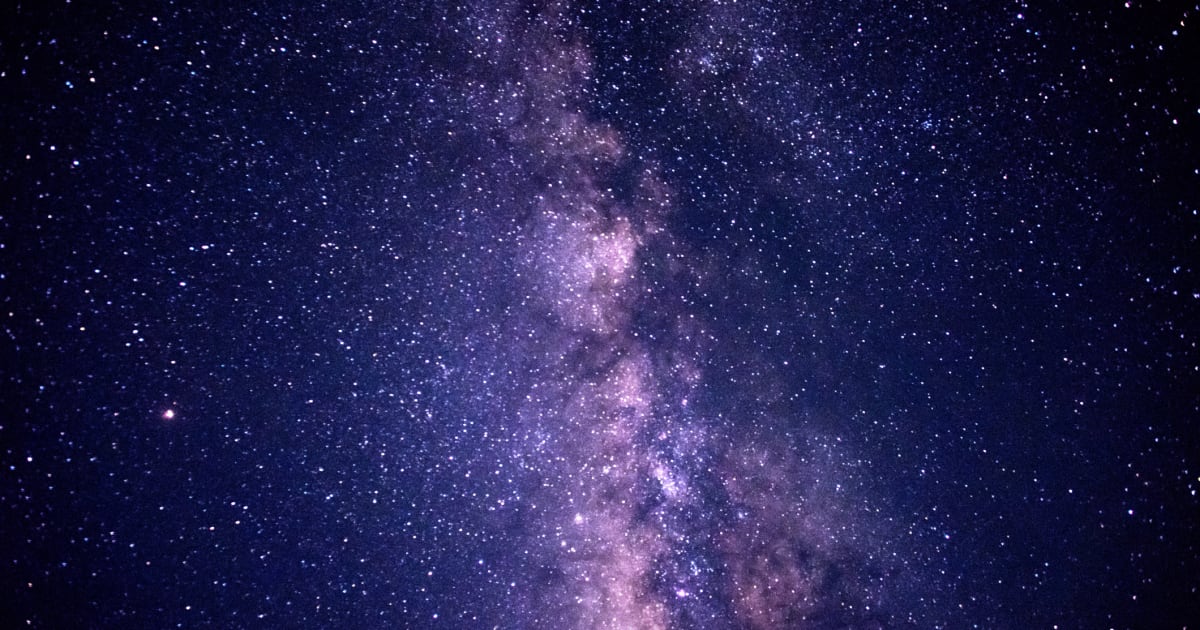
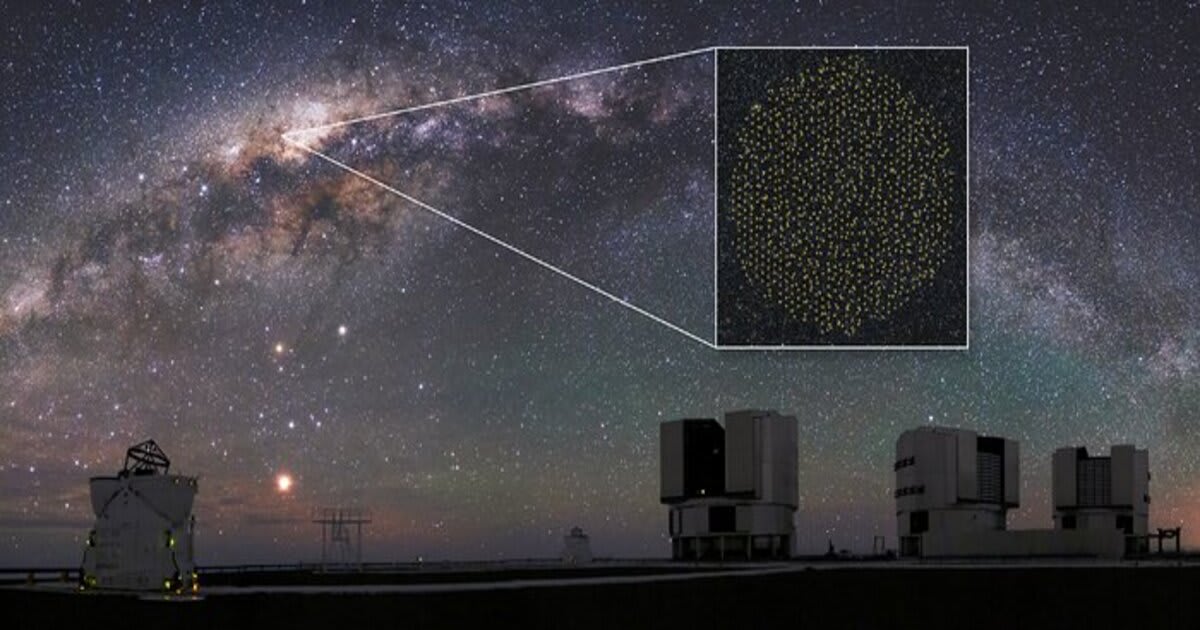
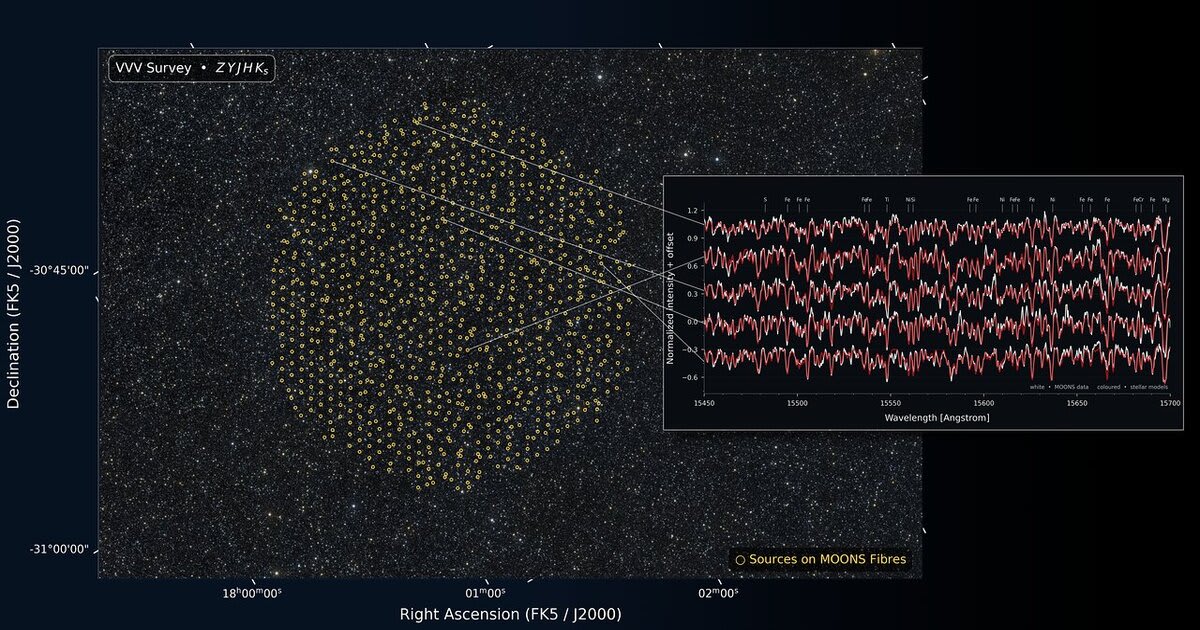
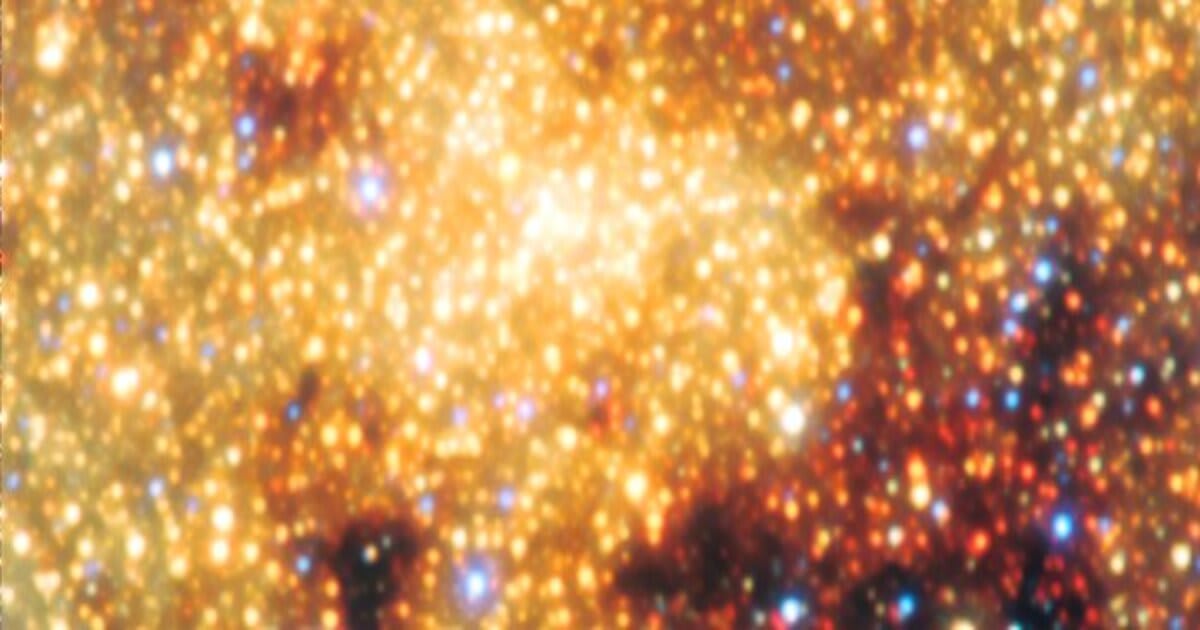
ESO's newest instrument opened its eyes for the first time this month, and it did not waste the moment. The Multi-Object Optical and Near-Infrared Spectrograph, or MOONS, achieved what astronomers call "first light" on September 3, 2026, at the European Southern Observatory's Very Large Telescope (VLT) in northern Chile. In its first run, it captured details of stars near the center of the Milky Way.
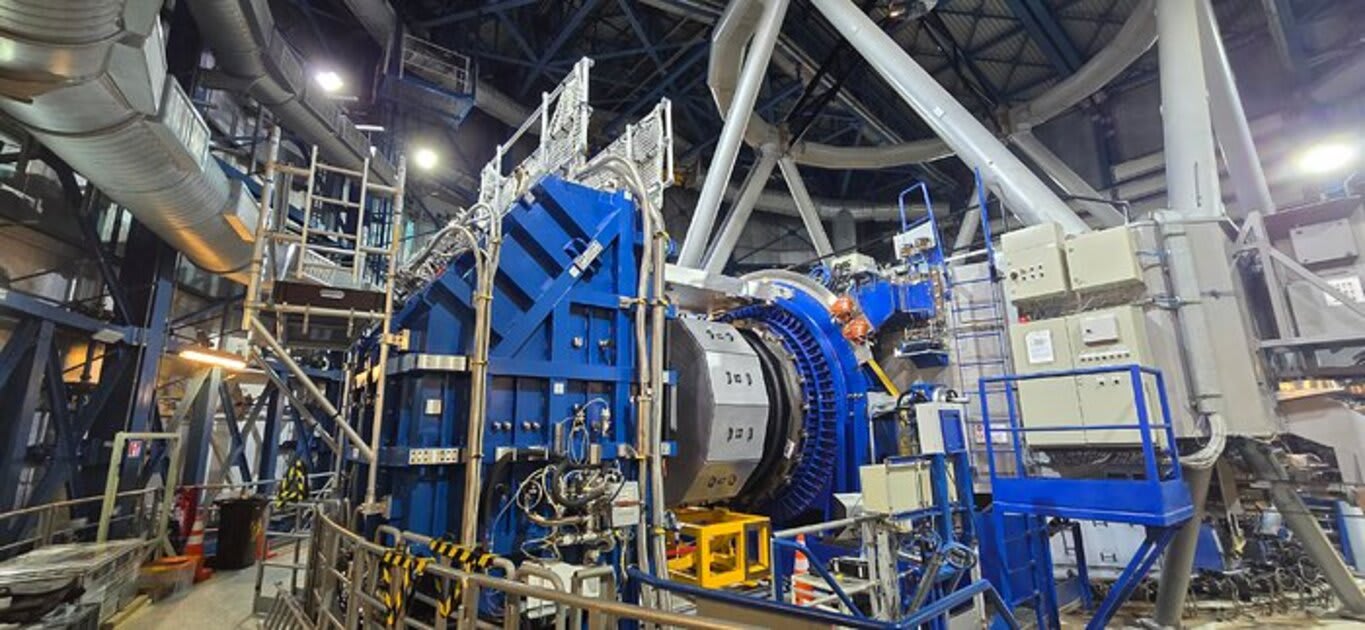
Michele Cirasuolo, the MOONS Principal Investigator, said watching first light happen was an emotional moment after years of work by the team. He said the instrument will let astronomers study stars and galaxies going back more than 13 billion years.
A thousand targets, not one
While many traditional spectrographs look at one star or a galaxy at a time, MOONS stands apart, and looks at roughly a thousand, all at once. It does this with about a thousand optical fibres, each attached to its own tiny robotic arm, positioned to point at each spot across a wide swath of sky. The light each fibre picks up gets fed into one of the two identical spectrographs.
Think of what a prism does to sunlight, breaking it into a rainbow. That's basically the job here, just done with starlight instead. Once the light is split apart like this, astronomers can learn about its chemical composition, its mass, and how fast it's moving.
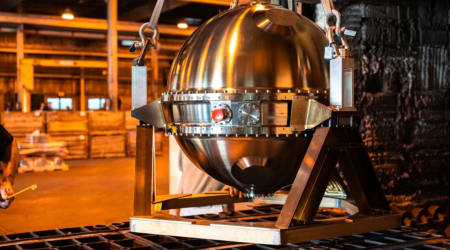
The two spectrographs, however, need to stay extremely cold, so they sit inside a cryostat where the optics operate at -143 degrees Celsius and the highly sensitive detectors are kept at an even colder -233 degrees Celsius. The equipment itself is 4.5 meters tall and weighs over 10 tons. Getting it to those extreme temperatures takes 5,000 liters of liquid nitrogen, which makes the MOONS cryostat one of the largest ever built for a ground-based telescope.
Looking starlight through galactic dust
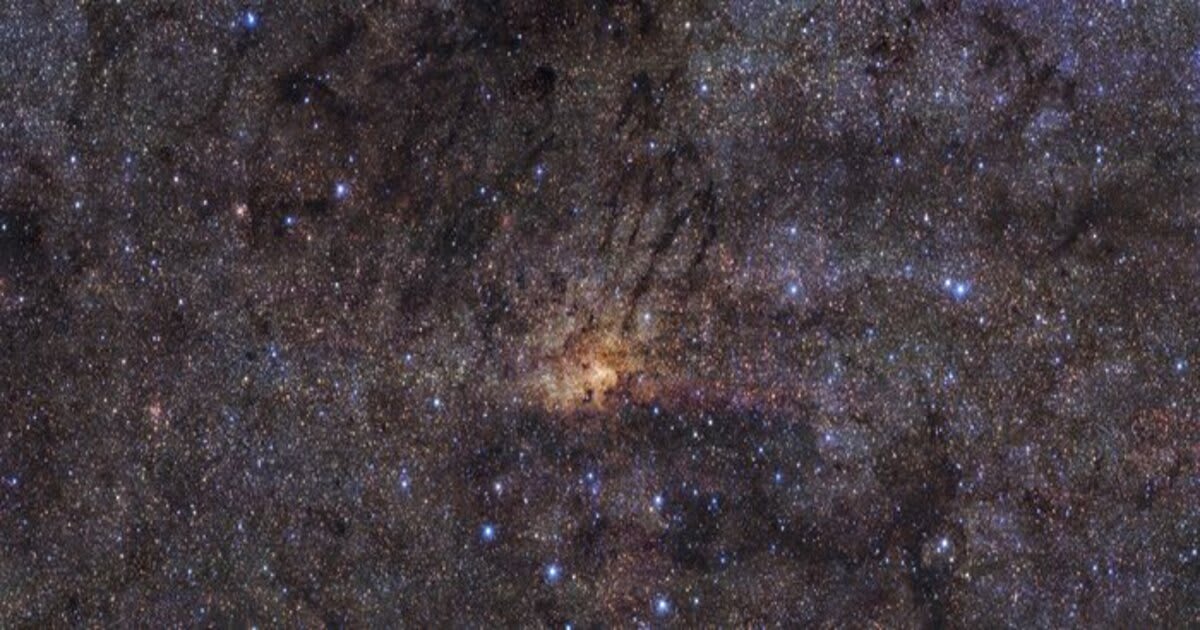
Our galaxy's centre is buried under thick clouds of dust. Visible light is heavily blocked by it, making it difficult for astronomers to get a clear view of many stars near the heart of the Milky Way. Infrared light passes through dust far more easily than visible light does, and these are the wavelengths MOONS was built to observe.
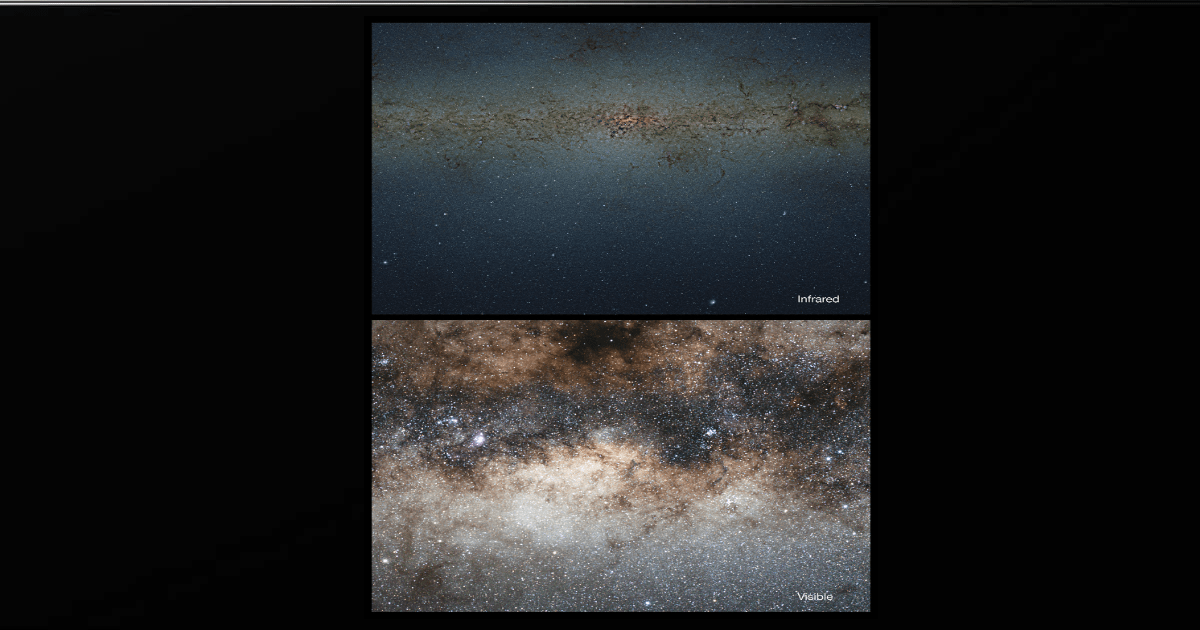
For its first look, the team pointed the instrument at stars in that dusty region and picked up their light. There is another reason infrared light matters here, too. It can help astronomers study very distant galaxies. As the universe expands, the light from distant galaxies gets stretched toward longer, redder wavelengths. This is known as redshift.
Push that far enough, and some of the light from very distant galaxies can be shifted into infrared wavelengths—which is precisely where MOONS is designed to work. Amelia Bayo, the MOONS Project Scientist at ESO, said the first observations highlight the "power of MOONS in numbers, sensitivity, quality and multi-wavelength." She added that MOONS will allow astronomers to study otherwise obscured groups of stars and identify unusual objects among thousands of targets.
What's next: a decade, ten million objects
MOONS has a design lifetime of about ten years. During that time, it is expected to observe up to ten million objects. One of its goals is to build a detailed 3D map of the Milky Way, reaching stars as far as 40,000 light-years away. The instrument was developed by an international consortium led by the UK Astronomy Technology Centre, with institutions from the UK, Chile, Switzerland, France, Italy, and Portugal contributing to the project. ESO provided the scientific detector systems inside the instrument.
The UK's Astronomer Royal Michele Dougherty was among the officials who travelled to Paranal to see the first observations. MOONS UK Principal Investigator Oscar Gonzalez said first light marked the moment when “years of work are transformed into discovery.” Now, after more than a decade of development, MOONS is ready to begin its work among the stars.
More on Starlust
Milky Way may have tilted sideways after collision with a dwarf galaxy 10 billion years ago
Tiny satellite galaxies orbiting the Milky Way could reveal the 'climate' of the early universe