ESA's Solar Orbiter captures first direct view of Sun's polar magnetic field in motion

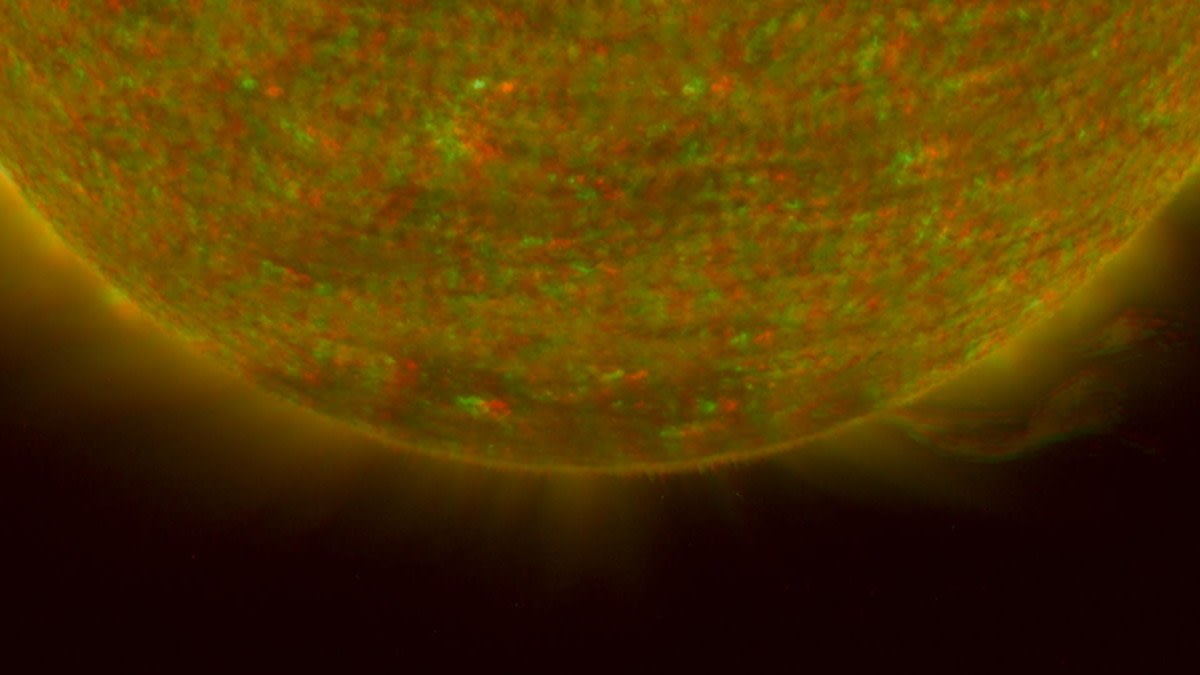
Analyzing late March data from Solar Orbiter, researchers produced the first detailed map of the magnetic network and supergranulation at the Sun's south pole.
PUBLISHED NOV 6, 2025
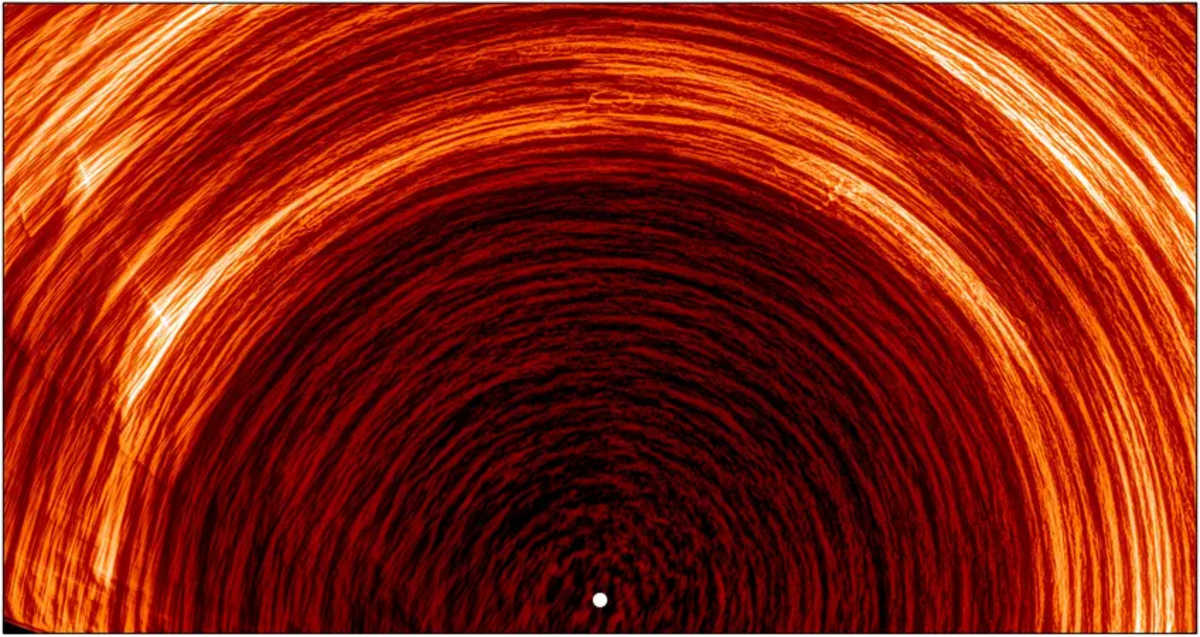
Solar Orbiter’s highest resolution image of the Sun’s south pole (Representative Cover Image Source: ESA & NASA/Solar Orbiter/EUI Team)

Scientists using the European Space Agency's (ESA) Solar Orbiter have published their analysis of the first clear view of the movement of the magnetic field near the Sun's south pole. A blind spot until now, the region is crucial to understanding the star's fundamental 11-year activity cycle, according to the Max Planck Institute

The magnetic network on the solar surface leaves imprints in the chromosphere above. In images of this region taken by Solar Orbiter's Extreme Ultraviolet Imager (EUI), these imprints appear as bright spots (Image Source: ESA & NASA | Solar Orbiter | EUI-Team)

The Sun's magnetic rhythm is driven by vast plasma circulations: near the surface, plasma flows carry the magnetic field from the equator toward the poles, while beneath the surface, it cycles back toward the equator. The understanding of how this "magnetic conveyor belt" operates at the poles has been limited so far, as ground-based telescopes and most space missions have not had a clear view of the poles. Solar Orbiter's unique vantage point, achieved after it tilted its orbit by 17 degrees out of the ecliptic plane in March, has finally provided the necessary perspective. 
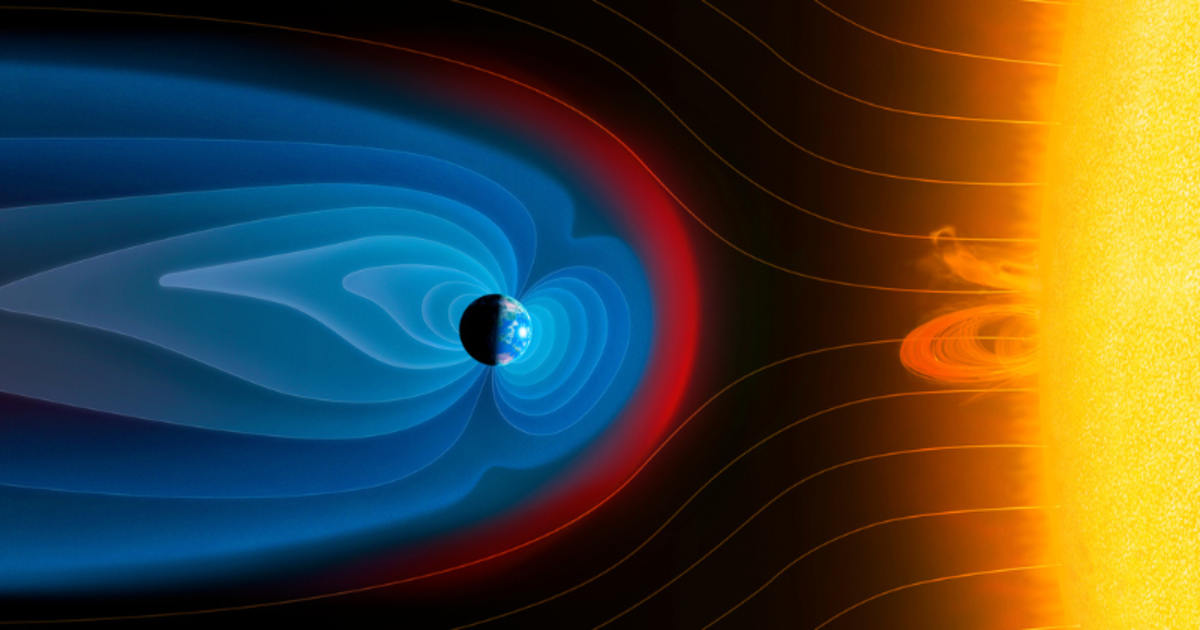
An illustration of the Earth's magnetosphere.
(Representative Image Source: Getty Images | Mark Garlick/Science Photo Library.)
An illustration of the Earth's magnetosphere. (Representative Image Source: Getty Images | Mark Garlick/Science Photo Library.)

Researchers analyzing the spacecraft's Polarimetric and Helioseismic Imager (PHI) and Extreme-Ultraviolet Imager (EUI) data from late March have generated a map of the magnetic network and supergranulation at the Sun's south pole. Supergranules, which are cells of circulating plasma as big as three times the Earth's size, were observed to be sweeping magnetic field lines to their edges, forming the characteristic magnetic web.
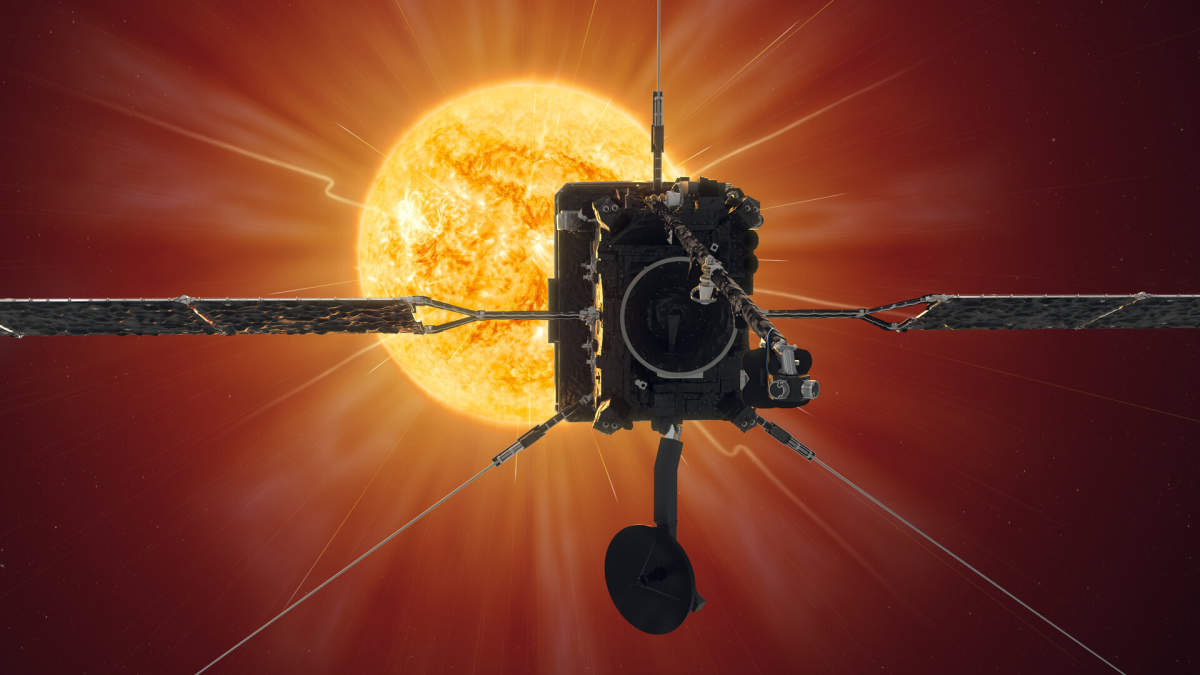
Solar Orbiter is the most complex scientific laboratory ever sent to our life-giving star, taking images of the Sun from closer than any spacecraft before and being the first to look at its polar regions (ESA)
Solar Orbiter is the most complex scientific laboratory ever sent to our life-giving star, taking images of the Sun from closer than any spacecraft before and being the first to look at its polar regions (Image Source: ESA)

Crucially, the initial data reveal that the magnetic field is drifting poleward at an average speed of 10 to 20 meters per second. This speed is surprisingly consistent with flows measured at lower latitudes, challenging previous models based on the ecliptic-plane observations that suggested a much slower drift near the poles. Dr. Sami Solanki, MPS Director and a co-author of the study published in Astrophysical Journal Letters, emphasized the importance of this new data stream: "To understand the Sun's magnetic cycle, we still lack knowledge of what happens at the Sun's poles. Solar Orbiter can now provide this missing piece of the puzzle." 
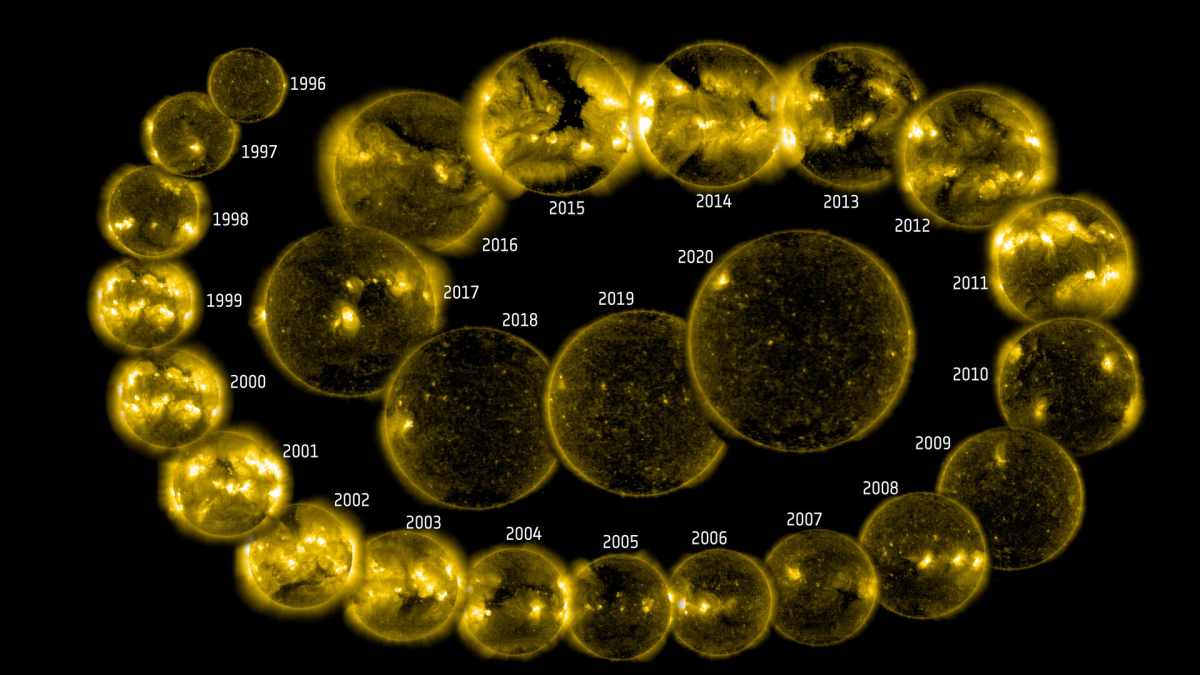
The Sun follows a roughly 11-year rhythm of waking up and becoming very active before calming down again, a stellar beat known as the solar cycle (Image Source: ESA)

Dr. Lakshmi Pradeep Chitta, the study's first author, stated that the polar supergranules are acting as visible tracers for the hidden circulation: "They make the polar component of the Sun's global, eleven-year circulation visible for the first time." While the findings offer vital clues about the global plasma and magnetic field transport, the team cautions that the results represent a brief snapshot. Further, extended observations are required to definitively confirm whether the magnetic conveyor belt maintains this speed throughout the entire solar cycle

The Sun's polar regions remain one of the least explored areas in solar science. While existing observatories provide extraordinary coverage of the Sun's surface and atmosphere, the limited ecliptic-plane viewing angle restricts knowledge of these high-latitude dynamics, according to Science Daily. Yet, these regions are crucial, as their magnetic fields shape the solar magnetic cycle and supply the mass and energy that feed the fast solar wind, ultimately influencing space weather throughout the solar system. 
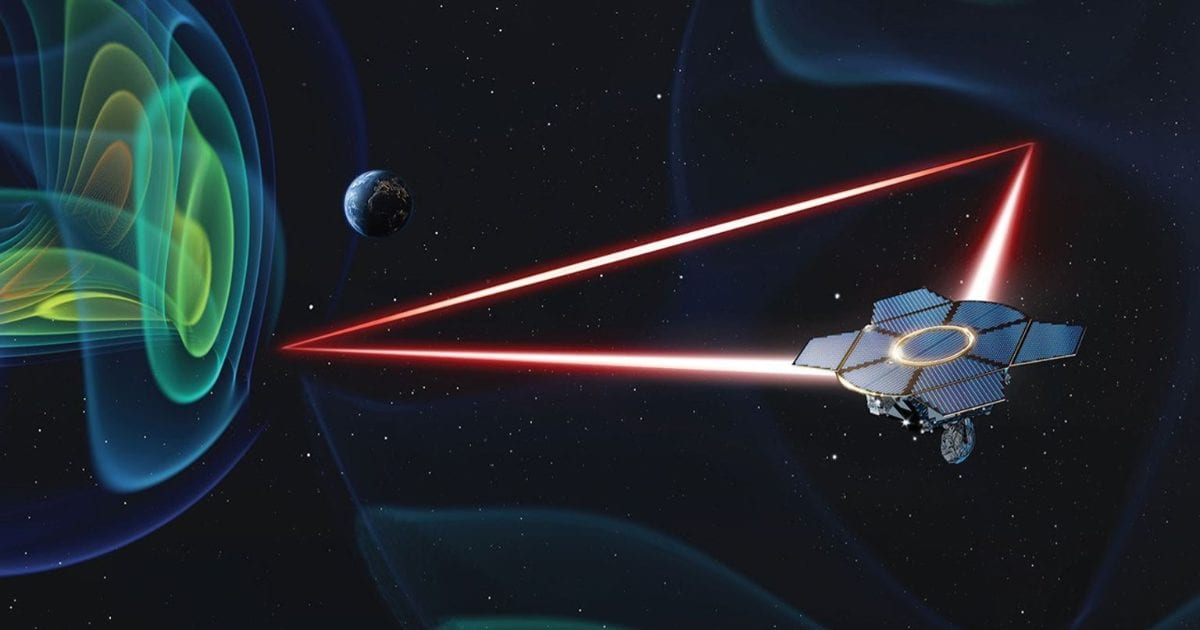
NASA Solar Terrestrial Relations Observatory satellites have provided the first 3-dimensional images of the Sun (Cover Image Source: NASA Image and Video Library | NASA)
NASA Solar Terrestrial Relations Observatory satellites have provided the first 3-dimensional images of the Sun (Representative Image Source: NASA Image and Video Library | NASA)

The scientific community is now looking forward to the upcoming Solar Polar-orbit Observatory (SPO) mission, which is expected to enhance this understanding dramatically. Once operational, SPO will give scientists an unprecedented, direct look at the Sun's hidden polar regions, promising new insight into the fundamental forces that shape our star and sustain life on Earth. 

More on Starlust

Astrophotographer achieves 'once in a lifetime' shot of ISS crossing Sun during solar flare eruption

Magnetic activity cycles in 138 Sun-like stars help scientists understand the Sun's past—and Earth's future

MORE STORIES

Flight controllers and technical specialists are racing to pinpoint the cause of the radio failure and restore contact with the orbiter.
2 days ago
The final milestone in construction was reached on November 25, as technicians carefully joined the giant telescope's inner and outer components.
5 days ago
The exoplanet is located seven times closer to its star than Mercury is to our own planet.
Dec 4, 2025
The rocks were determined to be kaolinite, which is found in tropical regions on Earth.
Dec 3, 2025
Five young stars in the Ophiuchus region were studied to detect ultraviolet radiation and understand its role in the formation of stars.
Dec 1, 2025
On September 23, 2025, NASA's OSIRIS-APEX successfully used an Earth flyby to slingshot toward its target: potentially hazardous asteroid Apophis.
Dec 1, 2025
The Hubble Space Telescope has been surveying space since 1990 and has captured some interesting cosmic elements in action.
Nov 28, 2025
The Moon's far side never faces Earth, so currently, radio signals cannot reach us directly. But it may change in the future.
Nov 28, 2025
Perseverance's main job is Martian weather forecasting, but its routine solar scans on November 25 unexpectedly detected the large sunspot.
Nov 27, 2025
The telescope's outer barrel and solar panels were subjected to a powerful acoustic blast reaching 138 decibels, louder than standing next to a jet engine during takeoff.
Nov 26, 2025