NASA gives Blue Origin four years to complete high-speed communications network around Mars
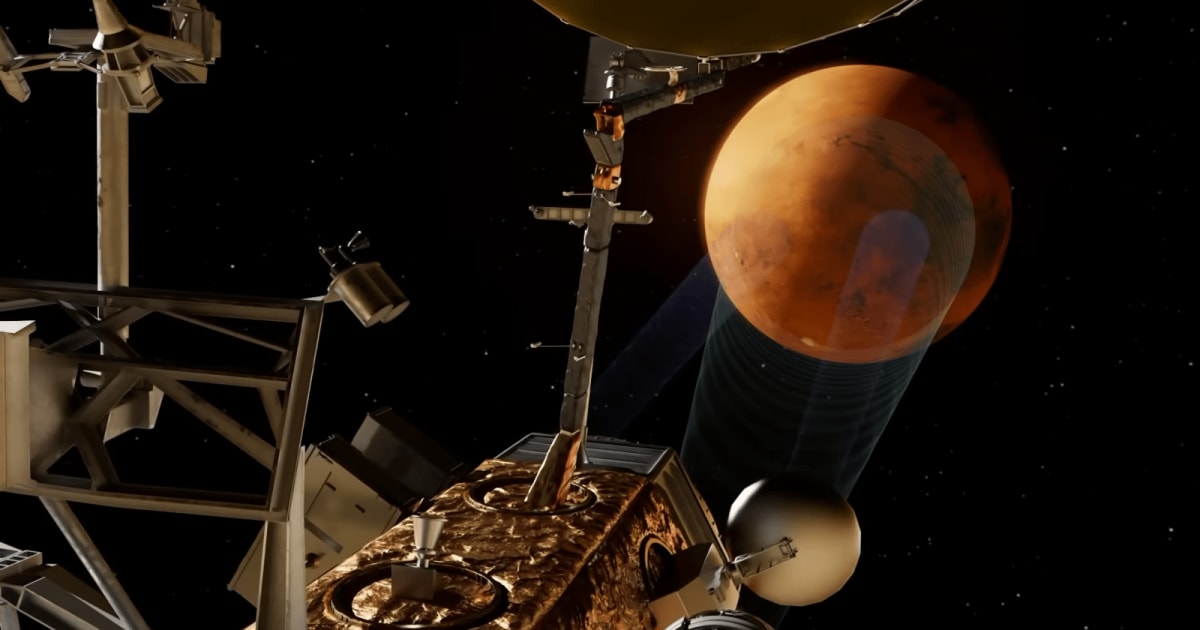
Blue Origin has been awarded a huge contract to develop NASA's Mars Telecommunications network. To honor the contract, the company is building a Mars telecommunications orbiter (MTO) that will facilitate high-bandwidth communications and navigation services around Mars. The deadline for the delivery of the system is December 31, 2028.
https://t.co/AipR3dYKYT
— Dave Limp (@davill) September 1, 2026
Before the first human steps on Mars, we have to build the road.
Honored that Blue Origin has been selected by @NASA to deliver our Mars Telecommunications Orbiter (MTO), built on Blue Ring and in production now in Huntsville. MTO will enable science,…
Blue Origin's Mars telecommunications orbiter: Some specifics
Featuring multiple high-rate links and supplemented by deployable UHF (ultra-high frequency) relay satellites, MTO will establish a high-speed communications relay network for continuous coverage between Earth and Mars. The architecture will transmit everything, from science data, imagery to navigational information and critical communications for spacecraft operating on and around Mars. Described by Blue Origin as a "complete infrastructure hub," MTO will also offer data storage, edge computing, and AI applications. Compatible with five-meter-class fairing rockets besides the company's own New Glenn launch vehicle, MTO will be capable of carrying over 1,000 kilograms of payload to Mars orbit, depending on the requirements of each mission. Unlike a chemical system, MTO will feature hybrid (chemical + electrical) propulsion, which is expected to expand launch windows to Mars and increase maneuverability.
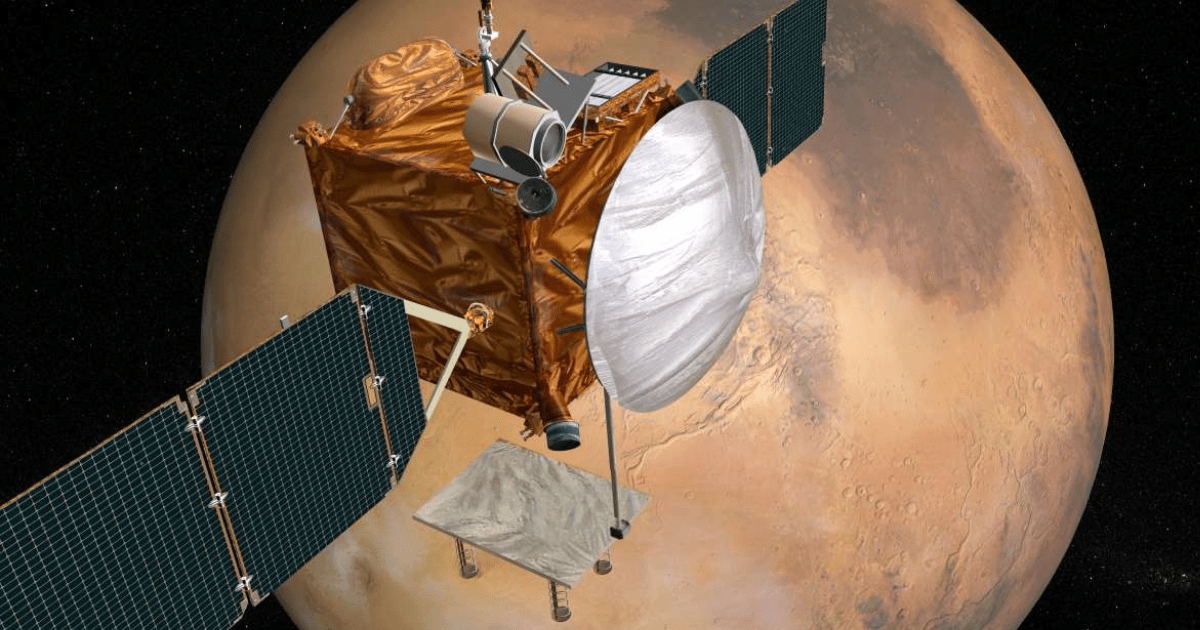
This initiative is a part of NASA's master plan to build a communications and navigation system extending farther than the Earth and Moon, thus establishing the foundations for sustained exploration of the Red Planet in the years to come. The firm-fixed-price contract has a maximum potential value of around $700 million and was awarded to Blue Origin following a request for proposal that NASA issued in May.
Why high-capacity communications is important for Mars
The Red Planet currently hosts a fleet of robotic explorers, including rovers and orbiters—and their number increases with each successful Martian mission from Earth. As these spacecraft produce enormous volumes of astronomical data (like images, measurements, etc.), transmitting the raw data to Earth is a Herculean task. As of now, the Martian missions rely on a fusion of spacecraft and communication links to transmit data through the distance between Earth and Mars.

Besides sending more complex robotic missions to Mars, NASA eventually also wants to land humans on the planet—the foundations for which it is building through the Artemis program. Such ambitious goals will result in an increased demand for data and hence, a high-performance communications infrastructure with greater capacity, reliability, and operational flexibility. That is exactly what Blue Origin is bringing to the table with MTO.
"Numerous NASA Mars exploration studies note that multi-use, enduring infrastructure platforms that provide high-rate communications and the ability to deliver other services and infrastructure repeatedly are the best approach to increase the pace of exploration," the company's page for MTO reads. The network, which will be supervised by the Space Communications and Navigation program of NASA, is expected to commence operations at Mars by 2030 and will support both current and future missions to the Red Planet.
More on Starlust
JAXA's probe will land on Mars' moon Phobos and bring its samples back to Earth for the first time
NASA's Perseverance captured a solar eclipse on Mars; see videos & images here