NASA’s Nancy Grace Roman Space Telescope completes crucial milestone ahead of August 30 launch
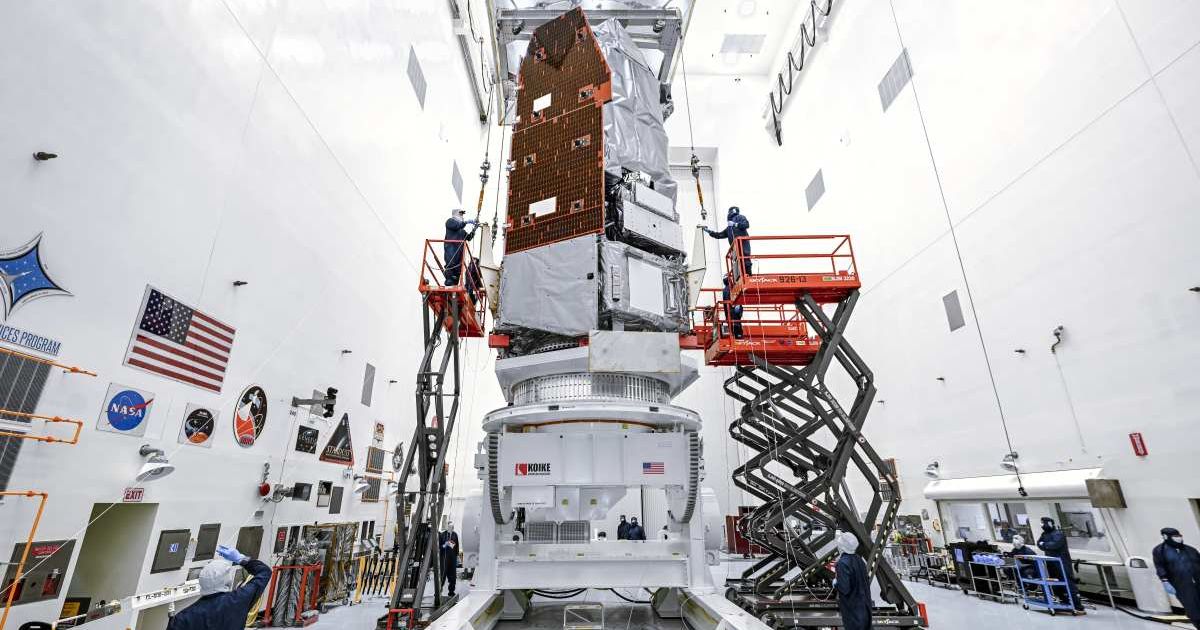
Teams processing the Nancy Grace Roman Space Telescope prior to its launch have successfully achieved certain critical pre-launch milestones at the Kennedy Space Center (KSC) in Florida, NASA announced in a statement on July 6, 2026. In what was a major operational step, engineers and technicians recently raised the 18,000-pound observatory from a horizontal to vertical position inside KSC's high bay. This repositioning signals the start of the final processing of the spacecraft, which includes rigorous inspection and testing, and its eventual integration with its launch vehicle.
Behold, Roman.
— NASA's Kennedy Space Center (@NASAKennedy) July 2, 2026
For the first time since arriving in Florida, NASA's Nancy Grace Roman Space Telescope is on full display after being unboxed and raised to its vertical position inside the high bay. And what a sight she is! 🤩 pic.twitter.com/wHxFzRpR2q
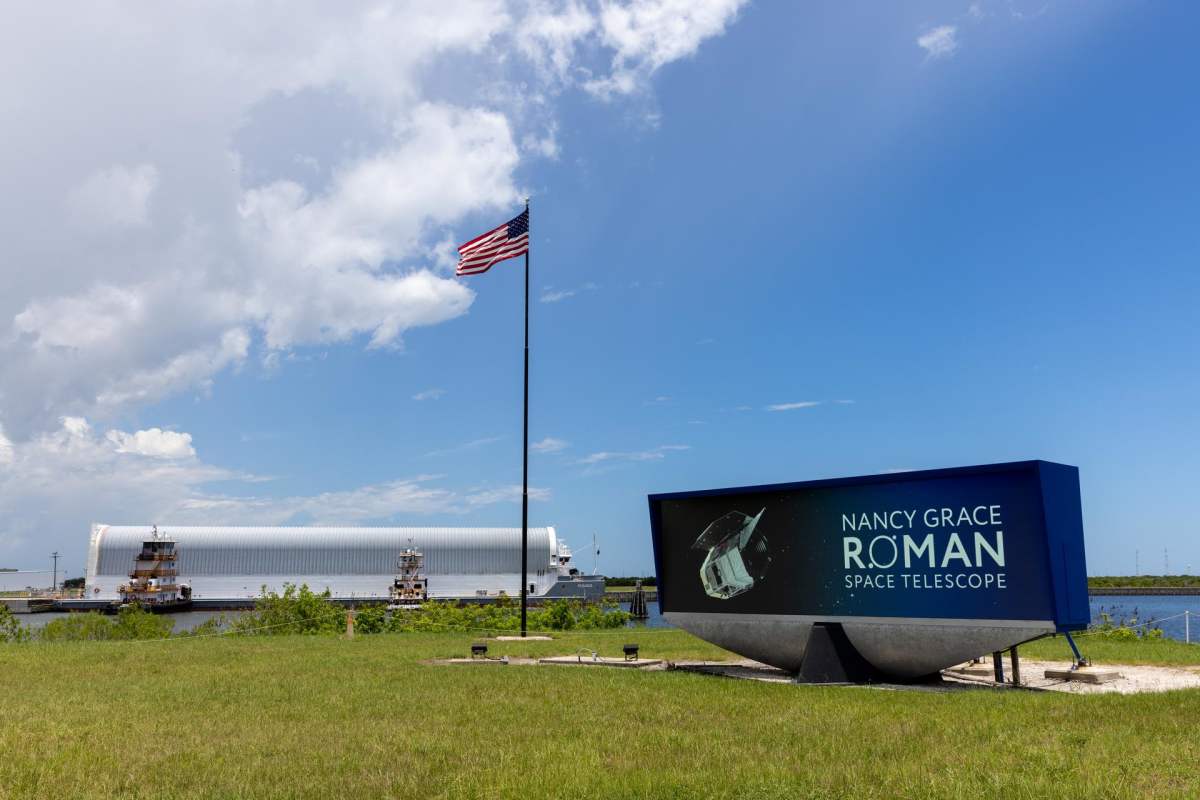
The telescope's arrival in Florida capped off an eight-day, 800-nautical-mile voyage that began at NASA's Goddard Space Flight Center in Greenbelt, Maryland, where Roman was initially assembled and tested. For the journey, the telescope's hardware was secured inside a specialized, climate controlled shipping container called CHARIOT (Conditioned Housing for Air, Road, Imaging optics assembly, and Observatory Transport), and loaded on to the agency's Pegasus barge, which found its way to KSC by June 21, 2026. CHARIOT was then attached to a truck and driven to the Payload Hazardous Servicing Facility, which had recently been modified exclusively for the arrival of Roman.
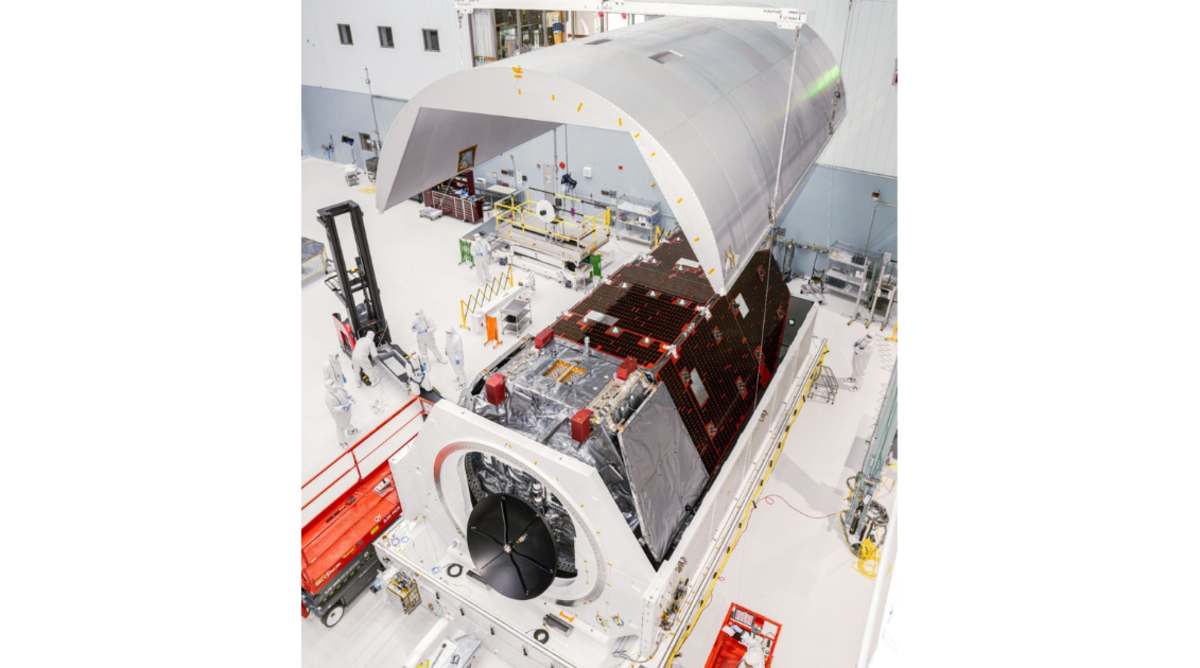
Before the observatory could be unboxed here, teams executed strict protocols to prevent contamination, cleaning the container itself before moving it into the Payload Hazardous Servicing Facility's airlock. Subsequently, Roman was set on a large work platform known as Pantheon for further processing, with the aid of large cranes that hoisted the 42-foot telescope into place. With the telescope now secure in the high bay, technicians are entering a phase of preparing Roman for spaceflight.
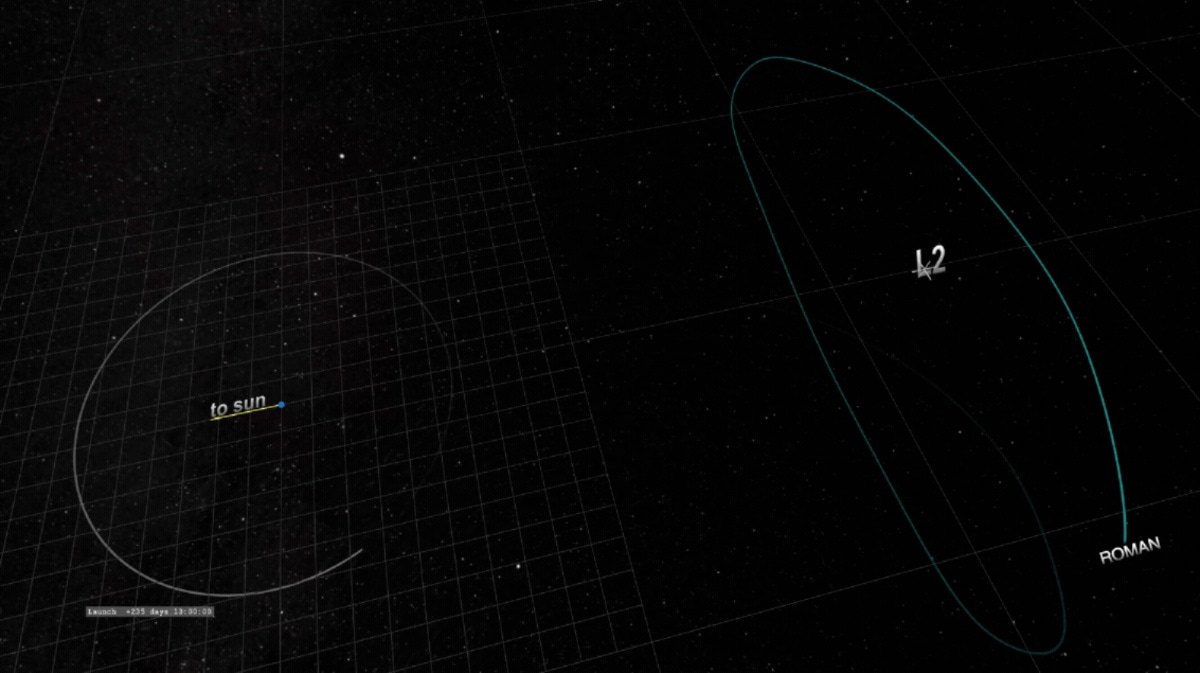
Looking ahead, NASA and SpaceX are targeting a launch no earlier than August 30, 2026, nine months earlier than original schedules had planned. Roman will be launched on top of a SpaceX Falcon Heavy rocket, which will lift off from Launch Complex 39A at KSC. Once in space, Roman will journey to orbit the second Sun-Earth Lagrange point (L2), a 'parking spot' where the combined gravity of Earth and the Sun allow spacecraft to hover in line with our planet as it orbits its host star. Roman will follow a highly elliptical orbit around L2, similar to the James Webb Space Telescope (JWST).
The flagship space telescope has been named in honor of Dr. Nancy Grace Roman, who was the first chief astronomer at NASA and is often regarded as the "mother of the Hubble Space Telescope". With Hubble now more than 35 years old, Roman will leapfrog its predecessor in several key areas. The new telescope features extremely fast image processing capabilities and a 300-megapixel near-infrared camera that boasts a field of view at least 100 times larger than Hubble's. From its vantage point, Roman will spend years conducting vast cosmic surveys, discovering thousands of new exoplanets, and providing insights into the nature of mysterious dark matter and dark energy.
More on Starlust:
Your name can travel aboard NASA's Roman Telescope on its journey—get your boarding pass now
NASA's Roman Telescope to map dark matter and dark energy more precisely than ever