How NASA's Roman Telescope will find hidden 'rogue' planets despite challenges in observing them
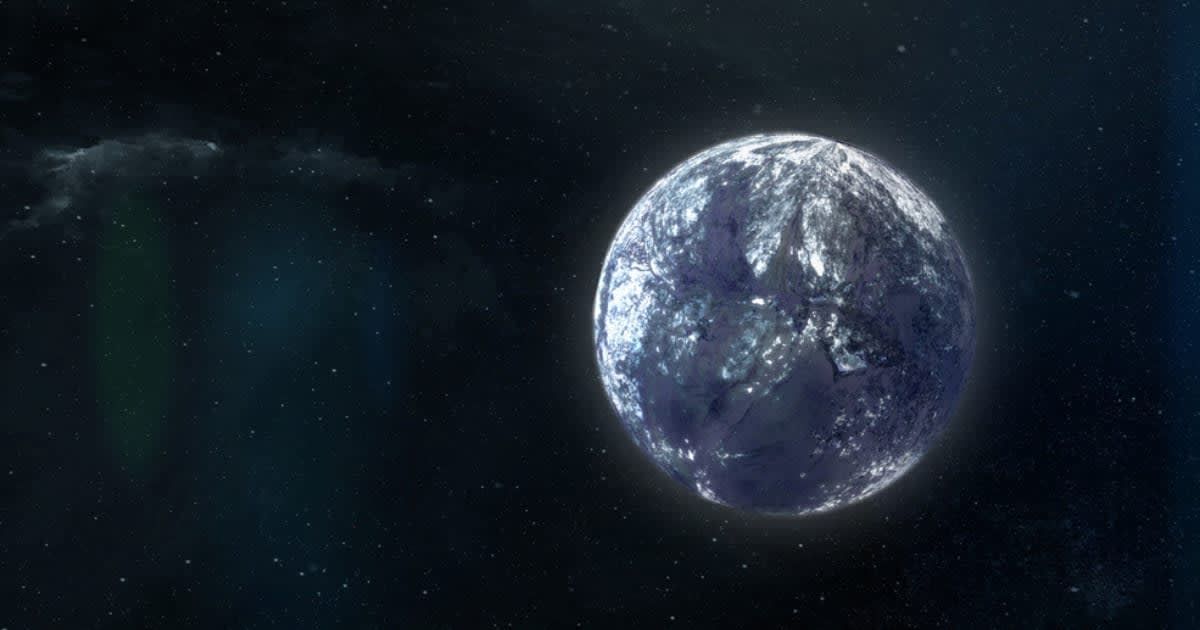
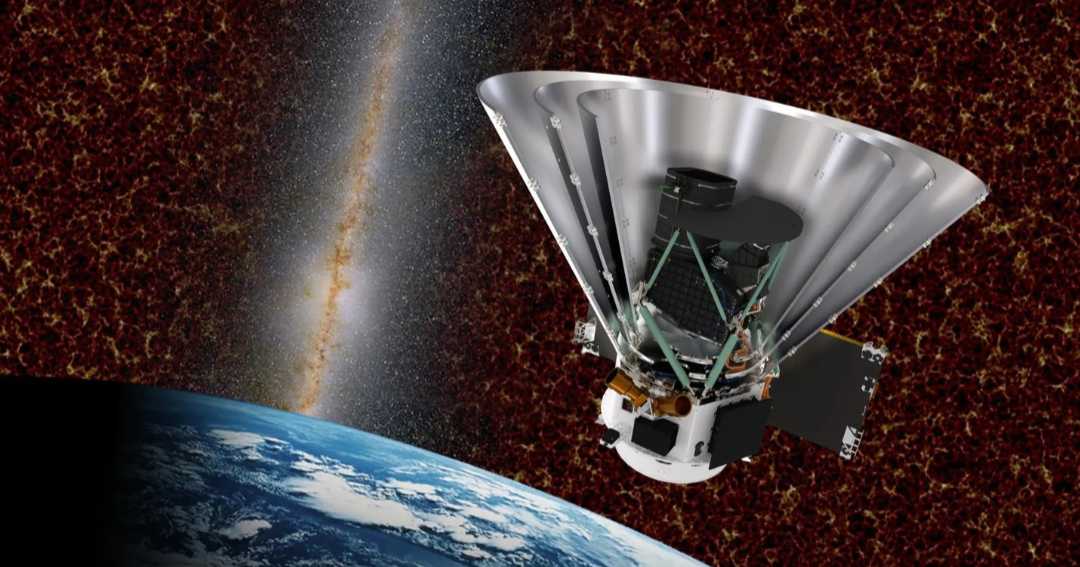
NASA is all but ready to launch its groundbreaking Nancy Grace Roman Space Telescope this August, and astronomers have begun preparing to process the vast amount of data it is set to furnish. One of the least known types of celestial bodies is the free-floating planet, which does not orbit a star. Aptly called "rogue planets," they drift through space largely undetected by existing observatories. Despite the fact that they emit no visible light, researchers have examined the prospects of deducing the mass of these rogue planets, which Roman is expected to find with its advanced capabilities. The results were published in The Astronomical Journal recently.
In order to detect dark objects in space, such as black holes and brown dwarfs, scientists use something called gravitational microlensing, a phenomenon where light from a background source bends around an intervening object with mass, magnifying the light to reach the observer. Despite having much smaller masses, planetary-sized rogue bodies can also cause a smaller, yet observable, amount of light-bending. Ground-based observations have revealed that Earth-mass rogue bodies alone may be 20 times as numerous as the stars in our galaxy. Since Roman is expected to discover hundreds of such planets with the help of its Galactic Bulge Time-Domain Survey (GBTDS), researchers used a method to analyze the planets collectively, rather than individually, to map out their mass distribution.
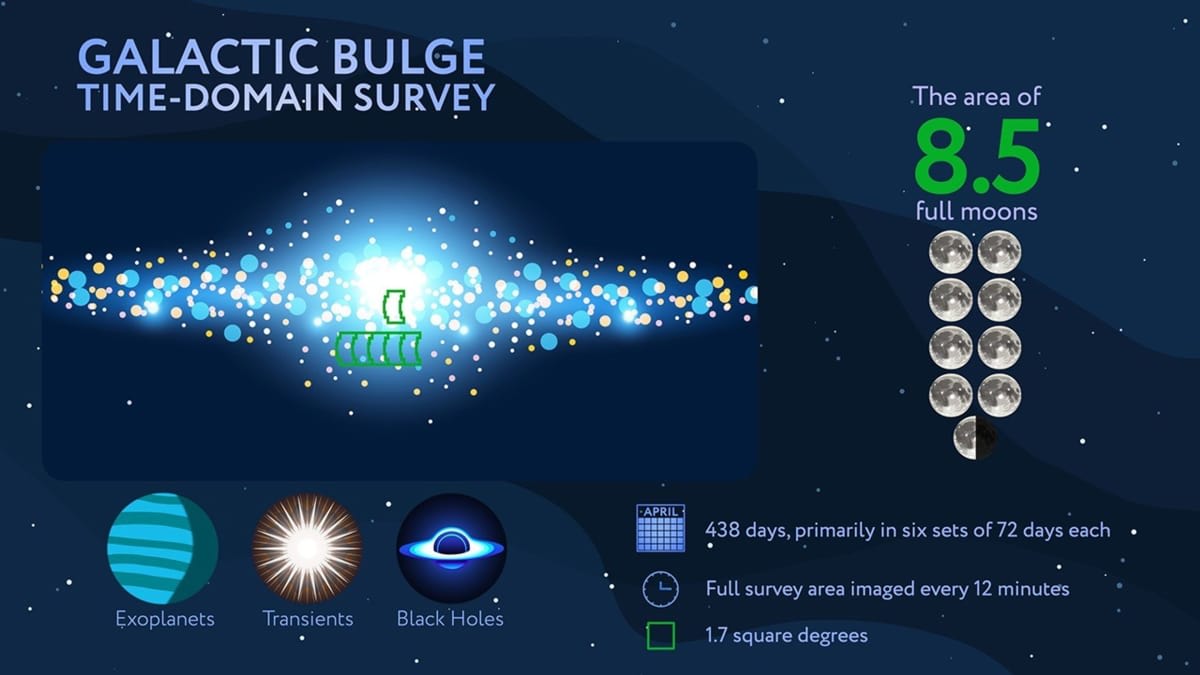
The challenge for astronomers when calculating the mass of these rogue planets—especially the small ones—stems from the fact that these objects have no detectable emissions to capture using traditional electromagnetic radiation. Observing them individually through fleeting events like gravitational microlensing can also lead to uncertainties about their exact mass and distance (a hurdle known in astrophysics as degeneracy). To overcome this, the researchers ran simulations generating 990,000 microlensing events using a Roman-dedicated simulation framework. The resulting data, which included 906,749 simulated free-floating planet events, was then used to create a model replicating exactly what the to-be-launched telescope is expected to find during the GBTDS. Using a statistical method known as Bayesian inference, astronomers can use this model to extract an overall mass distribution for the rogue planets that Roman will observe post-launch.
Roman will use a technique called microlensing, where a distant planet’s gravity acts like a lens that briefly magnifies the background stars’ light to locate rogue planets! Concept mission CLEoPATRA would help calculate the distance to the planets: https://t.co/9qrT7kEjtk
— Nancy Grace Roman Space Telescope (@NASARoman) October 18, 2021
While researchers say that these free-floating planets are a "ubiquitous outcome of planet formation, possibly constituting one of the largest planetary demographics in the Galaxy," a major gap still exists in our understanding of these worlds, which outnumber orbiting exoplanets many times over. The study supports the widely held belief that low-mass rogue planets initially form within protoplanetary disks, only to be thrown out of their home star systems by the gravitational pull of larger sibling planets. By applying this new statistical method to the actual observations that Roman will make, researchers will not only understand how massive these rogue planets typically are, but the findings may eventually also provide clues to how planetary systems around stars might have formed in the first place.
5⃣ The Nancy Grace Roman Space Telescope will help find new planets using microlensing effects. pic.twitter.com/3lyq9Mbgjm
— ESA Science (@esascience) May 3, 2023
Another study by researchers from NASA and Osaka University in Japan projected back in 2023 that Roman's GBTDS is expected to find roughly 400 Earth-sized rogue planets alone, alongside numerous others of varying sizes. Roman will work in tandem with ground-based observatories like Japan's PRIME (Prime-focus Infrared Microlensing Experiment) telescope, allowing scientists to create detailed maps of rogue planet distribution across the sky. At the time, Naoki Koshimoto, who led the 2023 study, had said, "Roman will be sensitive to even lower-mass rogue planets since it will observe from space," highlighting the 42-foot-long telescope's exceptionally wide field of view and sharp infrared vision.
More on Starlust:
Rogue planet 10 times Jupiter's mass found devouring six billion tons of gas and dust every second
'Under budget and ahead of schedule': NASA moves up Roman telescope launch date after key inspection