Your name can travel aboard NASA's Roman Telescope on its journey—get your boarding pass now
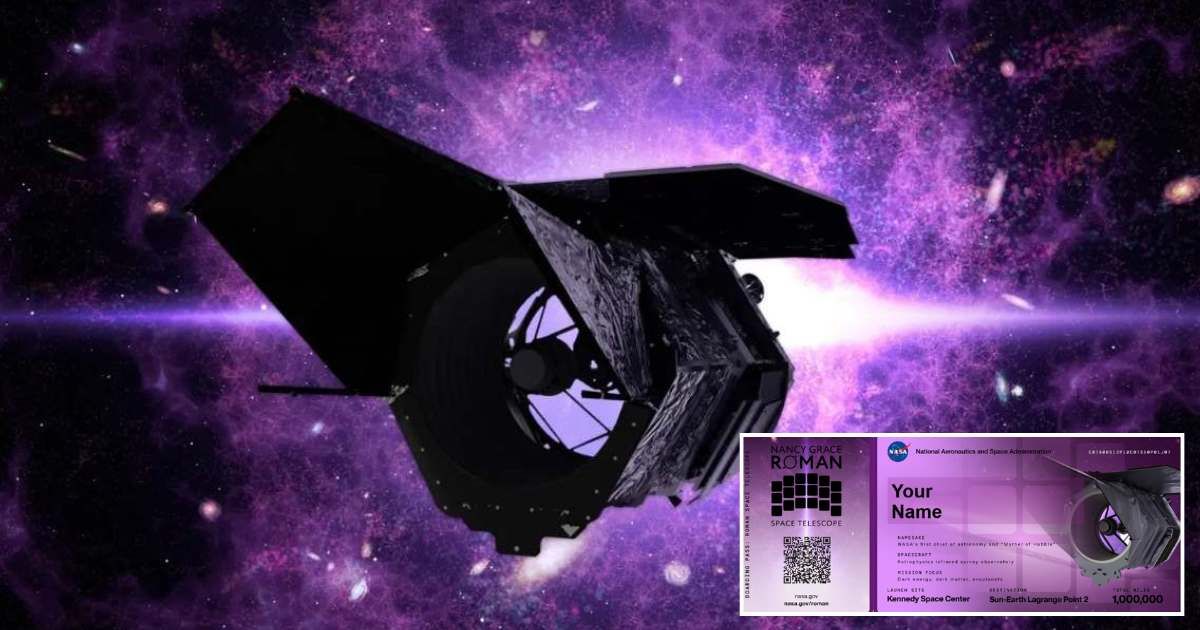
Submitted names will be uploaded to an SD card, which will be attached to the Roman Space Telescope before its launch on August 30.
The Nancy Grace Roman Space Telescope will settle essential questions in the areas of dark energy, exoplanets, and astrophysics. (Representative Cover Image Source: NASA); Inset image shows how your boarding pass will look.

Astronomy enthusiasts can send their names to the second Sun-Earth Lagrange point (L2), one million miles away, all thanks to NASA and the brand-new Nancy Grace Roman Space Telescope. The submitted names will be uploaded to an SD card that will be attached to the observatory before launch. Each person who registers will also get an official digital boarding pass as a keepsake.
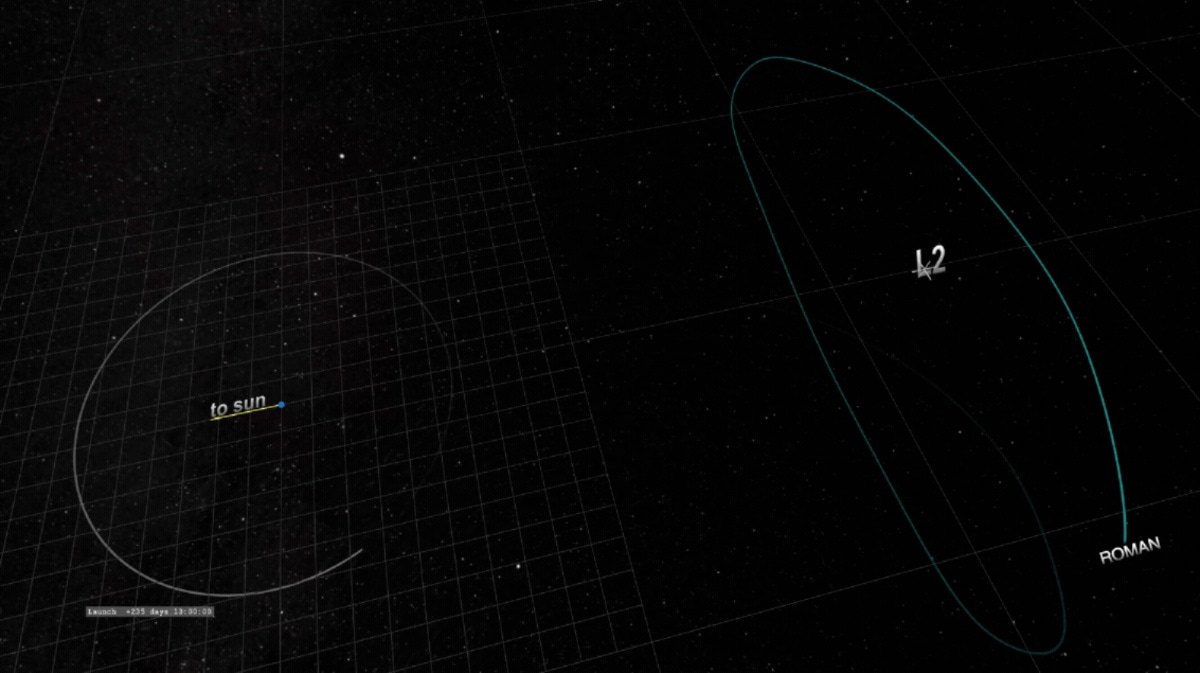
Illustration showing the orbit of Roman around the L2 point, in relation to Earth's orbit around the Sun. (Representative Image Source: NASA)
An illustration showing the orbit of Roman around the L2 point, in relation to Earth's orbit around the Sun. (Representative Image Source: NASA)

The Roman Telescope was previously supposed to launch in early September this year. NASA, however, decided to bring up the launch date to August 30 after the successful completion of the final inspection of its 7.9-foot mirror at the agency's Goddard Space Flight Center in Greenbelt, Maryland. NASA Administrator Jared Isaacman took to X to acknowledge the revised launch date, stating that the mission is both "under budget AND ahead of schedule." This leaves just a few weeks for interested folks to enter their names and download their passes before a SpaceX Falcon Heavy rocket lifts off with the observatory from NASA's Kennedy Space Center in Florida.
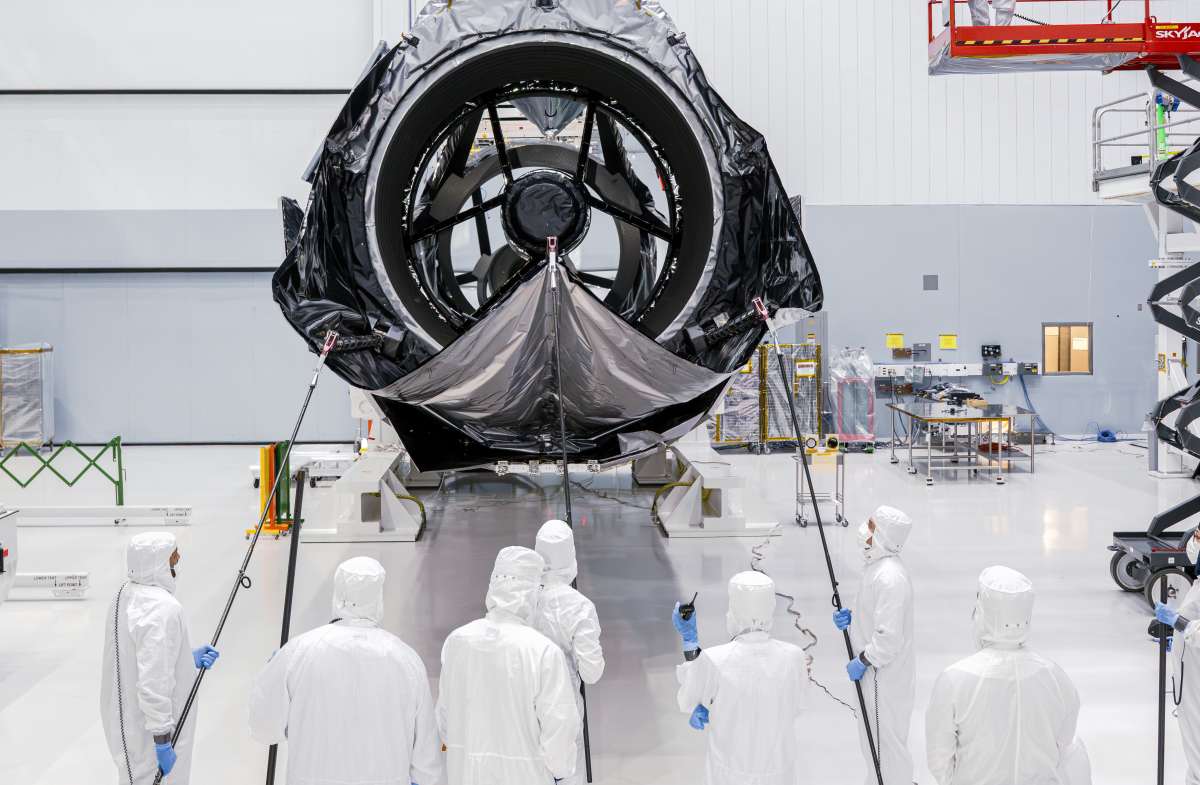
Engineers have a look at Roman’s mirror as its hood is tested at NASA’s Goddard Space Flight Center. (Image Source: NASA | Sydney Rohde)

Step-by-step guide to securing your very own Roman Telescope boarding pass

1) Visit the NASA Special Events portal

2) Enter your first name and last name

3) Add your email address and click 'Submit' to generate the boarding pass
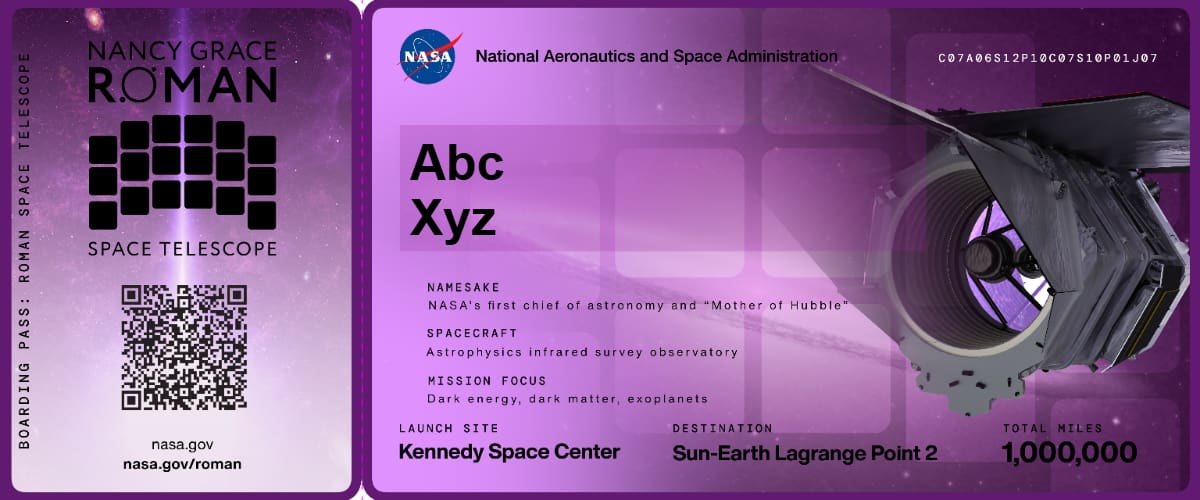
A sample boarding pass generated to mark one's name being sent with Roman. (Representative Image Source: NASA)
A sample Roman telescope boarding pass. (Representative Image Source: NASA)

The highly capable space telescope is named after Dr. Nancy Grace Roman, NASA's first chief astronomer, who passed away in 2018. The space telescope is engineered to scan vast portions of the sky in infrared vision to investigate dark matter, dark energy, and the fundamental structure of our universe. It can, in fact, survey the sky more than 1,000 times faster than the Hubble Space Telescope and can capture 200 times more area in a single image.
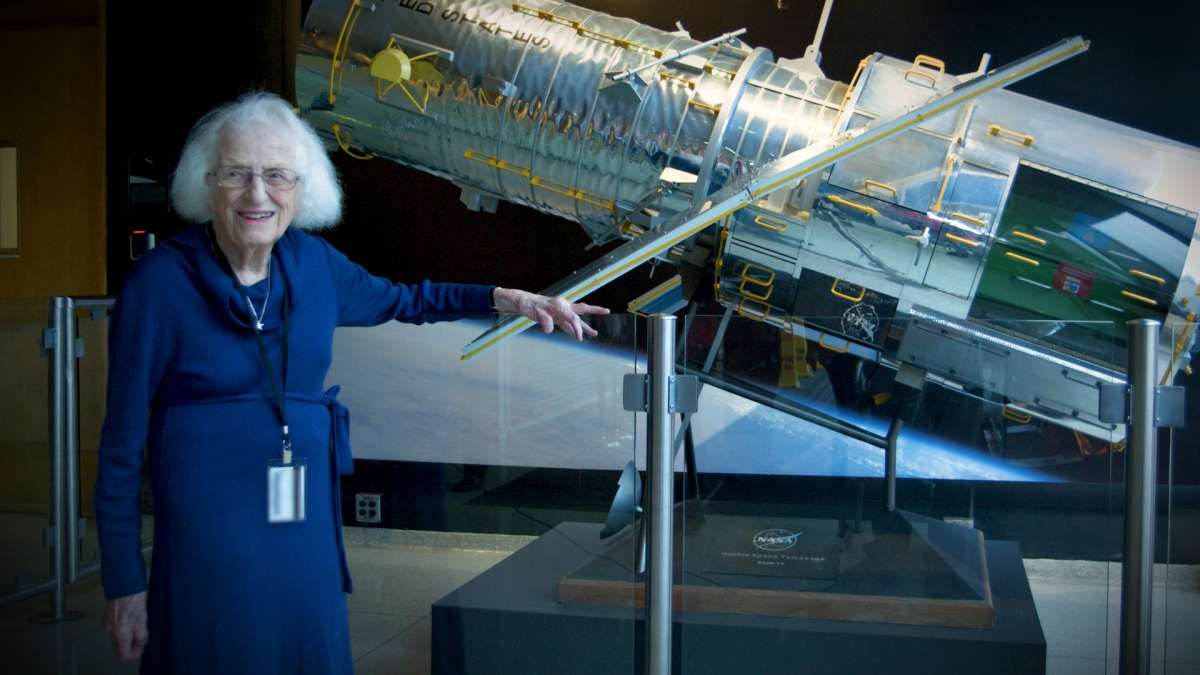
The late Dr. Nancy Grace Roman, the namesake of NASA’s next flagship astrophysics mission, which is on track to launch by May 2027 (Cover Image Source: X | Nancy Grace Roman Space Telescope)
The late Dr. Nancy Grace Roman, after whom NASA's next flagship observatory is named, is also called the "mother" of the Hubble Space Telescope. (Image Source: X | Nancy Grace Roman Space Telescope)

At L2, Roman will share its orbit with another one of its predecessors—the James Webb Space Telescope. The observatory will be able to maintain a stable orbit at L2 as the gravitational forces between the Sun and Earth are balanced there. It will be able to do so without spending too much fuel while also having access to a constant, unobstructed view of the sky. 

This mosaic is composed of images covering the entire sky, taken by the Wide-field Infrared Survey Explorer (WISE) as part of WISE’s 2012 All-Sky Data Release (Image Source: NASA)
This mosaic is composed of infrared images covering the entire sky as part of WISE’s 2012 All-Sky Data Release (Representative Image Source: NASA)

The campaign to have names sent on missions and make boarding passes available is not new, with NASA having done something similar to raise public engagement before the Artemis II mission as well. It was quite successful in its purpose, with more than 5.6 million people choosing to have their names voyage beyond the Moon and back on a journey spanning over 250,000 miles.

More on Starlust

NASA's Roman Telescope to map dark matter and dark energy more precisely than ever

NASA’s Roman Space Telescope survey aims to discover 100,000 star explosions and feeding black holes
MORE STORIES

A new study shows that a solar sail may face drag force from the very light that powers it.
1 day ago
The spacecraft will bring home thousands of pounds of hardware and important scientific samples.
1 day ago
The robotic arm experienced what NASA described as "elevated motor current in a wrist joint."
2 days ago
Jeremy Parsons, part of Moon to Mars office at NASA, explained that the Falcon Heavy or the Vulcan can also get the job done.
5 days ago
The 1967 Outer Space Treaty mandates peaceful exploration of space, but that's not the only space agreement going around.
2 days ago
Both landers have been the subject of intense speculation ever since NASA announced its revised roadmap for the Artemis program.
5 days ago
LINK will rescue Swift from a premature atmospheric re-entry, allowing it to continue operations.
5 days ago
Blue Origin reported good progress despite the NG-4 setback, while SpaceX updated its mission plan.
6 days ago
Many medications expire faster in space than on Earth, and regular resupply for missions that may travel millions of miles from the planet isn't really an option.
6 days ago
While the crew being revealed was central to the event, a few key mission updates were also shared.
6 days ago