The sharpest-ever images of the Sun reveal how its tiny vortices help store and release energy
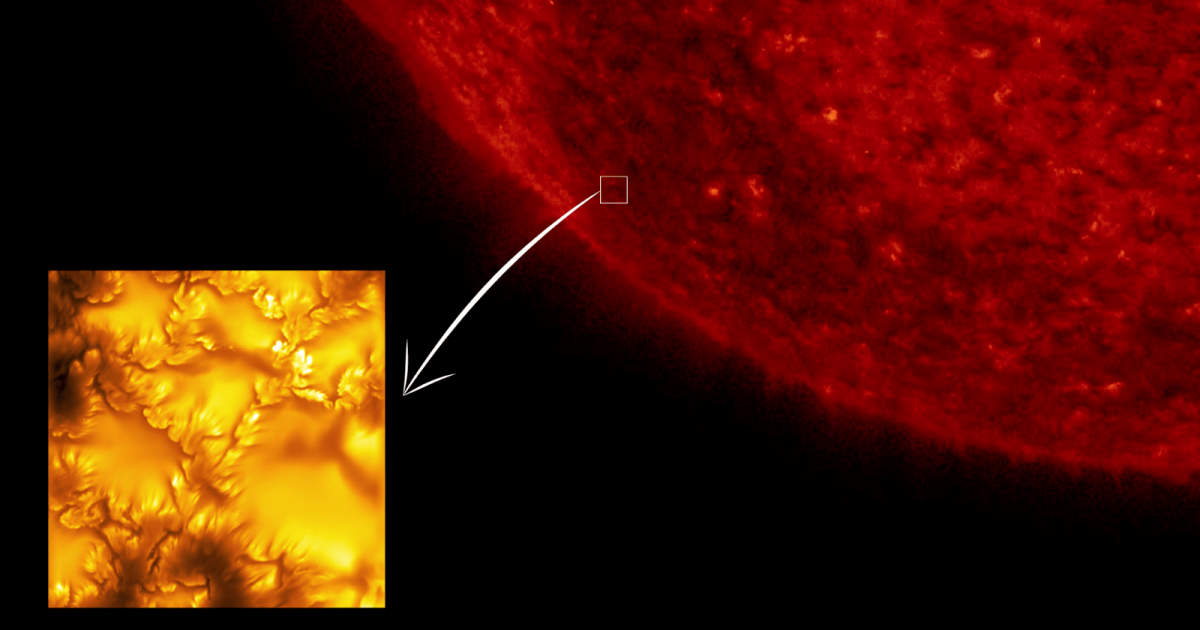
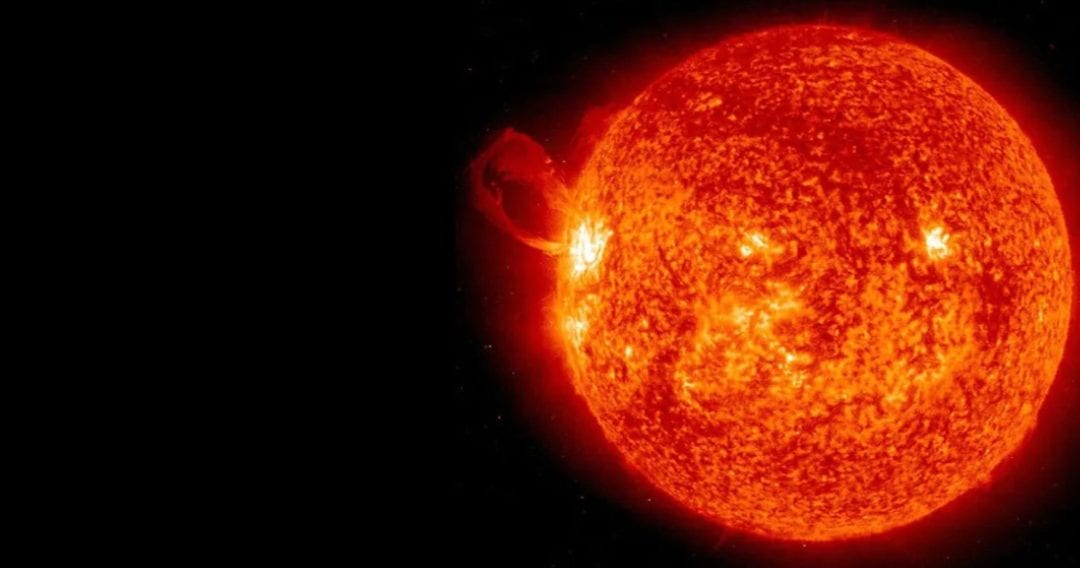
Astronomers have discovered previously unknown tiny vortices on the Sun’s surface that could help decipher how our star stores and releases energy in its magnetic field by analysing the most detailed view ever captured of the Sun. They made the discovery by peering into the Sun’s surface using the world’s largest solar telescope, the NSF Daniel K. Inouye Solar Telescope, and simulating the vortices. The findings have been published in the journal Nature.
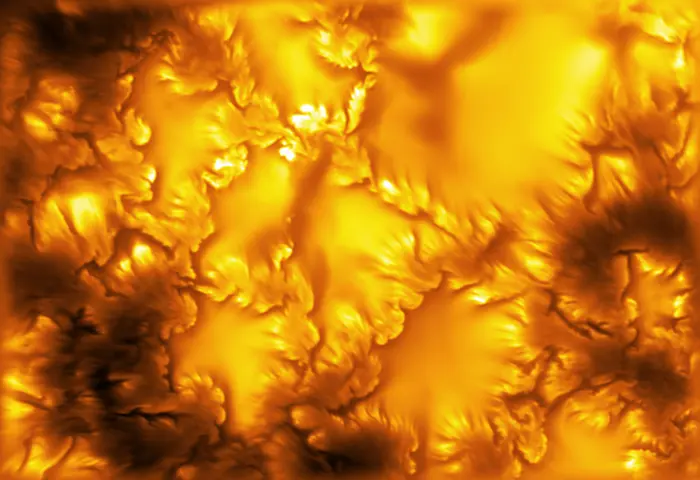
Vortices are minute disturbances that occur at the edges of so-called granules, which are found on the Sun’s visible surface. Measuring between 310 and 1242 miles in diameter, these granules coalesce to form the granulation, which originates from plasma flows that emerge from deep inside the Sun’s hot interior, cool, and sink back again. When adjacent layers of plasma flow past each other at different speeds, they create minute instabilities known as Kelvin-Helmholtz instabilities. Such instabilities generate shear force at the boundary where the two layers meet, creating minute upheavals that grow into wave- or vortex-like flows.
For the first time, researchers from the U.S. National Science Foundation National Solar Observatory (NSF NSO) and the Max Planck Institute for Solar System Research (MPS) in Germany observed fringed structures at the edges of the granules, which exhibited spinning motions akin to breaking ocean waves. Some of the structures are a mere 12 miles wide. The researchers compared resolving these delicate structures to distinguishing a one-euro coin from a distance of about 111 miles.
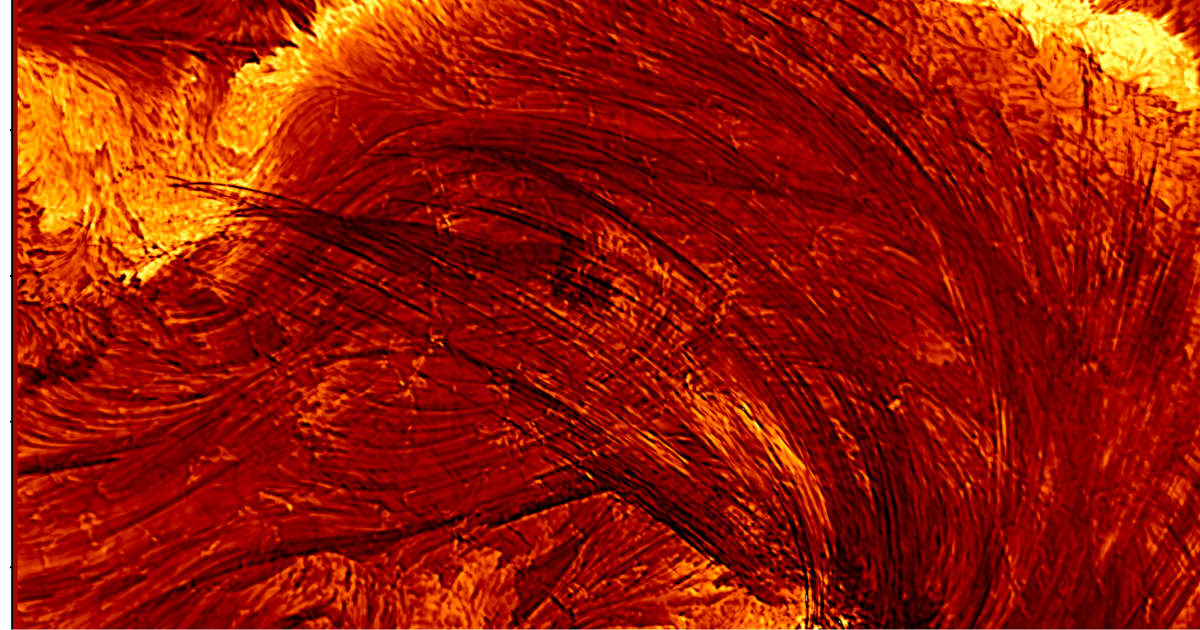
“To detect the vortices, we needed to resolve structures on the solar surface about 20 kilometers in size,” said MPS scientist and co-author of the new publication Michiel van Noort, who contributed to the observations and conducted the data reduction and image restoration. “That is at the limit of what even the world’s largest solar telescope and state-of-the-art simulations can achieve.” The Sun’s diameter is 864,000 miles, so resolving surface features just 12 miles across is a daunting task, one which the researchers accomplished using a broadband imaging camera provided by the MPS.
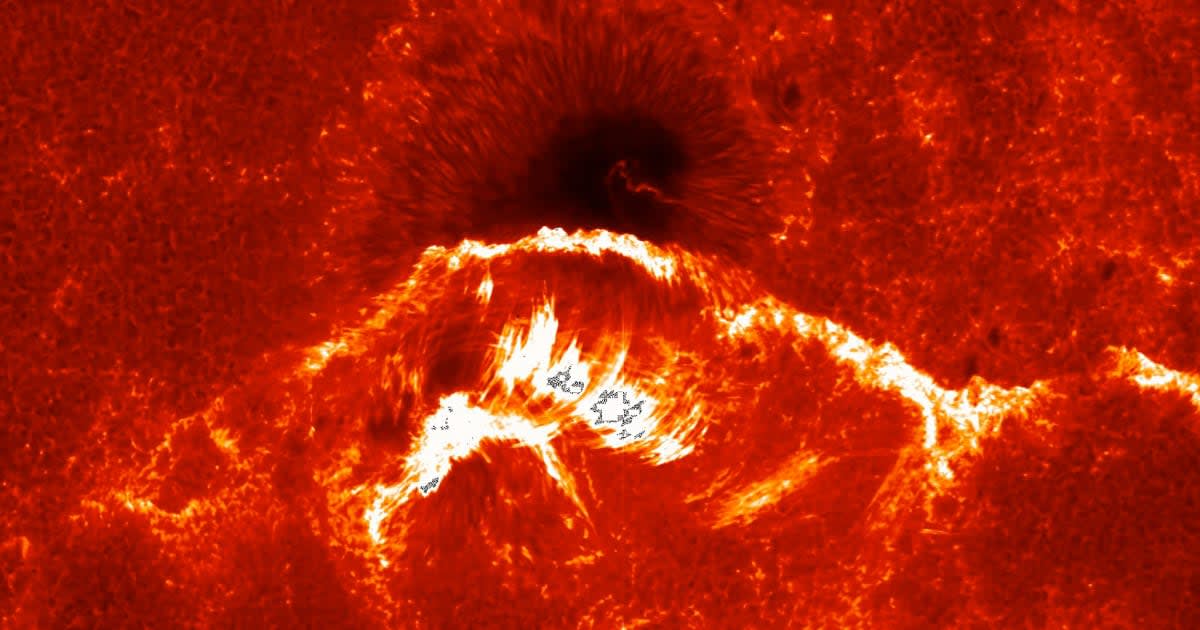
The newly discovered vortices have provided new insights into how our star stores and releases energy in its magnetic field, which sometimes erupts in the form of minute bursts of radiation known as nanoflares. Existing theory suggests that the Sun builds its magnetic energy through the twisting and coiling of magnetic field lines—similar to winding up a tightly coiled metal spring. This creates a highly energetic but unstable magnetic field architecture. When the stored energy is suddenly released, the twisted lines snap open and reconnect. To date, it was not clear what triggers the magnetic field lines to twist. Now, the discovery of vortices can partly answer this question. Vortices occur wherever the magnetic field is strong, suggesting that they might be the driving force that triggers the twisting.
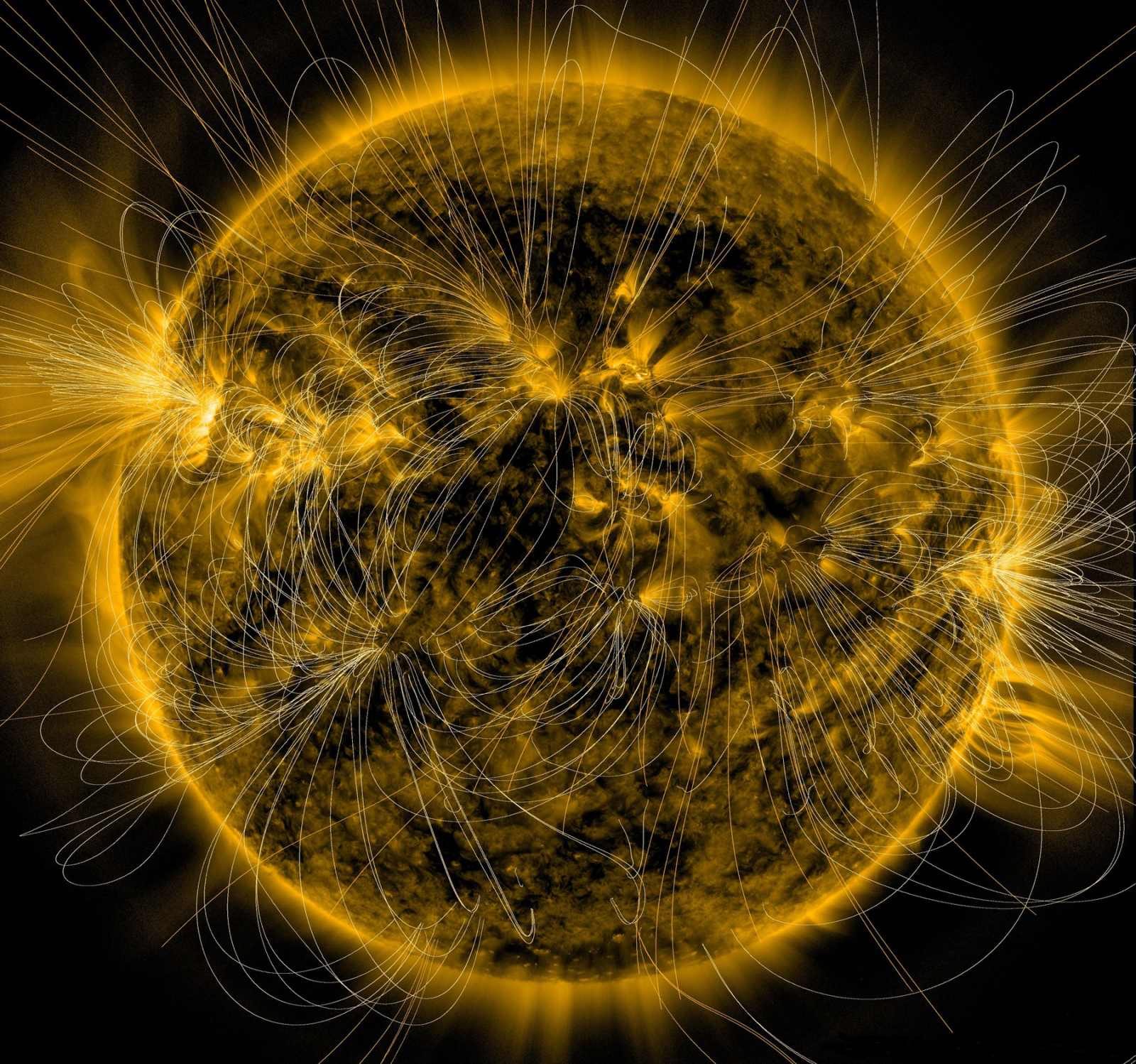
The researchers also detected mini-vortices that efficiently mix magnetized and non-magnetized plasma together on the Sun’s surface, aiding the magnetic field to move rapidly from the surface into the Sun’s atmosphere. “The newly discovered plasma vortices impressively demonstrate how minute processes—at the limit of what we can resolve using all available techniques—significantly determine the nature of our star,” said co-author Sami K. Solanki, director of the MPS.
More on Starlust:
In a rare feat, scientists captured the Sun just hours before a massive solar flare—and were stunned
Scientists discover the Sun has more silver than previously estimated