Venus may once have been a paradise: New study suggests oceans covered 90% of planet
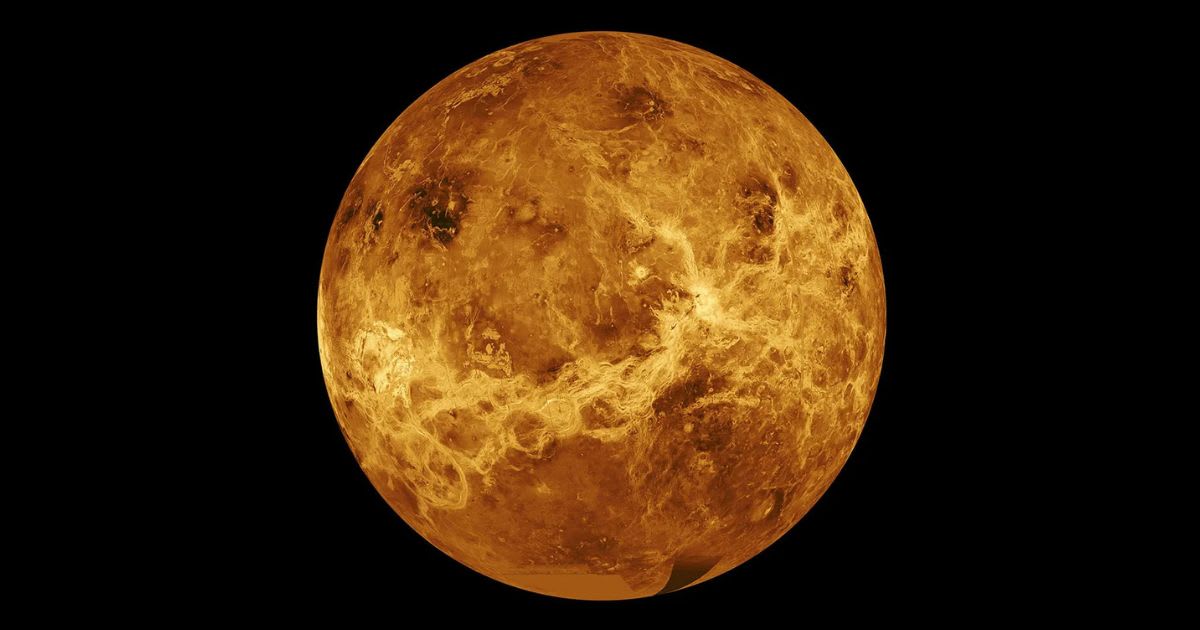
A research team led by Richard Ghail at the University of London has suggested that Venus might have hosted oceans larger than previously thought. They took a fresh look at a network of polygon-shaped cracks covering parts of Venus's low-lying plains and concluded that volcanoes didn’t create these geological features. Instead, according to a study published in the journal Earth and Planetary Science Letters, these structures more closely resemble cracks formed in water-rich seafloor sediments on Earth.
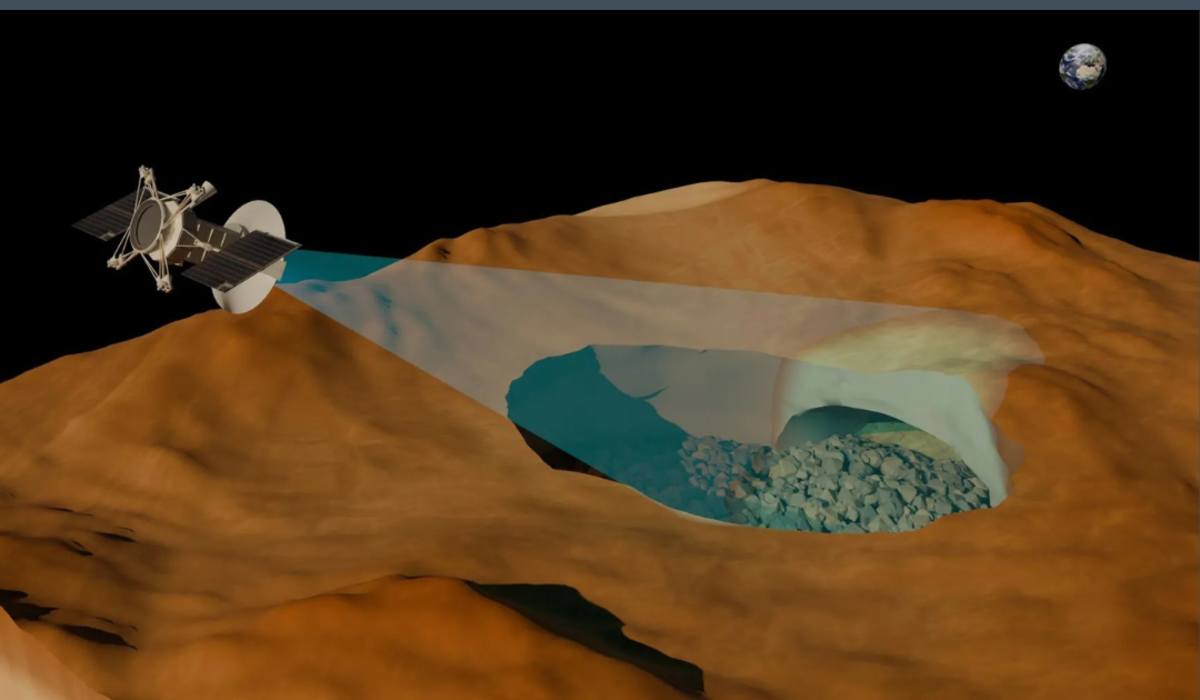
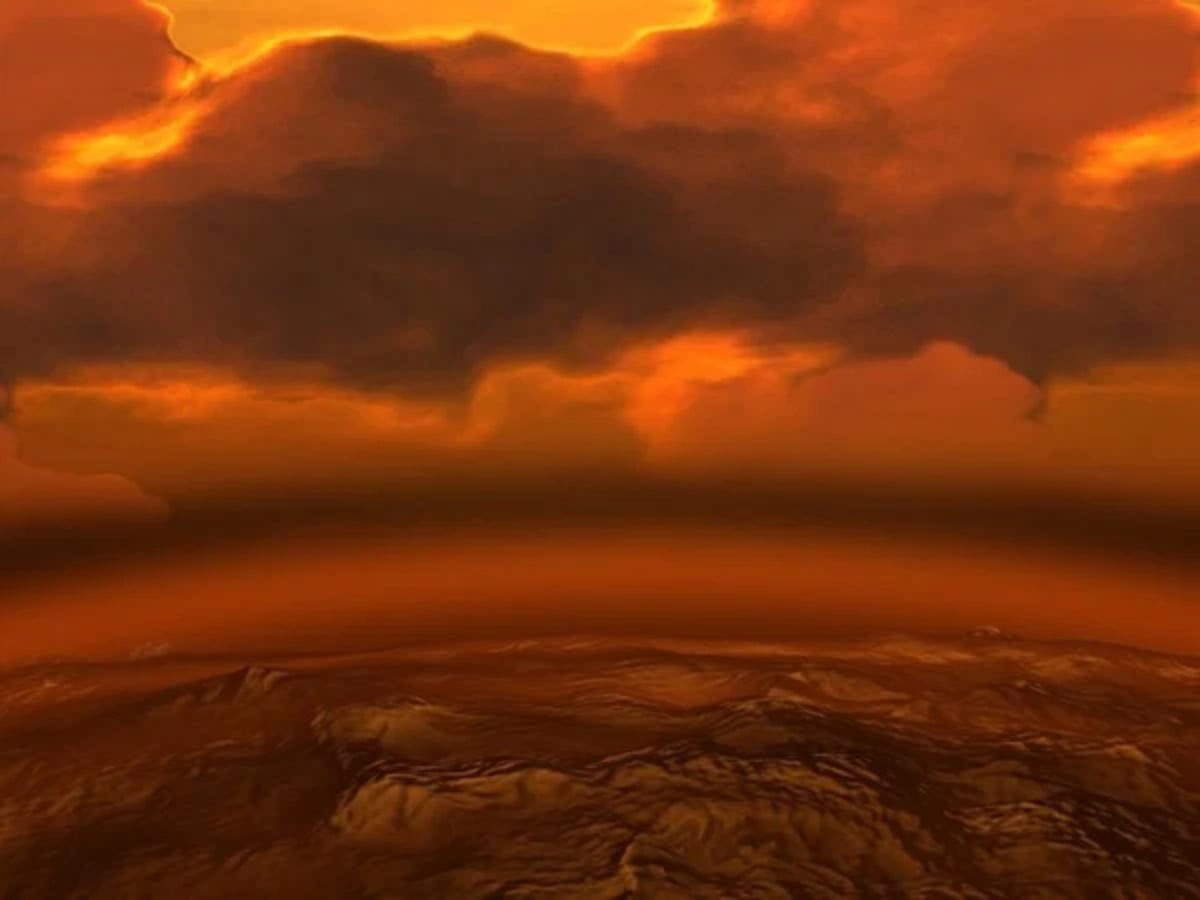
Currently, Venus is inhospitable with its scorching temperatures and crushing pressures, and is shrouded in a toxic soup of carbon dioxide and sulfuric acid. Among its geological features, scientists have long puzzled over sprawling networks of polygon-shaped cracks that are spread across large portions of Venus’s low-lying plains. Each polygon spans roughly 0.6 to 1.2 miles (1 to 2 kilometers). Traditionally, planetary scientists believed volcanoes probably left behind such shapes. Under this model, lava cooled, contracted, and fractured into these geometric patterns after massive volcanic eruptions.
However, Ghail and his team propose a remarkably different origin. After classifying the crack networks based on their shapes and arrangements, the team found striking similarities to features seen on Earth's ancient seabeds. Instead of volcanic cooling, they suggest the polygons could have formed when thick layers of waterlogged marine mud were buried beneath sediments. As the mud slowly compacted and lost water over millions of years, it shrank, producing characteristic polygonal fractures.
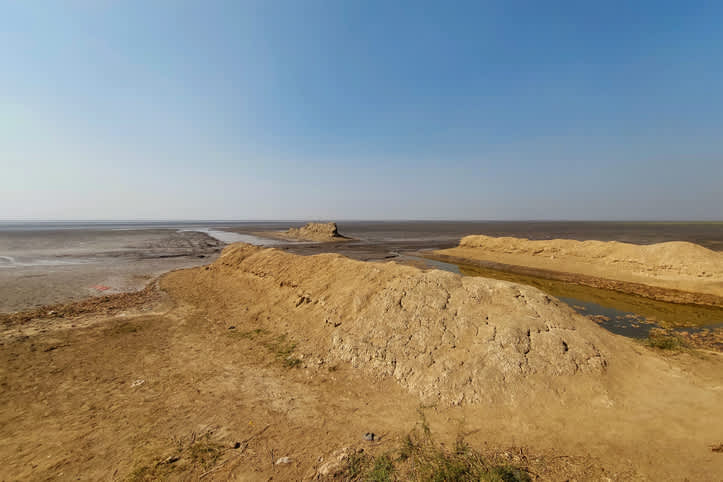
To probe what happens when seas dry up, the researchers turned their attention to one of Earth’s most dramatic geological episodes. Around six million years ago, the Mediterranean Sea nearly vanished during what geologists call the Messinian salinity crisis. Following the sea’s evaporation, enormous salt deposits formed across the basin, which, when dried, gave rise to polygonal patterns remarkably similar to the ones observed on Venus. The researchers also reanalysed Venus's mysterious canali—long, winding channels that can extend for hundreds of miles. These features are widely thought to have been left behind by enormous lava flows. Ghail's team, however, notes that their shapes also resemble submarine channels carved by water and sediment currents on Earth's ancient ocean floors.
The researchers also studied other geological features such as wrinkle ridges, which they suspect overlie thick layers of salt left behind when the ancient oceans evaporated. Analysing these features, the researchers suggest that either Venus' oceans were smaller or less salty than Earth’s counterparts, leaving behind salt deposits estimated to be at least 210 feet (64 meters) thick. All these features allowed them to predict the area and volume of this lost ocean, calculating “an ocean area close to 90% of the Venus surface, and a volume of about 40% of Earth’s oceans, with an equivalent average ocean depth of 1400 m,” as the researchers write. But how did the oceans evaporate on Venus? The researchers attribute such drying up to a runaway greenhouse effect that occurred less than a billion years ago. By that time, life had already been thriving on Earth for billions of years, but a similar runaway greenhouse event might have wiped it out on Venus.
More on Starlust:
Venus is not geologically dormant, new computer simulations reveal
What creates Venus' mysterious lower haze? Astronomers may finally have the answer