Astronomers have discovered a unique planetary system where planets are arranged 'inside out'
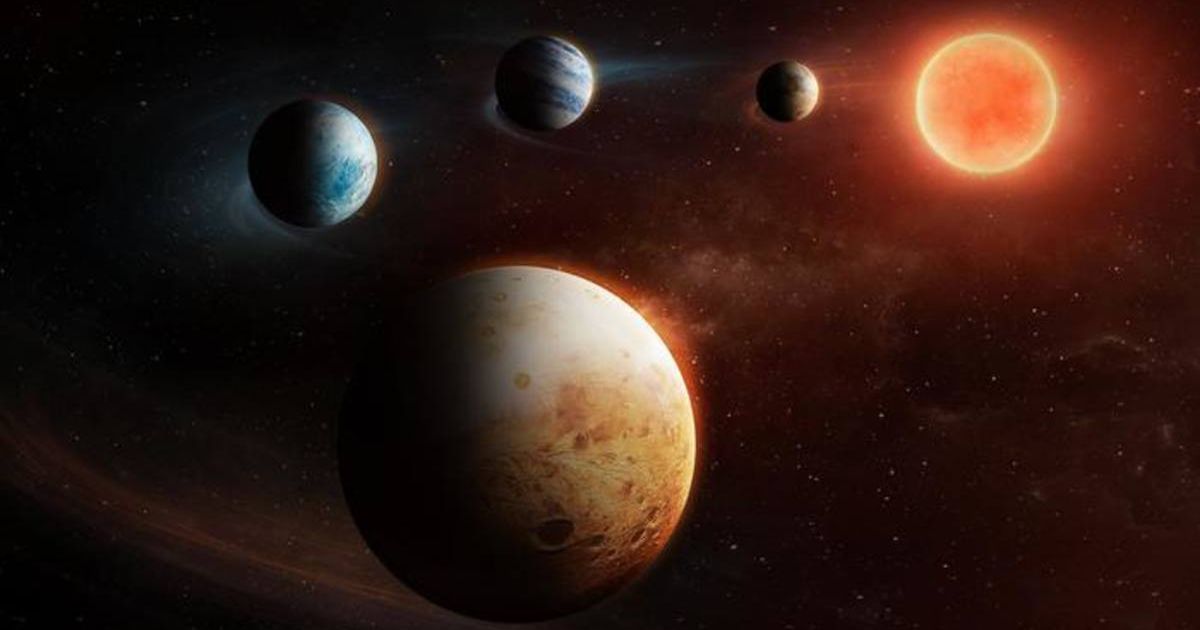
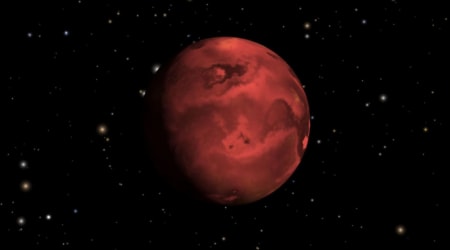
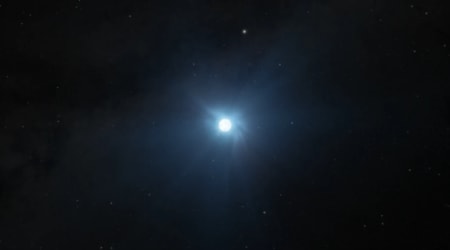
Astronomers have discovered a strange planetary system in the thick disk of the Milky Way. The system has four planets that orbit an old, red dwarf star, LHS 1903, which had been photometrically observed by the Transiting Exoplanet Survey Satellite (TESS) between 2019 and 2023. The first planet is rocky, followed by two gas worlds, while the outermost planet is rocky again. This is in stark contrast to what we observe in our solar system, where the inner planets—Mercury to Mars—are rocky, but the outer planets—Jupiter to Neptune—are gaseous. Thus, this arrangement turns the definition of planetary system upside down, standing out as an ‘inside out’ system that deviates from the conventional planetary systems found across our galaxy. The study, led by Dr. Thomas Wilson from the University of Warwick, has been published in Science.
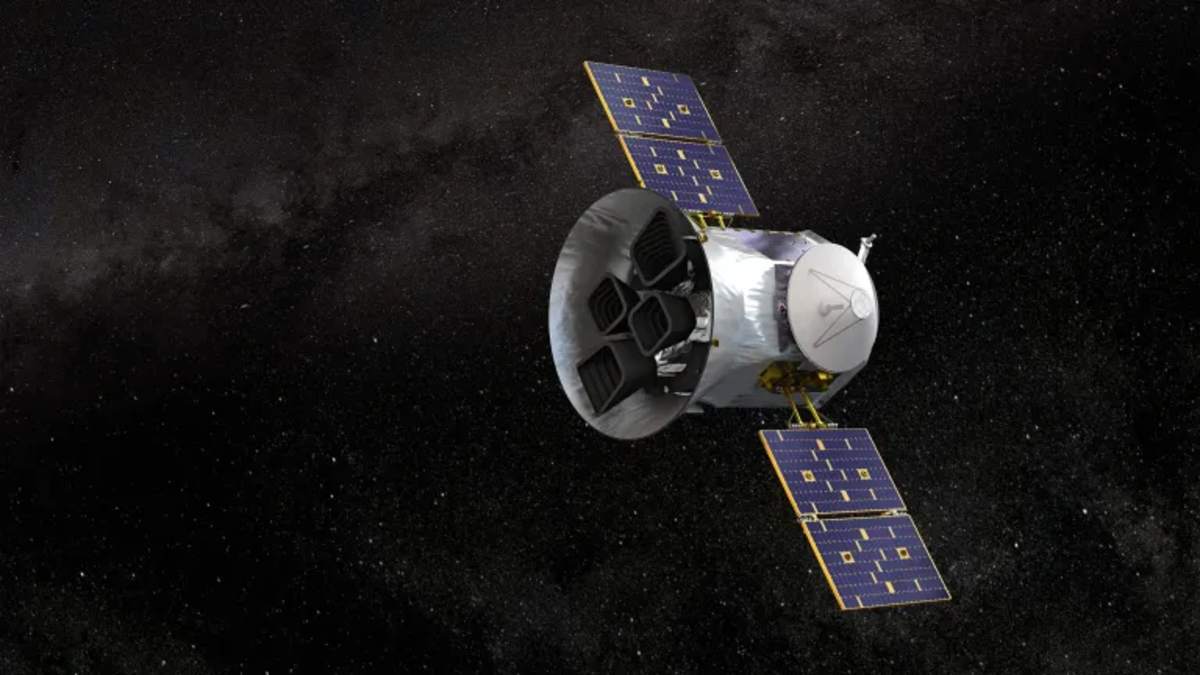
The fourth planet was detected using ESA’s CHaracterising ExOPlanet Satellite (CHEOPS), and it surprised the astronomers. “This strange disorder makes it a unique inside-out system” says Dr. Wilson, who's an assistant professor in the Department of Physics at Warwick, per the university's press release. “Rocky planets don’t usually form far away from their home star, on the outside of the gaseous worlds.”
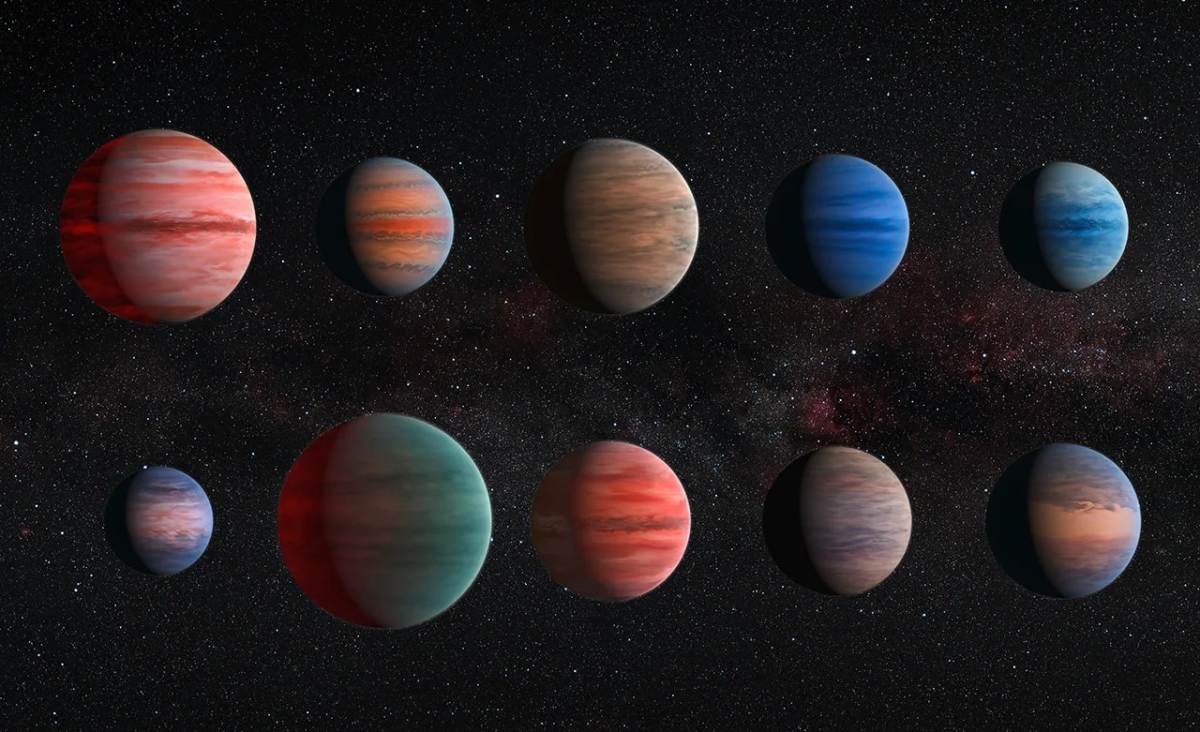
The host star's radiation heats the closest planets, stripping them of their gaseous atmosphere and leaving behind the solid core. Farther out from the star, the intensity of radiation drops, forming a cooler atmosphere where planets can trap gas, forming gas-rich planets. Then what happened to the fourth planet that orbits LHS 1903? Analyzing observational data, Wilson and his co-researchers found evidence that reveals that the four planets were not born at the same time. Instead, they formed one after another in a process called inside-out planet formation. LHS 1903 blew out dust and gas to spawn the inner planets first and then the outer ones. But the outermost planet probably evolved in a completely different environment.
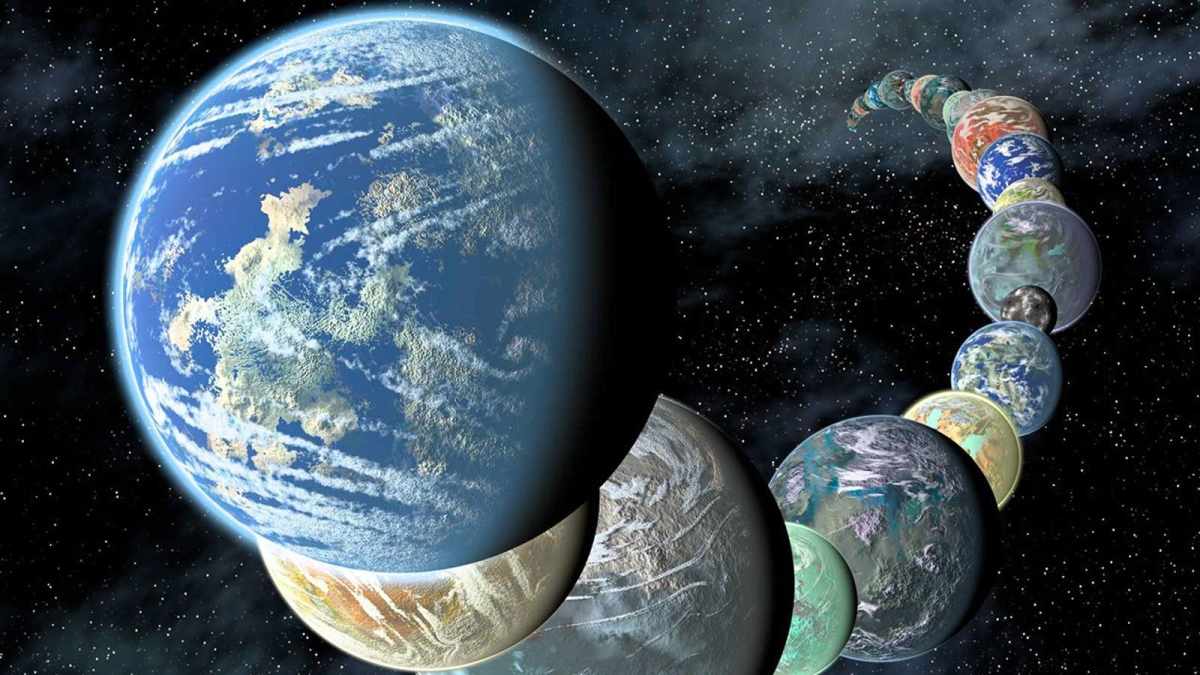
“By the time this final outer planet formed, the system may have already run out of gas, which is considered vital for planet formation,” Wilson explains in the press release. “Yet here is a small, rocky world, defying expectations. It seems that we have found the first evidence for a planet that formed in a gas-depleted environment.” Analysis shows that the radius of LHS 1903 b is typical of super-Earth planets, while planet c and planet d are sub-Neptune size. The farthest rocky planet, LHS 1903 e, is smaller than c and d but bigger than b, and it sits in an environment that is colder than most known exoplanets.
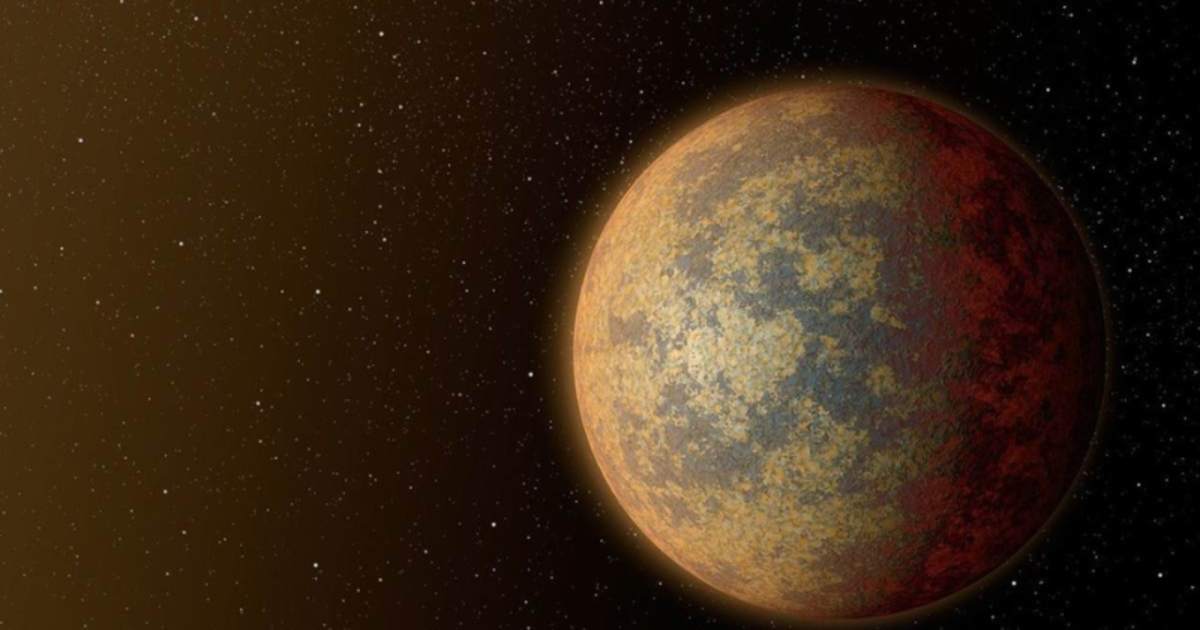
The researchers think such a planetary system offers a new theory of planet formation, which can only be strengthened by finding similar systems in the Milky Way and elsewhere in the universe. “Historically, our planet formation theories are based on what we see and know about our solar system,” says Isabel Rebollido, a research fellow at the European Space Agency, in the press release. “As we are seeing more and more different exoplanet systems, we are starting to revisit these theories.”
More on Starlust
Astronomers finally managed to measure the mass of a 'rogue' planet—it's a lot like Saturn
NASA's James Webb Space Telescope finds a lemon-shaped exoplanet with a never-before-seen atmosphere