Astronomers witness supermassive black hole waking up from a long slumber for the first time
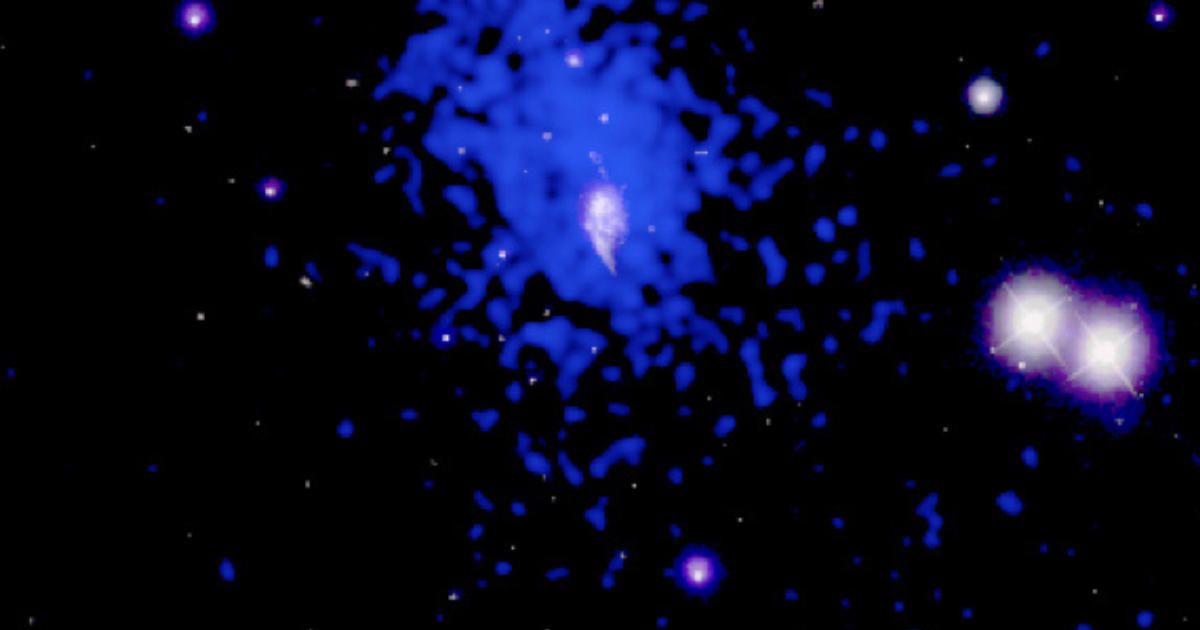
An international team of astronomers has captured a supermassive black hole emerging from a long period of inactivity, marking a pivotal discovery in the study of galaxy formation. The findings, published in The Astrophysical Journal, provide a rare glimpse into the initial stages of a black hole's influence on its host galaxy, a phenomenon known as "feedback," according to The National Radio Astronomy Observatory.
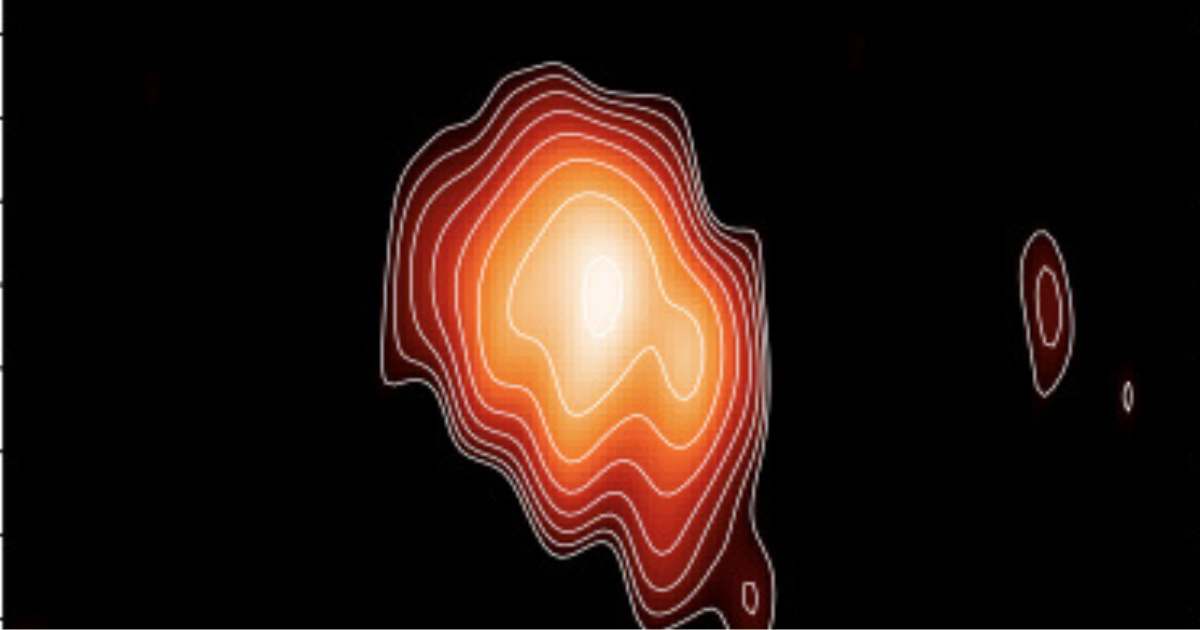
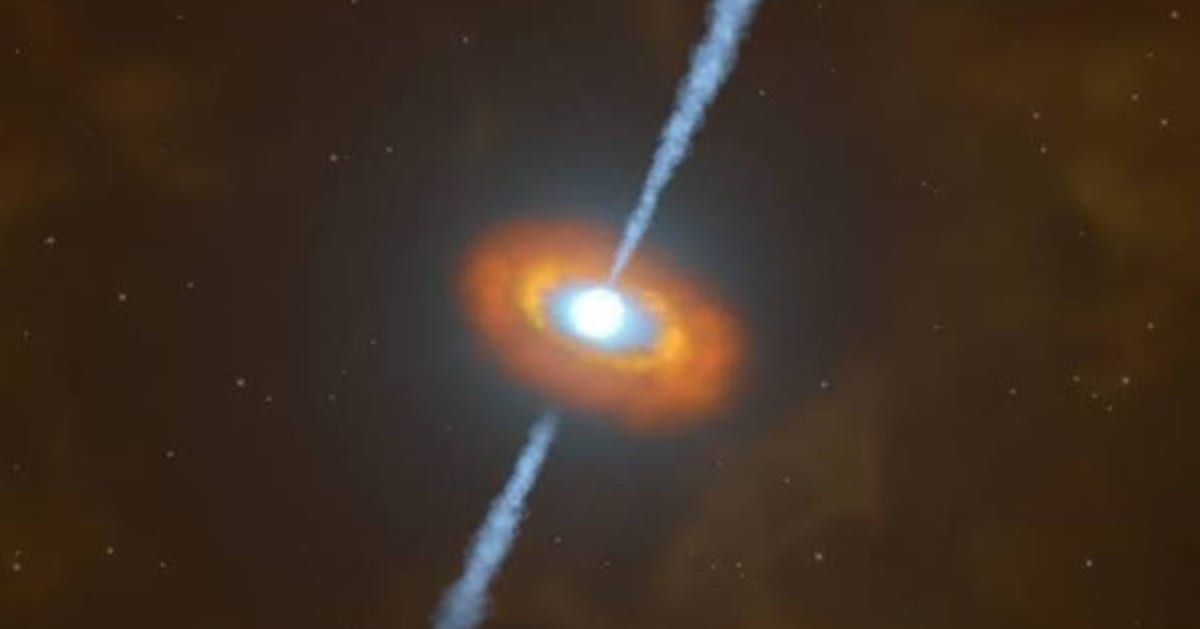
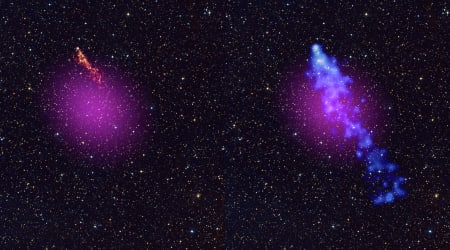
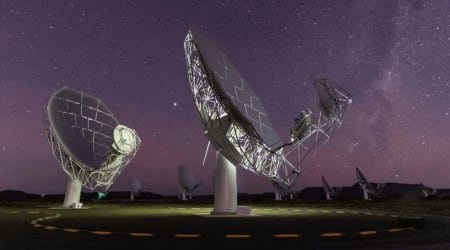
Using instruments from the US National Science Foundation's Very Long Baseline Array (VLBA) and Very Large Array (VLA), researchers led by Francesco Ubertosi of the University of Bologna identified a recently activated black hole in the galaxy cluster CHIPS 1911+4455, located six billion light-years away. This black hole began consuming matter and ejecting powerful jets of plasma, which only extend to about 100 light-years, covering a minuscule distance compared to the jets of mature black holes that can stretch for tens of thousands of light-years. The VLBA's high-resolution imaging, combined with the radio source's distinctive "peaked" spectrum, confirmed its extremely young age.
NEW: Astronomers (Using @NSF VLA + VLBA) Catch Supermassive Black Hole in the Act of “Waking Up”
— National Radio Astronomy Observatory | NRAO (@TheNRAO) August 11, 2025
"This is like watching a sleeping giant wake up... It’s an incredibly rare opportunity to study the ‘before’ picture of black hole feedback.”https://t.co/6e1lHWdKmG
"This is like watching a sleeping giant wake up,” stated Ubertosi, the study’s lead author. “We’re seeing this supermassive black hole at the very beginning of its active phase, before it has had time to significantly alter its surroundings. It’s an incredibly rare opportunity to study the ‘before’ picture of black hole feedback.”
Co-author Myriam Gitti, also from the University of Bologna, explained that the jets are so new they haven't yet pushed away the surrounding hot gas in the cluster. This allows scientists to study the conditions that existed before the black hole began to heat and disrupt the gas, a process known to regulate star formation in massive galaxies. Researchers call this arrangement a "pre-feedback" cluster, where one can study the conditions that existed before the black hole significantly molded its surroundings.
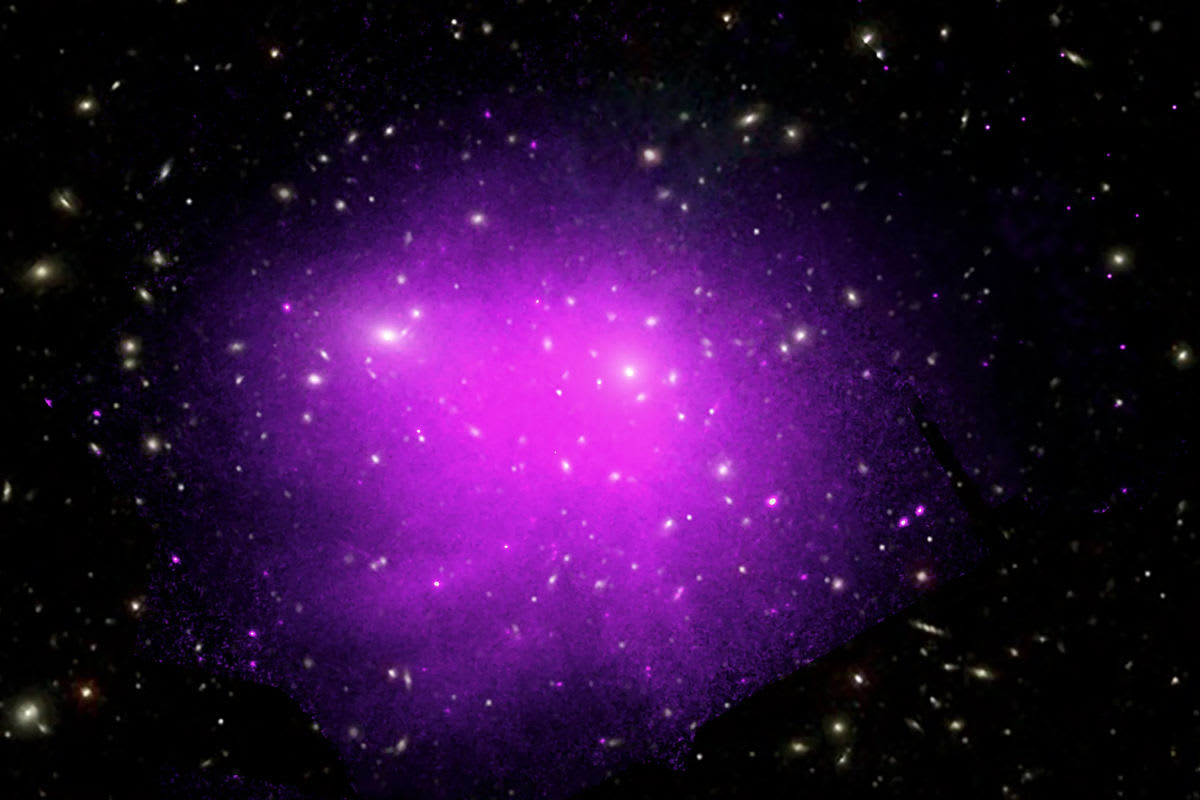
This research also supports previous findings, which posited that the galaxy is forming stars at a rate of 140-190 solar masses per year — more than 100 times faster than the Milky Way. This prolific star formation may have provided the fuel that "woke up" the dormant black hole. Observations from the VLA showed faint radio "whiskers" precisely aligned with these star-forming regions, likely from supernovae, which independently confirm the galaxy's immense star production. “CHIPS 1911+4455 may represent a different flavor of how black hole feedback gets started,” Ubertosi noted. While some black holes are triggered by efficient gas cooling, this particular system also shows signs of a recent merger, which may have contributed to both the enhanced gas cooling and the black hole's awakening, as mentioned by NRSO.
This study underscores the value of using multiple complementary radio telescopes. The VLBA provided the magnifying-glass view needed to measure the tiny jets, while the VLA offered the wider perspective to understand the broader galactic context. Researchers plan to continue monitoring the galaxy cluster to observe how the young black hole's influence evolves over time. "This discovery opens up a new way to study black hole feedback,” Ubertosi said. “Instead of just looking at the end result, we can now study the process as it unfolds. It’s like having a time machine to see how these cosmic giants first begin to shape their environments.”