One of Webb's biggest images yet hides the lightest "failed stars" ever found
Inside one of JWST’s biggest images
Since its launch in 2021, NASA's James Webb Space Telescope (also known as JWST or Webb) has helped scientists capture images of the brightest and most stunning places in our galaxy. And now, it has given us a look at its largest images ever released to date.
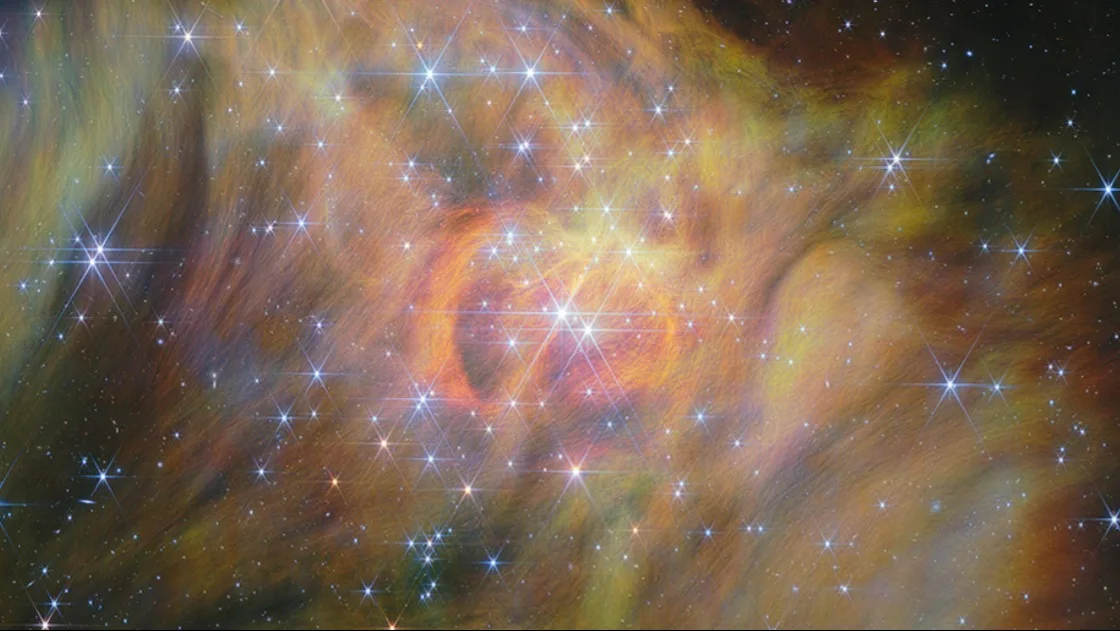
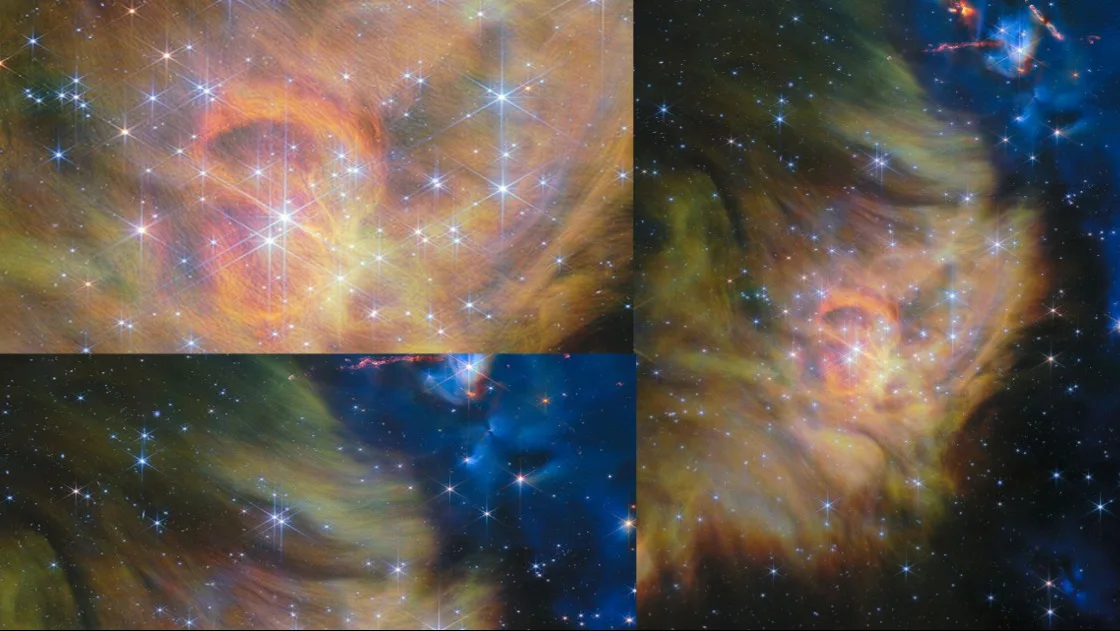
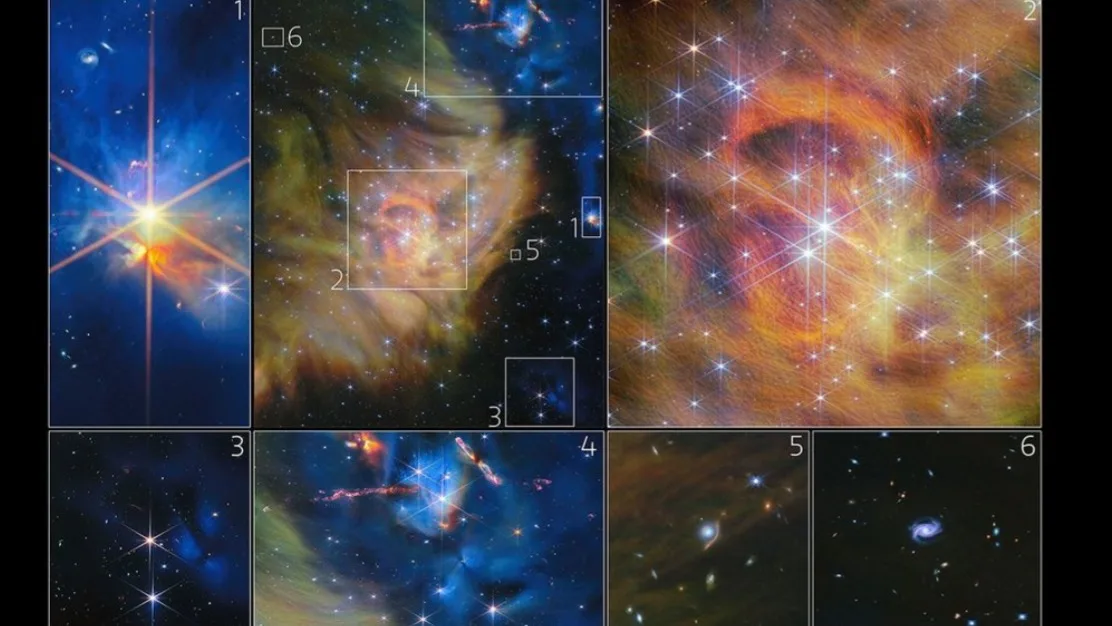
This image captures a star-forming region, IC 348, which is 1,000 light-years away. The near-infrared panorama is packed with details of stars as well as sweeping clouds of gas and dust. Here's a closer look at what the image shows.
This is where stars are born
Stars form in regions called stellar nurseries, where cold clouds of molecular hydrogen gas collapse under their own gravity. This process can create very different kinds of stars.
Massive stars end in supernova explosions after only a few million years, while the smallest and most common stars are long-lived. Webb's new image shows one of these regions in remarkable detail.
This region is 1,000 light-years away
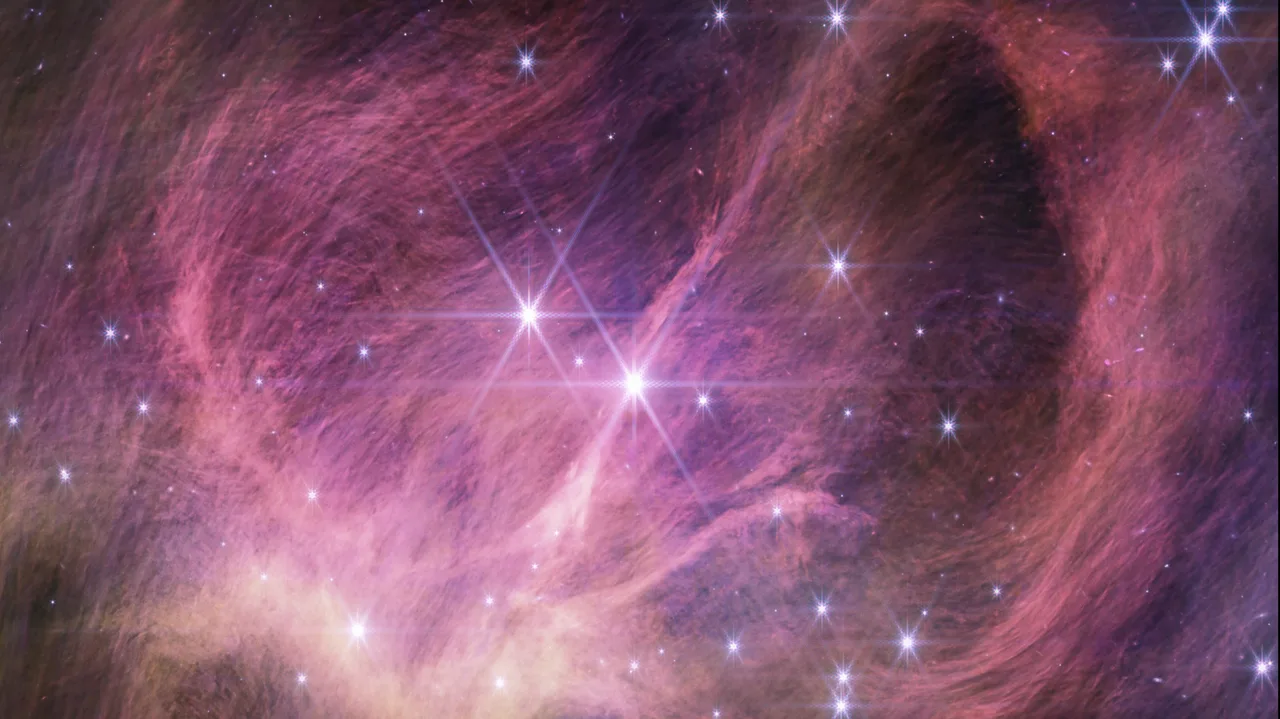
In this image, you can see the region IC 348 in the constellation Perseus. Stars pack most tightly near the center, where the brightest ones show diffraction spikes. In the upper right, protostars (stars still forming) shoot jets into the surrounding gas and dust. Those jets create glowing features called Herbig-Haro objects.
The smallest stars have roughly 8 percent of the Sun's mass. Anything lighter falls into a class called brown dwarfs, which sit between giant gas planets like Jupiter and true stars.
How did astronomers capture the image?
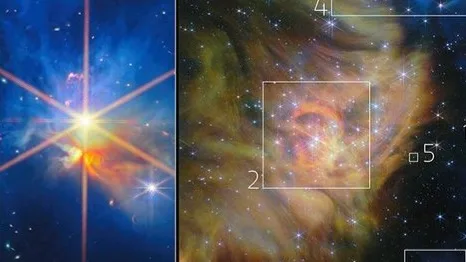
The same research team first studied IC 348 with Webb in 2022 and found brown dwarfs three to four times Jupiter's mass. For the new search, they used the NIRCam instrument in 2024 and picked 39 candidates based on color and brightness.
In 2025, the NIRSpec instrument examined the light of 15 of them to study their masses. Nine were identified as new substellar members of the IC 348 cluster, and this means that they are less massive than the smallest stars.
How small is the smallest brown dwarf?
The study also answered this question. The researchers found brown dwarfs that are lighter than any known before. According to their study, the faintest have estimated masses of around two Jupiters, or as low as 0.19 percent of the Sun's mass.
As per NASA, "These are the least massive brown dwarfs known and their existence poses a challenge to models of how stars form."
Could something that small have planets?
Astronomers have also spotted signs of a disk around one of the lowest-mass brown dwarfs known. If planets are forming there, they could be growing around an object that itself is only about as massive as a planet.
The team found a feature in the spectra that they attribute to an unidentified hydrocarbon, which is a type of molecule made only of hydrogen and carbon atoms. This feature has only been seen in the lowest-mass brown dwarfs, so these objects might form a spectral class of their own.