NASA got closer to Jupiter’s Great Red Spot than ever before. See the stunning images
A closer look at Jupiter’s giant storm matters
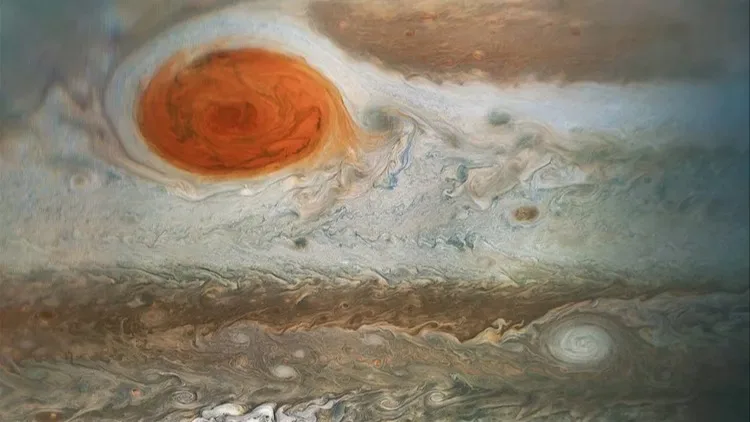
The Great Red Spot on Jupiter is a gigantic storm that is wider than our planet. NASA calls it a “Swirling Mystery”, and it’s mostly made of hydrogen and helium. This also means that the storm has no solid ground to weaken it. And studying the spot up close has never been easy.
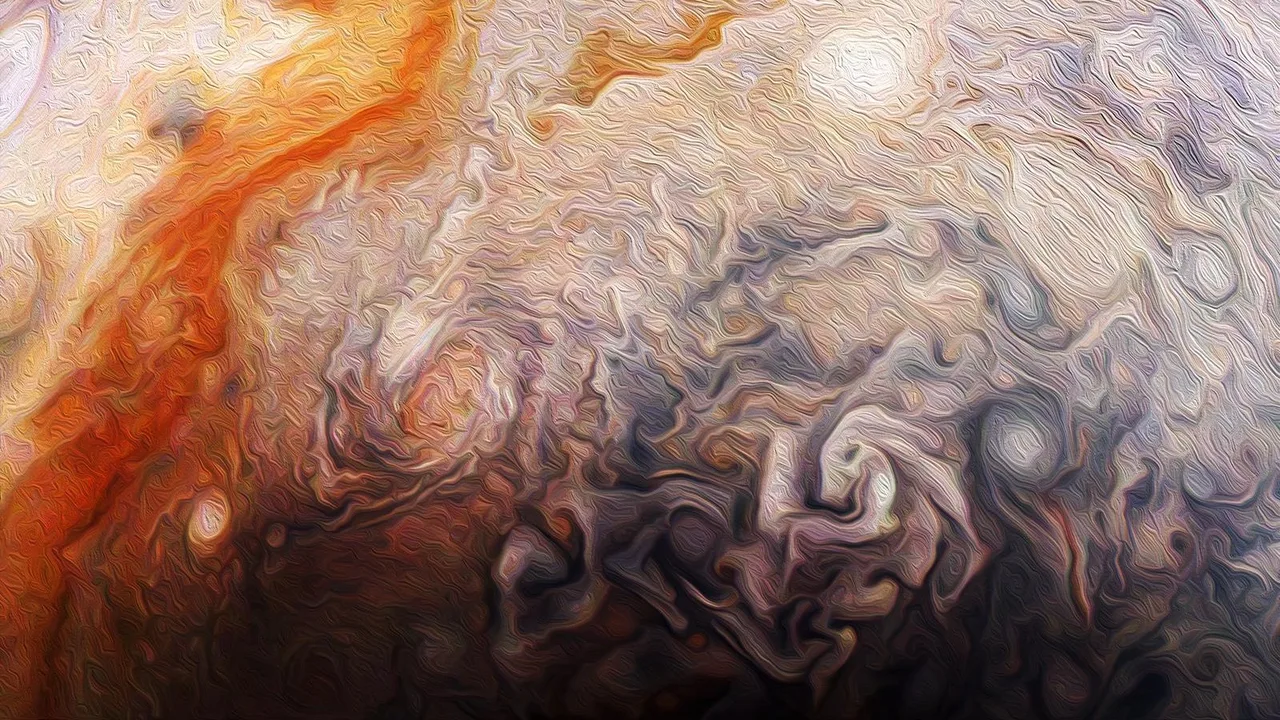
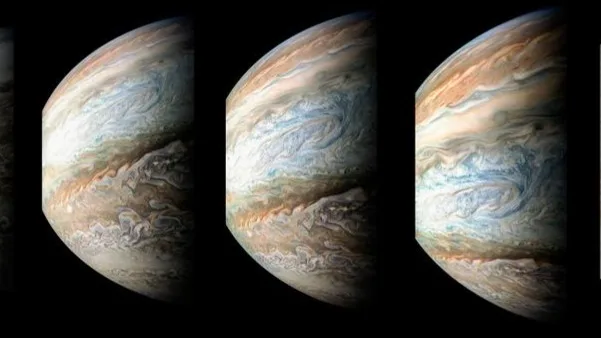
That changed with NASA’s Juno spacecraft, which has been circling Jupiter since 2016 and giving scientists a much closer view. Here’s a look at the Great Red Spot in all its beauty.
Juno made its closest pass yet
NASA’s Juno spacecraft arrived at Jupiter on July 4, 2016. On July 10, it was scheduled to pass about 5,600 miles (9,000 km) above the Great Red Spot at roughly 7:06 p.m. PDT. During the pass, all eight of its science instruments and its imaging camera were set to collect data. This flyby gave scientists the closest views yet.
Earth-based telescopes added a new perspective
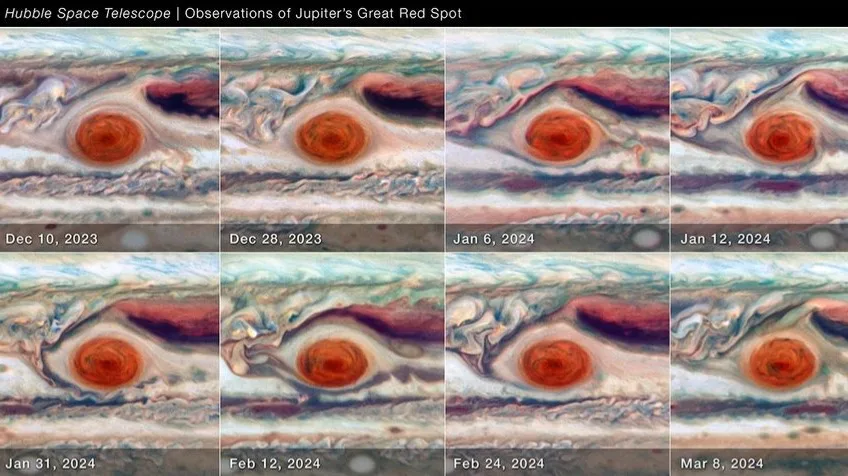
Before the flyby, the Gemini and Subaru telescopes on Mauna Kea in Hawaii imaged Jupiter to add context to Juno’s data. Glenn Orton of NASA’s Jet Propulsion Laboratory explained, “Observations with Earth’s most powerful telescopes enhance the spacecraft’s planned observations by providing three types of additional context.”
Gemini’s infrared image showed the storm’s highest layers as a bright white oval. The data suggested the interior is cold and cloudy toward the center, and the edges are warmer and clearer.
The Great Red Spot is getting smaller
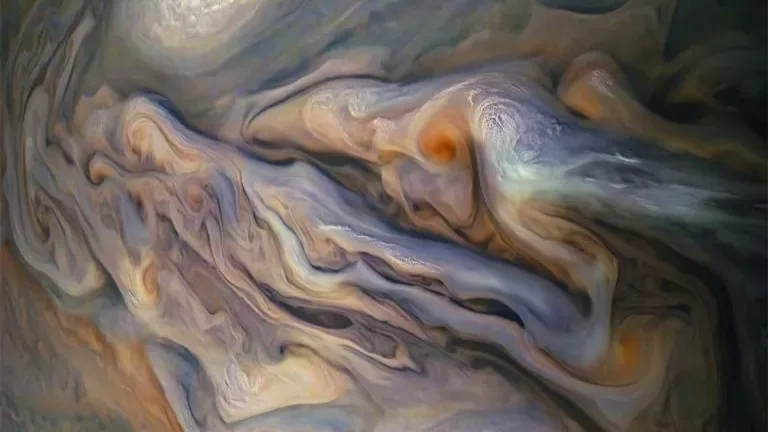
The Great Red Spot includes winds that peak at about 400 mph. It has been swirling for at least 150 years, and astronomers have tracked it from Earth since at least 1830.
When Voyager 1 and 2 measured it in 1979, it was 14,500 miles (23,300 km) wide. It now measures around 10,150 miles (16,330 km) wide (about 1.3 times the diameter of Earth). Some astronomers say that if the shrinking continues unchecked, the storm could vanish within a few decades.
And nobody knows what makes it red
Scientists still can’t say exactly what produces the storm’s color, which has shifted between red and brown over the years. Jupiter’s upper clouds are thought to contain ammonia, ammonium hydrosulfide and water, but it isn’t clear whether they react to create the reddish hues.
Amy Simon, an expert in planetary atmospheres at NASA’s Goddard Space Flight Center in Greenbelt, said, “We’re talking about something that only makes up a really tiny portion of the atmosphere.” Currently, the exact chemical recipe of the storm remains one of the major cosmic mysteries.