A giant star 2.5 million times brighter than the Sun vanished from view. Scientists may know why
The case of the missing star
For years, astronomers have studied how the most massive stars end their lives. Our current answer is that most of them go out in a supernova, which is an enormous explosion that’s easy to spot. So when researchers pointed the Very Large Telescope at one such giant star in 2019, they hoped to learn more about how it would end its life.
Instead, the massive star seemingly vanished from view without a trace. Here’s what researchers found that might explain what really happened.
A giant star in a faraway galaxy
The story began about 75 million light-years away, in the Kinman Dwarf galaxy in the constellation Aquarius. The galaxy is too far for astronomers to see individual stars, but they can pick up the traces that some stars leave in its light.
From 2001 to 2011, those traces pointed to a luminous blue variable, which is a massive star near the end of its life that swings unpredictably in brightness. This one was roughly 2.5 million times brighter than the Sun. Stars like it are rare, and only a handful have been confirmed.
But the star that wasn’t there
In 2019, a team led by Andrew Allan of Trinity College Dublin pointed the European Southern Observatory’s Very Large Telescope at the galaxy. They hoped to learn more about how stars this massive die.
In August 2019, they first turned the ESPRESSO instrument toward the star, using all four of the telescope’s 8-meter units at the same time. But they noticed that the star’s signs were gone. A few months later, a second instrument, X-shooter, found nothing either. “Instead, we were surprised to find out that the star had disappeared!” noted Allan.
The massive star disappeared without a supernova
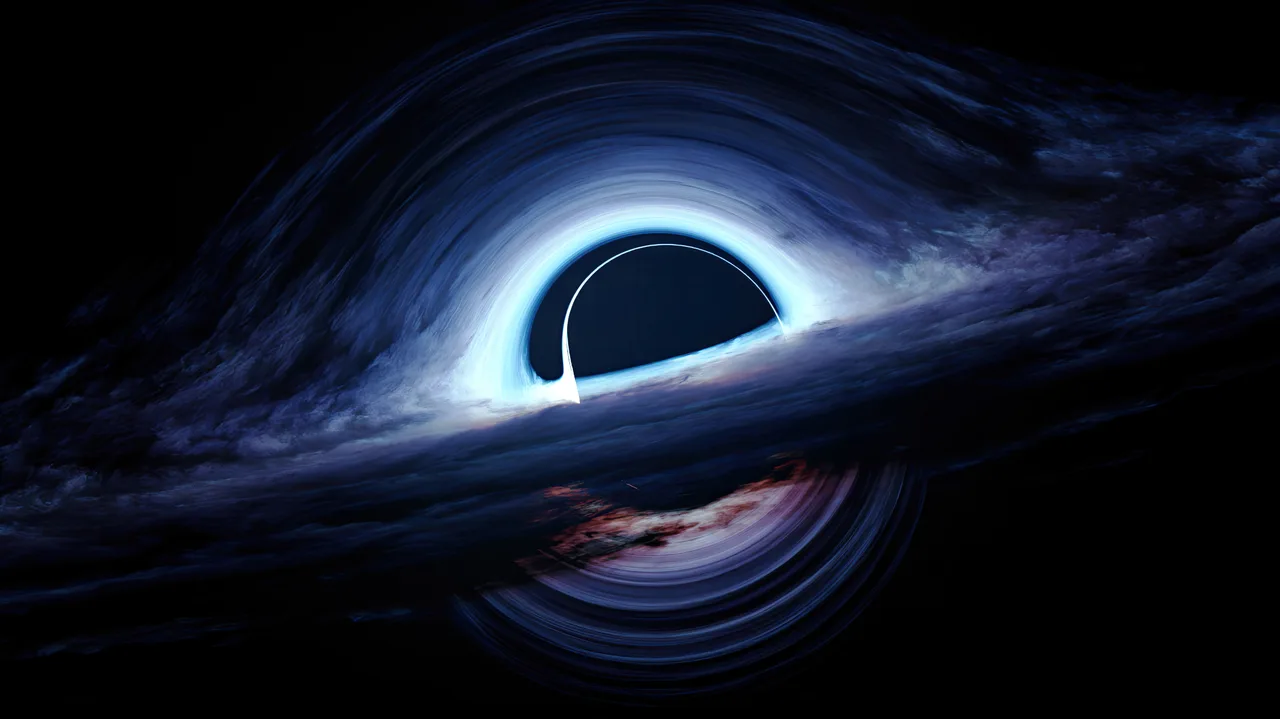
According to the European Southern Observatory, a supernova leaves a lasting mark on the space around it, with powerful radiation reaching many light-years in every direction. Afterward, the star’s dense leftover core may collapse into a black hole or a neutron star.
But in this study, this star left no such radiation behind. Commenting on this, Allan said, “It would be highly unusual for such a massive star to disappear without producing a bright supernova explosion.”
So, where did it go?
As of now, researchers have two ideas. One is that the star dimmed after a possible outburst. It may now be a less luminous star, partly hidden by dust. If so, it could reappear in future observations. The other is that it collapsed into a black hole with no supernova, possibly 85 to 120 times the Sun’s mass.
“We may have detected one of the most massive stars of the local Universe going gently into the night,” said co-author Jose Groh. “If true, this would be the first direct detection of such a monster star ending its life in this manner,” added Allan.