Astronomers found a giant planet that should have been swallowed by its dying star
A planet that escaped its dying star
In about 5 billion years, our Sun will run out of hydrogen in its core, and this will cause it to swell out to around the orbit of Mars as a red giant. The inner planets, Earth included, will be engulfed. So far, astronomers have found a lack of planets in close orbits around red giants, which has suggested that such worlds don’t survive the change.
But in a surprising discovery, a giant planet avoided being engulfed by its dying star. How did it escape such a fate? Here’s a closer look at what astronomers say.
Meet the planet that isn’t supposed to exist
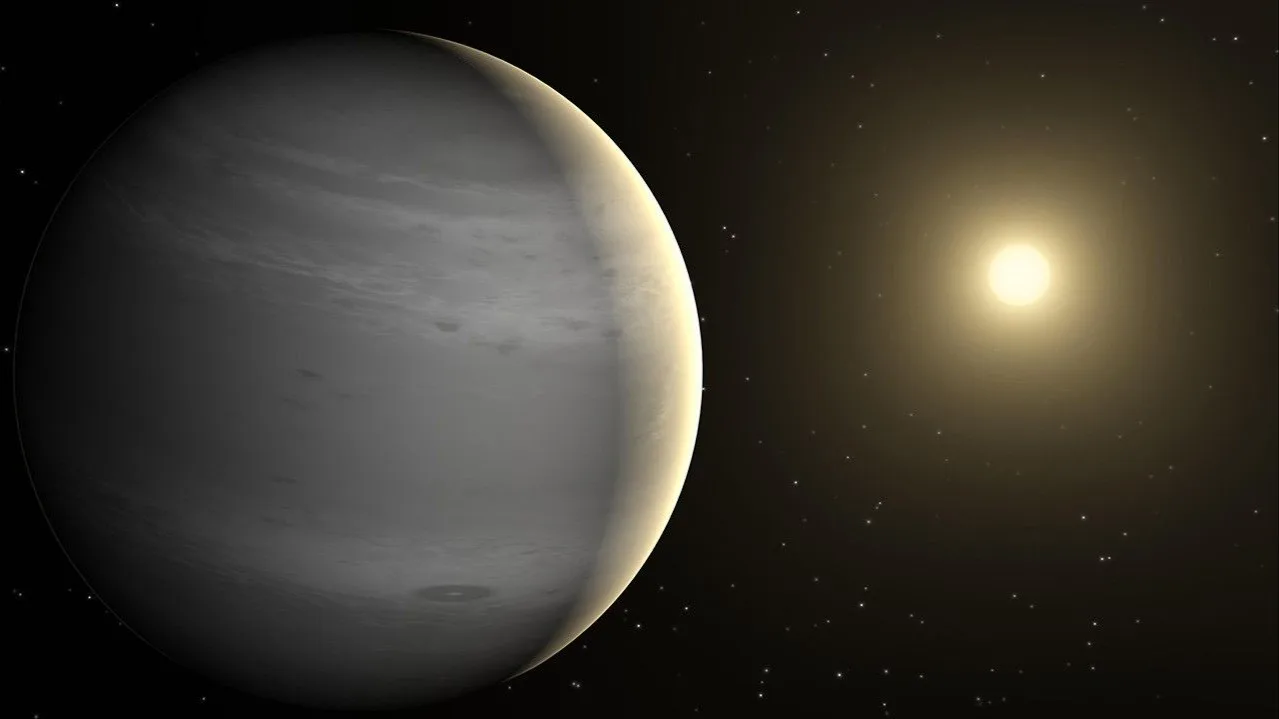
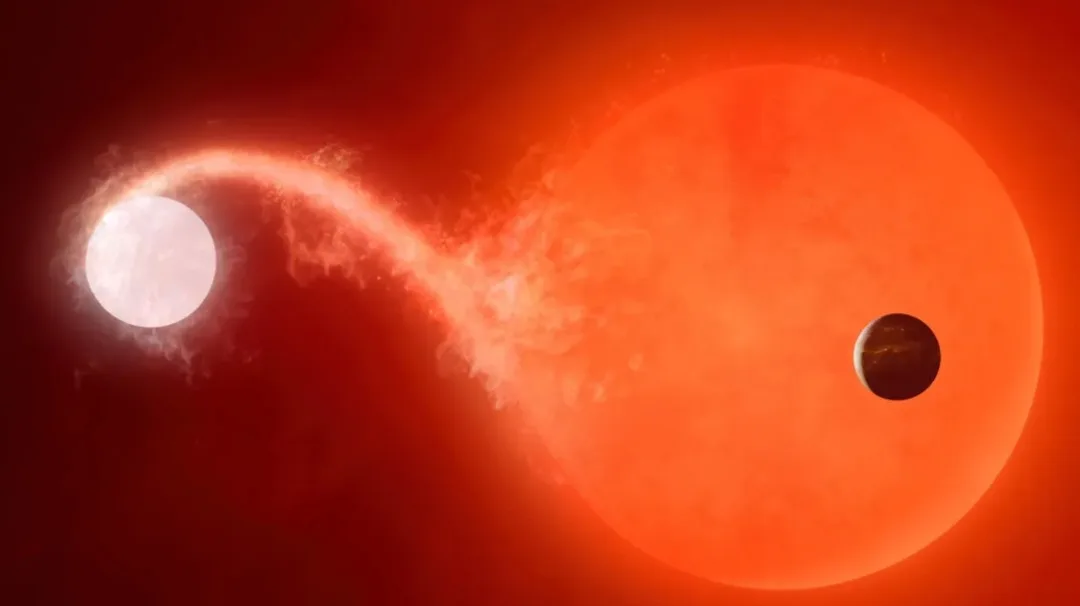
The planet is designated 8 Ursae Minoris b, or Halla. This giant has 1.7 times the mass of Jupiter and orbits a red giant named Baekdu from about 46 million miles (74 million km) away. This puts it at roughly half the Earth-Sun distance. One orbit here takes just 94 Earth days.
The lead author of the study, Marc Hon of the University of Hawai’i, told Space.com, “In other words, we have here essentially a ‘forbidden planet,’ namely one that has seemingly survived imminent destruction from its once expanding host star.” He added, “In other words, this planet should not exist today!”
This star should have swallowed the planet long ago
According to scientists, helium fusion is currently powering Baekdu's core. Based on how stars like it normally evolve, Baekdu was predicted to balloon to roughly 65 million miles (105 million km) across. And until now, the only objects known to survive being engulfed by a red giant were brown dwarfs.
Hon said, “This is the first system that we know of in which a planet survives so closely around a star burning helium in its core. The core-helium burning phase is a stage that stars reach only after they’ve swelled up and consumed nearby planets.”
Did Halla move closer to its star later?
This scenario is unlikely because Baekdu has a relatively short helium-burning phase (lasting roughly 100 million years). In this case, a late arrival means that the planet would need billions of years to settle into a near-perfect circle.
Hon said, “Death by star, particularly when the star first expands into a red giant, is not the end for all close planets!” He further explained, “What’s surprising is that the continued existence of this planet implies a variety of pathways over which planets can survive the volatile evolution of their host stars.”
So how did it survive?
According to one theory, Baekdu and its white dwarf companion came together in a stellar merger. Mergers like this have been thought to ignite helium and cut a red giant’s growth short. If that happened here, the star’s outer edge would never have reached Halla. But even then, Halla would only be safe for a while, as Baekdu will expand again once it runs out of helium to burn.
The other theory suggests that Halla formed in a second generation of planets. Before Baekdu and a companion star merged, the companion’s gravity may have pulled material off Baekdu. This would then form a disk around it, much like the disks around young stars where planets are born.
And Halla may not be the only exception
Next, the team will investigate how certain the fate of planets close to young red giants really is. Hon said, “There aren’t that many of these stars that have been searched simply because they shouldn’t have planets.” He added, “We want to know if there are more of these ‘engulfment-escaping’ surviving planets.”
He also noted, “The fact that planets are appearing where we really don’t expect them to show up is telling us that planet formation may be surprisingly resilient.” The study has been published in Nature.