Did our universe begin inside a black hole? New study questions the Big Bang
What came before the beginning?
For a very long time, scientists have believed that the Big Bang is how everything started, and it’s what caused space, time, and energy to exist. This model also explains most of what we know about the universe today. But it leaves the moment of the singularity unexplained.
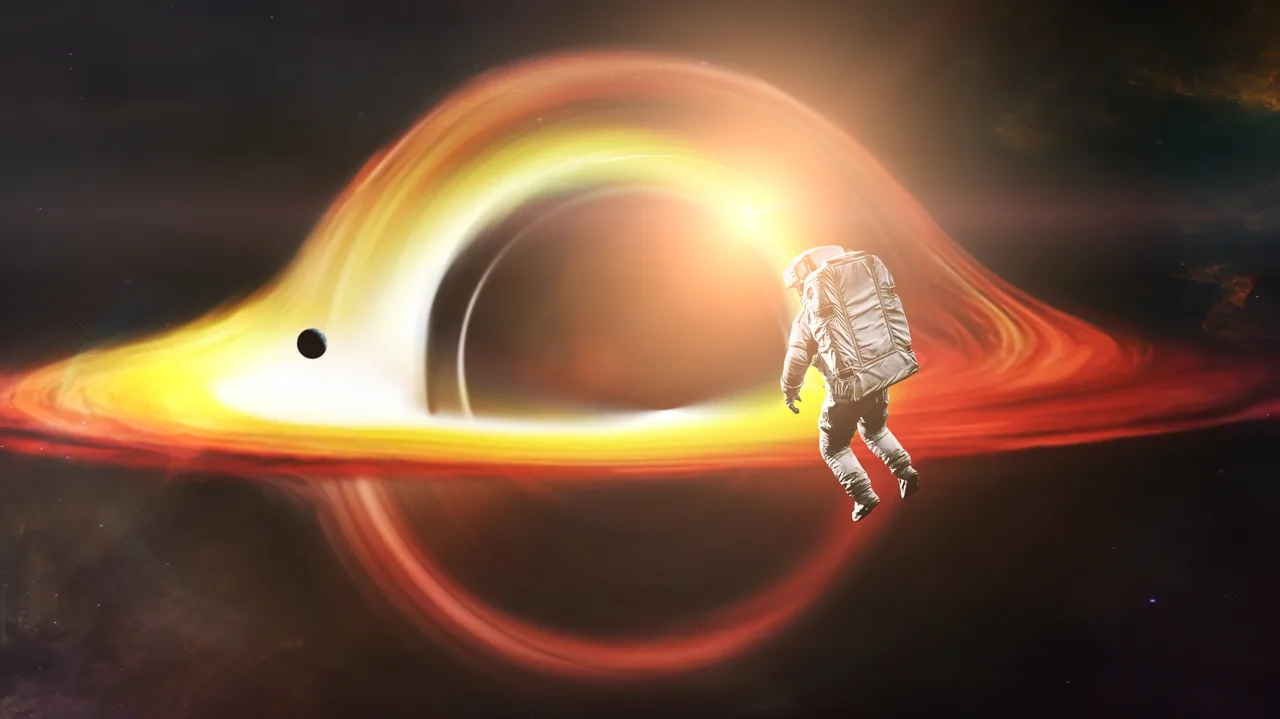
Now, researchers from the University of Portsmouth have proposed that there’s more to what we know. They argue that our universe may have formed inside a black hole that existed in another, larger universe. Here’s what they say about how it all started.
What if our universe was born inside a black hole?
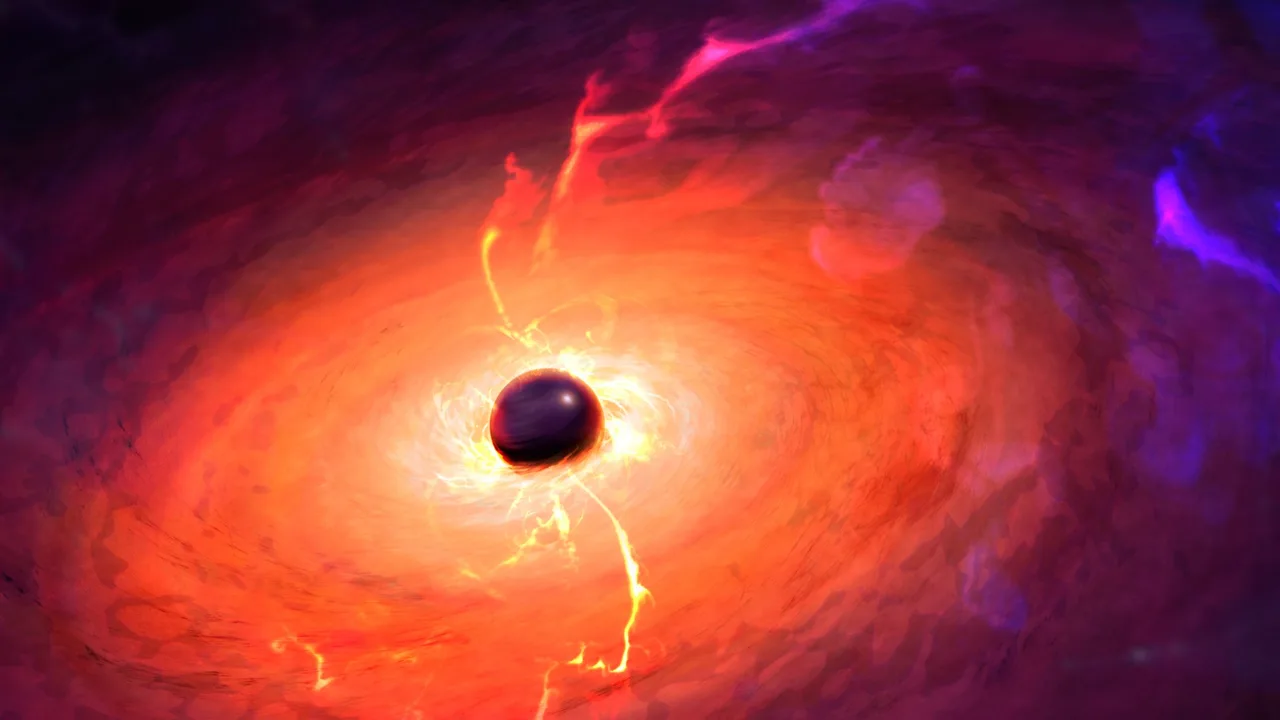
The research team, led by Enrique Gaztañaga at the University of Portsmouth, asked: what happens when a massive cloud of matter collapses under its own gravity? Their Black Hole Universe model, published in Physical Review D, argues that under the right conditions, a collapsing cloud does not crush into nothing. Instead, it bounces back, and the bounce could be how our universe began.
In a conversation, Gaztañaga shared, "[Our study] began with a simple but profound question: Why is the expansion of the universe accelerating? Our entire observable universe lies inside its own gravitational radius, meaning that from the outside, it would appear like a black hole. That led to a radical idea: What if the universe formed in the same way a star collapses into a black hole?”
A rule of quantum physics changes the story
For this study, the researchers used the exclusion principle, which says that certain particles cannot crowd into the same state. As the cloud gets denser, the pressure inside it also builds up and starts resisting the collapse. Scientists call this degeneracy pressure, and it’s the same effect that helps stop dead stars like white dwarfs and neutron stars from collapsing further.
Explaining this further, he added, "In quantum mechanics, two identical particles (like electrons or neutrons) cannot occupy the same state — they can't be in the exact same place at the same time. This principle creates a kind of pressure — called degeneracy pressure — that resists compression. It's what stops the cores of dying stars from collapsing endlessly, and it's what can trigger a supernova explosion. In our model, it's this same quantum effect that halts the universe's collapse and causes it to bounce."
The black hole could hide an entire universe inside it
When we look at it from the outside, a cloud collapsing this way would look like any other ordinary black hole. But once it shrinks past the boundary, which is called the event horizon, we won’t be able to see what happens next.
And once it’s inside, the matter would reach an extreme density, and then it would start expanding into what becomes a new region of space and time. This means that the black holes we observe in space, even in our own universe, could each have been created in the same way and exist inside a larger, unseen parent universe.
The theory could also explain patterns already seen in the sky
The researchers also argue that their model could help explain some strange features seen in the heat left over from the early universe. Gaztañaga added, "In fact, some early results from the James Webb Space Telescope (JWST) have found surprisingly old galaxies close to the origin of the universe.”
He added, “These findings may be hard to reconcile with the standard Big Bang timeline, but they could make sense if early relics like supermassive black holes helped galaxies form faster.” He noted that challenging the Big Bang wasn’t the absolute start of everything is “controversial”, but questioning these “long-held assumptions is essential to scientific progress.”