Black holes are 'much less efficient eaters' than previously suspected, claims new study
Astronomers at the University of Warwick caught a glimpse of a black hole that consumed gas from a nearby star and, at the same time, threw up some of the devoured matter into space as jets and winds. The researchers have detailed their findings in a paper published in the Monthly Notices of the Royal Astronomical Society.
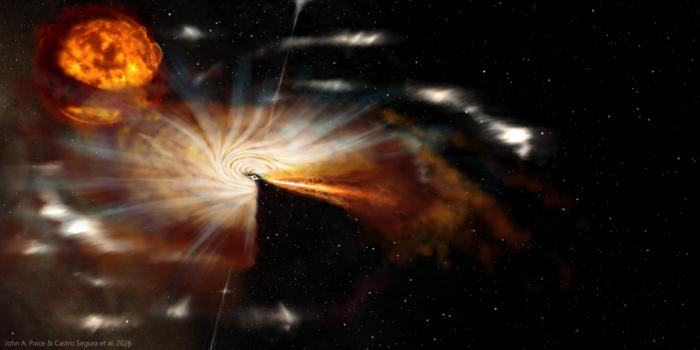
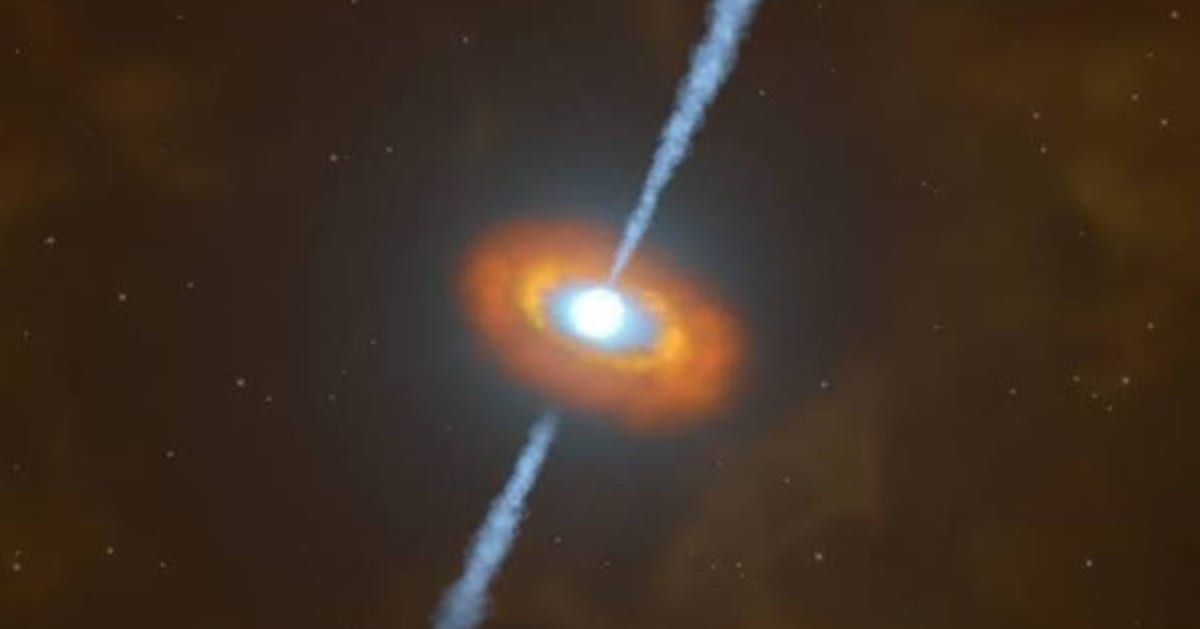
“People often imagine black holes simply swallowing everything around them,” said lead author Dr. Noel Castro Segura, a postdoctoral fellow at the University of Warwick, in a statement. “What we're seeing is a much more complex process. Matter falls in, the system processes it, and a surprising amount is expelled again.” For the study, Dr. Segura's team looked into the system Swift J1727.8−1613, which, since its discovery in 2023, has become one of the brightest sources of X-rays in the sky. The black hole in the system siphons gas from a nearby star, creating a swirling disc of material around it. The astronomers caught this feeding frenzy in real time, obtaining a detailed optical record of how the system changed over time.
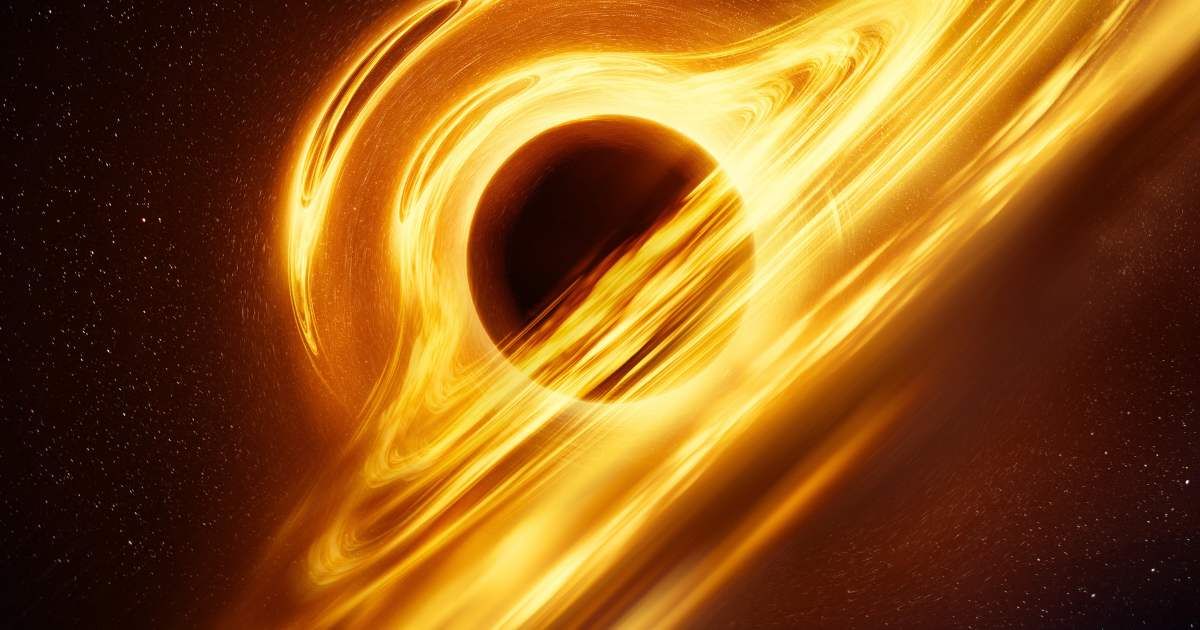
![An illustration supermassive black hole at the center of the Milky Way galaxy, known as Sagittarius A* (A-star). It is surrounded by a swirling accretion disk of hot gas (Image Credit: NASA, ESA, CSA, Ralf Crawford [STScI] )](https://de40cj7fpezr7.cloudfront.net/595fadf2-adbf-417b-b20b-2ee06c9d0b3d.png)
During the observation, the researchers found that the feeding disc underwent changes as the black hole released a powerful jet. This was a rare glimpse into the relationship between the infalling matter of a black hole and the matter that is expelled out. But what was even more curious was the discovery that the black hole was blowing away gas even when its feeding frenzy had subsided to roughly one hundredth of its peak. The finding suggests that black holes even expel gas even when their activity is on the decline, pointing to the fact that the amount of matter expelled may rival what the black hole had swallowed.
“If black holes can continue shedding material even after their largest outbursts, it means they may be much less efficient eaters than we previously assumed,” said Segura. “A significant fraction of the meal may never reach the black hole at all, changing our understanding of how binary stars in galaxies evolve.” The notion that black holes are cosmic gluttons that eat everything they can lay their hands on thus takes a massive beating. The new research shows that black holes form dynamic systems that devour and give back substantial fractions of ingested matter into space through strong jets and winds, providing one of the clearest views yet of how black holes feed, react, and influence their surroundings.
More on Starlust
Rare, long-lasting black hole outburst is giving scientists a better look at the early universe
Astronomers have found the first ever 'wandering' supermassive black hole at the edge of a galaxy