Astronomers find 'barred' galaxy from two billion years after the Big Bang
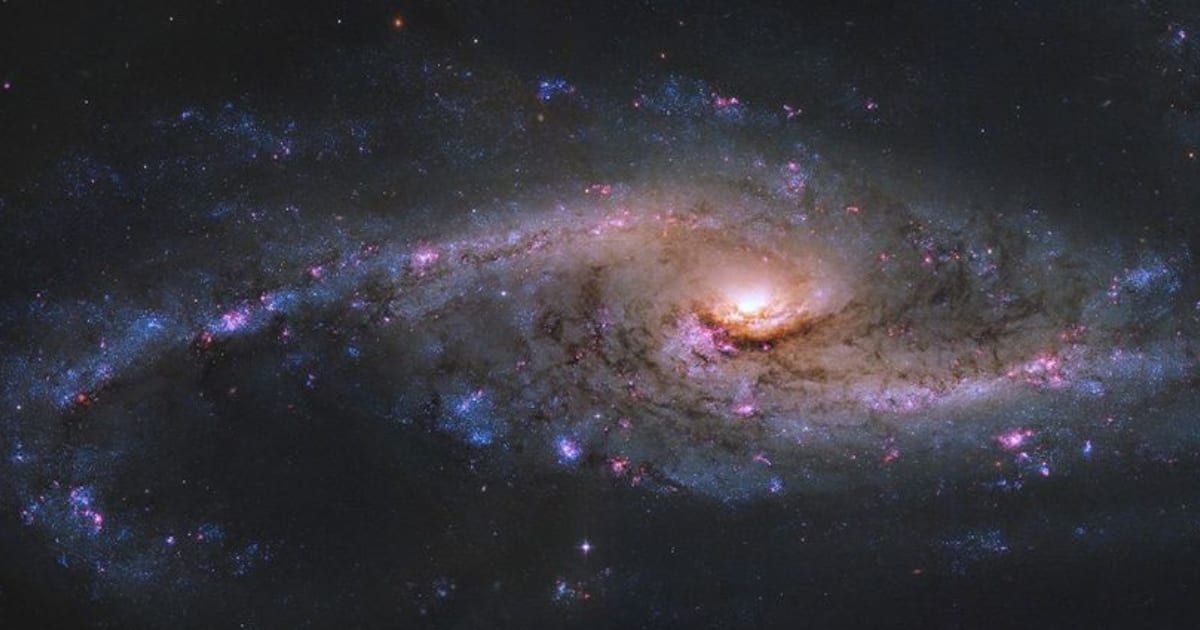
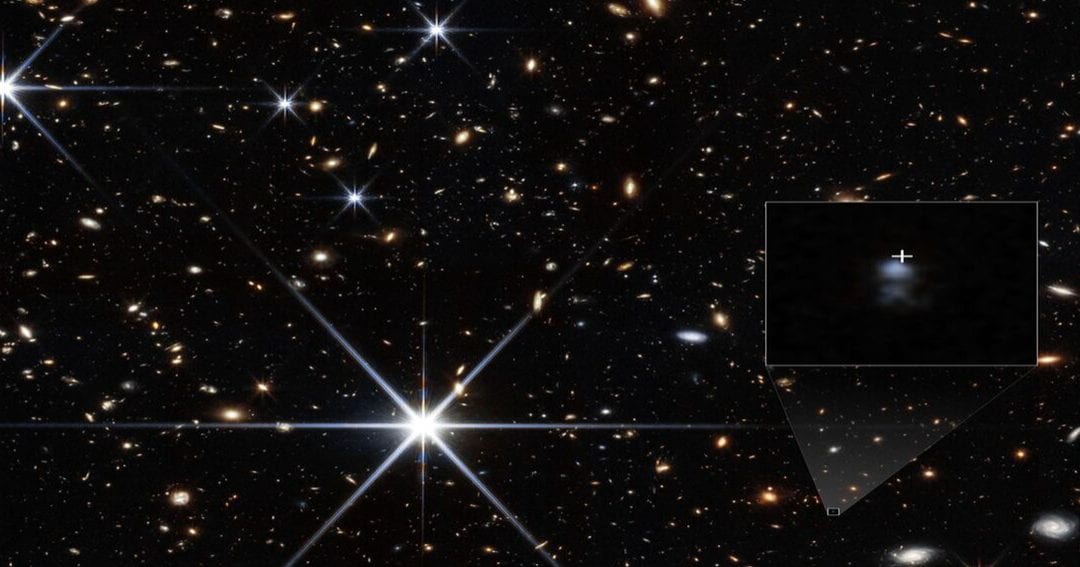
A group of astronomers has discovered a "barred" spiral galaxy from 11.5 billion years ago. That's only about 2 billion years after the Big Bang, which makes the galaxy, designated COSMOS-74706, one of the earliest examples of this class of galaxies ever found.
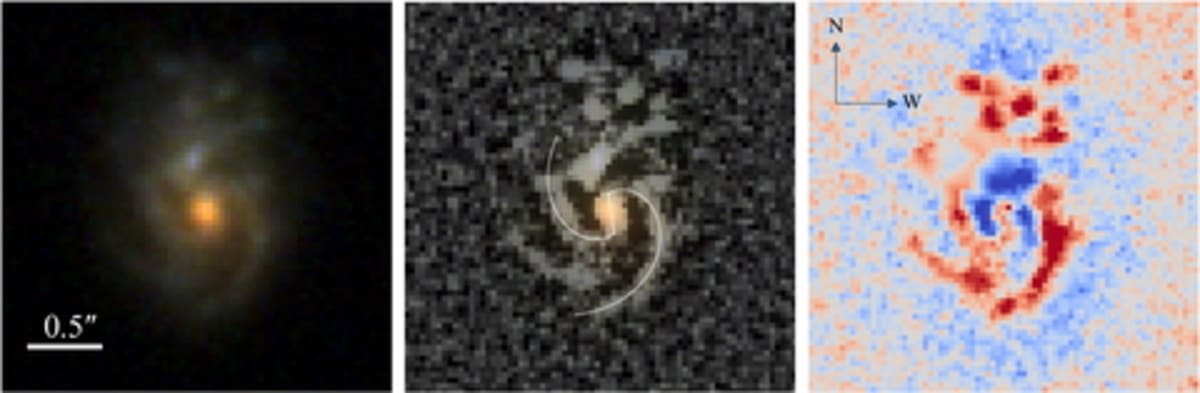
The study was led by Daniel Ivanov of the University of Pittsburgh and was presented on January 8 during the 247th meeting of the American Astronomical Society. A stellar bar is a dense and straight line of stars and gas that appears through the middle of a spiral galaxy in images taken from a vantage point perpendicular to the galactic plane. The discovery of a bar in such an ancient galaxy indicates that the prerequisites for bar formation existed much earlier than thought. “This galaxy was developing bars 2 billion years after the birth of the universe," Ivanov remarked in a statement.
A bar's presence is not only a characteristic but also a substantial contributor to the growth of galaxies. It is hypothesized by astronomers that bars act as "funnels" and draw the gas from the outskirts towards the center of the galaxy. This gas then becomes food for the supermassive black hole at the center of the galaxy and, at the same time, leads to the inside-out evolution of galaxies, wherein stars are first formed inside of the galaxy and then in the outer regions. “There’s a large burst of star formation near the center of the galaxy, early in its history,” Ivanov said, but not much star formation farther out. “So, you end up with a much older core of the galaxy than in the outer disk.”
Professor Mauro Giavalisco, co-author of the study, said, “Bars are very important because they reflect key features of the gravitational potential and of the dynamics of disk galaxies.” He further elaborated, pointing out their widespread occurrence in the current universe as a factor that makes the bars not only important but also a puzzle. “Their conceptual importance in our understanding of gravitational systems is highlighted by the fact that they are very common in the present-day universe among disk galaxies, and yet we do not fully understand the conditions for bar formation.”
The team behind the research posits that the bars can be produced in two ways, with the first being through natural instability, which a settled disk will create on its own in the absence of an external event. Alternatively, their formation can be triggered by the gravity of another galaxy. “If you have a close interaction with a nearby galaxy, that can actually trigger the global instability that leads to the formation of a stellar bar,” Ivanov explained.
The team stumbled upon the discovery when they were developing a catalog of barred and non-barred galaxies in the designated area of the sky. COSMOS-74706 was flagged by them due to their observation of "redshift," which is a stretching of light and its measurement, thus confirming the galaxy's extreme age and great distance. Professor Giavalisco said that following these bars through cosmic history offers a "powerful diagnostics of the assembly and evolution of disk galaxies."
More on Starlust
NASA's JWST discovers massive Milky Way-like spiral galaxy just 1.5 billion years after the Big Bang
Hubble Space Telescope unveils striking portrait of a spiral galaxy harboring an active nucleus