Keck Observatory detects rare 'anti-solar tail' on interstellar comet 3I/ATLAS
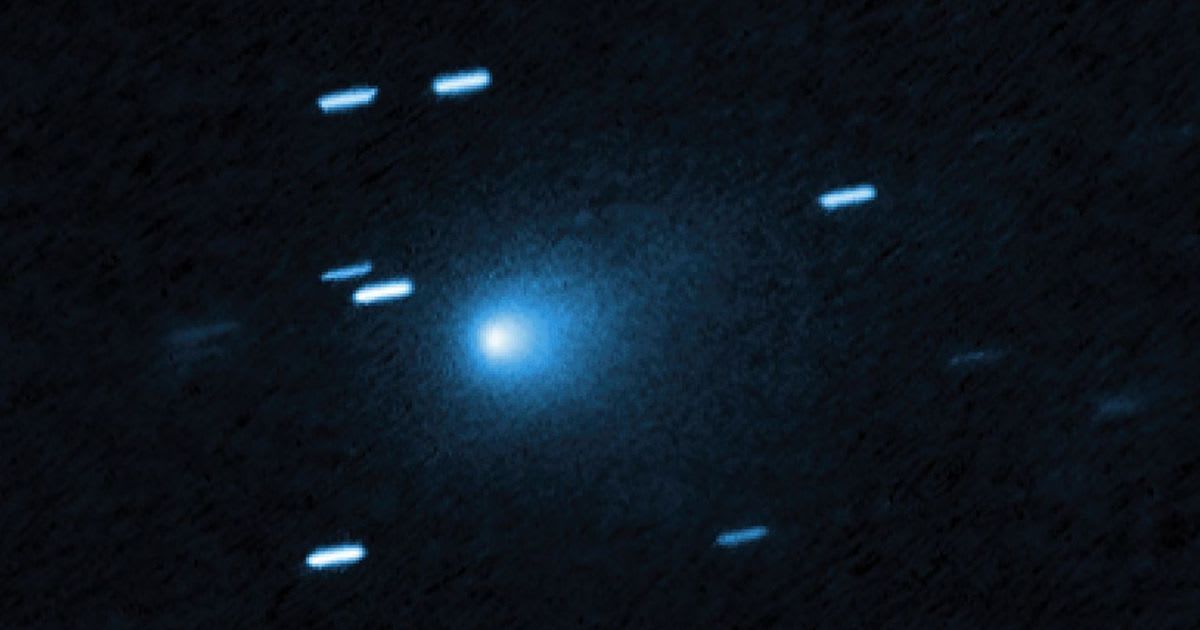
Astronomers utilizing the W. M. Keck Observatory have identified peculiar characteristics, including a rare "anti-solar tail" and an unusually confined nickel presence, on the interstellar comet 3I/ATLAS. The study's preliminary findings, which have not yet undergone peer review, are currently accessible on the preprint server arXiv.
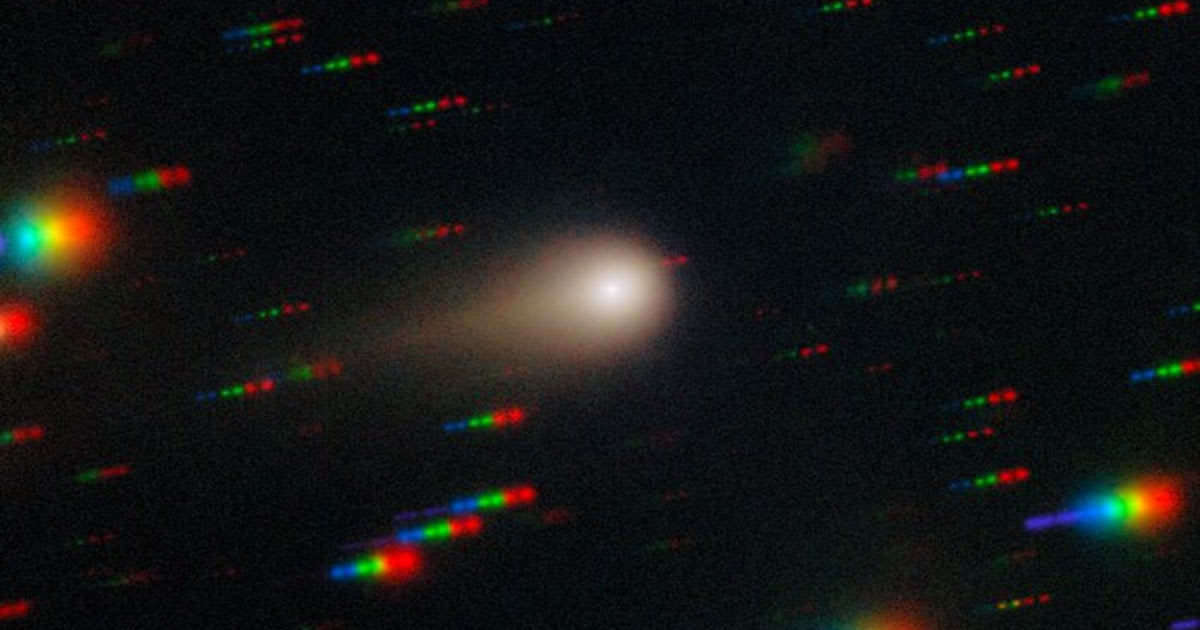
The interstellar comet, designated 3I/ATLAS after the Asteroid Terrestrial-impact Last Alert System that discovered it in July 2025, represents only the third such visitor ever observed in our solar system, according to IFL Science. Traveling at an exceptional speed with an eccentricity between 6.1 and 6.2 (meaning it is on a trajectory to exit our solar system), the object is of immense scientific interest as a potential 10-billion-year-old time capsule from a distant stellar system. A team of international researchers analyzed the object's spectra, captured by the Keck Cosmic Web Imager on August 24, to determine its elemental composition. This analysis is critical for understanding its origins, as outgassing from a comet's volatile ices, known as the coma, provides a direct sample of materials formed in its home system.
The new data reveal a clear detection of nickel (Ni) and cyanide (CN), consistent with previous observations, but only weak or no signs of iron (Fe). The spatial distribution of these elements within the coma presents a new mystery: the nickel is highly concentrated, with the majority of its flux confined to the innermost 2,000 kilometers of the object. Nickel was found to extend only about 594 kilometers from the nucleus, significantly less than cyanide, which extends to around 841 kilometers.
Researchers suggest that the nickel may be released from an intermediate "parent" molecule, such as a metal-organic compound like Ni+PAH, which is rapidly broken apart by solar radiation, thus keeping the nickel centrally concentrated. Furthermore, the ratio of nickel production relative to cyanide in 3I/ATLAS is higher than that of 2I/Borisov and orders of magnitude above the median for comets in our solar system, highlighting its unique composition. The very presence of nickel and iron in a cometary coma at such a low temperature is already an outstanding puzzle, as it is generally too cold for these refractory metals to vaporize.
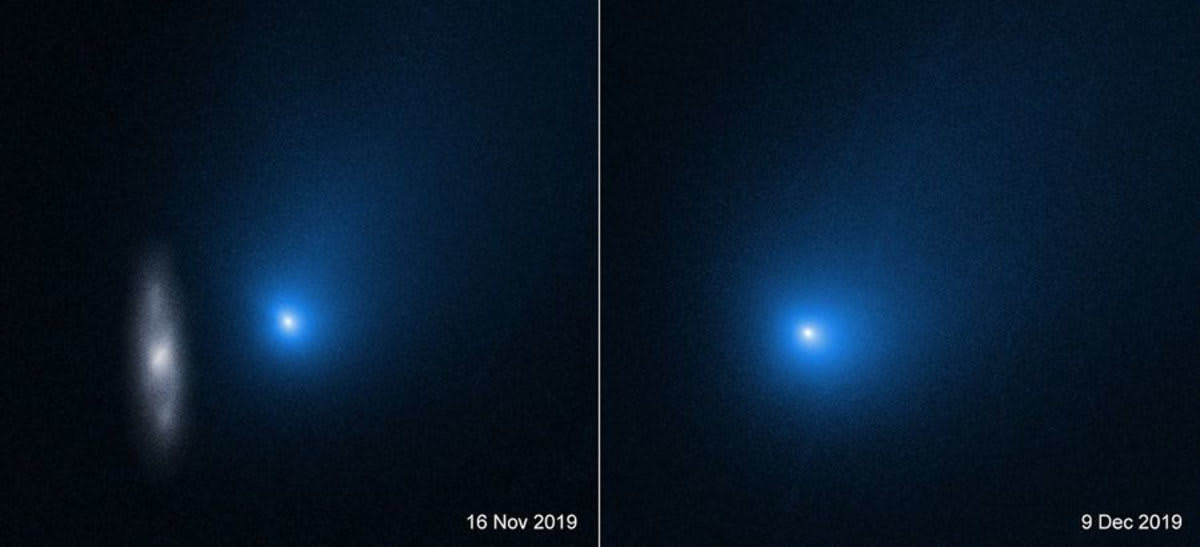
Further analysis confirmed the existence of an "anti-tail," a tail structure that points toward the Sun rather than away from it, which is the typical direction for a dust tail due to solar radiation pressure. In 3I/ATLAS, this phenomenon is not an optical illusion. It is attributed to the slow ejection of relatively large dust particles, primarily from the comet's sunlit hemisphere, which are not significantly pushed away by solar wind. While this morphology is considered unusual, the study notes similar precedents among distant active cometary bodies.
Scientists anticipate that upcoming observatories, such as the Vera C. Rubin Telescope, will accelerate the discovery of more interstellar objects, which is crucial for advancing our understanding of these rare travelers and the environments in which they formed.
More on Starlust
Astrophysicist explains how Mars Orbiters captured closest view of interstellar comet 3I/ATLAS